Common Pleco
This page is educational reference material for preparing questions. A licensed veterinarian examines the animal, makes the diagnosis, and sets the treatment.
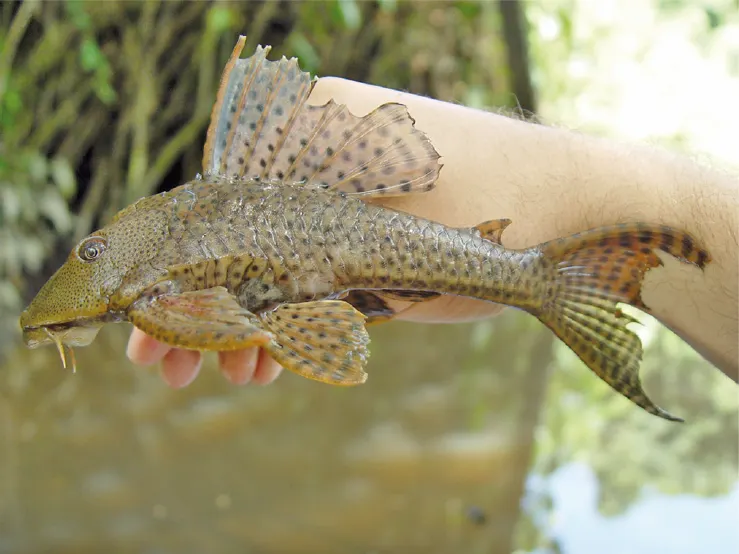
Affiliate links may earn a commission. Affiliate disclosure.
Quick Facts
| Attribute | Details |
|---|---|
| Scientific Name | Hypostomus plecostomus |
| Origin | South America |
| Size | 12-24 inches (30-60 cm) |
| Lifespan | 10-15 years |
| Temperature Range | 72-82°F (22-28°C) |
| pH Range | 6.5-7.5 |
| Tank Size Minimum | 75-100 gallons (adult) |
| Care Level | Moderate |
| Diet | Omnivore (primarily herbivore) |
| Temperament | Peaceful, nocturnal |
Recommended for Plecos
Aquarium Co-Op - Quality pleco foods & driftwood | Seachem - Powerful filtration systems | Fluval - Large tank solutions
Common Pleco Overview
The Common Pleco, often marketed as a "sucker fish" or "algae eater," is one of the most frequently sold aquarium fish - unfortunately, also one of the most commonly misunderstood. While small juveniles are sold for just a few dollars, these fish grow to impressive sizes of 12-24 inches and require large aquariums that many owners aren't prepared to provide.
Despite their reputation as algae cleaners, adult Common Plecos are not efficient algae eaters and require supplemental feeding. However, for those with appropriately sized tanks, they make fascinating, long-lived pets with prehistoric appearances and interesting nocturnal behavior.
The fish this page is about is the common pleco, Hypostomus plecostomus, from South America. Adults reach 12 to 24 inches and live 10 to 15 years. The minimum tank for an adult is 75 to 100 gallons. Many fish sold simply as plecos, with no species name, are this animal or something that gets just as large. A 3-inch juvenile in a 20-gallon tank is a temporary condition, not a small species.
Do not buy one because someone said it will clean the glass. Commons rasp biofilm and wood, they eat more than algae, and they produce a great deal of waste while leaving plenty of algae behind. The diet is omnivore with a herbivore lean: algae wafers, driftwood to rasp, blanched greens, and some meaty foods. A pleco that is fed only what it can scrape from a bare tank starves slowly and still pollutes the water. Temperature is 72 to 82°F, pH 6.5 to 7.5, hardness 4 to 18 dGH. Once the fish is over a foot long, nitrate still needs to stay under 40 ppm. Ammonia and nitrite at 0 ppm matter more as the fish passes a foot long and the filter has not been upgraded.
They are peaceful and nocturnal. That peace does not include plants, which get uprooted, or small caves they outgrow and then get stuck in. Give an adult a long tank, real driftwood, and a cave it can leave. They are territorial toward other large loricariids. One common in 75 to 100 gallons is a reasonable reading of the minimum. Two adults need more room than the bottom of that range.
Natural Habitat & Origin
Common Plecos originate from South American river systems.
- Native Range: Amazon and Orinoco River basins, throughout South America
- Habitat: Rivers, streams, and flooded areas with driftwood
- Environment: Submerged logs, root systems, rocky areas
- Behavior: Nocturnal, hide during day, forage at night
In their native waters, plecos spend daylight hours hiding in caves and crevices, emerging at night to graze on biofilm, algae, and organic matter.
Tank Requirements & Setup
Common Plecos need large tanks due to their adult size: Your aquatic veterinarian and experienced Pleco owners can offer perspective tailored to your situation.
Tank Size
- Juveniles: 30+ gallons (temporary)
- Adults: 75-100 gallons minimum
- Ideal: 125+ gallons for full-grown adults
- Footprint: Length matters more than height
Essential Equipment
- Heavy Filtration: Plecos are messy - filter 4-6x tank volume/hour
- Heater: Maintain stable tropical temperatures
- Air Pump: Good oxygenation beneficial
- Low Lighting: Nocturnal fish prefer dim conditions
Decoration & Hiding Spots
- Driftwood: Essential - plecos rasp wood for fiber and digestion
- Caves/Tubes: Multiple hiding spots for daytime rest
- Plants: Hardy plants only (may be eaten)
- Substrate: Sand or smooth gravel
Pleco Tank Essentials
Aquarium Co-Op - Malaysian driftwood & pleco caves | Fluval FX Series - Canister filters for large tanks | Seachem Matrix - Bio-media for heavy bioloads
Water Parameters
Common Plecos are adaptable but prefer clean, well-oxygenated water.
| Parameter | Ideal Range |
|---|---|
| Temperature | 72-82°F (22-28°C) |
| pH | 6.5-7.5 |
| Ammonia | 0 ppm |
| Nitrite | 0 ppm |
| Nitrate | <40 ppm |
| Hardness (GH) | 4-18 dGH |
Size Warning
Do not purchase a Common Pleco unless you can accommodate a 12-24 inch fish. They grow rapidly and can live 15+ years. Consider Bristlenose Plecos as a smaller alternative that stays under 6 inches.
Diet & Feeding
Despite their reputation, plecos need varied diets beyond tank algae: Generic guidance gets you to the starting line; the actual gains come from calibrating the plan to your specific animal.
Primary Foods
- Sinking Wafers: Algae wafers, spirulina wafers
- Vegetables: Zucchini, cucumber, blanched spinach, peas
- Driftwood: Essential for fiber and digestion
- Frozen Foods: Bloodworms, brine shrimp (occasionally)
- Protein: Shrimp pellets, occasional meaty foods
Feeding Guidelines
- Feed after lights out (nocturnal feeders)
- Provide vegetables 2-3 times weekly
- Don't rely solely on tank algae
- Remove uneaten vegetables after 24 hours
- Driftwood should always be available
Proper nutrition for Common Pleco requires understanding not just what to feed, but how feeding strategies affect health, behavior, and water quality. A disciplined approach to feeding, where your Common Pleco receives the right amount of appropriate food at consistent intervals, is one of the most impactful things you can do for both the fish and the overall aquarium ecosystem.
Bristlenose plecos, Ancistrus, are the smaller animal people often meant to buy. Males grow fleshy tentacles on the head, and the fish stays a fraction of a common's length. If the tank is not in the 75-to-100-gallon adult range, a bristlenose is the honest substitute. Do not expect a common to stop growing because the tank is small. Growth slows, the body suffers, and the waste does not shrink in proportion to the hope.
Behavior & Temperament
Common Plecos have distinctive behavioral traits: Upfront effort to understand how a Pleco actually operates usually pays dividends in fewer vet emergencies.
- Nocturnal: Most active at night, hide during day
- Peaceful: Generally ignore other fish
- Territorial: May become aggressive toward other plecos
- Sucker Behavior: Attach to surfaces with specialized mouth
- Messy: Produce significant waste
- Hardy: Tolerant of various conditions once established
Care is moderate because of adult size and feeding, not because the fish is aggressive. A hood is still wise. Large plecos thrash when the lights come on and they can shove a heater. Handle them with wet hands and respect the odontodes, the small spines on the plates, which catch skin and nets. The 10-to-15-year lifespan is a housing decision made when the fish is still the size of a banana. Name the species at purchase, or assume you have a common and build the 75-to-100-gallon tank.
Compatibility with Other Fish
Common Plecos can live with many fish species: Your aquatic veterinarian and experienced Pleco owners can offer perspective tailored to your situation.
Compatible Tank Mates
- Large cichlids (Oscars, severums)
- Silver dollars
- Large barbs
- Bichirs
- Large catfish
- Most community fish (in large tanks)
Incompatible Species
- Other Common Plecos (may fight)
- Slow-moving fish they may attach to
- Fish too small once pleco matures
- Discus (may try to eat slime coat)
Breeding Information
Common Plecos rarely breed in home aquariums.
- Difficulty: Very difficult in captivity
- Requirements: Large caves, specific conditions
- Wild Breeding: Males guard eggs in caves along riverbanks
- Commercial Breeding: Usually done in large outdoor ponds
- Sexing: Difficult - males have broader head, odontodes on gills
Common Health Issues
Common Plecos are generally hardy but can face some issues: Your aquatic veterinarian and experienced Pleco owners can offer perspective tailored to your situation.
Ich (White Spot Disease)
- Symptoms: White spots on body and fins
- Treatment: Raise temperature, ich medication (half dose for scaleless fish)
Malnutrition
- Symptoms: Sunken belly, lethargy, dull color
- Causes: Relying only on tank algae
- Treatment: Varied diet, vegetables, quality sinking foods
Fin Rot
- Symptoms: Deteriorating fins
- Treatment: Clean water, antibacterial medication
Bloat
- Symptoms: Swollen abdomen
- Causes: Improper diet, constipation
- Treatment: Fiber-rich foods, blanched peas, driftwood
Pleco Health Products
Aquarium Co-Op - Quality pleco wafers | Seachem Paraguard - Safe disease treatment | API Test Kit - Monitor water quality
For Pleco, prevention is always better than treatment.
Is This Fish Right for You?
Think of this as the knowledge layer that most Pleco owners skip and later wish they had started with. Small tweaks based on how your Pleco actually reacts usually beat rigid adherence to a template.
Common Plecos Are Great For:
- Those with very large tanks (75+ gallons)
- Monster fish keepers
- Long-term fishkeeping commitments
- Those wanting prehistoric-looking fish
- Large cichlid tank inhabitants
Common Plecos May Not Be Ideal For:
- Small tanks (under 75 gallons)
- Those wanting effective algae cleaners
- Community tanks with small fish
- Beginners unprepared for growth
- Those unable to commit long-term
The question to ask yourself is not whether you can keep a Common Pleco alive, but whether you can keep one thriving. If you are willing to invest in those consistently, you and your Common Pleco will both benefit.
Cost of Ownership
Common Pleco care quality tracks three controllable habits — parameter stability, feeding discipline, and quarantine protocol — more than anything else; these factors drive outcomes more than brand-name products.
The true cost of keeping Common Pleco extends well beyond the initial purchase price and basic equipment. While the upfront investment in a properly equipped aquarium (minimum 75-100 gallons (adult)) represents a significant portion of the total cost, ongoing expenses for water treatment chemicals, filter media, electricity for heating and lighting, and food constitute the majority of long-term spending. Many aspiring Common Pleco keepers underestimate these ongoing costs, which can lead to cut corners that ultimately compromise fish health and result in even greater expenses. A realistic budget that accounts for both routine maintenance and occasional replacement of equipment provides a more accurate picture of what Common Pleco keeping actually costs.
Related Species
If you're interested in Plecos, consider these alternatives.
- Bristlenose Pleco - Stays small (4-6"), better algae eater
- Corydoras - Small bottom-dwelling catfish
- Kuhli Loach - Interesting bottom dweller
- Oscar - Common pleco tank mate
Ask Our AI About Common Plecos
Have specific questions about pleco care, diet, or tank requirements? Our AI assistant can provide personalized guidance.
Get Personalized AI Guidance
Ask Our AI NowDecision Guides for Common Pleco
Use these only when comparing food, insurance, ownership budget, or beginner fit for this specific pet.
The word pleco on a store label covers several species. The common Hypostomus grows past 18 inches, a bristlenose stays near 5 inches, and a clown pleco needs wood as food. Ask which fish is in the bag before you choose the tank. All of them need a cave, clean water, and something to eat besides a spotless glass panel.