Bristlenose Pleco
This page is educational reference material for preparing questions. A licensed veterinarian examines the animal, makes the diagnosis, and sets the treatment.
Affiliate links may earn a commission. Affiliate disclosure.
Quick Facts
| Attribute | Details |
|---|---|
| Scientific Name | Ancistrus spp. |
| Origin | South America |
| Size | 4-6 inches (10-15 cm) |
| Lifespan | 10-15 years |
| Temperature Range | 73-81°F (23-27°C) |
| pH Range | 6.5-7.5 |
| Tank Size Minimum | 20 gallons |
| Care Level | Easy |
| Diet | Herbivore/Omnivore |
| Temperament | Peaceful |
Recommended for Bristlenose Plecos
Aquarium Co-Op - Algae wafers & driftwood | Seachem - Water treatment | Fluval - Filtration systems
Bristlenose Pleco Overview
The Bristlenose Pleco (often called "bushy nose pleco" or "BN pleco") is the ideal algae-eating catfish for most aquariums. Unlike the Common Pleco that grows over 12 inches, bristlenose plecos stay a manageable 4-6 inches, making them suitable for tanks as small as 20 gallons.
Named for the distinctive bristle-like growths on their snouts (more pronounced in males), these plecos are excellent algae eaters and fascinating to watch. They're hardy, peaceful, and breed readily in home aquariums, making them popular among both beginners and experienced aquarists.
Bristlenose plecos are Ancistrus, a group of small South American suckermouth catfish. Adults stay about 4 to 6 inches and live 10 to 15 years. That size is the reason to buy one on purpose. A common pleco sold as a baby looks similar for a month and then heads past a foot long. The tank minimum here is 20 gallons. Temperature is 73 to 81°F, pH 6.5 to 7.5, hardness 4 to 15 dGH. Nitrate is listed under 30 ppm, a little more forgiving than some cards, and ammonia and nitrite still sit at 0 ppm.
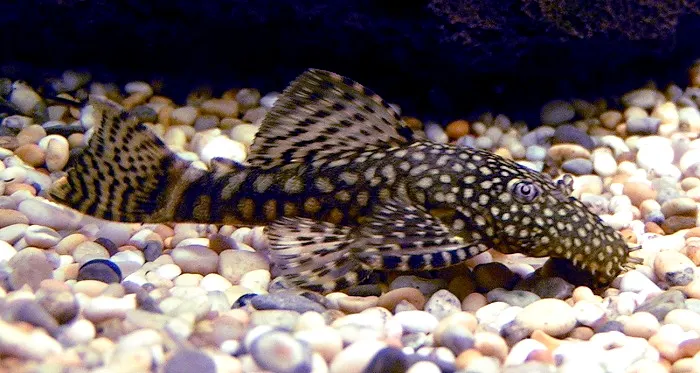
Males wear the bristles, a branched crown on the snout that gives the fish its name. Females may show a few short bristles at the edge of the snout or none at all. The difference matters if you keep more than one. Two adult males in a 20-gallon tank will fight over a cave. One male and one female is the pair that works in the minimum tank. A larger group needs more wood, more caves, and more than 20 gallons.
Bristlenose Pleco the three variables that move outcomes most are water stability, feeding discipline, and careful handling of new stock; these factors drive outcomes more than brand-name products.
Natural Habitat & Origin
Bristlenose plecos originate from South American rivers.
- Native Range: Amazon basin and tributaries throughout South America
- Habitat: Rivers and streams with submerged wood and rocks
- Environment: Areas with driftwood for grazing and hiding
- Behavior: Nocturnal, territorial around caves
Tank Requirements & Setup
Bristlenose plecos are adaptable but have some key needs.
Tank Size
- Minimum: 20 gallons for one
- Pairs/Groups: 30+ gallons with multiple caves
- Footprint: Floor space more important than height
Essential Equipment
- Filter: Good filtration - they produce waste
- Heater: Maintain tropical temperatures
- Lighting: Moderate - they're mostly nocturnal
Decoration (Critical Elements)
- Driftwood: ESSENTIAL - they rasp wood for fiber
- Caves: Multiple hiding spots and breeding sites
- Plants: Won't damage most plants
- Substrate: Any type works
Driftwood is Essential
Bristlenose plecos require driftwood in their diet. The wood fiber aids digestion and provides essential nutrients. Always include driftwood in a bristlenose tank.
Water Parameters
Bristlenose plecos are adaptable to various conditions.
| Parameter | Ideal Range |
|---|---|
| Temperature | 73-81°F (23-27°C) |
| pH | 6.5-7.5 |
| Ammonia | 0 ppm |
| Nitrite | 0 ppm |
| Nitrate | <30 ppm |
| Hardness (GH) | 4-15 dGH |
Diet & Feeding
Bristlenose plecos are primarily herbivores: Your aquatic veterinarian and experienced Bristlenose Pleco owners can offer perspective tailored to your situation.
Primary Foods
- Algae Wafers: Staple diet, feed after lights out
- Vegetables: Blanched zucchini, cucumber, spinach, peas
- Driftwood: Essential for fiber
- Tank Algae: Will graze but need supplemental feeding
- Occasional Protein: Bloodworms, brine shrimp (small amounts)
Feeding Guidelines
- Feed after lights out (nocturnal)
- Don't rely solely on tank algae
- Vegetables 2-3 times per week
- Remove uneaten vegetables after 24 hours
Popular Bristlenose Varieties
- Common/Brown: Mottled brown coloration
- Albino: Pale white/yellow with red eyes
- Super Red: Orange-red coloration
- Longfin: Extended flowing fins
- Starlight: Dark with white spots
- Calico: Patchy coloration
Behavior & Temperament
- Nocturnal: Most active at night
- Peaceful: Won't bother other fish
- Territorial: Males defend caves, especially when breeding
- Algae Grazer: Constantly rasping surfaces
- Hardy: Tolerant of various conditions
The diet is herbivore and omnivore. They rasp biofilm and soft algae, and they need real driftwood in the tank. Ancistrus chew wood. A tank with no wood and a diet of fish flakes produces a thin pleco that spends the night on the glass looking for something that is not there. Blanched zucchini, a sinking algae wafer, and the wood itself are the staple. They are not a solution for every algae type. Black beard algae is mostly ignored. Green film and diatoms are what they actually reduce.
Temperament is peaceful toward fish they cannot fit in the mouth. Fry and tiny shrimp are not safe once the pleco is grown. They are nocturnal. A fish you never see during the day is behaving normally if the glass is rasped clean by morning and the belly is round. A bristlenose parked on the heater, breathing hard, is not shy. Check the water before you decide it is hiding. They produce more waste than a fish of 5 inches looks like it should, and a 20-gallon tank with only a small hang-on-back filter will show it.
Ten to 15 years means the cute juvenile is a long resident. Breeding is straightforward once a male owns a cave. He guards the eggs and the fry. If you did not plan on young plecos, give him a cave anyway, because a male with nowhere to sit becomes the fish that shoves the female around the tank. Care level is easy if the wood is present and the filter is honest. It is not easy if the animal was bought to replace maintenance in a tank that is already overstocked.
Applying breed history to daily decisions — what to feed, how much to exercise, how to structure enrichment — consistently improves long-term health trajectories.
Compatibility with Other Fish
People often underestimate how much this piece of a Bristlenose Pleco's routine influences later health outcomes.
Compatible Tank Mates
- Most community fish
- Tetras, rasboras, barbs
- Corydoras catfish
- Livebearers
- Cichlids (most peaceful species)
- Angelfish
- Gouramis
Incompatible Species
- Other territorial plecos (may fight)
- Very aggressive fish
Breeding Information
Bristlenose plecos breed readily in home aquariums: Generic guidance is a floor; it is the Bristlenose Pleco-specific nuance that raises the ceiling on outcomes.
- Sexing: Males have large bristles on snout, females have smaller or none
- Cave Breeding: Male cleans and guards a cave
- Spawning: Female lays eggs in cave, male fertilizes
- Eggs: 20-200 orange eggs in clusters
- Paternal Care: Male guards and fans eggs
- Hatching: 4-10 days
- Fry Care: Fry absorb yolk sac, then eat algae, blanched vegetables
Ich
- Symptoms: White spots
- Treatment: Raise temperature, ich medication (watch dosing for plecos)
Malnutrition
- Symptoms: Sunken belly, dull color
- Causes: Not enough food, missing driftwood
- Treatment: Varied diet, add driftwood
Bloat
- Symptoms: Swollen abdomen
- Causes: Overfeeding protein, constipation
- Treatment: Fast, then fiber-rich vegetables
Bristlenose Pleco Essentials
Aquarium Co-Op - Quality algae wafers & driftwood | Seachem - Water treatment | API Test Kit - Water monitoring
Is This Fish Right for You?
Generic guidance is a floor; it is the Bristlenose Pleco-specific nuance that raises the ceiling on outcomes.
Bristlenose Plecos Are Great For:
- Algae control in community tanks
- Those wanting a manageable-sized pleco
- Beginner fishkeepers
- Those interested in breeding plecos
- Most community aquarium setups
Bristlenose Plecos May Not Be Ideal For:
- Tanks without driftwood
- Very small tanks (under 20 gallons)
- Those expecting plecos to survive on algae alone
Fishkeeping is one of those hobbies where patience pays dividends. Rushing to add a Bristlenose Pleco to a new tank, skipping the cycling process, or cutting corners on filtration leads to predictable problems.
Cost of Ownership
Related Species
- Common Pleco - Much larger alternative
- Corydoras - Other peaceful bottom dwellers
- Kuhli Loach - Another bottom-dwelling option
- Angelfish - Compatible tank mate
Ask Our AI About Bristlenose Plecos
Have specific questions about bristlenose pleco care, breeding, or diet? Our AI assistant can provide personalized guidance.
Get Personalized AI Guidance
Ask Our AI NowDecision Guides for Bristlenose Pleco
Use these only when comparing food, insurance, ownership budget, or beginner fit for this specific pet.
Bristlenose plecos, Ancistrus, stay around 4 to 5 inches and need driftwood to rasp, a cave for the male, and wafers plus vegetables. A common pleco sold as a small algae eater is a different animal that grows past a foot and a half. Males guard eggs in the cave.