Goby
This page is educational reference material for preparing questions. A licensed veterinarian examines the animal, makes the diagnosis, and sets the treatment.
Affiliate links may earn a commission. Affiliate disclosure.
Quick Facts
| Attribute | Details |
|---|---|
| Scientific Name | Gobiidae family (various genera) |
| Origin | Tropical seas worldwide |
| Size | 1-6 inches (2.5-15 cm) depending on species |
| Lifespan | 3-8 years |
| Temperature | 72-82°F (22-28°C) |
| pH | 8.1-8.4 |
| Tank Size | 10-55+ gallons (species dependent) |
| Care Level | Easy to Moderate |
| Diet | Carnivore (most species) |
| Temperament | Peaceful |
Recommended for Gobies
Chewy - Marine foods & frozen varieties | Petco - Reef aquarium supplies | PetSmart - Sand & substrate options
Overview
Gobies are one of the largest fish families, with thousands of species ranging from tiny nano fish to robust sand-sifters. They're beloved in the marine aquarium hobby for their peaceful nature, interesting behaviors, and symbiotic relationships with pistol shrimp. Many species are perfect for nano reefs and beginner marine tanks.
From the hovering firefish to the industrious sand-sifting gobies, this diverse group offers something for every aquarist. Their small size, hardy nature, and entertaining behaviors make them staples in reef aquariums worldwide.
Goby, on a marine label, is the family Gobiidae, not one fish. The animals in the trade run from about 1 inch to 6 inches and live 3 to 8 years, in tanks from 10 gallons up past 55, depending on the species. They need 72 to 82°F, pH 8.1 to 8.4, and specific gravity 1.020 to 1.025. Most of them are carnivores. Temperament is generally peaceful. Care runs from easy to moderate. The spread is the point. A neon goby and a sand-sifting goby do not share a care sheet just because both perch on their pelvic fins.
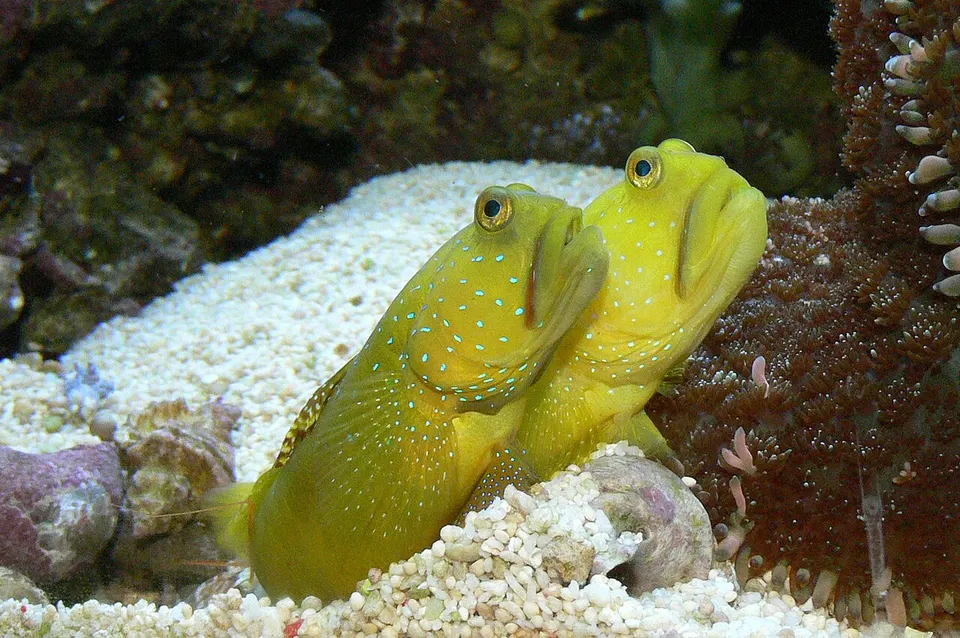
Watchman gobies, the Cryptocentrus and related fish, pair with a pistol shrimp. The shrimp digs. The goby watches. A watchman in a tank with no shrimp and no deep sand will sit in a PVC pipe and never show you the behavior you bought it for. Give them a sand bed several inches deep and a rubble pile the shrimp can brace. Do not put two pistol-shrimp pairs on top of each other in a 10-gallon tank. The shrimp will fight, and the gobies will have no burrow left.
Neon gobies and their Elacatinus relatives are the small cleaners. They pick at fish and they also need frozen foods and small pellets. They are a poor choice as the only cleaner in a tank full of ich, and they are a good choice as a small peaceful fish in a reef that already has a lid. They jump less than a firefish, and they still fit through a hole around a cable. A 10-gallon minimum can hold a neon goby and should not also hold a hawkfish that eats shrimp and small gobies.
Natural Habitat
Gobies inhabit diverse marine environments.
- Range: Tropical and temperate seas worldwide
- Environment: Sand flats, coral reefs, rubble zones
- Behavior: Bottom-dwelling; many burrow or hover near substrate
- Symbiosis: Many species partner with pistol shrimp
Popular Species
Many goby species are kept in aquariums.
- Firefish Goby (Nemateleotris magnifica): White/red gradient; hovers mid-water; 3 inches
- Yellow Watchman Goby (Cryptocentrus cinctus): Yellow; pairs with pistol shrimp; 4 inches
- Diamond Goby (Valenciennea puellaris): Sand-sifter; 6 inches; keeps sand clean
- Clown Goby (Gobiodon spp.): Tiny at 1.5 inches; lives in coral branches
- Neon Goby (Elacatinus oceanops): Blue stripe; cleaner fish; 2 inches
- Engineer Goby (Pholidichthys leucotaenia): Eel-like; burrows; 13 inches
Tank Requirements
Requirements vary by species type.
- Tank Size: 10 gallons for tiny species; 30-55+ for sand-sifters
- Reef Safe: Most species are completely reef safe
- Substrate: Fine sand essential for sand-sifting species
- Burrows: Provide caves or allow room for burrow construction
- Lid: Essential for firefish and other jumpers
- Filtration: Standard reef filtration
Water Parameters
Standard marine water quality: Leaning into Goby-specific detail, instead of one-size-fits-all advice, consistently yields better results.
| Parameter | Ideal Range |
|---|---|
| Temperature | 72-82°F (22-28°C) |
| pH | 8.1-8.4 |
| Salinity | 1.020-1.025 SG |
| Ammonia | 0 ppm |
| Nitrite | 0 ppm |
| Nitrate | <20 ppm |
Diet & Feeding
Most gobies are carnivorous.
- Staple Food: Frozen mysis shrimp, brine shrimp
- Prepared Foods: Marine pellets (some species accept these)
- Live Foods: Copepods, amphipods from refugiums
- Sand-Sifters: Filter food from sand; need active sand beds
- Feeding Challenge: Some are shy feeders; target feed if needed
Feeding Schedule: Feed 2 times daily; small amounts.
Proper nutrition for Goby requires understanding not just what to feed, but how feeding strategies affect health, behavior, and water quality. A disciplined approach to feeding, where your Goby receives the right amount of appropriate food at consistent intervals, is one of the most impactful things you can do for both the fish and the overall aquarium ecosystem.
Diet variety is essential for optimal Goby health because no single commercial food provides the complete nutritional profile these fish require. Observing your Goby's response to different food types also provides useful health information, as reduced interest in normally preferred foods is often an early indicator of illness.
Goby-Shrimp Symbiosis
One of the most fascinating behaviors in marine aquariums: Your aquatic veterinarian and experienced Goby owners can offer perspective tailored to your situation.
- Partners: Watchman gobies pair with pistol shrimp
- Relationship: Shrimp digs/maintains burrow; goby acts as lookout
- Communication: Goby alerts shrimp to danger via tail signals
- Observation: Fascinating to watch their partnership
- Pairing: Not all goby/shrimp combinations work; research compatibility
Behavior & Personality
Gobies display varied behaviors.
- Bottom Dwellers: Most stay near substrate
- Hovering: Firefish hover mid-water near bolt holes
- Burrowing: Many excavate and maintain burrows
- Sand-Sifting: Some continuously filter sand for food
- Timid: Many are shy initially; need hiding spots
- Jumping: Firefish especially are notorious jumpers
Sand-sifting gobies, Valenciennea and similar genera, eat tiny animals out of the sand. They starve on a bare glass bottom under a layer of sugar-sized sand that has no life in it, and they starve in a new tank. They also shovel sand onto corals and into overflows. A mature deep sand bed and regular frozen food, offered where the goby is actually sifting, is the combination that keeps one alive. The carnivore line on this card is doing real work. An algae wafer meant for a snail does not feed these fish.
Three to 8 years covers a small cleaner that lives a shorter life and a larger watchman that can pass half a decade if the burrow stays intact. Moderate care is the sand-sifter and the shrimp pair. Easy care is a neon goby in a stable reef with a lid and a little meaty food. Read the species on the tag before you trust the family name. A goby is not a blenny, it does not scrape film algae for a living, and it should not be bought to replace a lawnmower that starved.
Feeding behavior in Goby reveals much about their ecological role and can be leveraged by keepers to promote natural behaviors and reduce aggression. Observing when, where, and how your Goby feeds provides diagnostic information about their comfort level, health status, and social standing. Many successful Goby keepers use varied feeding strategies including target feeding, scatter feeding, and enrichment feeders to promote natural foraging behaviors and reduce competition-related stress.
Compatibility
Gobies are peaceful community fish: Your aquatic veterinarian and experienced Goby owners can offer perspective tailored to your situation.
Compatible Tank Mates
- Most peaceful reef fish
- Clownfish, chromis, anthias
- Blennies (usually)
- Wrasses (non-aggressive species)
- Corals and invertebrates
- Pistol shrimp (for watchman types)
Incompatible Species
- Aggressive fish that bully them
- Other gobies of same species (usually)
- Large predatory fish
- Very competitive feeders (may outcompete shy gobies)
Breeding
Some gobies breed readily in aquariums: Your aquatic veterinarian and experienced Goby owners can offer perspective tailored to your situation.
- Neon Gobies: Relatively easy to breed
- Clown Gobies: Can spawn in aquariums
- Spawning: Usually in burrows or on surfaces
- Male Care: Males typically guard eggs
- Larvae: Small; require rotifers and phytoplankton
Common Health Issues
Gobies are generally hardy: Your aquatic veterinarian and experienced Goby owners can offer perspective tailored to your situation.
- Marine Ich: Common parasite; quarantine prevents introduction
- Jumping: Many species jump; secure lids essential
- Starvation: Shy feeders may not compete well for food
- Stress: From lack of hiding spots or aggression
- Sand-Sifter Issues: May starve in tanks without sufficient sand fauna
Health & Tank Products
Chewy - Frozen marine foods | Petco - Fine sand substrates | 1-800-PetMeds - Fish medications
The foundation of Goby health management is water quality — full stop. Regular testing and diligent maintenance are your best tools.
Recognizing early signs of disease in Goby requires a trained eye and consistent observation. Establishing a daily observation routine—even just a few minutes of focused attention during feeding—helps you develop a baseline understanding of what normal behavior looks like for your specific Goby, making deviations immediately apparent.
Quarantine protocols represent one of the most impactful health management practices available to Goby keepers. This single practice prevents the majority of disease outbreaks in established aquariums and is considered essential by virtually all experienced Goby keepers.
Is This Fish Right for You?
Of the many small parts of Goby care, this is the one households most often postpone and most often regret postponing.
Gobies Are Great For:
- Reef aquarium enthusiasts
- Nano reef keepers (smaller species)
- Those wanting the goby-shrimp symbiosis
- Peaceful community tanks
Gobies May Not Be Ideal For:
- Tanks without tight-fitting lids (jumpers)
- Aggressive fish communities
- Bare-bottom tanks (for sand-sifters)
- Highly competitive feeding environments
The question to ask yourself is not whether you can keep a Goby alive, but whether you can keep one thriving. If you are willing to invest in those consistently, you and your Goby will both benefit.
Cost of Ownership
Goby consistent chemistry, controlled feeding, and deliberate quarantine sit at the centre of sustained aquatic welfare; these factors drive outcomes more than brand-name products.
The true cost of keeping Goby extends well beyond the initial purchase price and basic equipment. Many aspiring Goby keepers underestimate these ongoing costs, which can lead to cut corners that ultimately compromise fish health and result in even greater expenses. A realistic budget that accounts for both routine maintenance and occasional replacement of equipment provides a more accurate picture of what Goby keeping actually costs.
Heaters, filters, lights, and pumps all have finite lifespans, and their failure—particularly heater or filter failure—can have catastrophic consequences for Goby if not addressed promptly. Many experienced Goby keepers also invest in battery-operated air pumps and backup heaters as insurance against power outages, which can be lethal to tropical species within hours depending on ambient room temperature.
The cost-benefit analysis of quality versus budget equipment deserves careful consideration for Goby keepers. This is particularly true for Goby, where the animals themselves, along with any tank mates, plants, and established biological filtration, represent a significant investment of both money and time that is worth protecting with reliable equipment.
Related Species
If you're interested in Gobies, you might also consider.
- Blenny - Similar bottom-dwelling lifestyle
- Dottyback - Bold reef fish
- Blue Green Chromis - Peaceful reef fish
- Wrasse - Active reef companions
Ask Our AI About Gobies
Have specific questions about Goby species, shrimp pairing, or care? Our AI assistant can provide personalized guidance.
Get Personalized AI Guidance
Ask Our AI NowDecision Guides for Goby
Use these only when comparing food, insurance, ownership budget, or beginner fit for this specific pet.