Blue Green Chromis
This page is educational reference material for preparing questions. A licensed veterinarian examines the animal, makes the diagnosis, and sets the treatment.
Affiliate links may earn a commission. Affiliate disclosure.
Quick Facts
| Attribute | Details |
|---|---|
| Scientific Name | Chromis viridis |
| Origin | Indo-Pacific, Red Sea |
| Size | 3-4 inches (8-10 cm) |
| Lifespan | 8-15 years |
| Temperature | 72-82°F (22-28°C) |
| pH | 8.1-8.4 |
| Tank Size | 30+ gallons |
| Care Level | Easy |
| Diet | Omnivore |
| Temperament | Peaceful, Schooling |
Recommended for Blue Green Chromis
Chewy - Marine flakes & pellets | Petco - Saltwater aquarium supplies | PetSmart - Reef equipment
Overview
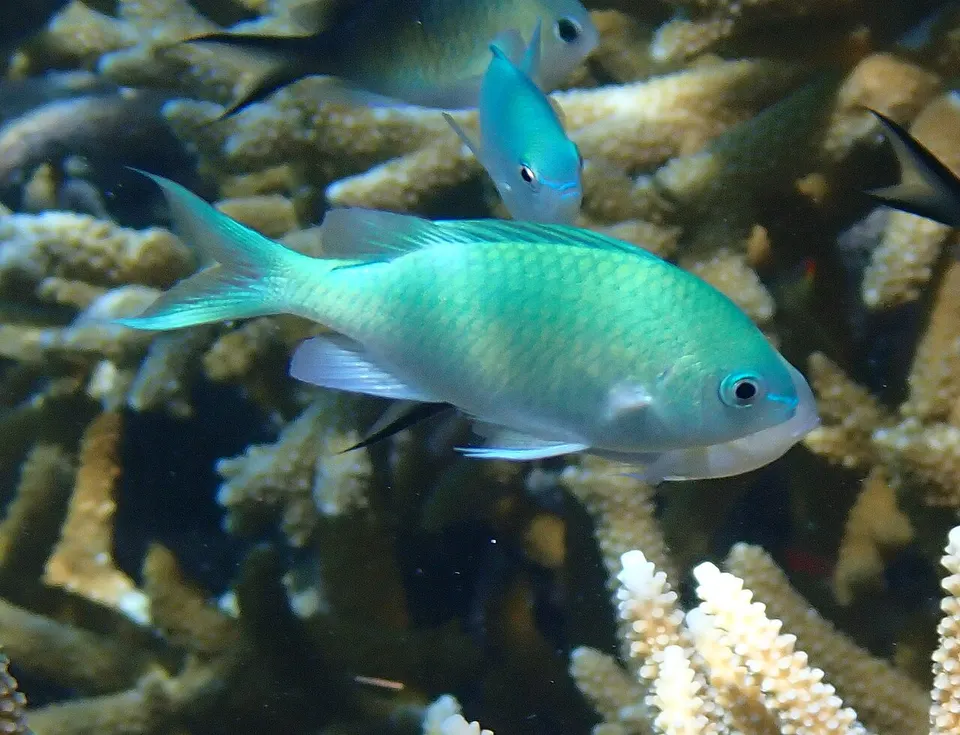
The Blue Green Chromis (also known as the Green Chromis) is one of the most popular and beginner-friendly saltwater fish in the hobby. Their peaceful nature, hardiness, stunning iridescent blue-green coloration, and active schooling behavior make them perfect for both reef aquariums and fish-only setups.
These damselfish are an exception to the typically aggressive damselfish family, remaining peaceful throughout their lives. They're often recommended as "starter" fish for cycling new marine aquariums due to their hardiness, though fishless cycling is preferred.
Blue green chromis are Chromis viridis, a damselfish from Indo-Pacific reefs and the Red Sea. Adults reach 3 to 4 inches and the lifespan line is 8 to 15 years, which is long for a fish people treat as a cheap school. They need 72 to 82°F, pH 8.1 to 8.4, specific gravity 1.020 to 1.025, and a tank of at least 30 gallons. Nitrate under 20 ppm, with ammonia and nitrite at 0 ppm, keeps the color from muddying. They are peaceful schooling fish, and a single animal is the wrong social unit.
On the reef they hang above coral heads and pick zooplankton from the current. In a tank that means a small marine pellet and frozen mysis or brine shrimp, not a diet of nori meant for a tang. They are omnivores, so an algae-based flake can be part of the rotation, but meaty frozen food is what puts weight on a fish that arrived thin from a wholesale system. Feed them where the school is, in the open water, or the food hits the sand and the wrasses get it.
Color is the husbandry tell. A healthy school reads blue-green and shifts as the fish turn. A chromis that has gone olive-brown is stressed, underfed, kept alone, or sitting in rising nitrate. The change is easy to blame on the light. It is usually the group size or the water. Buy at least six, and buy them together. A pair will harass a third fish that was added a month later. The peaceful label assumes a real school with enough room to spread out over the rock.
Natural Habitat
Blue Green Chromis are found throughout tropical waters: Your aquatic veterinarian and experienced Blue Green Chromis owners can offer perspective tailored to your situation.
- Range: Indo-Pacific region, Red Sea, and East Africa to French Polynesia
- Environment: Coral reefs, typically in large schools above branching corals
- Depth: Usually 1-12 meters (3-40 feet)
- Behavior: Form large aggregations above coral heads for protection
Tank Requirements
Blue Green Chromis are relatively easy to house: Your aquatic veterinarian and experienced Blue Green Chromis owners can offer perspective tailored to your situation.
- Tank Size: Minimum 30 gallons for a small school (3-5 fish)
- Reef Safe: 100% reef safe; won't harm corals or invertebrates
- Rockwork: Provide coral branches or rock formations for shelter
- Swimming Space: Need open water column for schooling
- Filtration: Standard reef/marine filtration; protein skimmer recommended
- Lighting: Any; adapt to various lighting conditions
Water Parameters
Maintain stable marine water quality: Your aquatic veterinarian and experienced Blue Green Chromis owners can offer perspective tailored to your situation.
| Parameter | Ideal Range |
|---|---|
| Temperature | 72-82°F (22-28°C) |
| pH | 8.1-8.4 |
| Salinity | 1.020-1.025 SG |
| Ammonia | 0 ppm |
| Nitrite | 0 ppm |
| Nitrate | <20 ppm |
Diet & Feeding
Blue Green Chromis are easy to feed.
- Staple Food: High-quality marine flakes or pellets
- Frozen Foods: Mysis shrimp, brine shrimp, chopped seafood
- Live Foods: Copepods, brine shrimp (occasional treat)
- Variety: Varied diet maintains health and coloration
- Feeding Style: Mid-water feeders; catch food as it floats
Feeding Schedule: Feed 2-3 times daily; small amounts they consume in 2 minutes.
Proper nutrition for Blue Green Chromis requires understanding not just what to feed, but how feeding strategies affect health, behavior, and water quality. A disciplined approach to feeding, where your Blue Green Chromis receives the right amount of appropriate food at consistent intervals, is one of the most impactful things you can do for both the fish and the overall aquarium ecosystem.
Diet variety is essential for optimal Blue Green Chromis health because no single commercial food provides the complete nutritional profile these fish require. Observing your Blue Green Chromis's response to different food types also provides useful health information, as reduced interest in normally preferred foods is often an early indicator of illness.
Behavior & Social Structure
Blue Green Chromis are active schooling fish: Health and behavior metrics for a Blue Green Chromis. A blue-green chromis is a schooling marine damselfish. One fish in a nano tank is the wrong plan. They need a group, swimming room, and stable saltwater parameters. They are hardy for a marine fish and they still die in a new, uncycled tank. Aggression shows up if the group is too small or the tank is too short. Buy the school, quarantine them, and do not add them to a tank that is still cycling.
- Schooling: Best kept in groups of 5+ for natural behavior
- Peaceful: Non-aggressive toward other species
- Active: Constantly swimming in open water
- Hierarchy: Establish pecking order within the school
- Attrition: Numbers may dwindle over time due to aggression within the group
School Dynamics
Blue Green Chromis can be aggressive toward each other, and weaker individuals may be bullied to death over time. Start with larger groups (6+) and provide ample space and hiding places. This is normal damselfish behavior despite their generally peaceful reputation.
They are reef-safe in the ordinary sense. They do not eat coral or ornamental shrimp. They do jump when the school spooks, so the lid or the mesh screen has to be on. A 30-gallon tank holds a small group and gets tight once the fish are a full 4 inches and sharing the rock with larger fish. They occupy the upper half of the tank. A goby on the sand and a chromis school above it is a better split than two midwater species fighting for the same open water.
Eight to 15 years is the part the price tag leaves out. A two-dollar fish that lives a decade still needs a stable reef for that decade. Replace losses in the school promptly. A chromis left alone after its group dies does not become a centerpiece. It fades, hides, and stops eating. If the shop tank has one brilliant fish and five pale ones, the pale ones are the husbandry lesson, not a bargain.
Feeding behavior in Blue Green Chromis reveals much about their ecological role and can be leveraged by keepers to promote natural behaviors and reduce aggression. Observing when, where, and how your Blue Green Chromis feeds provides diagnostic information about their comfort level, health status, and social standing. Many successful Blue Green Chromis keepers use varied feeding strategies including target feeding, scatter feeding, and enrichment feeders to promote natural foraging behaviors and reduce competition-related stress.
Compatibility
Blue Green Chromis are excellent community fish.
Compatible Tank Mates
- Clownfish
- Tangs (in larger tanks)
- Wrasses
- Gobies and blennies
- Angelfish (dwarf and larger)
- Most reef-safe fish
- All corals and invertebrates
Incompatible Species
- Highly aggressive fish (aggressive damsels, triggers)
- Large predatory fish that may eat them
- Fish that compete aggressively for the same space
Breeding
Breeding Blue Green Chromis is possible but challenging.
- Spawning: Males prepare nest sites on rock or rubble
- Courtship: Males display and attract females to nest
- Eggs: Female deposits eggs; male guards and fans them
- Hatching: Eggs hatch in 2-3 days
- Fry Challenge: Larvae are tiny and difficult to raise; require rotifers
Common Health Issues
Blue Green Chromis are hardy but can experience: Households that bother to read up on the Blue Green Chromis's natural tendencies usually build deeper trust with the animal too.
- Marine Ich: Common parasite; quarantine new fish
- Velvet: Another parasite; appears as gold dust
- Aggression Stress: From bullying within the school
- Nutritional Issues: Fading color from poor diet
- Bacterial Infections: Usually secondary to stress or injury
Health & Marine Supplies
Chewy - Marine fish foods | Petco - Salt mixes & test kits | 1-800-PetMeds - Fish medications
Keeping a Blue Green Chromis healthy means prioritizing water quality above everything else.
Recognizing early signs of disease in Blue Green Chromis requires a trained eye and consistent observation. Establishing a daily observation routine—even just a few minutes of focused attention during feeding—helps you develop a baseline understanding of what normal behavior looks like for your specific Blue Green Chromis, making deviations immediately apparent.
Quarantine protocols represent one of the most impactful health management practices available to Blue Green Chromis keepers. This single practice prevents the majority of disease outbreaks in established aquariums and is considered essential by virtually all experienced Blue Green Chromis keepers.
Blue Green Chromis Are Great For:
- Beginner marine aquarists
- Reef aquarium setups
- Those wanting active schooling fish
- Peaceful community marine tanks
Blue Green Chromis May Not Be Ideal For:
- Very small tanks (under 30 gallons)
- Those wanting to keep just 1-2 fish
- Tanks with aggressive species
- Those unprepared for some attrition in the school
Aquarium keeping is a hobby of specifics, and Blue Green Chromis is no exception.
If you can commit to the maintenance schedule and the initial investment in proper equipment, a Blue Green Chromis is likely to reward you with an engaging, long-term addition to your aquarium.
Cost of Ownership
Your actual costs for Blue Green Chromis care will depend on where you live, your animal's health, and the choices you make.
The true cost of keeping Blue Green Chromis extends well beyond the initial purchase price and basic equipment. Many aspiring Blue Green Chromis keepers underestimate these ongoing costs, which can lead to cut corners that ultimately compromise fish health and result in even greater expenses. A realistic budget that accounts for both routine maintenance and occasional replacement of equipment provides a more accurate picture of what Blue Green Chromis keeping actually costs.
Heaters, filters, lights, and pumps all have finite lifespans, and their failure—particularly heater or filter failure—can have catastrophic consequences for Blue Green Chromis if not addressed promptly. Many experienced Blue Green Chromis keepers also invest in battery-operated air pumps and backup heaters as insurance against power outages, which can be lethal to tropical species within hours depending on ambient room temperature.
The cost-benefit analysis of quality versus budget equipment deserves careful consideration for Blue Green Chromis keepers. This is particularly true for Blue Green Chromis, where the animals themselves, along with any tank mates, plants, and established biological filtration, represent a significant investment of both money and time that is worth protecting with reliable equipment.
Related Species
If you're interested in Blue Green Chromis, you might also consider.
- Dottyback - Colorful but more aggressive
- Goby - Peaceful bottom dwellers
- Blenny - Characterful reef fish
- Wrasse - Active, colorful reef fish
Ask Our AI About Blue Green Chromis
Have specific questions about Blue Green Chromis care, tank setup, or compatibility? Our AI assistant can provide personalized guidance.
Get Personalized AI Guidance
Blue Green Chromis three disciplines determine outcomes: keeping parameters stable, measuring feed portions, and quarantining new livestock thoroughly; these factors drive outcomes more than brand-name products.
Ask Our AI NowDecision Guides for Blue Green Chromis
Use these only when comparing food, insurance, ownership budget, or beginner fit for this specific pet.