Endler's Livebearer
This page is educational reference material for preparing questions. A licensed veterinarian examines the animal, makes the diagnosis, and sets the treatment.
Affiliate links may earn a commission. Affiliate disclosure.
Quick Facts
| Attribute | Details |
|---|---|
| Scientific Name | Poecilia wingei |
| Origin | Venezuela (Laguna de Patos) |
| Size | Males: 1 inch, Females: 1.5 inches (2.5-4 cm) |
| Lifespan | 2-3 years |
| Temperature | 72-82°F (22-28°C) |
| pH | 7.0-8.5 |
| Tank Size | 5+ gallons (10+ recommended) |
| Care Level | Easy |
| Diet | Omnivore |
| Temperament | Peaceful, Active |
Recommended for Endler's Livebearers
Chewy - Quality flake foods | Petco - Nano aquarium kits | PetSmart - Live plants & supplies
Overview
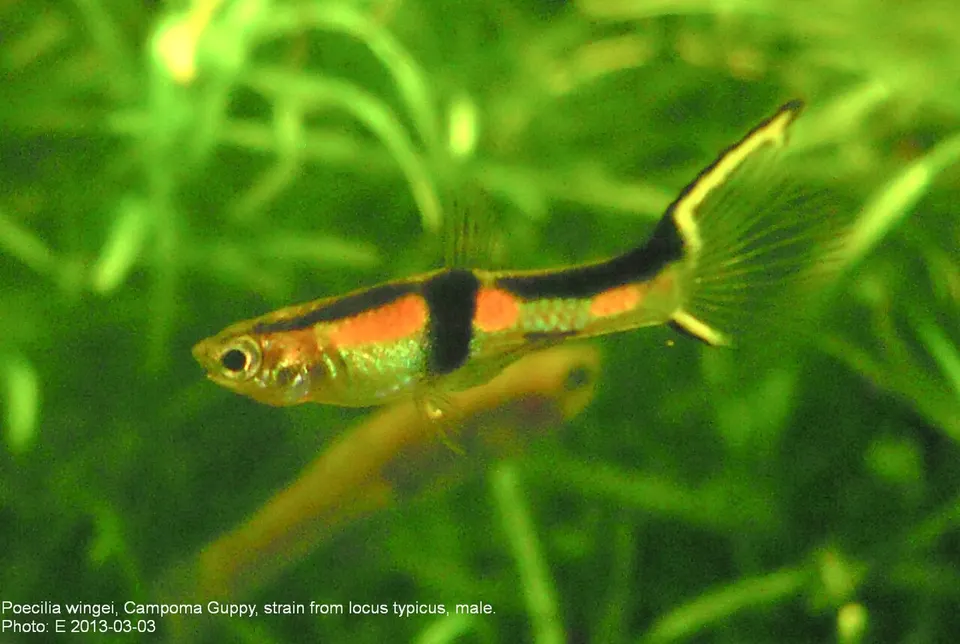
Endler's Livebearers are small, brilliantly colored fish closely related to guppies. Named after Dr. John Endler who discovered them in the 1970s, these tiny jewels display some of the most vibrant colors found in freshwater fish, with males showing stunning patterns of orange, black, green, and metallic colors.
Their small size, peaceful nature, hardiness, and prolific breeding make them perfect for nano aquariums and beginner fishkeepers. Pure Endlers (N-class) are increasingly rare, while hybrids with guppies are common in the trade.
Endler's livebearers are Poecilia wingei, a small poeciliid from Laguna de Patos in Venezuela. Males reach about 1 inch, females about 1.5 inches, and they live 2 to 3 years. The card allows 5 gallons and recommends 10 or more. They want 72 to 82°F, pH 7.0 to 8.5, and hard water, 10 to 25 dGH. They are peaceful, active omnivores, and they are easy only if you have already decided what to do with the fry and whether any guppies live in the same house.
They hybridize with guppies. A male guppy in an Endler tank, or a female Endler in a guppy tank, will produce crosses, and the line stops being Poecilia wingei. If you care about keeping the species, the two fish do not share a tank, a net, or a fry grow-out tub. If you do not care, the hybrids are still livebearers and they will still fill the tank. The color on a male Endler is smaller and tighter than a fancy guppy's tail. A huge delta tail on a fish sold as an Endler is a hint that guppy is already in the background.
Endler's Livebearer the three variables that move outcomes most are water stability, feeding discipline, and careful handling of new stock; these factors drive outcomes more than brand-name products.
Natural Habitat
Endler's Livebearers have a very limited natural range: Your aquatic veterinarian and experienced Endler Livebearer owners can offer perspective tailored to your situation.
- Location: Laguna de Patos and surrounding areas in Venezuela
- Environment: Warm, hard, algae-rich water
- Status: Critically endangered in the wild due to pollution
- Conservation: Aquarium populations help preserve the species
Classification
Endlers are classified by purity.
- N-class: Pure Endlers with documented lineage; most valuable
- P-class: Appear pure but lineage unknown
- K-class: Known hybrids with guppies; most common in stores
Tank Requirements
Endlers are adaptable but have preferences.
- Tank Size: Minimum 5 gallons; 10+ gallons for a colony
- Plants: Heavily planted tanks are ideal; provide fry cover
- Filtration: Gentle filtration; sponge filters ideal
- Water Flow: Low to moderate
- Substrate: Any; sand or gravel
- Lid: Recommended; they can jump
Water Parameters
Endlers prefer hard, alkaline water: Your aquatic veterinarian and experienced Endler Livebearer owners can offer perspective tailored to your situation.
| Parameter | Ideal Range |
|---|---|
| Temperature | 72-82°F (22-28°C) |
| pH | 7.0-8.5 |
| Hardness (GH) | 10-25 dGH |
| Ammonia | 0 ppm |
| Nitrite | 0 ppm |
| Nitrate | <30 ppm |
Diet & Feeding
Endlers are easy to feed omnivores: Your aquatic veterinarian and experienced Endler Livebearer owners can offer perspective tailored to your situation.
- Staple Food: High-quality micro flakes or small pellets
- Live Foods: Baby brine shrimp, daphnia, micro worms
- Frozen Foods: Bloodworms (chopped), brine shrimp
- Vegetables: Blanched spinach, spirulina-based foods
- Algae: Will graze on algae naturally
Feeding Schedule: Feed 2-3 small meals daily; they have tiny stomachs.
If you keep both sexes, give the males cover and keep more females than males. A single female with several males is chased until she is exhausted. Plants at the surface, moss, and a broken line of sight are the cover. One male with two or three females in a 10-gallon tank is a calmer ratio than the reverse. An all-male group avoids fry and still displays. They will spar. In a planted tank the sparring stays visual. In a bare 5-gallon tank it becomes nipping.
Behavior & Social Structure
Endlers are active and entertaining: Your aquatic veterinarian and experienced Endler Livebearer owners can offer perspective tailored to your situation.
- Active: Constantly swimming and exploring
- Peaceful: Non-aggressive toward all tank mates
- Displaying: Males constantly display to females and each other
- Shoaling: Best kept in groups; recommended 1 male to 2-3 females
- Surface Oriented: Often found near the surface
They are livebearers, and a female can drop a brood every month. Five gallons fills up. The fry are large enough to survive in the plants if the adults are well fed, which means the population problem arrives even when you were not trying to breed them. Have a plan before the first brood, not after the twentieth fry is hiding in the moss. Feed a small flake, a vegetable-based flake, and frozen brine shrimp. Hard water and a varied omnivore diet keep the males colored. Soft, acidic blackwater is the wrong tank. That water is for the tetras, not for this fish.
Two to 3 years is the life, and it is easy to spend it looking at a tank of hybrids you did not mean to make. Buy from someone who keeps them away from guppies if the species matters to you. Nitrate under 30 ppm is the ceiling on this card. A crowded livebearer tank hits it. Easy care assumes you will change water as the biomass climbs, and that you will not add them to a betta bowl and call a 5-gallon minimum a bowl. They are active. They need the length of a real small tank, a lid, and more females than males whenever both sexes are present.
Compatibility
Endlers work well in peaceful community setups: Your aquatic veterinarian and experienced Endler Livebearer owners can offer perspective tailored to your situation.
Compatible Tank Mates
- Small tetras (Ember, Neon)
- Corydoras catfish
- Otocinclus
- Small rasboras
- Peaceful shrimp (Cherry, Amano)
- Snails
Incompatible Species
- Guppies (will hybridize; ruins pure lines)
- Large or aggressive fish
- Fin nippers
- Fish that eat fry (unless population control desired)
Hybridization Warning
Do not keep Endlers with guppies if you want to maintain pure Endler lines. They will readily interbreed, producing hybrids. Keep species separate for pure breeding.
Breeding
Endlers are prolific livebearers.
- Ease: One of the easiest fish to breed; happens automatically
- Gestation: 23-24 days
- Fry Count: 5-25 fry per brood
- Frequency: Can give birth every 3-4 weeks
- Fry Care: Fry are free-swimming immediately; feed crushed flakes or baby brine shrimp
- Fry Survival: Good survival in planted tanks; parents rarely eat fry
Common Health Issues
Endlers are hardy but can experience: Your aquatic veterinarian and experienced Endler Livebearer owners can offer perspective tailored to your situation.
- Ich: Common parasite; treat with temperature increase and medication
- Fin Rot: Usually from poor water quality
- Wasting Disease: Internal parasites; quarantine new fish
- Dropsy: Often bacterial; difficult to treat
- Genetic Issues: Inbreeding can cause problems; diversify lines
Health & Care Products
Chewy - Quality foods & supplements | Petco - Water treatments | 1-800-PetMeds - Fish medications
Keeping an Endler Livebearer healthy means prioritizing water quality above everything else.
Is This Fish Right for You?
Endler Livebearer ownership rewards steady, informed choices more than heroic ones; the repeatable pattern is what produces the outcomes. Small tweaks based on how your Endler Livebearer actually reacts usually beat rigid adherence to a template.
Endler's Livebearers Are Great For:
- Beginners to fishkeeping
- Nano aquarium enthusiasts
- Those wanting colorful, active fish
- Hobbyists interested in breeding projects
Endler's Livebearers May Not Be Ideal For:
- Tanks with guppies (hybridization)
- Those who don't want prolific breeding
- Soft, acidic water setups
- Tanks with larger predatory fish
Before committing to an Endler's Livebearer, think less about whether this species is "easy" or "hard" and more about whether your setup matches its specific needs. A species rated as easy can still fail in the wrong environment.
Endler's livebearers hybridize with guppies. If you wanted Poecilia wingei, do not keep them with fancy guppies, or the next generation is a mix and you no longer have the species. Males stay small and colorful. Females are larger and plainer, and they will produce young until the tank is crowded. Give cover for the fry if you want any to survive, and a lid, because they jump. Harder water suits them better than a soft acid tank. They are not a disposable feeder fish, and a hybrid swarm is not a conservation project.
Cost of Ownership
Your actual costs for Endler Livebearer care will depend on where you live, your animal's health, and the choices you make.
Related Species
If you're interested in Endler's Livebearers, you might also consider.
- White Cloud Mountain Minnow - Hardy small fish
- Killifish - Colorful small species
- Pencilfish - Elegant nano fish
- Rosy Barb - Active schooling fish
Ask Our AI About Endler's Livebearers
Have specific questions about Endler care, breeding, or line preservation? Our AI assistant can provide personalized guidance.
When to Seek Help
- Water testing: Before treating for disease, always test water parameters.
Diet and Nutrition Tips
- Primary diet: Feed a high-quality staple food formulated for your Endler's Livebearer's dietary type (herbivore, omnivore, or carnivore). Look for foods with whole ingredients and minimal fillers.
- Variety ensures complete nutrition and encourages natural foraging.
- Feeding frequency: Feed small amounts 1-2 times daily.
- Avoid overfeeding: Overfeeding is the most common nutritional mistake in fishkeeping. It leads to obesity, water pollution, and secondary health problems.
Tank Environment and Stimulation
- Tank size: Always choose a tank that meets or exceeds the minimum recommended size for Endler's Livebearer. Larger tanks are more stable and forgiving of water quality fluctuations.
- Water parameters: Maintain consistent temperature, pH, and hardness levels appropriate for Endler's Livebearer. Test water weekly and perform regular partial water changes.
- Filtration: Use a quality filter rated for your tank size.
- This reduces stress and aggression.
Tank Maintenance Essentials
- Water changes: Perform 20-30% partial water changes weekly.
- Filter maintenance: Rinse filter media in old tank water monthly.
- Algae control: Some algae is normal, but excessive growth indicates nutrient imbalance. Adjust lighting duration and consider adding algae-eating species.
- Water testing: Test ammonia, nitrite, nitrate, and pH at least weekly. Keep a log to track trends and catch problems early.
Living Environment
The habits that matter most in this area take a few weeks to lock in; they hold for the remainder of ownership with minimal maintenance.
- A stable location reduces stress and prevents temperature fluctuations.
- Compatible tankmates: Research compatibility before adding new species. Aggression, different water parameter requirements, and size mismatches are common problems.
- Substrate choice: Select substrate appropriate for your Endler's Livebearer's natural behavior, whether that is sand for digging species or planted substrate for aquascaping.
- Equipment failures can be life-threatening.
Helpful Resources for Endler's Livebearer Owners
Explore More Guides
Get Personalized AI Guidance
An Endler's livebearer is a tiny poeciliid, not a guppy you can neglect, though the two hybridize if you mix them. They need a cycled tank, hard water, and plants, and the females will produce fry if a male is present. They are poor community-tank targets for anything with a mouth big enough to eat them. A heater, a lid, and a group matter more than a fancy color name.
Ask Our AI NowDecision Guides for Endler's Livebearer
Use these only when comparing food, insurance, ownership budget, or beginner fit for this specific pet.
Endlers, Poecilia wingei, are small livebearers from Venezuela. Males stay colorful in a planted tank, and a few females will fill the tank with fry if there is cover. They eat flake and also pick at algae. A crowded tank with no plants and constant fry becomes a water-quality problem within a month.