Dwarf Crayfish (CPO)
This page is educational reference material for preparing questions. A licensed veterinarian examines the animal, makes the diagnosis, and sets the treatment.
Affiliate links may earn a commission. Affiliate disclosure.
Quick Facts
| Attribute | Details |
|---|---|
| Scientific Name | Cambarellus patzcuarensis (Orange) |
| Origin | Mexico (Lake Patzcuaro) |
| Size | 1.5-2 inches (4-5 cm) |
| Lifespan | 2-3 years |
| Care Level | Easy |
| Tank Size | 5+ gallons |
| Temperature | 65-78°F (18-26°C) |
| pH Range | 6.5-8.0 |
| Breeding | Easy in captivity |
Recommended for Dwarf Crayfish
Chewy - Crayfish foods & supplies | Aquarium Co-Op - Small caves & plants | Flip Aquatics - CPO dwarf crayfish
Overview
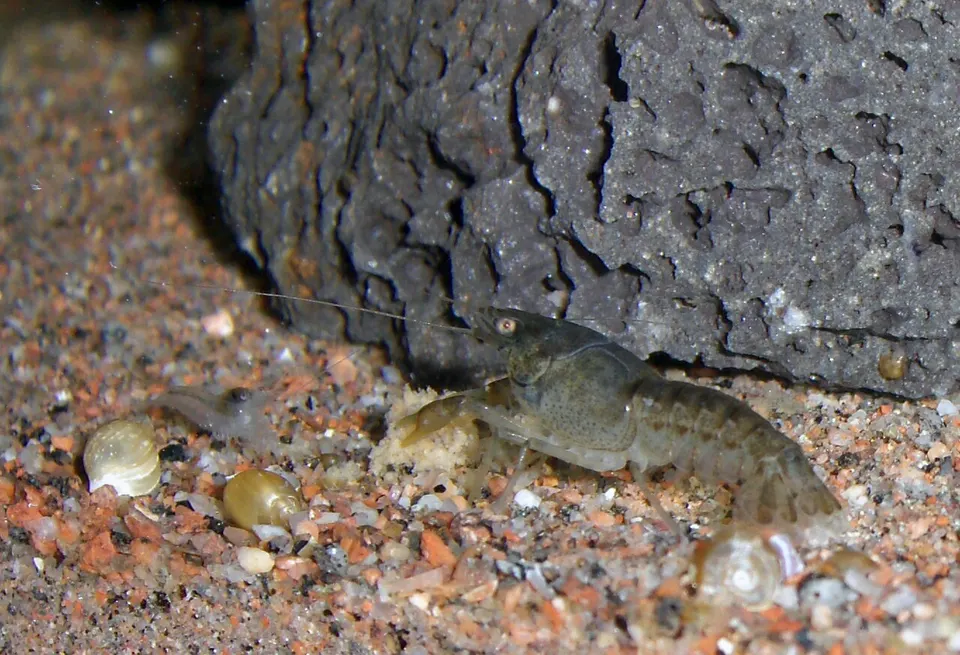
Dwarf Crayfish, commonly called CPO (Cambarellus patzcuarensis "Orange"), are miniature crayfish that offer all the fascinating behavior of their larger cousins in a tiny, more community-friendly package. These adorable crustaceans rarely exceed 2 inches and are far less aggressive than standard crayfish.
The orange color morph is most popular, but dwarf crayfish also come in blue and natural brown varieties. Their small size makes them suitable for nano tanks and planted aquariums, and they're one of the few crayfish species that can be kept with small, peaceful fish.
The dwarf crayfish on this page is the orange CPO, Cambarellus patzcuarensis, a Mexican crayfish that stays 1.5 to 2 inches and lives 2 to 3 years. A lidded 5-gallon tank is the smallest setup on the card. They want 68 to 75°F, pH from 6.5 to 8.0 with a practical band around 7.0 to 8.0, general hardness 6 to 12 dGH, and carbonate hardness 3 to 10 dKH. Care is easy and breeding in captivity is easy. The orange animal in the shop is a color form. It is still a crayfish.
Small does not mean harmless. Dwarf crayfish nip. A slow fish that sleeps on the bottom, a betta with long fins, and a shrimp that molts in the open are all fair targets. They do better in a species tank, or with fast midwater fish that stay off the floor at night, than in a cherry shrimp colony. People buy them as a tiny lobster for a shrimp tank and then wonder where the shrimp went. The crayfish did not need to be large to do that.
They climb. A lid, weighted or clipped, is part of the tank. An airline tube, a filter stem, and a plant that reaches the surface are all ladders. A crayfish on the floor dries out faster than a fish would, and it will try to leave. Give them a cave, a bit of wood, and somewhere to get out of sight when they molt. A molt looks like a dead crayfish. The live one is soft and hidden nearby. Leave both alone until the new shell hardens.
Natural Habitat
CPO originate from a single Mexican lake: Your aquatic veterinarian and experienced Dwarf Crayfish owners can offer perspective tailored to your situation.
- Range: Lake Patzcuaro, Michoacan, Mexico
- Environment: Shallow vegetated areas of the lake
- Status: Wild populations endangered; aquarium specimens are captive-bred
- Substrate: Rocky and vegetated lake bottoms
Tank Requirements
Dwarf Crayfish are suitable for smaller setups.
- Tank Size: 5+ gallons for 1-2 crayfish; 10+ for groups
- Substrate: Sand or fine gravel for foraging
- Hiding Spots: Many small caves, tubes, and crevices
- Plants: Generally safe with plants; may nibble occasionally
- Filtration: Standard filtration; protect intakes for babies
- Lid: Recommended - they can climb but less escape-prone than large crayfish
Water Parameters
Dwarf Crayfish are adaptable to various conditions: Your aquatic veterinarian and experienced Dwarf Crayfish owners can offer perspective tailored to your situation.
| Parameter | Ideal Range |
|---|---|
| Temperature | 68-75°F (20-24°C) |
| pH | 7.0-8.0 |
| GH | 6-12 dGH |
| KH | 3-10 dKH |
| Ammonia | 0 ppm |
| Nitrite | 0 ppm |
| Nitrate | <20 ppm |
Calcium Needs
Like all crayfish, CPOs need calcium for successful molting. Ensure adequate hardness or supplement with cuttlebone, calcium blocks, or mineral supplements.
Diet & Feeding
Dwarf Crayfish are omnivores with modest appetites: Your aquatic veterinarian and experienced Dwarf Crayfish owners can offer perspective tailored to your situation.
- Commercial Foods: Sinking pellets, algae wafers, shrimp foods
- Protein: Bloodworms, brine shrimp, daphnia
- Vegetables: Blanched zucchini, spinach, peas
- Biofilm: Graze on tank surfaces for microorganisms
- Calcium: Cuttlebone, snail shells, mineral supplements
- Old Shells: Will eat their molted exoskeletons
Feeding: Feed small amounts every 1-2 days. They have small stomachs.
Proper nutrition for Dwarf Crayfish (CPO) requires understanding not just what to feed, but how feeding strategies affect health, behavior, and water quality. A disciplined approach to feeding, where your Dwarf Crayfish (CPO) receives the right amount of appropriate food at consistent intervals, is one of the most impactful things you can do for both the fish and the overall aquarium ecosystem.
Diet variety is essential for optimal Dwarf Crayfish (CPO) health because no single commercial food provides the complete nutritional profile these fish require. Observing your Dwarf Crayfish (CPO)'s response to different food types also provides useful health information, as reduced interest in normally preferred foods is often an early indicator of illness.
Behavior & Temperament
Dwarf Crayfish are relatively peaceful for crayfish: Your aquatic veterinarian and experienced Dwarf Crayfish owners can offer perspective tailored to your situation.
- Less Aggressive: Much calmer than larger crayfish species
- Curious: Explore tank and investigate objects
- Territorial: May defend small territories and hiding spots
- Active: More visible during day than large crayfish
- Social: Can be kept in groups with enough hiding spots
- Molting: Hide during vulnerable molting periods
Feed a sinking pellet, a blanched vegetable, and the occasional meaty offering. They are scavengers and they will also eat live plants if they are hungry or if the plant is tender. A heavily planted aquascape and a CPO is a negotiation. Java fern and Anubias usually survive. Delicate stem plants often do not. Two to 3 years is the life, and a colony replaces itself if a male and female are both present. Females carry eggs under the tail. The young are miniature crayfish, not a larval stage you have to move to salt water.
The wild species is from the Lake Patzcuaro region and is in trouble there. The orange animals in the trade are captive-bred. That is the stock to buy, not a wild-caught crayfish of uncertain species. Do not release them. A 5-gallon tank with a lid, a cave, and no shrimp you are fond of is an honest home. Easy care is true for the water. It is not a promise that they will politely ignore every tankmate. If you wanted a gentle algae shrimp, this is the wrong basket at the shop.
Feeding behavior in Dwarf Crayfish (CPO) reveals much about their ecological role and can be leveraged by keepers to promote natural behaviors and reduce aggression. Observing when, where, and how your Dwarf Crayfish (CPO) feeds provides diagnostic information about their comfort level, health status, and social standing. Many successful Dwarf Crayfish (CPO) keepers use varied feeding strategies including target feeding, scatter feeding, and enrichment feeders to promote natural foraging behaviors and reduce competition-related stress.
Color Varieties
Dwarf crayfish come in several color forms.
- Orange (CPO): Bright orange; most popular variety
- Blue: Blue coloration through selective breeding
- Wild Type: Brown/tan natural coloration
- White: Pale/leucistic specimens occasionally available
Compatibility
Dwarf Crayfish have better compatibility than large crayfish: Dwarf Crayfish-aware routines catch issues earlier, respond faster, and prevent more than generic ones.
Good Tankmates
- Small, fast fish (Tetras, Rasboras, Danios)
- Otocinclus
- Guppies and small livebearers
- Snails (may occasionally hunt small ones)
- Other Dwarf Crayfish (with hiding spots)
Use Caution
- Shrimp (may prey on them, especially babies)
- Slow-moving or bottom-dwelling fish
- Long-finned fish
Avoid
- Large fish that might eat the crayfish
- Aggressive fish
- Large crayfish species (will kill dwarfs)
Breeding
- Sexing: Males have modified swimmerets (gonopods); females have wider tails
- Mating: Male deposits sperm packet on female
- Eggs: Female carries 20-40 eggs under tail
- Incubation: 3-4 weeks
- Babies: Stay with mother briefly, then independent
- Survival: Many hiding spots increase baby survival
- Growth: Reach maturity in 3-4 months
Baby Survival
Adult crayfish may eat babies if they encounter them. Dense moss, plants, and numerous small hiding spots increase juvenile survival rates. Consider a separate breeding tank for highest success.
Health Issues
Common Dwarf Crayfish health concerns.
- Failed Molts: Usually from calcium deficiency or poor water
- Lost Limbs: From fights; regenerate through molting
- Shell Problems: Soft or damaged shell indicates mineral issues
- Lethargy: May indicate poor water quality
- Fungal Infections: White fuzzy growths; often stress-related
Signs of Health
- Active exploration
- Bright, vibrant coloration
- Hard, complete shell
- Good appetite
- Regular molting
Recognizing early signs of disease in Dwarf Crayfish (CPO) requires a trained eye and consistent observation. Establishing a daily observation routine—even just a few minutes of focused attention during feeding—helps you develop a baseline understanding of what normal behavior looks like for your specific Dwarf Crayfish (CPO), making deviations immediately apparent.
Quarantine protocols represent one of the most impactful health management practices available to Dwarf Crayfish (CPO) keepers. This single practice prevents the majority of disease outbreaks in established aquariums and is considered essential by virtually all experienced Dwarf Crayfish (CPO) keepers.
Dwarf Crayfish Are Perfect For:
- Those wanting crayfish in smaller tanks
- Community tank keepers (with appropriate fish)
- Beginners to crayfish keeping
- Aquarists interested in breeding invertebrates
- Planted tank enthusiasts
Dwarf Crayfish May Not Be Ideal For:
- Shrimp-focused tanks
- Tanks with slow or bottom-dwelling fish
- Those wanting completely peaceful invertebrates
- Tanks without adequate hiding spots
Before committing to a Dwarf Crayfish (CPO), think less about whether this species is "easy" or "hard" and more about whether your setup matches its specific needs. A species rated as easy can still fail in the wrong environment.
Dwarf crayfish, including the orange Cambarellus patzcuarensis sold as a CPO, are escape artists. Close every gap around the lid and the filter. Copper kills them. A crayfish on its back and still may be molting, so do not peel it off the substrate to help. They will take fish eggs, very small shrimp, and sometimes plant stems. Give hides for every animal if you keep more than one, because a soft post-molt crayfish gets eaten. They are not a lobster and they are not algae control. Write down the species. A full-size Procambarus is a different animal.
Cost of Ownership
Planning ahead financially is one of the most practical things you can do before getting a Dwarf Crayfish (CPO). Dwarf Crayfish (CPO) care costs are real and ongoing.
The true cost of keeping Dwarf Crayfish (CPO) extends well beyond the initial purchase price and basic equipment. Many aspiring Dwarf Crayfish (CPO) keepers underestimate these ongoing costs, which can lead to cut corners that ultimately compromise fish health and result in even greater expenses. A realistic budget that accounts for both routine maintenance and occasional replacement of equipment provides a more accurate picture of what Dwarf Crayfish (CPO) keeping actually costs.
Heaters, filters, lights, and pumps all have finite lifespans, and their failure—particularly heater or filter failure—can have catastrophic consequences for Dwarf Crayfish (CPO) if not addressed promptly. Many experienced Dwarf Crayfish (CPO) keepers also invest in battery-operated air pumps and backup heaters as insurance against power outages, which can be lethal to tropical species within hours depending on ambient room temperature.
The cost-benefit analysis of quality versus budget equipment deserves careful consideration for Dwarf Crayfish (CPO) keepers. This is particularly true for Dwarf Crayfish (CPO), where the animals themselves, along with any tank mates, plants, and established biological filtration, represent a significant investment of both money and time that is worth protecting with reliable equipment.
Related Species
If you're interested in Dwarf Crayfish, consider these related species.
- Electric Blue Crayfish - Larger, more aggressive
- Vampire Crab - Small, colorful, semi-terrestrial
- Cherry Shrimp - Smaller, completely peaceful
- Amano Shrimp - Hardy, larger shrimp option
Ask Our AI About Dwarf Crayfish
Have specific questions about CPO care, breeding, or compatibility? Our AI assistant can provide personalized guidance.
Get Personalized AI Guidance
Ask Our AI NowDecision Guides for Dwarf Crayfish (CPO)
Use these only when comparing food, insurance, ownership budget, or beginner fit for this specific pet.
The orange dwarf crayfish, Cambarellus patzcuarensis, stays under 2 inches. It still eats slow fish and molts, so it needs a cave, calcium in the water, and a lid. A newly molted crayfish is soft and will be eaten by tankmates if it has nowhere to hide for a day or two.