Cherry Shrimp
This page is educational reference material for preparing questions. A licensed veterinarian examines the animal, makes the diagnosis, and sets the treatment.
Affiliate links may earn a commission. Affiliate disclosure.
Quick Facts
| Attribute | Details |
|---|---|
| Scientific Name | Neocaridina davidi |
| Origin | Taiwan |
| Size | 1-1.5 inches (2.5-4 cm) |
| Lifespan | 1-2 years |
| Care Level | Beginner |
| Tank Size | 5+ gallons |
| Temperature | 65-80°F (18-27°C) |
| pH Range | 6.5-8.0 |
| Breeding | Easy - prolific breeders |
Recommended for Cherry Shrimp
Chewy - Shrimp foods & supplements | Aquarium Co-Op - Live plants & botanicals | Buce Plant - Premium aquatic plants
Overview
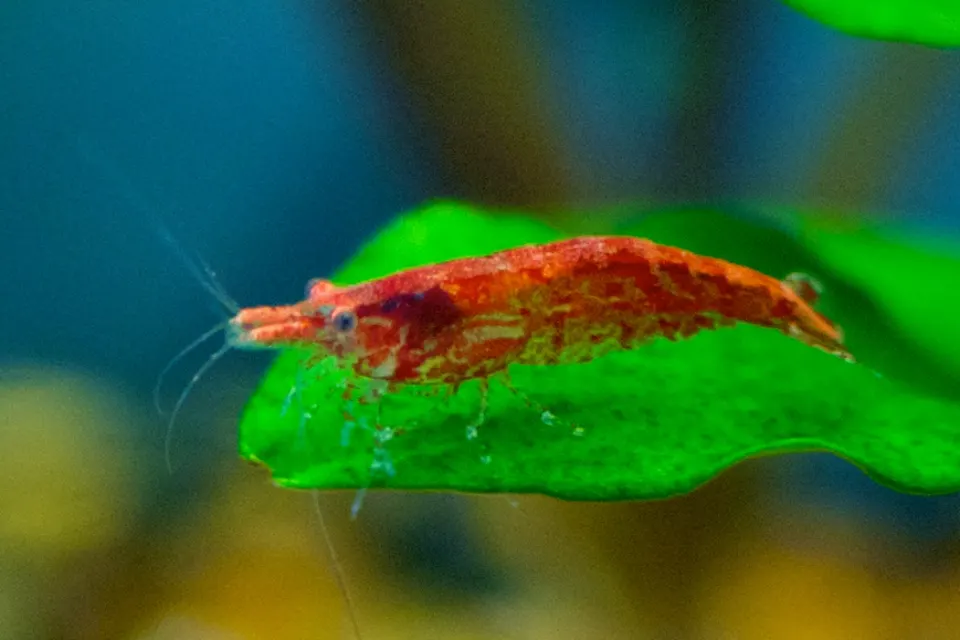
Cherry Shrimp (Neocaridina davidi) are one of the most popular freshwater invertebrates in the aquarium hobby. Originally bred from wild Neocaridina in Taiwan, these vibrant red shrimp have been selectively bred into numerous color grades, from pale pink "Sakura" to deep red "Painted Fire Red" varieties.
Their hardiness, peaceful nature, and prolific breeding make them ideal for beginners and experienced aquarists alike. Cherry Shrimp serve as excellent algae eaters and cleanup crew members while adding a splash of color to planted aquariums.
Cherry shrimp are Neocaridina davidi, a Taiwanese shrimp bred into a red grade that now has a dozen trade names. Adults are 1 to 1.5 inches and live 1 to 2 years. Five gallons is the listed minimum for a starter colony. They breed easily and often. The red color is a line, not a different species from blue velvet, yellow, or wild-type Neocaridina. Mix the colors and the young come out brown and clear.
The preferred temperature is cooler than most tropical fish: 68 to 74°F. pH is listed broadly at 6.5 to 8.0, with 6.8 to 7.5 as the tighter band, general hardness 6 to 8 dGH, carbonate hardness 2 to 5 dKH, and TDS around 150 to 250 ppm. A stable reading matters more than a perfect one. Swings kill more colonies than a pH that sits a little off the center of the range. For cherries, nitrate under 20 ppm with ammonia and nitrite stuck at zero is the line between a colony and a crash. A 5-gallon tank has very little dilution, so a dead snail or a missed fast can spike it.
Copper in a fish medication will wipe a cherry colony out. That includes many ich treatments sold for community fish. If the tank has cherry shrimp, copper stays on the shelf. There is no safe guess at a low dose. Move the shrimp to another tank before any copper treatment, and do not move them back into a tank that still has copper in the silicone and the substrate. This is the practical rule that separates a shrimp tank from a fish tank that happens to contain shrimp.
Natural Habitat
Wild Neocaridina davidi inhabit freshwater streams and ponds in Taiwan and parts of China.
- Environment: Slow-moving streams with dense vegetation
- Substrate: Rocky bottoms with leaf litter and debris
- Water: Clean, well-oxygenated water with moderate hardness
- Natural Diet: Biofilm, algae, decaying plant matter, and microorganisms
Tank Requirements
Setting up the ideal Cherry Shrimp habitat: Your aquatic veterinarian and experienced Cherry Shrimp owners can offer perspective tailored to your situation.
- Tank Size: Minimum 5 gallons; 10+ gallons recommended for colonies
- Substrate: Inert gravel, sand, or active shrimp soil
- Filtration: Sponge filter recommended (safe for shrimplets)
- Plants: Java moss, Java fern, Anubias, mosses, and floating plants
- Hiding Spots: Driftwood, cholla wood, shrimp tubes, and dense plant cover
- Lighting: Moderate lighting to support plant growth and biofilm
Water Parameters
Cherry Shrimp are adaptable but thrive in stable conditions.
| Parameter | Ideal Range |
|---|---|
| Temperature | 68-74°F (20-23°C) |
| pH | 6.8-7.5 |
| GH (General Hardness) | 6-8 dGH |
| KH (Carbonate Hardness) | 2-5 dKH |
| Ammonia | 0 ppm |
| Nitrite | 0 ppm |
| Nitrate | <20 ppm |
| TDS | 150-250 ppm |
Copper Warning
Cherry Shrimp are extremely sensitive to copper. Avoid medications containing copper and check fertilizers for copper content. Even trace amounts can be lethal to invertebrates.
Diet & Feeding
Cherry Shrimp are omnivorous scavengers with diverse dietary needs: When in doubt, choose the guidance that names the Cherry Shrimp explicitly over the guidance that treats all pets alike.
- Biofilm: Primary food source; grows naturally on surfaces
- Algae: Graze on various algae types throughout the tank
- Commercial Foods: Shrimp pellets, wafers, and specialty foods
- Blanched Vegetables: Zucchini, spinach, cucumber, carrots
- Protein: Occasional bloodworms, brine shrimp, or fish food
- Calcium Sources: Cuttlebone, mineral supplements, or crushed coral
Feeding Frequency: Feed sparingly every 1-2 days. In established tanks with biofilm, supplemental feeding may be minimal.
Behavior & Temperament
Cherry Shrimp exhibit fascinating behaviors.
- Peaceful: Completely non-aggressive toward tankmates
- Social: Thrive in groups; more active in larger colonies
- Grazing: Constantly pick at surfaces for food particles
- Molting: Shed exoskeleton regularly as they grow
- Swimming: Females may "swim" when releasing pheromones (breeding behavior)
They eat biofilm, algae film, and leftover food. A colony in a mature planted tank needs little extra. A colony in a new tank needs a shrimp pellet or blanched spinach until the surfaces season. They are not bamboo shrimp and they will not fan-feed from the current. They also will not strip black beard algae. Females carry eggs under the tail and release fully formed miniature shrimp. There is no saltwater larval stage. A berried female in a tank with fish is mostly feeding those fish. Guppies, bettas, and any cichlid will take the babies, and many will take the adults.
One to 2 years is the life of each shrimp. The colony lasts longer only because they breed. A tank of aging adults with no moss, no cover, and a hungry fish will look busy and then quietly empty. If you want red offspring, keep only the red line. A crystal red shrimp is the wrong addition. That animal is Caridina cantonensis and wants softer, more acidic water than this card. Cherries in crystal-red parameters often fail, and crystals in cherry parameters fail the other way. Pick one genus for the tank.
Guidelines set the floor; observation of your individual animal sets the ceiling.
Compatibility
Cherry Shrimp are vulnerable prey animals - choose tankmates carefully.
Good Tankmates
- Other Neocaridina shrimp (may interbreed)
- Small peaceful fish: Otocinclus, Pygmy Corydoras, small Rasboras
- Snails: Nerite, Mystery, Ramshorn
- Amano Shrimp (won't interbreed)
Avoid
- Most fish larger than 2 inches
- Cichlids (even small ones)
- Bettas (individual temperament varies)
- Gouramis, angelfish, and other predatory species
- Crayfish and crabs
Breeding
Cherry Shrimp breed readily in home aquariums.
- Sexual Maturity: 3-4 months of age
- Identification: Females larger, more colorful with curved underbelly (saddle)
- Mating: Occurs after female molts; males actively seek receptive females
- Eggs: Females carry 20-30 eggs under their tail for 3-4 weeks
- Shrimplets: Hatch as miniature adults; no larval stage
- Survival: Provide dense moss and hiding spots for babies
Color Grades
Cherry Shrimp are graded by color intensity: Your aquatic veterinarian and experienced Cherry Shrimp owners can offer perspective tailored to your situation.
- Cherry (Regular): Light red with some transparency
- Sakura: More solid red coverage
- Fire Red: Deep solid red throughout
- Painted Fire Red: Intense red with no transparency
- Bloody Mary: Darkest red, nearly opaque
Health Issues
Common health concerns for Cherry Shrimp.
- Failed Molts: Often caused by improper mineral balance (GH/KH)
- Bacterial Infections: White or pink discoloration; often fatal
- Parasites: Vorticella (white fuzzy growth), Scutariella (worms on rostrum)
- Muscular Necrosis: White muscle tissue; stress-related and fatal
- Planaria: Flatworms that can attack shrimp and eggs
Prevention Tips
Maintain stable water parameters, avoid sudden temperature changes, quarantine new additions, and ensure adequate calcium for successful molting. Many shrimp deaths are caused by rapid parameter swings rather than illness.
Cherry Shrimp three disciplines determine outcomes: keeping parameters stable, measuring feed portions, and quarantining new livestock thoroughly; these factors drive outcomes more than brand-name products.
Is This Species Right for You?
Cherry Shrimp Are Perfect For:
- Beginners to the shrimp hobby
- Nano tank enthusiasts
- Planted tank keepers wanting algae control
- Those interested in breeding projects
- Aquarists seeking low-maintenance invertebrates
Cherry Shrimp May Not Be Ideal For:
- Community tanks with larger fish
- Those who want hands-off feeding routines
- Tanks with copper-based medications
- Keepers who can't maintain stable parameters
Adding a Cherry Shrimp to your setup works best when you have honestly evaluated your tank size, maintenance habits, and budget.
Experienced Cherry Shrimp keepers will tell you that the learning curve is steepest in the first few months. After that, maintenance becomes routine.
Cost of Ownership
Related Species
If you're interested in Cherry Shrimp, consider these related species.
- Blue Velvet Shrimp - Same species, blue color morph
- Amano Shrimp - Larger, excellent algae eaters
- Crystal Red Shrimp - More challenging, stunning patterns
- Ghost Shrimp - Transparent, very hardy
Ask Our AI About Cherry Shrimp
Have specific questions about Cherry Shrimp care, breeding, or tank setup? Our AI assistant can provide personalized guidance.
Get Personalized AI Guidance
Ask Our AI NowDecision Guides for Cherry Shrimp
Use these only when comparing food, insurance, ownership budget, or beginner fit for this specific pet.
Cherry shrimp are Neocaridina davidi. They breed in freshwater, drop eggs under the tail, and the shrimplets eat the same biofilm as the adults if the tank is mature. A copper treatment, a newly cycled tank, and a huge water change are the usual reasons a colony crashes during a molt.