Freshwater Angelfish
This page is educational reference material for preparing questions. A licensed veterinarian examines the animal, makes the diagnosis, and sets the treatment.
Affiliate links may earn a commission. Affiliate disclosure.
Quick Facts
| Attribute | Details |
|---|---|
| Scientific Name | Pterophyllum scalare |
| Origin | Amazon Basin, South America |
| Size | 6 inches long, 8-10 inches tall |
| Lifespan | 10-12 years |
| Temperature Range | 76-84°F (24-29°C) |
| pH Range | 6.0-7.5 |
| Tank Size Minimum | 30 gallons tall |
| Care Level | Moderate |
| Diet | Omnivore |
| Temperament | Semi-aggressive |
Recommended for Angelfish
Aquarium Co-Op - Quality angelfish foods & supplies | Seachem - Premium water treatment | Fluval - Tall tanks ideal for angels
Angelfish Overview
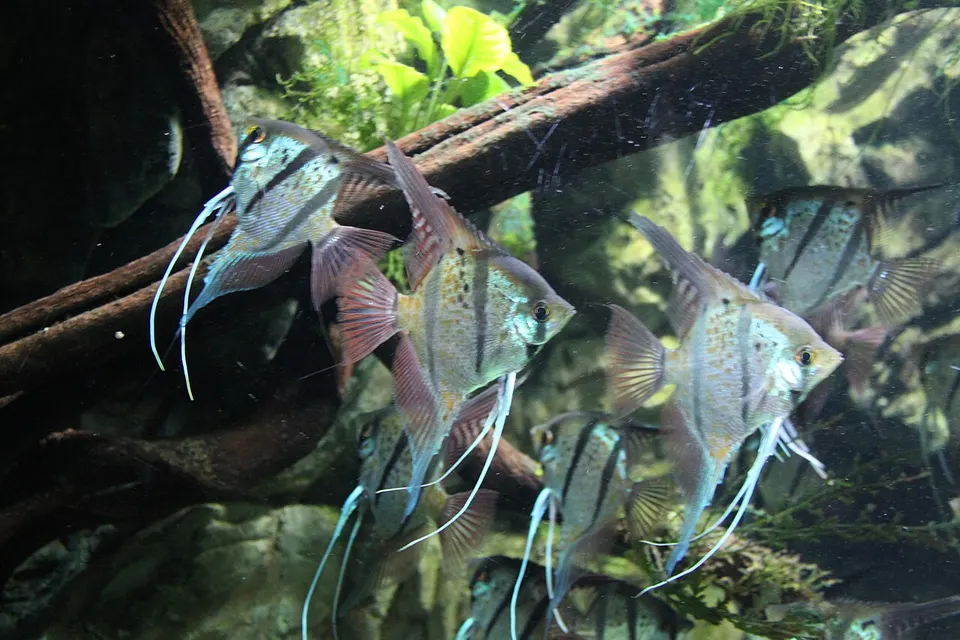
The Freshwater Angelfish is one of the most elegant and popular cichlids in the aquarium hobby. With their distinctive triangular shape, long flowing fins, and graceful swimming style, angelfish have been captivating aquarists for over a century. They're often called the "King of the Aquarium" for their regal appearance.
Originally from the Amazon River basin, angelfish have been selectively bred into numerous color varieties including silver, black, marble, koi, gold, and platinum. While they have a reputation as peaceful community fish, they are actually cichlids with complex social behaviors and can be territorial, especially when breeding.
Freshwater angelfish are Pterophyllum scalare, a tall Amazon cichlid. The body grows to about 6 inches long. The dorsal and anal fins make the fish 8 to 10 inches tall. That height is why the minimum is a 30-gallon tall tank, not a long shallow tank with the same gallon count. A fish that cannot turn without folding its fins into the gravel is in the wrong shape of water. Lifespan is 10 to 12 years when the water stays clean and the fins stay intact.
Hold them at 76 to 84°F, pH 6.0 to 7.5, and hardness around 3 to 8 dGH. That is softer water than a livebearer tank and the wrong water for a Lake Malawi setup. Ammonia and nitrite at 0 ppm and nitrate under 20 ppm are the standing limits. They are omnivores. A cichlid pellet they can bite, plus frozen bloodworms or brine shrimp, matches the way they feed in the middle of the water column. Flakes that sink past them before they notice are a poor staple for a fish this tall.
Temperament is semi-aggressive, and a bonded pair is the moment that label becomes obvious. Angels clean a broad leaf or a piece of slate and then own that corner. Tetras that were ignored for months become food or get driven into the heater. Juveniles can be grown as a group in a tall tank. Once a pair forms, the spare angels usually have to move. Six adults in the 30-gallon minimum is not a stocking plan. The 30 is the smallest tank that fits the fin span of one or two fish.
Natural Habitat & Origin
Understanding angelfish origins helps provide optimal care.
- Native Range: Amazon River basin, Orinoco basin, various rivers in Guiana
- Habitat: Slow-moving, heavily vegetated waters with submerged roots and fallen trees
- Water Type: Soft, acidic blackwater with tannins
- Environment: Vertical hiding spots among plant stems and roots
Their tall, laterally compressed bodies evolved to navigate through dense vegetation and vertical structures in their native habitat.
Tank Requirements & Setup
Angelfish need specific tank considerations due to their body shape.
Tank Size
- Minimum: 30 gallons tall for a single angelfish or pair
- Recommended: 55+ gallons for a small group
- Height: At least 18-20 inches tall to accommodate their body shape
- Groups: Keep 5-6+ to distribute aggression, or a mated pair
Essential Equipment
- Heater: Reliable heater for stable warm temperatures
- Filter: Moderate flow - angelfish prefer calmer water
- Lighting: Moderate lighting, plants provide shade
- Thermometer: Monitor temperature closely
Decoration & Plants
- Tall Plants: Amazon swords, vallisneria, tall crypts
- Vertical Structures: Driftwood, tall decorations
- Spawning Sites: Broad-leaved plants, slate, or spawning cones
- Substrate: Sand or fine gravel
- Open Swimming Space: Balance cover with room to swim
Angelfish Tank Essentials
Aquarium Co-Op - Amazon sword plants & driftwood | Fluval Tall Tanks - Perfect angelfish dimensions | Seachem Flourish - Plant nutrition
Water Parameters
Maintaining stable water parameters is crucial for angelfish health: Generic guidance is a floor; it is the Angelfish-specific nuance that raises the ceiling on outcomes.
| Parameter | Ideal Range |
|---|---|
| Temperature | 76-84°F (24-29°C) |
| pH | 6.0-7.5 |
| Ammonia | 0 ppm |
| Nitrite | 0 ppm |
| Nitrate | <20 ppm |
| Hardness (GH) | 3-8 dGH |
Temperature Sensitivity
Angelfish are sensitive to temperature fluctuations. Sudden changes can trigger ich outbreaks or stress-related illness. Use a quality heater and avoid placing the tank near windows or vents.
Diet & Feeding
Angelfish are omnivores that benefit from a varied diet: Your aquatic veterinarian and experienced Angelfish owners can offer perspective tailored to your situation.
Primary Foods
- High-Quality Flakes/Pellets: Cichlid-specific formulas
- Frozen Foods: Bloodworms, brine shrimp, mysis shrimp
- Live Foods: Blackworms, brine shrimp, daphnia
- Vegetables: Blanched spinach, zucchini
- Specialty Foods: Color-enhancing formulas
Feeding Guidelines
- Feed 2-3 times daily in amounts consumed within 3 minutes
- Vary diet for optimal nutrition and coloration
- Remove uneaten food promptly
- Condition with live/frozen foods before breeding
Freshwater Angelfish consistent chemistry, controlled feeding, and deliberate quarantine sit at the centre of sustained aquatic welfare; these factors drive outcomes more than brand-name products.
Behavior & Temperament
Angelfish exhibit complex cichlid behavior: Generic guidance gets you to the starting line; the actual gains come from calibrating the plan to your specific animal.
- Territorial: Establish and defend territories, especially when breeding
- Hierarchical: Form pecking orders within groups
- Pair Bonding: Mated pairs form strong bonds and work together
- Semi-Aggressive: May bully smaller or weaker fish
- Predatory: Will eat fish small enough to fit in their mouths
- Intelligent: Recognize owners and feeding routines
Fin-nippers and angelfish do not share a tank. Tiger barbs will reduce a veil-fin angel to stumps, and the angel stops eating once the damage is bad. Very small fish, including newborn livebearers and tiny rasboras, fit in an adult mouth. A school of cardinal tetras is the classic dither, and even those are safer in a tank larger than the minimum. Slow fish with long fins, such as fancy guppies, get the worst of the sparring even when nobody is spawning.
Most shop fish are scalare, or a farmed line of it. Altum angels are a different species, taller still, and less forgiving of ordinary tap water. Marble, koi, and veil are color and fin forms of the common fish, and the longest fins are the first thing another cichlid shreds. Buy animals that are eating and holding the fins fully extended, not a pale fish clamped in the top corner of a wholesale vat. Ten to 12 years is a long time to keep a cichlid that will eventually refuse the tankmates you chose in year one.
Compatibility with Other Fish
Careful tank mate selection is important with angelfish.
Compatible Tank Mates
- Medium-sized tetras (not neons - too small when angels mature)
- Corydoras catfish
- Larger rasboras
- Dwarf gouramis
- Bristlenose plecos
- Larger peaceful cichlids (rams, keyholes)
- Rainbowfish
Incompatible Species
- Small tetras (neons, cardinals - may be eaten)
- Fin nippers (tiger barbs, serpae tetras)
- Aggressive cichlids
- Small shrimp (will be eaten)
- Very active fish that may stress angels
Breeding Information
Angelfish are dedicated parents and can breed in home aquariums: Your aquatic veterinarian and experienced Angelfish owners can offer perspective tailored to your situation.
- Pair Formation: Best to let angels choose mates from a group
- Spawning Site: Vertical surfaces - leaves, slate, aquarium glass
- Egg Laying: Females lay 100-1,000+ eggs in rows
- Parental Care: Both parents guard and fan eggs
- Hatching: 48-72 hours at 80°F
- Fry Development: Fry become free-swimming after about 5 days
- Fry Food: Baby brine shrimp, microworms, crushed flakes
Popular Angelfish Varieties
- Silver: Classic wild-type coloration
- Black: Solid black or dark gray
- Marble: Black and white marbled pattern
- Koi: Orange, white, and black resembling koi fish
- Gold: Solid golden-yellow
- Platinum: Solid white/silver
- Veil: Extra-long flowing fins
Common Health Issues
Angelfish can be susceptible to several conditions: Upfront effort to understand how an Angelfish actually operates usually pays dividends in fewer vet emergencies.
Ich (White Spot Disease)
- Symptoms: White spots, flashing, clamped fins
- Treatment: Raise temperature to 86°F, ich medication
Hexamita (Hole-in-Head Disease)
- Symptoms: Pitting around head and lateral line
- Causes: Poor water quality, nutritional deficiencies
- Treatment: Metronidazole, improve water quality and diet
Fin Rot
- Symptoms: Deteriorating fins, often with redness
- Treatment: Clean water, antibacterial medication
Angelfish Virus
- Symptoms: Excessive slime coat, lethargy, often fatal
- Prevention: Quarantine new fish, avoid stress
Angelfish Health Products
API General Cure - Treats parasites | Seachem Paraguard - Broad-spectrum treatment | Aquarium Co-Op Meds - Quality fish medications
The foundation of Angelfish health management is water quality — full stop. Regular testing and diligent maintenance are your best tools.
Owners who use these specifics to calibrate their care programme — not as background reading but as operational defaults — report fewer surprises over the long term.
Is This Fish Right for You?
Angelfish Are Great For:
- Aquarists wanting an elegant centerpiece fish
- Those with appropriately sized tall tanks
- Keepers interested in breeding cichlids
- Planted tank enthusiasts
- Intermediate to advanced hobbyists
Angelfish May Not Be Ideal For:
- Small or short tanks
- Community tanks with tiny fish
- Beginners wanting hassle-free fish
- Those with aggressive tank mates
Adding a Freshwater Angelfish to your setup works best when you have honestly evaluated your tank size, maintenance habits, and budget.
Experienced Freshwater Angelfish keepers will tell you that the learning curve is steepest in the first few months. After that, maintenance becomes routine.
Cost of Ownership
The true cost of keeping Freshwater Angelfish extends well beyond the initial purchase price and basic equipment. While the upfront investment in a properly equipped aquarium (minimum 30 gallons tall) represents a significant portion of the total cost, ongoing expenses for water treatment chemicals, filter media, electricity for heating and lighting, and food constitute the majority of long-term spending. Many aspiring Freshwater Angelfish keepers underestimate these ongoing costs, which can lead to cut corners that ultimately compromise fish health and result in even greater expenses. A realistic budget that accounts for both routine maintenance and occasional replacement of equipment provides a more accurate picture of what Freshwater Angelfish keeping actually costs.
Small adjustments based on what you observe often yield the biggest improvements.
Related Species
If you're interested in Angelfish, you might also consider.
- Discus - The "King of the Aquarium" - more challenging but stunning
- Ram Cichlid - Smaller, colorful South American cichlid
- Gouramis - Elegant labyrinth fish
- Rainbowfish - Colorful, peaceful schooling fish
Ask Our AI About Angelfish
Have specific questions about angelfish care, breeding, or health issues? Our AI assistant can provide personalized guidance.
Get Personalized AI Guidance
Ask Our AI NowDecision Guides for Freshwater Angelfish
Use these only when comparing food, insurance, ownership budget, or beginner fit for this specific pet.
Freshwater angelfish, Pterophyllum scalare, are tall cichlids from the Amazon. A pair needs a tank that is deep as well as long, warm water around 78 to 84 F, and tankmates too large for a grown angel to swallow. They eat a cichlid pellet and frozen foods.
Parameter Ideal Range Temperature 76-84°F (24-29°C) pH 6.0-7.5 Ammonia 0 ppm Nitrite 0 ppm Nitrate <20 ppm Hardness (GH) 3-8 dGH Angelfish are sensitive to temperature fluctuations.