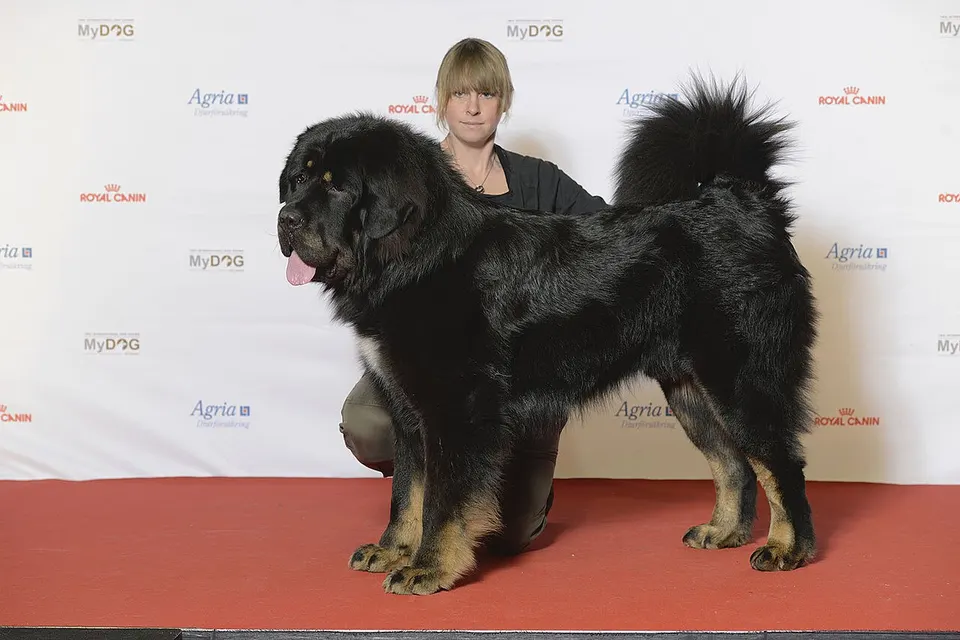
Tibetan Mastiff
This page is educational reference material for preparing questions. A licensed veterinarian examines the animal, makes the diagnosis, and sets the treatment.
Affiliate links may earn a commission. Affiliate disclosure.
Quick Facts
| Attribute | Details |
|---|---|
| Breed Group | Working |
| Size | Giant (70-150 lbs) |
| Height | 24-26+ inches |
| Lifespan | 10-12 years |
| Temperament | Independent, Protective, Reserved |
| Good with Kids | Moderate (better with older children) |
| Good with Other Dogs | Moderate (can be same-sex aggressive) |
| Shedding | Seasonal (heavy annual blowout) |
| Exercise Needs | Moderate (30-60 minutes daily) |
| Trainability | Low to Moderate (very independent) |
Recommended for Tibetan Mastiffs
The Farmer's Dog - Fresh food for large breeds | Embark DNA - Health screening for genetic conditions | Spot Insurance - Covers hereditary conditions such as hip dysplasia if not pre-existing
Tibetan Mastiff Overview
The Tibetan Mastiff is an ancient breed that has guarded livestock and monasteries in the Himalayan highlands for thousands of years. DNA studies suggest they may be the progenitor of all modern mastiff-type breeds. Their imposing presence and lion-like mane have made them legendary guardians.
Known as "Do-Khyi" (meaning "door guardian" or "tied dog") in Tibet, these powerful dogs were traditionally tied outside homes and monasteries at night to guard against predators and intruders. They're one of the most primitive and independent dog breeds, retaining many characteristics of their wild ancestors.
The Tibetan Mastiff is a breed that commands attention not just for its physical appearance but for the depth of personality and capability it brings to a household. With a lifespan averaging 10-12 years, the decision to welcome a Tibetan Mastiff into your family is one that will shape your daily routine, activity levels, and emotional life for well over a decade. This breed's independent, protective, reserved temperament is the product of generations of selective breeding for specific traits—understanding this heritage provides valuable insight into why your Tibetan Mastiff behaves the way it does and what it needs from you as an owner to truly thrive.
Caring well for a Tibetan Mastiff requires more than meeting their basic physical needs. Owners who approach Tibetan Mastiff care with this depth of knowledge create an environment where the animal can genuinely flourish.
Sharing your space with a Tibetan Mastiff means making room — literally and figuratively — for their specific needs. Owners who recognize this early and plan for it tend to have a much smoother experience than those who expect the Tibetan Mastiff to simply fit into their existing routine unchanged.
Temperament & Personality
Tibetan Mastiffs are among the most independent of all dog breeds.
- Fiercely Independent: They think for themselves and may choose whether to obey commands.
- Territorial: Strong guarding instincts; they claim and protect their property.
- Reserved with Strangers: Not friendly with people they don't know; aloof at best, suspicious at worst.
- Loyal to Family: Form strong bonds but show affection on their own terms.
- Nocturnal Tendencies: More active at night, reflecting their traditional role as nighttime guardians.
The independent, protective, reserved nature of the Tibetan Mastiff is not a simple personality label—it is a complex behavioral profile shaped by breed history, individual genetics, early socialization experiences, and ongoing environmental factors. What this means in practice is that two Tibetan Mastiff from different lines, raised in different environments, can display meaningfully different behavioral tendencies while still sharing core breed characteristics.
A veterinarian who knows your Tibetan Mastiff will see variables an article cannot; treat their input as the final adjustment.
Common Health Issues
orthopedic problems
- Hip Dysplasia: Affects approximately 15% of the breed. OFA screening recommended.
- Elbow Dysplasia: Can occur but less common than in some giant breeds.
- Panosteitis: Growing pains in puppies and adolescents.
Eye Conditions
- Entropion: Eyelid rolls inward, causing irritation.
- Ectropion: Lower eyelid droops outward.
- Progressive Retinal Atrophy (PRA): Genetic blindness.
Other Concerns
- Hypothyroidism: Underactive thyroid; relatively common in the breed.
- Canine Inherited Demyelinative Neuropathy (CIDN): Inherited neurological condition; DNA test available.
- Autoimmune Thyroiditis: Can lead to thyroid problems.
- Allergies: Skin allergies can occur.
Health Screening Recommendation
Before getting a Tibetan Mastiff, ask breeders for OFA hip/elbow evaluations, thyroid testing, eye certifications, and CIDN DNA testing. Consider Embark DNA testing for comprehensive genetic screening.
Keeping your Tibetan Mastiff healthy over the long haul requires attention to details that are easy to overlook.
If you are curious about your Tibetan Mastiff's inherited health profile, genetic testing can provide valuable context.
As your Tibetan Mastiff ages, their care needs will shift in ways that are easier to manage when anticipated.
Cost of Ownership
Understanding the full cost helps prepare for Tibetan Mastiff ownership.
| Expense Category | Annual Cost Estimate |
|---|---|
| Food (premium quality) | $800-$1,500 |
| Veterinary Care (routine) | $350-$700 |
| Pet Insurance | $500-$1,000 |
| Grooming | $300-$600 |
| Training (first year) | $500-$1,500 |
| Supplies & Toys | $300-$500 |
| Total Annual Cost | $2,750-$5,800 |
No matter how carefully you plan, owning a Tibetan Mastiff will occasionally throw a curveball. A modest emergency fund — separate from your regular care budget — ensures that surprise expenses do not compromise the quality of care your Tibetan Mastiff receives.
Budgeting for a Tibetan Mastiff is easiest once you understand the spending curve.
Your Tibetan Mastiff might look perfectly healthy and still benefit from a routine exam.
Exercise & Activity Requirements
Tibetan Mastiffs have moderate but specific exercise needs.
- Daily Exercise: 30-60 minutes, preferably with property patrol time
- Nocturnal Activity: May be more active and alert at night
- Secure Fencing: Essential; they will roam if able
- Cool Weather Preference: Most active in cooler temperatures
- Independent Exploration: Prefer investigating their territory to structured exercise
Training Tips for Tibetan Mastiffs
Training a Tibetan Mastiff requires understanding their independent nature.
- Extensive Socialization: Critical and ongoing; expose to many people and situations
- Experienced Handler: Absolutely not for novice owners
- Respect Independence: They won't perform repetitive tasks for no reason
- Patience: Training takes longer; they may never be fully "obedient"
- Positive Methods: Harsh methods will damage your relationship
Nutrition & Feeding
Tibetan Mastiffs have unique feeding characteristics.
- Self-Regulating: Unlike many breeds, they often self-regulate food intake
- Quality over Quantity: May eat less than expected for their size
- Large Breed Formula: Choose food appropriate for large breeds
- Joint Support: Glucosamine and omega-3s support joint health
- Consistent Schedule: Feed on a regular schedule
Top Food Choices for Tibetan Mastiffs
The Farmer's Dog - Fresh, portion-controlled meals | Ollie - Custom fresh food for large breeds | Hill's Science Diet - Large breed formulas
Grooming Requirements
The Tibetan Mastiff's impressive coat requires regular maintenance.
- Brushing: Weekly brushing; daily during shedding season
- Annual Coat Blow: Heavy shedding once yearly (females may shed twice)
- Bathing: Infrequently; their coat has natural protective oils
- Mane Care: Their lion-like mane needs regular attention
- Nail Trimming: Every 2-3 weeks
- No Clipping: Their coat should not be shaved or clipped
Is a Tibetan Mastiff Right for You?
A Tibetan Mastiff tends to reveal the payoff of this kind of attention gradually, rather than in a single dramatic moment.
Tibetan Mastiffs Are Great For:
- Very experienced dog owners familiar with primitive guardian breeds
- Rural properties needing a natural deterrent
- Those who appreciate an independent, cat-like dog
- Cold climates (they thrive in cool weather)
- People who don't expect traditional dog obedience
Tibetan Mastiffs May Not Be Ideal For:
- First-time dog owners
- Urban or suburban homes without large, secure yards
- Those with close neighbors (they bark at night)
- Families with young children or frequent visitors
- Hot climates
A Tibetan Mastiff is a nocturnal livestock guardian. Barking at night is the job, not a phase. They are independent, suspicious of strangers, and large enough that an untrained adult is a liability. Hip dysplasia and a giant-breed lifespan, often under ten years, belong in the budget. They do not suit a house that wants a quiet evening or a dog that greets guests.
A Tibetan Mastiff barks at night because livestock guardians bark at night. Neighbors will not treat that as heritage. The coat mats to the skin if you only pet the outside, and heat under that coat is dangerous. Hips, eyelids that roll inward, and thyroid disease belong on the vet list. Same-sex dog aggression and suspicion of strangers are the breed, not a training gap you close with a dog park. A mastiff bought as a status photo, without a fence and a handler, becomes a dangerous dog.
Related Breeds to Consider
If you're interested in Tibetan Mastiffs, you might also consider.
- Kuvasz - Similar guardian temperament, more trainable
- Great Pyrenees - Independent guardian, friendlier
- Anatolian Shepherd - Similar working style
- Caucasian Shepherd - Similar temperament and appearance
Ask Our AI About Tibetan Mastiffs
Related Health & Care Guides
A grounded sense of this part of Tibetan Mastiff care puts you in a better position to make decisions the animal can actually feel. Because each Tibetan Mastiff is its own animal, treat any general guideline as a starting point and refine from there.
Get Personalized AI Guidance
Ask Our AI NowDecision Guides for Tibetan Mastiff
Use these only when comparing food, insurance, ownership budget, or beginner fit for this specific pet.