Budgerigar (Budgie) Care Guide
This page is educational reference material for preparing questions. A licensed veterinarian examines the animal, makes the diagnosis, and sets the treatment.
Detailed guide to budgie care covering diet, cage setup, health issues, training, and why budgies make excellent first birds.
Housing and Enclosure
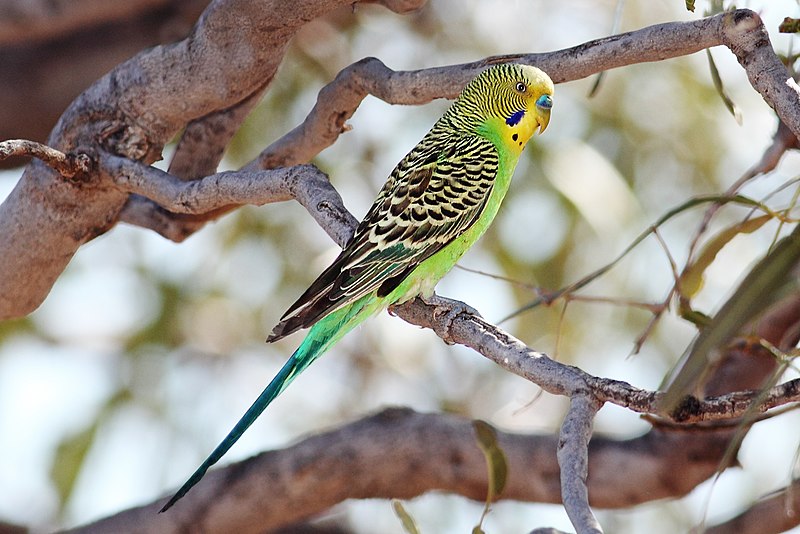
Budgies need a cage at least 18"x18"x18" per bird — larger is always better. Use 1/2 inch bar spacing. Provide multiple perches of varying diameter, swings, mirrors, bells, and shreddable toys. Budgies are highly social and benefit from having a companion or extensive daily human interaction.
Diet and Nutrition
Feed a base of high-quality budgie pellets (60-70%), supplemented daily with fresh vegetables (leafy greens, broccoli, carrots) and occasional fruit. Limit seed to 20-30% of diet, as an all-seed diet leads to obesity and fatty liver disease. Provide cuttlebone and mineral block for calcium.
Health and Veterinary Care
Common budgie health issues include megabacteria (AGY), scaly face mites, fatty liver disease, tumors, and respiratory infections. Annual avian vet checkups are recommended. Watch for changes in droppings, fluffed feathers, discharge from eyes or nostrils, or changes in activity level.
Common Health Issues
- Metabolic bone disease: Often caused by inadequate UVB lighting or calcium supplementation
- Respiratory infections: Usually linked to incorrect temperature or humidity
- Parasites: Both internal and external parasites can affect exotic pets
- Nutritional deficiencies: Result from improper or monotonous diets
- Stress-related illness: Caused by improper housing, handling, or environmental factors
Handling and Socialization
- Allow new pets to acclimate to their enclosure before handling
- Learn proper handling techniques specific to your pet's species
- Start with short handling sessions and gradually increase duration
- Wash hands before and after handling to prevent disease transmission
- Respect your pet's signals — not all exotic pets enjoy being handled
Are budgies good for first-time bird owners?
Some exotic pets are excellent for beginners (leopard geckos, corn snakes, budgies, betta fish) while others require advanced experience (chameleons, macaws, saltwater aquariums). Research thoroughly before committing.
How much do exotic pets cost to care for?
Initial setup costs (enclosure, lighting, heating) are usually the largest expense, ranging from $100-$1,000+. Ongoing costs for food, substrate, and veterinary care typically run $30-$100/month.
A budgerigar needs a cage wide enough to fly between perches, with bar spacing the head cannot pass through. Millet is a treat. Daily food is a budgie pellet or a seed mix plus greens, and a cuttlebone or mineral block supplies calcium. Give about ten to twelve hours of dark at night. Keep the bird out of a kitchen where nonstick pans can overheat. Those fumes kill birds.