Tarantula
This page is educational reference material for preparing questions. A licensed veterinarian examines the animal, makes the diagnosis, and sets the treatment.
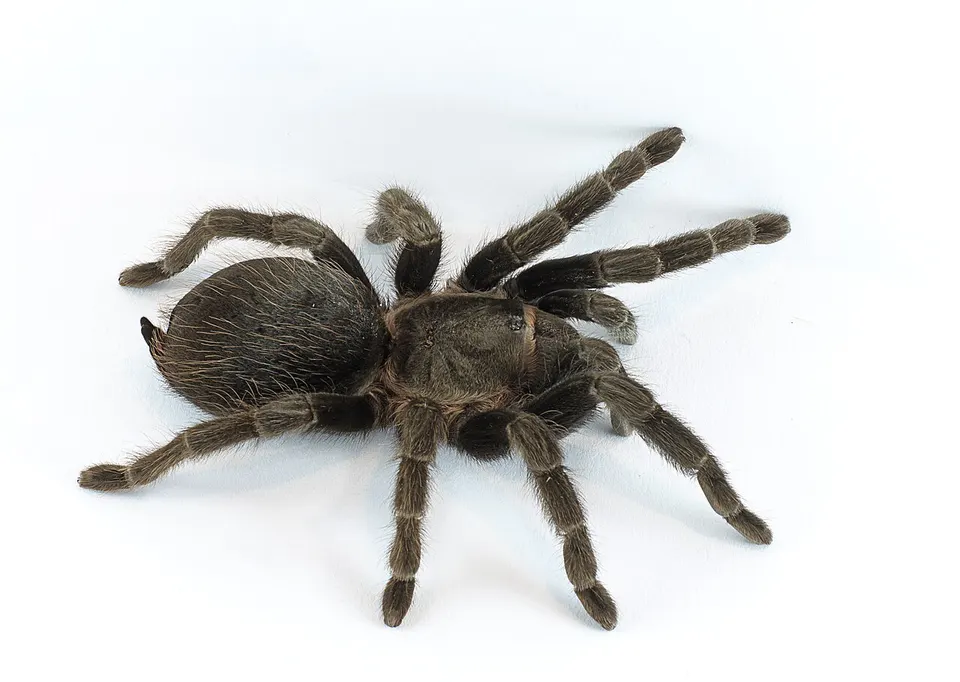
Affiliate links may earn a commission. Affiliate disclosure.
Quick Facts
| Attribute | Details |
|---|---|
| Type | Invertebrate |
| Size | 3-10 inches legspan |
| Lifespan | 5-30 years |
| Temperament | Calm, Docile (species-dependent) |
| Difficulty | Beginner-Intermediate |
| Origin | Worldwide Tropical/Subtropical |
Tarantula Overview
Tarantula on this page is a generic name. The card does not name one species. Size is 3-10 inches of legspan, lifespan is 5-30 years, and origin is worldwide tropical and subtropical. That spread is the point. A spider at 3 inches and a spider at 10 inches, one that lives near 5 years and one that can live toward 30, are not the same pet. Do not collapse 5-30 years into a single age, and do not invent a species name this card does not give. Temperament is calm and docile, with the card itself adding that this is species-dependent. Difficulty is beginner-intermediate. Both labels depend on which spider is in the enclosure.
New World species have urticating hairs and usually milder venom. Those hairs are a defense. The spider kicks them off the abdomen when it is disturbed, and they irritate skin, eyes, and lungs. A calm New World spider is still carrying that defense. Usually milder venom is not a promise that a bite is nothing. It is a comparison with the other half of this hobby. The hairs are the reason a New World tarantula is a poor animal to pass around, even when the species has a reputation for sitting still.
Old World species lack those urticating hairs. They tend to be faster, and they have medically more significant venom. A bite from an Old World tarantula is a medical problem, not a badge and not a moment for a home remedy or a dose you found online. This page does not name a species and does not give a treatment. It says the keeper has to know which spider they bought before they even think about handling. Speed plus a more serious venom is a bad combination in an animal someone assumed was the calm one on a poster.
Most tarantulas should not be handled. The calm, docile line is species-dependent, and it describes an animal left in its enclosure, not a spider that wants to be on a hand. Choosing to handle one starts with knowing whether you have a New World species with urticating hairs or an Old World species without them. If you do not know, you do not handle it. A display animal that never comes out is a complete life for a tarantula. Nothing in the 5-30 year span requires a handling session to be successful.
They need a secure lid. Tarantulas climb, including species that spend their time on the ground, and they push. A lid that relies on the animal's weight, or a top that slides, is how a spider ends up on the floor. The enclosure also needs the right moisture for that species. Arboreal spiders need height, airflow, and a moisture level that does not turn the tank into a swamp. Fossorial spiders need depth they can dig and a moisture level that suits a burrow, which is not the same setting. One average humidity poured over every tarantula will be too wet for one species and too dry for another. The 3-10 inch legspan changes the floor space as well. Match the box to the spider you have.
Housing and environment design for Tarantula has evolved considerably as our understanding of small animal welfare has improved. The size and complexity of the enclosure or hutch directly correlates with your Tarantula's physical health, behavioral normality, and overall lifespan. Experienced Tarantula keepers consistently advocate for the largest enclosure or hutch that space and budget allow, supplemented with regular supervised free-roaming time outside the enclosure.
Temperament & Behavior
A fall onto a hard floor can rupture the abdomen. That is the practical reason the lid stays on and the spider stays in the enclosure. An abdomen that splits is an injury an invertebrate does not walk off. Handling over a table, a tile floor, or a sink is how that fall happens. Even a short drop is enough. The beginner-intermediate rating assumes the animal is contained. It does not assume the keeper can catch a falling spider safely. If a tarantula gets out, guide it with a cup and a piece of card back into the enclosure. Do not grab it.
Costs are initial setup $100-$500+, animal purchase $10-$500+, annual food and bedding $150-$500, and annual vet care $50-$200. A tarantula eats infrequently compared with a mammal, so the annual food range is insects on a slow schedule, not a daily bowl. The purchase range is wide because the card is not one species. A cheap spider and an expensive spider can both sit inside $10-$500+, and the cheap one may be the Old World species you are not prepared to keep. Setup money is the locking lid, the right orientation of the tank, and the substrate depth. Across a lifespan that can run 5-30 years, the enclosure outlasts several other pets. Know which spider you bought. Most should not be handled. The lid stays shut.
Social needs vary considerably among small animals, and Tarantula specifically have particular requirements that owners should understand before acquisition. Some Tarantula thrive in pairs or small groups, while others may display territorial aggression toward cage mates. Age, sex, and the introduction method all influence compatibility. Even naturally social Tarantula require careful introduction protocols when adding new cage mates—sudden introductions in shared territory can trigger fight-or-flight responses that establish lasting negative associations.
Activity patterns and play preferences in Tarantula provide important insights into their overall wellbeing. A healthy, well-adjusted Tarantula will display curiosity about new enrichment items, engage in species-typical play behaviors, and maintain consistent activity patterns within their normal circadian rhythm. Keepers who establish a baseline understanding of their individual Tarantula's normal behavior patterns are better positioned to identify and address problems early, when intervention is most effective and least costly.
Housing & Environment Requirements
Provide an appropriately sized habitat for your Tarantula.
Diet & Nutrition
Research species-specific dietary needs.
Good nutrition is the foundation of Tarantula health, but that does not mean you need the most expensive food on the shelf. Your Tarantula's response — steady weight, good energy, healthy coat, firm stools — is the best indicator that you have found the right food.
First ingredient should be a specific animal protein. Calorie content per cup helps you portion correctly for your Tarantula's size.
Common Health Issues
Research common health concerns specific to Tarantulas and find a veterinarian experienced with this species before bringing one home. Early veterinary intervention is crucial as small animals can deteriorate quickly.
Keeping your Tarantula healthy over the long haul requires attention to details that are easy to overlook.
If you are curious about your Tarantula's inherited health profile, genetic testing can provide valuable context.
As your Tarantula ages, their care needs will shift in ways that are easier to manage when anticipated.
Grooming & Maintenance
Beginner-Friendly Rating: Beginner-Intermediate
Tarantulas are suitable for keepers with some experience.
Before acquiring a Tarantula, research thoroughly and prepare the habitat in advance. Join online communities and forums dedicated to exotic pet keeping to connect with experienced keepers who can offer guidance specific to Tarantula care.
Socialization & Enrichment
Environmental enrichment is essential for Tarantulas to thrive in captivity. Rotating enrichment items keeps the environment novel and stimulating.
Always wash hands before and after handling any pet. Learn to read your Tarantula's body language to understand when they are comfortable, stressed, or unwell.
Where to Find Tarantulas
Find Tarantulas through reputable breeders, specialty pet shops, or rescue organizations. Online communities can help connect you with responsible sources in your area.
Cost of Ownership Overview
| Expense | Estimated Cost |
|---|---|
| Initial Setup (habitat + supplies) | $100-$500+ |
| Animal Purchase | $10-$500+ |
| Annual Food & Bedding | $150-$500 |
| Annual Vet Care | $50-$200 |
Tarantulas are one of the most cost-effective exotic pets available — ongoing expenses are minimal once a proper enclosure is set up, since they eat infrequently and require no specialized lighting or heating in most homes. The main upfront investment is the habitat itself: a well-ventilated terrarium with appropriate substrate, hides, and humidity control. Veterinary care is rarely needed, but finding an exotics vet who sees invertebrates before an emergency arises is still a wise precaution.
Budget more aggressively for the first year. Beyond the obvious — food, vet visits, supplies — there are costs that catch people off guard: replacing items your Tarantula destroys during teething, emergency visits for swallowed objects, and higher food costs during rapid growth phases. After that initial period, expenses settle into a more manageable rhythm.
Owners who maintain a regular preventive care schedule for their Tarantula consistently report lower overall vet costs than those who wait for problems to appear. The math favors prevention every time.
Daily Care Routine for Tarantulas
Establishing a consistent daily care routine ensures your Tarantula stays healthy and thriving. Ensure habitat conditions (temperature, humidity) are within appropriate ranges.
Quick Answers About Tarantulas
A Tarantula tends to reveal the payoff of this kind of attention gradually, rather than in a single dramatic moment.
Are Tarantulas good pets for children?
Tarantulas are better suited for older children or teens who can understand and meet their specific care requirements.
How much space do Tarantulas need?
Tarantulas require an appropriately sized habitat that meets their specific needs. Research species-specific housing requirements. Always provide more space than the minimum recommendation when possible.
How long do Tarantulas live?
Tarantulas typically live 5-30 years with proper care. Consider the time commitment before acquiring any pet.
What veterinary care do Tarantulas need?
Find a veterinarian experienced with exotic invertebrates before bringing one home. Annual wellness exam (AAHA Preventive Healthcare Guidelines are recommended for most species.
Long-Term Commitment & Responsible Ownership
Owning a Tarantula is a commitment for the animal's full lifespan of 5-30 years.
Identify pet sitters experienced with Tarantulas, connect with online and local communities, and ensure you have emergency veterinary access. Teaching responsible pet ownership to children through proper care of a Tarantula creates lasting values about compassion and commitment.
Decision Guides for Tarantula
Use these only when comparing food, insurance, ownership budget, or beginner fit for this specific pet.
Tarantula May Be Great For:
- A keeper who knows whether the species is terrestrial or arboreal before choosing the tank height
- Someone who will not handle, and who will leave a molting spider alone
- An owner who writes down the scientific name and matches humidity to that species
Tarantula May Not Be Ideal For:
- A tall tank for a terrestrial spider. Falls rupture the abdomen
- Anyone who wants a handling pet
- A keeper who sprays a desert species like a tropical one
If your research has confirmed that you can realistically meet a Tarantula's needs, the next move is finding a healthy, well-adjusted individual from a reputable source, whether a specialist breeder or a rescue organization. This step deserves as much care as any other part of the process. A well-chosen Tarantula from a reliable source sets the stage for a much smoother experience from day one.
Housing follows the species, not the word tarantula. A terrestrial spider in a tall tank climbs and falls, and a ruptured abdomen is usually fatal. Give substrate and a hide, and skip wire mesh that can trap a foot. Do not handle. A fall kills the animal, and a bite is painful. Fasting and a spider on its back often mean a molt. Disturbing a molt can kill it. Write down the scientific name, because humidity for a desert terrestrial will rot an arboreal species, and the reverse dries the arboreal one out.