Short-Tailed Opossum
This page is educational reference material for preparing questions. A licensed veterinarian examines the animal, makes the diagnosis, and sets the treatment.
Affiliate links may earn a commission. Affiliate disclosure.
Quick Facts
| Attribute | Details |
|---|---|
| Type | Exotic |
| Size | 4-6 inches |
| Lifespan | 4-8 years |
| Temperament | Curious, Solitary |
| Difficulty | Intermediate |
| Origin | South America |
Short-Tailed Opossum Overview
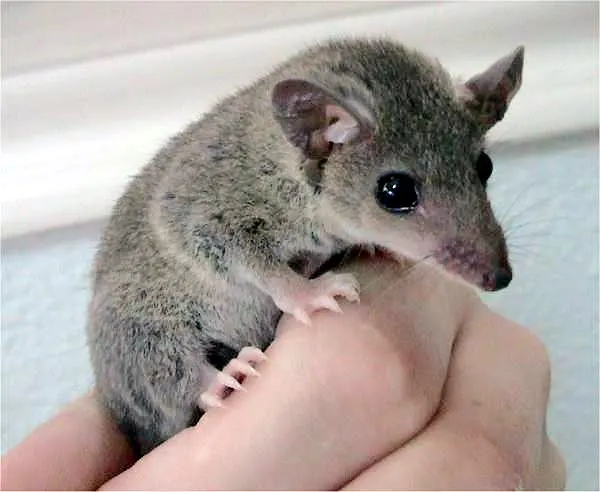
The short-tailed opossum is Monodelphis domestica, a small solitary marsupial from South America. It is not a sugar glider, and it is not a Virginia opossum. Size on the card is 4-6 inches. Lifespan is 4-8 years. There is no gliding membrane, no colony, and no life in the rafters of a North American house. People meet the name opossum and picture the Virginia animal, or they meet a marsupial and picture a sugar glider. This card is the small, short-tailed species. The 4-6 inch body is the scale.
Four to 8 years is a short life compared with a cat. The card's 4-8 year range is the one to plan on. Do not stretch it to a cat's lifespan because the animal is a mammal that can learn your routine. Difficulty is intermediate. A 4-6 inch marsupial that may only live to the low end of 4-8 years does not have many seasons in which to recover from the wrong diet or the wrong housing. Intermediate means you set the enclosure up correctly before the animal arrives, not after a month of experiments.
They do not have a pouch. Nothing about this species matches the picture of a mother with a belly pocket full of young. Females of this species lack that pouch. If you wanted a marsupial you could watch carry joeys in a pocket, this is the wrong animal, and a sugar glider is a different wrong animal. Do not prod the belly looking for a pouch that the species does not have. Curiosity on the card is the animal's trait, not an invitation to examine it like a specimen.
Temperament is curious and solitary. Solitary housing is the plan. One short-tailed opossum to an enclosure. They are not a colony pet, and they are not happier in a pair the way sugar gliders are. Housing two together because both are small marsupials is how animals get bitten and stressed. Curious means they investigate the cage and your hand. It does not mean they want to live in a pocket or sleep in a group. A hide, and enough room to move at night, matters more than a companion.
They can bite. A 4-6 inch animal has a mouth that can break skin, and a solitary marsupial does not owe you handling. Intermediate care includes a plan for an animal that would rather be in the hide. Use a cup or a short tunnel to move one if it does not step onto a hand. Do not pull it out by the tail. Children who need a pet that tolerates grabbing are looking at the wrong card. Curious animals still bite when they are restrained. The short life does not make a bite harmless.
Use this as preparatory reading, your exotic vet's adjustments for your individual Short Tailed Opossum are what actually matter.
Temperament & Behavior
The diet is insectivore and omnivore. Insects and other animal protein matter. A fruit cup meant for a sugar glider, or a seed mix meant for a hamster, is not this diet. Offer a varied menu built around that insectivore and omnivore need, and keep water available. Do not free-feed sweets because the animal is only 4-6 inches and seems to burn it off. Origin is South America. You do not need a rainforest room. You do need a secure lid, because a curious marsupial will leave through a gap a jar could not.
Costs on the card are initial setup $100-$500+, animal purchase $10-$500+, annual food and bedding $150-$500, and annual vet care $50-$200. The setup range has to buy an enclosure for a solitary animal, with a hide and a lock, not a sugar-glider colony cage you already own. Annual food in the $150-$500 band is insects and the rest of an omnivore diet across 4-8 years, scaled to the year. Vet care at $50-$200 assumes you can find a clinician who will see a marsupial before you need one. Monodelphis domestica is the species. No pouch, no glider, no Virginia opossum, solitary housing, and a bite you should expect if you force the handling.
Housing & Environment Requirements
Provide an appropriately sized habitat for your Short-Tailed Opossum. Ensure the habitat meets the specific size, temperature, and enrichment requirements for this species.
Diet & Nutrition
Provide a species-appropriate diet with fresh water always available. Research specific nutritional requirements.
Nutrition for your Short should be evaluated by results, not labels. The best food is the one that keeps your Short at a healthy weight, supports a glossy coat, provides steady energy, and produces firm, consistent stool.
Common Health Issues
Research common health concerns specific to Short-Tailed Opossums and find a veterinarian experienced with this species before bringing one home. Early veterinary intervention is crucial as small animals can deteriorate quickly.
Taking care of a Short's long-term health means knowing what to watch for and when to act.
Genetic testing gives Short owners a head start on conditions that might otherwise catch them off guard. By understanding which health risks are written into your Short's DNA, you can work with your vet to schedule targeted checks and make informed choices about diet, exercise, and supplementation.
The shift from prime adulthood to the senior phase is gradual for most Shorts, and the owners who navigate it best are the ones who adapt their care approach incrementally.
Grooming & Maintenance
Beginner-Friendly Rating: Intermediate
Short-Tailed Opossums are suitable for keepers with some experience.
Before acquiring a Short-Tailed Opossum, research thoroughly and prepare the habitat in advance. Join online communities and forums dedicated to exotic pet keeping to connect with experienced keepers who can offer guidance specific to Short-Tailed Opossum care.
Socialization & Enrichment
Environmental enrichment is essential for Short-Tailed Opossums to thrive in captivity. Rotating enrichment items keeps the environment novel and stimulating. Observe your pet to learn its individual preferences for play and interaction.
Always wash hands before and after handling any pet. Learn to read your Short-Tailed Opossum's body language to understand when they are comfortable, stressed, or unwell.
Where to Find Short-Tailed Opossums
Find Short-Tailed Opossums through reputable breeders, specialty pet shops, or rescue organizations. Ensure any animal you acquire appears healthy, alert, and well-cared-for. Online communities can help connect you with responsible sources in your area.
Cost of Ownership Overview
| Expense | Estimated Cost |
|---|---|
| Initial Setup (habitat + supplies) | $100-$500+ |
| Animal Purchase | $10-$500+ |
| Annual Food & Bedding | $150-$500 |
| Annual Vet Care | $50-$200 |
Most new Short-Tailed Opossum owners are surprised by first-year costs. The good news is that subsequent years are more predictable. Just keep in mind that senior Short-Tailed Opossums may need additional care as they enter the last few years of their 4-8 years lifespan.
Think of preventive care as an insurance policy with a guaranteed payout. For Short-Tailed Opossum owners, staying on top of preventive care is one of the simplest ways to reduce lifetime veterinary expenses.
Daily Care Routine for Short-Tailed Opossums
Establishing a consistent daily care routine ensures your Short-Tailed Opossum stays healthy and thriving. Ensure habitat conditions (temperature, humidity) are within appropriate ranges.
Are Short-Tailed Opossums good pets for children?
Short-Tailed Opossums are better suited for older children or teens who can understand and meet their specific care requirements.
How much space do Short-Tailed Opossums need?
Short-Tailed Opossums require an appropriately sized habitat that meets their specific needs. Research species-specific housing requirements. Always provide more space than the minimum recommendation when possible.
How long do Short-Tailed Opossums live?
Short-Tailed Opossums typically live 4-8 years with proper care. Consider the time commitment before acquiring any pet.
What veterinary care do Short-Tailed Opossums need?
Find a veterinarian experienced with Short-Tailed Opossums before bringing one home. Annual wellness exam (AAHA Preventive Healthcare Guidelines are recommended for most species.
Long-Term Commitment & Responsible Ownership
Owning a Short-Tailed Opossum is a commitment for the animal's full lifespan of 4-8 years.
Identify pet sitters experienced with Short-Tailed Opossums, connect with online and local communities, and ensure you have emergency veterinary access. Teaching responsible pet ownership to children through proper care of a Short-Tailed Opossum creates lasting values about compassion and commitment.
Get Personalized Short-Tailed Opossum Guidance
Ask Our AI NowDecision Guides for Short-Tailed Opossum
Use these only when comparing food, insurance, ownership budget, or beginner fit for this specific pet.
Is a Short-Tailed Opossum Right for You?
Short-Tailed Opossum May Be Great For:
- A keeper who will house Monodelphis alone, with an exotic vet already identified
- Someone who accepts a short life, often a few years, and a strong scent
- An aquarist-level husbandry person who will not house them with sugar gliders
Short-Tailed Opossum May Not Be Ideal For:
- A child who wants a pocket pet to carry around
- Two males, or a male and female unless you are prepared for breeding
- Anyone who was told a short-tailed opossum is a low-smell hamster
Whether a Short-Tailed Opossum fits your life comes down to a few practical questions. How much time can you realistically spend on exercise, grooming, and training each day? Is your living space suitable? Can you afford both routine care and the occasional surprise vet bill over the next 4-8 years? If the honest answers line up, a Short-Tailed Opossum can be a genuinely good match. If they don't, there is no shame in choosing a different small animal — or waiting until your circumstances change.
The gray short-tailed opossum, Monodelphis domestica, is a small solitary marsupial from South America. Adults are often housed alone because males fight. They eat insects and a prepared protein diet, and they are active at night. Fruit is a small side beside that protein. Room temperature with a night drop suits them better than a hot basking lamp.