Fancy Mouse
This page is educational reference material for preparing questions. A licensed veterinarian examines the animal, makes the diagnosis, and sets the treatment.
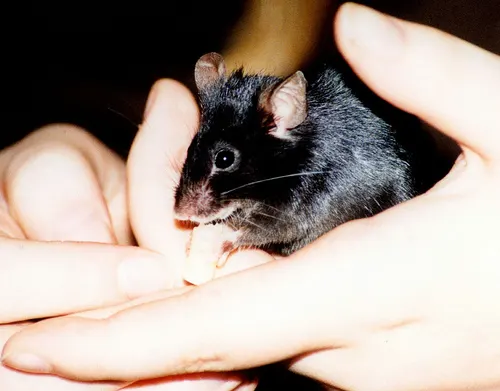
Quick Facts
| Attribute | Details |
|---|---|
| Type | Mouse |
| Size | Very Small (0.5-1 oz) |
| Lifespan | 1.5-3 years |
| Diet | Mouse food, seeds, vegetables |
| Social Needs | Social - females in groups |
| Activity Level | High |
| Care Level | Beginner |
| Space Requirements | Minimum 1 sq ft per mouse |
Recommended for Fancy Mice
Size and lifespan
Fancy mice weigh about half an ounce to an ounce and live roughly 1.5 to 3 years. They are busy at night and quick enough to vanish behind a dresser during a cage clean. Floor space matters more than a tall tube system that nobody can clean. A wheel with a solid surface saves tails.
Feed a pellet made for mice, plus a little fresh food, and skip the sticky seed-bar that is mostly honey. They are escape artists. A lid that "usually" stays on will be the night you lose one in the kitchen.
Tumors and respiratory disease
Mammary tumors and respiratory infections are the common end. A mouse is so small that a day without food is already late. Weigh it if you can. A dropping scale is the early sign. ASPCA small-pet notes are general. The not-eating page is the urgent version.
A house mouse, bred for color
The fancy mouse is Mus musculus, the same species as the house mouse, selected for coat, ears, and temperament in the pet and laboratory trade. An adult is about half an ounce to an ounce. The 1.5 to 3 year lifespan on the table is the expected life. A seed stick will not lengthen it. They are nocturnal, smell-oriented, and small enough to leave through a gap you would not notice on a hamster cage.
Floor space
The quick-facts line gives a minimum of 1 square foot per mouse. That figure is a floor, and it is a cramped one. Three females do better in a bin or a tank with 4 to 6 square feet, deep paper bedding, and a solid wheel at least 8 inches across so the spine stays flat. If you use bars, keep the gap at or under a quarter inch. Mice flatten and they leave. Wire wheels strip tails. Cedar and pine shavings are already ruled out in the questions, because the oils and the dust bother the airway. Ammonia does the rest. Spot-clean urine every couple of days and change bedding before your nose adapts to it. A mesh lid that "usually" sits in place will be the night one is in the stove.
Daily diet
A lab-style mouse pellet, about a teaspoon per mouse per day, is the base. Scatter a few seeds in the bedding so they forage, and add a vegetable bite a few times a week: a broccoli floret, a bit of carrot, a seedless cucumber slice. Pull uneaten fresh food the same day. The sticky seed bar sold as a treat is honey and millet, and it glues itself to teeth. Water in a bottle you tap every morning, because a bubble of air looks like a full sipper. A mouse that is suddenly thin has already been sick longer than you think.
Breathing, lumps, and appetite
Mycoplasma pulmonis is common in mice. Sneezing, a clicking chest, a head tilt, or a coat that stays rough is a same-day veterinary visit. A bedding change will not clear it. They crash. Mammary tissue runs along the body in mice, so a lump on the shoulder can be a mammary tumor in a male or a female. Do not squeeze it. Diarrhea from a pile of fruit dehydrates an ounce-weight animal in hours. Weigh the group on a kitchen scale weekly, or weigh a favorite in a cup. A dropping number is the early sign the opening mentions. The not-eating page is the urgent version, and a dog clinic may refuse the appointment, so ask an exotic practice first. No penicillin-type drug from a cabinet. Some antibiotics that are ordinary in dogs are dangerous in small rodents, and the dose is not yours to invent.
Handling
Scoop a mouse into a cup or a toilet-paper tube. Pulling the tail, even the base, can strip the skin the way it does in a gerbil. They bite when woken at noon. Handle in the evening, briefly, and stop when they squirm. They do not need a bath. A wet mouse gets cold. Nails wear on climbing. A nail curled into the pad needs a person who can see what they are cutting.
Enrichment
Deep bedding, cardboard, a buried box, and a scatter of the day's pellet are the enrichment. An exercise ball is a bad fit: small feet, overheating, and no way to stop. Floor time only inside a pen or a bathtub you have plugged and checked for the overflow hole, and only while you are there. A house mouse behind the refrigerator is a pet you will not catch humanely.
Costs in October 2026
A bin cage, lid, and wheel in October 2026 often cost $30 to $80. Bedding runs about $10 to $20 a month for a deep layer. Food is under $10. The mice themselves are often under $10 each, which is why people skip the clinic. An exotic exam is commonly $70 to $160 before a test, and many practices will tell you a mouse is "not worth it." Find the practice that will see one before you fall for a pair at the register. The short lifespan means you will do this goodbye more than once if you keep the hobby.
California law
Fish and Game Code section 2118 makes it unlawful to import, transport, possess, or release the listed wild animals into California without a permit. The rodent entry then excepts "domesticated races of rats or mice (white or albino; trained, dancing or spinning, laboratory-reared)." California Code of Regulations, Title 14, section 671, says those same races "are not restricted." Read section 2118 and ask the California Department of Fish and Wildlife before you move a pied or a satin mouse. Do not rely on a cashier. Hawaii's prohibited-animal examples cover other species; confirm mice with Plant Quarantine rather than treating a fancy mouse as livestock. A mouse turned loose in the yard becomes a pest, and release of a non-native rodent can be its own offense.
Housing groups and children
The questions already say adult males fight and female groups introduced young are the social cage. A male kept alone still needs the large floor and the wheel. He is not happier in a smaller cage because he is single. Children can measure food. Children should not be the only keeper. Handle with a cup. A pocket crushes a mouse or loses it behind the stove. Cats staring at the bin stress the mice even when the lid holds. Do not house them with gerbils, hamsters, or a rat. The rat will eventually treat the mouse as prey, or the mouse will simply be injured in play.
Before you buy
Ask for females unless you want a single male, and watch the seller sex them rather than trusting a dot of marker. Listen for sneezing in the bin. Look for lumps, wet tails, and crusty eyes. Mice that are hunched while their cagemates run are already sick. Ask what pellet they are on. Take home only as many as the bin you already own can hold at 4 or more square feet for a trio. A shoe box for the first week fills with ammonia and starts respiratory infections.
Fancy mouse questions
Can two male mice live together?
Adult males fight. House a male alone or with females only if you are prepared for a population explosion. Female groups, introduced young, are the social cage.
Why does the cage smell?
Males mark. Clean the urine spots often and do not use a strong pine or cedar bedding. Ammonia from urine in a dirty cage is what damages the airway.
Are they good kids' pets?
They are fast, fragile, and nocturnal. A child can help feed a mouse. A child should not be the only keeper, and nobody should carry one in a pocket.
How much space do fancy mice need?
The table lists 1 square foot per mouse as a minimum. A group of three females does better in 4 to 6 square feet of floor, with deep paper bedding, a solid wheel of at least 8 inches, and bar gaps at or under a quarter inch.
What should a fancy mouse eat each day?
About a teaspoon of a mouse pellet per animal, a few seeds scattered for foraging, and a small vegetable bite a few times a week. Skip honey seed bars. The honey sticks to the teeth.
Are colored fancy mice legal in California?
Section 2118 excepts "domesticated races of rats or mice (white or albino; trained, dancing or spinning, laboratory-reared)" from the rodent restriction. Title 14, section 671, says those races are not restricted. Ask the California Department of Fish and Wildlife whether your mouse is in that group before a move.
Decision Guides for Fancy Mouse
Use these only when comparing food, insurance, ownership budget, or beginner fit for this specific pet.