Emperor Scorpion
This page is educational reference material for preparing questions. A licensed veterinarian examines the animal, makes the diagnosis, and sets the treatment.
Affiliate links may earn a commission. Affiliate disclosure.
Quick Facts
| Attribute | Details |
|---|---|
| Type | Invertebrate |
| Size | 5-8 inches |
| Lifespan | 5-8 years |
| Temperament | Docile, Slow-Moving |
| Difficulty | Beginner |
| Origin | West Africa |
Emperor Scorpion Overview
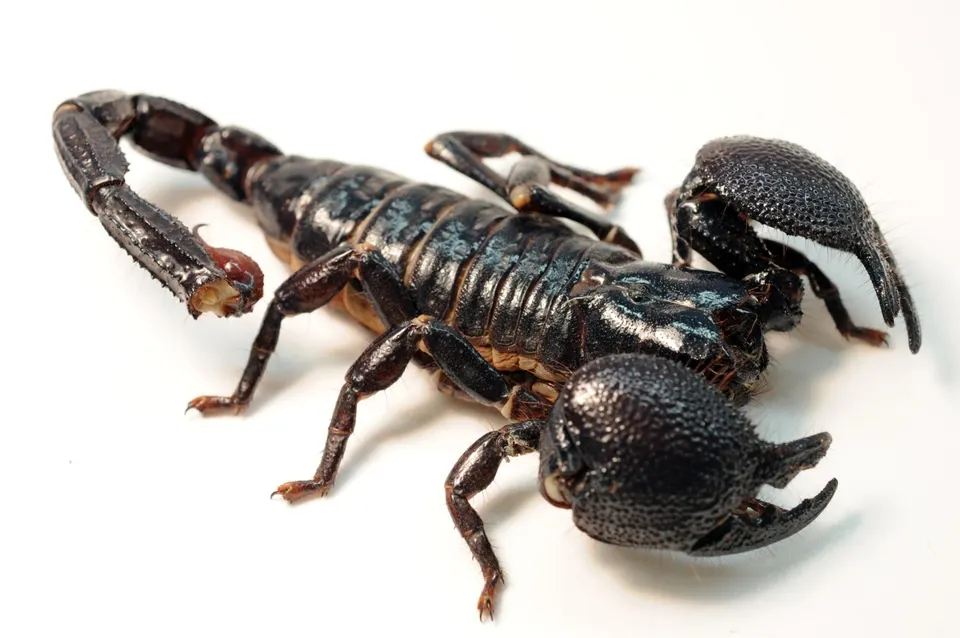
The emperor scorpion is Pandinus imperator, a large West African scorpion. This card lists 5 to 8 inches, a lifespan of 5 to 8 years, a docile and slow-moving temperament, and an origin of West Africa. The size includes the body and the pedipalps people notice first. Slow and docile describes a healthy adult that would rather threat-posture than chase. It does not describe a plastic toy, and it does not cancel the sting or the paperwork.
They are listed on CITES Appendix II. International movement is regulated, and the animals in the pet trade should be captive-bred with documents a keeper can actually trace. That sourcing rule, together with the humidity, is why this is not a beginner invertebrate even though the card's difficulty line is rosy and the venom is not in the deathstalker class. If a seller cannot say where the scorpion was bred, do not take it home and sort the legality out later.
They want humidity and a hide. A dry desert kit with a sand-colored background is the wrong habitat. The substrate needs to hold moisture, the hide needs to sit tight against the body, and the ventilation has to exist without turning the enclosure into a crisping box. A scorpion that stays on the water dish all day is often telling you the rest of the cage is too dry. Five to eight years is a long time to guess at that balance.
They can be kept in small groups of similar size. Similar is the condition. A much larger animal will treat a smaller cagemate as food, and a freshly molted scorpion is soft and easy to damage. Give more than one hide so every animal can get out of sight. Do not crowd a group because the species is sometimes communal. Feed enough that they are not hunting each other between meals. Insects, not leftover table scraps, are the prey.
The venom is mild compared with a deathstalker. Mild is a comparison, not a claim that the sting is imaginary. A healthy adult can still puncture skin, and a person who swells, vomits, or has trouble breathing after a sting needs medical care. Do not keep this animal on a shoulder or in a pocket to prove the venom point. Forceps, a calm hand, and a plan that keeps guests from tapping the lid are the handling policy. There is no dose on this page because none belongs here.
Every Emperor Scorpion is an individual.
Temperament & Behavior
Ultraviolet light makes them fluoresce. The cuticle glows under a UV source, which is a way to confirm where a dark animal is sitting, not a vitamin the scorpion has to bask under. They do not need a reptile UVB lamp the way a desert lizard does. Leaving a powerful lamp on the enclosure to make the glow permanent overheats a species that wanted a humid hide, not a spotlight. Use UV as a check, then turn it off.
Five to eight inches and 5 to 8 years, from West Africa, with a slow walk and a mild sting, still adds up to a regulated animal in a humid box. Buy captive-bred. Keep the paperwork. Hold the humidity. House only similar sizes together. The beginner label some charts paste on emperors skips the two parts that actually remove people from the hobby: a dry cage, and an animal that should not have been sold.
Housing & Environment Requirements
Provide an appropriately sized habitat for your Emperor Scorpion.
Diet & Nutrition
Research species-specific dietary needs.
First ingredient should be a specific animal protein. Calorie content per cup helps you portion correctly for your Emperor Scorpion's size.
Common Health Issues
Research common health concerns specific to Emperor Scorpions and find a veterinarian experienced with this species before bringing one home. Early veterinary intervention is crucial as small animals can deteriorate quickly.
Good health outcomes for an Emperor Scorpion depend less on reacting to problems and more on preventing them from gaining a foothold.
Grooming & Maintenance
Beginner-Friendly Rating: Beginner
Emperor Scorpions are excellent for newcomers to small-animals keeping.
Before acquiring an Emperor Scorpion, research thoroughly and prepare the habitat in advance. Join online communities and forums dedicated to exotic pet keeping to connect with experienced keepers who can offer guidance specific to Emperor Scorpion care.
Socialization & Enrichment
Environmental enrichment is essential for Emperor Scorpions to thrive in captivity. Rotating enrichment items keeps the environment novel and stimulating.
Always wash hands before and after handling any pet. Learn to read your Emperor Scorpion's body language to understand when they are comfortable, stressed, or unwell.
Where to Find Emperor Scorpions
Find Emperor Scorpions through reputable breeders, specialty pet shops, or rescue organizations. Online communities can help connect you with responsible sources in your area.
Cost of Ownership Overview
| Expense | Estimated Cost |
|---|---|
| Initial Setup (habitat + supplies) | $100-$500+ |
| Animal Purchase | $10-$500+ |
| Annual Food & Bedding | $150-$500 |
| Annual Vet Care | $50-$200 |
One of the more practical financial habits for Emperor Scorpion ownership is maintaining a small emergency reserve.
Expect the first year of Emperor Scorpion ownership to carry the heaviest financial load. That initial period bundles together a wave of one-time costs — an appropriate enclosure, bedding, an initial vet checkup, feeding supplies, and enrichment accessories — that will not repeat. Once you clear that first-year hurdle, the ongoing baseline drops to food, bedding, routine health checks, and enrichment supplies.
Regular health assessments for your Emperor Scorpion are an investment, not an expense. The conditions most likely to be caught at a routine checkup — early-stage illness, dental issues, and nutritional imbalances — tend to be far more manageable when identified before they produce noticeable symptoms.
Daily Care Routine for Emperor Scorpions
Establishing a consistent daily care routine ensures your Emperor Scorpion stays healthy and thriving. Ensure habitat conditions (temperature, humidity) are within appropriate ranges.
Common Questions About Emperor Scorpions
Owners planning for an Emperor Scorpion usually concentrate on predictable topics; this one benefits meaningfully from more attention than it typically gets.
Are Emperor Scorpions good pets for children?
With proper adult supervision, Emperor Scorpions can be appropriate pets for responsible children. They teach valuable lessons about animal care and responsibility.
How much space do Emperor Scorpions need?
Emperor Scorpions require an appropriately sized habitat that meets their specific needs. Research species-specific housing requirements. Always provide more space than the minimum recommendation when possible.
How long do Emperor Scorpions live?
Emperor Scorpions typically live 5-8 years with proper care. Consider the time commitment before acquiring any pet.
What veterinary care do Emperor Scorpions need?
Find a veterinarian experienced with exotic invertebrates before bringing one home. Annual wellness exam (AAHA Preventive Healthcare Guidelines are recommended for most species.
Long-Term Commitment & Responsible Ownership
Owning an Emperor Scorpion is a commitment for the animal's full lifespan of 5-8 years.
Identify pet sitters experienced with Emperor Scorpions, connect with online and local communities, and ensure you have emergency veterinary access. Teaching responsible pet ownership to children through proper care of an Emperor Scorpion creates lasting values about compassion and commitment.
Get Personalized Emperor Scorpion Guidance
Ask Our AI NowDecision Guides for Emperor Scorpion
Use these only when comparing food, insurance, ownership budget, or beginner fit for this specific pet.
Emperor Scorpion May Be Great For:
- A keeper who wants Pandinus or a similar emperor and will provide heat, humidity, and a hide
- Someone who accepts a sting still hurts even when the venom is mild compared with a bark scorpion
- An owner who will not handle for fun and will leave a molting scorpion alone
Emperor Scorpion May Not Be Ideal For:
- A child who wants a handling pet
- A dry, cold tank
- Anyone who cannot tell an emperor from a more dangerous scorpion sold under a vague name
- Plan the adult size, the vet, and the daily work for the emperor scorpion before it comes home.
An emperor scorpion is a moist-forest invertebrate, not a desert pet. They need a deep damp substrate, a hide, and a temperature that does not cook them under a badly placed heat lamp. They eat insects, not fruit. The sting is usually compared to a bee, which is still a reason to know whether anyone in the house is allergic, and they should not be handled as a toy. A dry tank is how emperors die.
Keeping an Emperor Scorpion shifts the way you think about animal behavior entirely — these are slow, methodical creatures that reward patient observation far more than frequent handling. Watching one stalk and subdue a cricket in the dim glow of a red nightlight reveals an ancient predatory elegance that no amount of reading fully prepares you for. Owners who respect the scorpion's preference for undisturbed hiding spots and stable humidity find that their animals remain calm during necessary maintenance and rarely adopt a defensive posture.