Dwarf Hamster (Campbell's & Winter White)
This page is educational reference material for preparing questions. A licensed veterinarian examines the animal, makes the diagnosis, and sets the treatment.
Affiliate links may earn a commission. Affiliate disclosure.
Quick Facts
| Attribute | Details |
|---|---|
| Scientific Name | Phodopus campbelli / Phodopus sungorus |
| Origin | Central Asia, Siberia |
| Size | Small (3-4 inches / 7-10 cm) |
| Lifespan | 1.5-2.5 years |
| Diet | Omnivore (seeds, vegetables, protein) |
| Activity Level | High (crepuscular/nocturnal) |
| Social Needs | Can sometimes live in same-sex pairs |
| Care Level | Intermediate |
| Space Requirements | Minimum 450 sq inches floor space |
Recommended for Dwarf Hamsters
Kaytee - Dwarf hamster food and habitats | Oxbow - Premium small animal nutrition | Chewy Autoship - Save 35% on supplies
Dwarf Hamster Overview
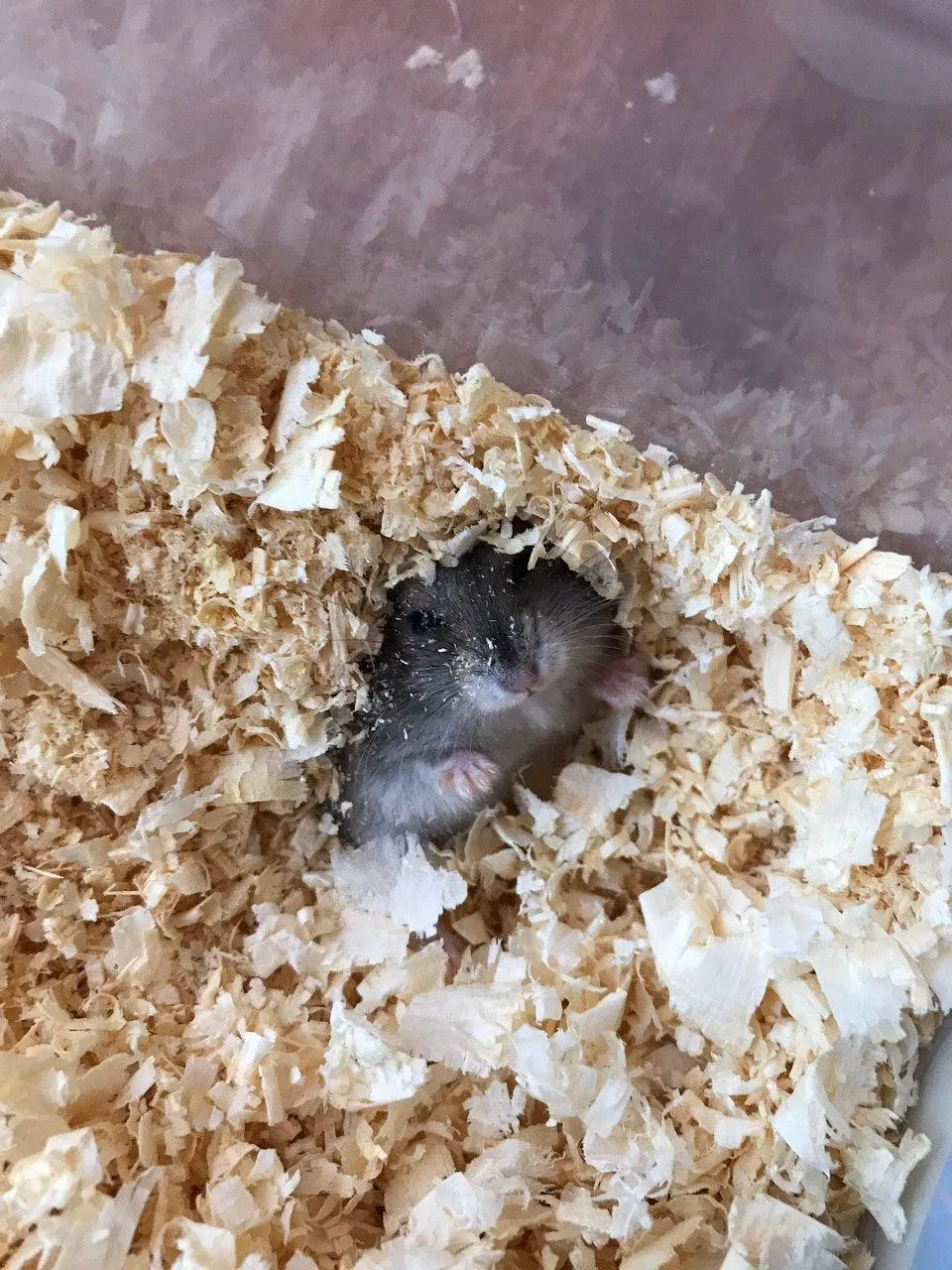
Dwarf hamsters are tiny, energetic rodents that have become increasingly popular pets. The two most common species are Campbell's Dwarf Hamsters and Winter White Dwarf Hamsters (also called Djungarian or Siberian hamsters). These species are closely related and are often hybridized in the pet trade, making pure specimens difficult to find.
These diminutive hamsters pack big personalities into their small bodies. They're faster and more active than Syrian hamsters, making them fascinating to watch but sometimes more challenging to handle. Under the right circumstances, they may be able to live in same-sex pairs, though this isn't guaranteed.
This page covers two dwarf hamsters, Campbell's (Phodopus campbelli) and the winter white (Phodopus sungorus). It does not cover Syrians, and it does not cover Roborovskis. Both animals here are small and nocturnal. The card lists 3 to 4 inches (7 to 10 cm), a lifespan of 1.5 to 2.5 years, high activity that is also crepuscular, intermediate care, and a minimum of 450 square inches of floor. Origin is Central Asia and Siberia. A Syrian is a larger, solitary hamster in a different genus. A Roborovski is the third Phodopus and is not the pair described here.
Campbell's are often more aggressive in groups. The card says these dwarf hamsters can sometimes live in same-sex pairs, which is a maybe, not a promise, and it fails more often with Campbell's. Fighting looks like chasing that does not stop, bitten ears, and one animal camping on the wheel while the other stops eating. Separate them. Do not wait for a bond to appear after blood. Winter whites can change coat color with day length, fading toward white when the days are short and darkening again when the light lasts longer. That molt is normal. It is not a sign you bought a Campbell's that is ill, and it is not a reason to add a sun lamp.
Housing and environment design for Dwarf Hamster (Campbell's & Winter White) has evolved considerably as our understanding of small animal welfare has improved. The size and complexity of the enclosure or hutch directly correlates with your Dwarf Hamster (Campbell's & Winter White)'s physical health, behavioral normality, and overall lifespan. Experienced Dwarf Hamster (Campbell's & Winter White) keepers consistently advocate for the largest enclosure or hutch that space and budget allow, supplemented with regular supervised free-roaming time outside the enclosure.
Species Comparison
Understanding the two main species.
Campbell's Dwarf Hamster
- Scientific Name: Phodopus campbelli
- Size: 3-4 inches
- Colors: Many color variations from breeding
- Temperament: Can be nippy if not handled regularly
- Social: May live in pairs if introduced young
- Diabetes Risk: Higher susceptibility - limit sugary foods
Winter White Dwarf Hamster
- Scientific Name: Phodopus sungorus
- Size: 3-4 inches
- Colors: Fewer variations than Campbell's
- Color Change: May turn white in winter with reduced light
- Temperament: Often considered slightly friendlier
- Social: May live in pairs if introduced young
Housing Requirements
Dwarf hamsters need appropriate housing despite their small size: A care plan fitted to this particular Dwarf Hamster almost always produces better behavior and better health markers.
Cage Size
- Minimum: 450 square inches floor space
- Recommended: 600+ square inches for optimal wellbeing
- Bar Spacing: Maximum 1/4 inch (they can squeeze through small gaps!)
- Options: Aquariums or bin cages often safer than wire cages
Essential Equipment
- Wheel: 6.5-8 inch diameter minimum (back should be straight)
- Bedding: 6+ inches paper-based or aspen for burrowing
- Multiple Hides: If keeping pairs, provide multiple hiding spots
- Water Bottle: Small-nozzle bottle appropriate for tiny mouths
- Sand Bath: Chinchilla sand for grooming
- Chews: Wooden toys for dental health
Escape Artists
Dwarf hamsters are notorious escape artists due to their tiny size. They can squeeze through surprisingly small spaces and are fast once out. Ensure bar spacing is no more than 1/4 inch, or use aquarium/bin cages. Check enclosure security regularly!
Diet & Nutrition
Dwarf hamsters have fast metabolisms and specific needs: Dwarf Hamster-aware routines catch issues earlier, respond faster, and prevent more than generic ones.
Daily Diet Components
- Seed Mix/Pellets: 1 tablespoon of dwarf hamster-specific food
- Fresh Vegetables: Small amounts (appropriate to their size)
- Protein: 2-3 times weekly (mealworms, egg)
- Treats: Sparingly - watch sugar intake
- Water: Fresh water always available
Diabetes Concerns
- Campbell's: Highly susceptible to diabetes
- Avoid: Sugary fruits, corn, peas (high sugar content)
- Limited: Even healthy treats should be small portions
- Signs: Excessive thirst/urination, weight changes
- Choose: Low-sugar vegetables like cucumber, broccoli
When it comes to Dwarf Hamster (Campbell's & Winter White) nutrition, simplicity usually wins. A well-formulated food that meets your Dwarf Hamster (Campbell's & Winter White)'s specific needs is better than a rotation of trendy diets. Focus on protein quality, calorie appropriateness for your Dwarf Hamster (Campbell's & Winter White)'s size and activity level, and avoiding ingredients your Dwarf Hamster (Campbell's & Winter White) does not tolerate well. The rest is marketing.
Learning to read a pet food label takes five minutes and will serve you for the life of your Dwarf Hamster (Campbell's & Winter White). Look at the guaranteed analysis for protein and fat percentages that match your Dwarf Hamster (Campbell's & Winter White)'s needs.
Social Behavior
Dwarf hamsters have different social needs than Syrians.
Keeping Pairs
- Possible: Same-sex pairs may cohabitate successfully
- Best Chance: Littermates raised together from birth
- Not Guaranteed: Fighting can occur even in bonded pairs
- Watch For: Signs of aggression or stress
- Always: Have a second enclosure ready if separation needed
Signs of Fighting
- Wounds, especially around face and rear
- One hamster hoarding all food
- One hamster always hiding
- Squeaking and chasing
- Weight loss in one hamster
Both species need the 450 square inches, a solid wheel, and an omnivore diet of seeds, vegetables, and some protein. One and a half to two and a half years is the whole life, so a hamster that is already adult in the shop has spent a visible piece of it. They are awake at night and around dawn and dusk. A child who wants a noon pet will mostly see a pile of bedding. Intermediate care is telling the two species apart, refusing to house them like Syrians or like Roborovskis, and treating a pair as a trial that can end in two cages.
Social needs vary considerably among small animals, and Dwarf Hamster (Campbell's & Winter White) specifically have particular requirements that owners should understand before acquisition. Some Dwarf Hamster (Campbell's & Winter White) thrive in pairs or small groups, while others may display territorial aggression toward cage mates. Age, sex, and the introduction method all influence compatibility. Even naturally social Dwarf Hamster (Campbell's & Winter White) require careful introduction protocols when adding new cage mates—sudden introductions in shared territory can trigger fight-or-flight responses that establish lasting negative associations.
Activity patterns and play preferences in Dwarf Hamster (Campbell's & Winter White) provide important insights into their overall wellbeing. A healthy, well-adjusted Dwarf Hamster (Campbell's & Winter White) will display curiosity about new enrichment items, engage in species-typical play behaviors, and maintain consistent activity patterns within their normal circadian rhythm. Keepers who establish a baseline understanding of their individual Dwarf Hamster (Campbell's & Winter White)'s normal behavior patterns are better positioned to identify and address problems early, when intervention is most effective and least costly.
Common Health Issues
Dwarf hamsters are prone to certain conditions.
Diabetes
- Prevalence: Common in Campbell's and hybrids
- Signs: Excessive drinking, urination, weight changes
- Prevention: Low-sugar diet, avoid sugary treats
- Management: Dietary control; consult vet
additional breed-specific health predispositions that warrant monitoring
- Wet Tail: Less common than in Syrians but still possible
- Tumors: Can occur, especially in older hamsters
- Respiratory Issues: From dusty bedding or drafts
- Dental Problems: Overgrown teeth
- Glaucoma: Seen in some Campbell's lines
Health management for a Dwarf Hamster (Campbell's & Winter White) works best when owners treat it as an ongoing conversation with their veterinarian rather than a once-a-year formality.
Genetic testing gives Dwarf Hamster (Campbell's & Winter White) owners a head start on conditions that might otherwise catch them off guard. By understanding which health risks are written into your Dwarf Hamster (Campbell's & Winter White)'s DNA, you can work with your vet to schedule targeted checks and make informed choices about diet, exercise, and supplementation.
The middle years of a Dwarf Hamster (Campbell's & Winter White)'s life are when subtle health shifts begin to appear — slightly slower recovery after exercise, a preference for softer resting spots, or minor changes in appetite.
Handling & Taming
Dwarf hamsters can be tamed but require patience.
Challenges
- Small size makes handling difficult
- Fast and agile - can leap from hands
- May be nippy if not handled regularly
- Some individuals never become fully tame
Taming Tips
- Start by letting them get used to your scent
- Offer treats from your hand
- Cup in hands rather than grabbing
- Handle over a safe surface (bed, floor)
- Keep sessions short but regular
- Be patient - may take weeks to months
Behavior & Activity
Understanding dwarf hamster behavior: Your exotic veterinarian and experienced Dwarf Hamster owners can offer perspective tailored to your situation.
Activity Patterns
- Crepuscular: Most active at dawn and dusk
- Nocturnal: Also active at night
- Wheel Running: Essential - they run miles nightly
- Burrowing: Love to dig and create tunnels
Common Behaviors
- Scent Marking: Rub bellies on surfaces
- Pouching: Stuff cheeks with food
- Sand Bathing: Roll in sand to clean fur
- Freezing: Stand motionless when startled
- Grooming: Frequent self-grooming
Dwarf Hamsters Are Great For:
- Those who enjoy watching active pets
- Owners wanting potentially social hamsters
- People with experience handling small animals
- Night owls or those home in evenings
- Those who appreciate small, cute pets
Dwarf Hamsters May Not Be Ideal For:
- First-time small pet owners (Syrians often easier)
- Young children (too small and fast)
- Those wanting a cuddly, handleable pet
- Light sleepers (active and noisy at night)
- Those not prepared for potential pair separation
Bringing any small animal into your home is a long-term commitment, and the Dwarf Hamster (Campbell's & Winter White) is no exception. A Dwarf Hamster (Campbell's & Winter White) thrives in a household where everyone participates in care, not just the person who wanted one.
People who live with a Dwarf Hamster (Campbell's & Winter White) tend to develop a deep appreciation for the breed's personality — its distinct character becomes part of the household's rhythm.
Cost of Ownership
Planning ahead financially is one of the most practical things you can do before getting a Dwarf Hamster (Campbell's & Winter White). Dwarf Hamster (Campbell's & Winter White) care costs are real and ongoing.
These cost ranges reflect typical spending, but every Dwarf Hamster (Campbell's & Winter White) is different. Use these numbers as a planning baseline, not a guarantee.
Most new Dwarf Hamster (Campbell's & Winter White) owners are surprised by first-year costs. The good news is that subsequent years are more predictable. Just keep in mind that senior Dwarf Hamster (Campbell's & Winter White) may need additional care as they enter the last few years of their 1.5-2.5 years lifespan.
Think of preventive care as an insurance policy with a guaranteed payout. For Dwarf Hamster (Campbell's & Winter White) owners, staying on top of preventive care is one of the simplest ways to reduce lifetime veterinary expenses.
Related Species to Consider
If you're interested in Dwarf Hamsters, you might also consider.
- Syrian Hamster - Larger, easier to handle
- Roborovski Hamster - Smallest species, very fast
- Chinese Hamster - Longer body, different species
- Gerbil - Social, slightly larger
Ask Our AI About Dwarf Hamsters
Have specific questions about dwarf hamster care, species differences, or health? Our AI assistant can provide personalized guidance.
Get Personalized AI Guidance
Before finalising any real Dwarf Hamster diet change, flag it to your exotic veterinarian — they are best placed to surface breed- and individual-specific risks.
Ask Our AI NowDecision Guides for Dwarf Hamster (Campbell's & Winter White)
Use these only when comparing food, insurance, ownership budget, or beginner fit for this specific pet.
- Best Food for Dwarf Hamster (Campbell's & Winter White) →
- Best Pet Insurance for Dwarf Hamster (Campbell's & Winter White) →
- Dwarf Hamster (Campbell's & Winter White) Cost to Own →
- Dwarf Hamster (Campbell's & Winter White) Health Costs →
- Is Dwarf Hamster (Campbell's & Winter White) Good for First-Time Owners? →