Chinese Hamster
This page is educational reference material for preparing questions. A licensed veterinarian examines the animal, makes the diagnosis, and sets the treatment.
Affiliate links may earn a commission. Affiliate disclosure.
Quick Facts
| Attribute | Details |
|---|---|
| Scientific Name | Cricetulus griseus |
| Origin | Northern China, Mongolia |
| Size | Small (3-5 inches / 8-13 cm) |
| Lifespan | 2.5-3 years |
| Diet | Omnivore (seeds, vegetables, protein) |
| Activity Level | High (crepuscular/nocturnal) |
| Social Needs | Solitary preferred (like Syrians) |
| Care Level | Intermediate |
| Space Requirements | Minimum 450 sq inches floor space |
Recommended for Chinese Hamsters
Kaytee - Hamster supplies and food | Oxbow - Premium hamster nutrition | Chewy Autoship - Save 35% on supplies
Chinese Hamster Overview
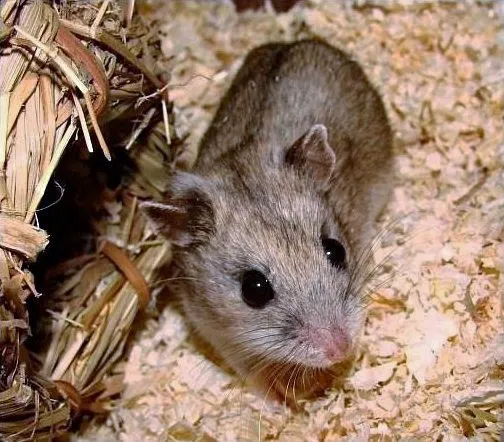
The Chinese Hamster is often called a "dwarf" hamster, but it's actually a distinct species in a different genus from true dwarf hamsters. These unique hamsters are easily recognizable by their long, slim body shape and notably longer tail than other hamster species, giving them a mouse-like appearance that sets them apart.
Chinese hamsters were first kept as laboratory animals in the 1920s and became popular as pets starting in the 1970s. They're known for being gentle, having good temperaments, and being excellent climbers thanks to their prehensile-like tail that helps with balance.
The Chinese hamster is Cricetulus griseus, a small hamster from northern China and Mongolia with a longer tail than a dwarf hamster. It is not a Campbell's, not a winter white, and not a Syrian that stayed small. This card lists 3 to 5 inches (8 to 13 cm), a lifespan of 2.5 to 3 years, high activity that is crepuscular and nocturnal, and intermediate care. The body is slim. The tail is visible. Someone expecting a round Phodopus with a stub has the wrong species in the box.
They are often kept solitary, and the card says solitary is preferred, the way it is for Syrians. Do not buy two because a dwarf-hamster page said pairs are possible. That advice belongs to a different genus. Floor space is a minimum of 450 square inches, which is a footprint, not a tiny travel cage with a wheel crammed on top. They need a solid wheel that will not catch that longer tail, hides, and bedding deep enough to dig. A wire wheel and a bare tray are how tails and feet get hurt.
A conversation with your exotic veterinarian ensures these general guidelines get adapted to your Chinese Hamster's unique needs, age, and overall condition.
Physical Characteristics
Chinese hamsters have distinctive features.
Unique Traits
- Body Shape: Long and slender, more mouse-like
- Tail: Relatively long (about 1 inch) - used for balance
- Size: Between dwarf and Syrian hamsters
- Coloring: Wild type is brown/gray with dark dorsal stripe
- White Spot: Distinctive white spot variant exists
- Climbing: Excellent climbers using tail for balance
Housing Requirements
Chinese hamsters have specific housing needs.
Cage Size
- Minimum: 450 square inches floor space
- Recommended: 600+ square inches
- Bar Spacing: Maximum 1/4 inch (small body, great escape artists)
- Best Options: Aquariums or bin cages safest
Essential Equipment
- Wheel: 8-inch diameter minimum
- Deep Bedding: 6+ inches for burrowing
- Climbing Opportunities: Branches, ropes (they love to climb!)
- Multiple Hides: Various hiding spots
- Water Bottle: Small-nozzle bottle
- Sand Bath: For grooming
Expert Escape Artists
Chinese hamsters are incredible climbers and squeezers. Their slim bodies allow them to fit through surprisingly small gaps. Wire cages are risky - if using one, ensure bar spacing is no more than 1/4 inch. Aquariums with secure mesh lids are the safest option.
Diet & Nutrition
Chinese hamsters need a balanced omnivorous diet.
Daily Diet
- Seed Mix/Pellets: 1-2 tablespoons quality hamster food
- Fresh Vegetables: Small portions daily
- Protein: Mealworms, egg, or plain meat 2-3 times weekly
- Treats: Small amounts of fruit, seeds occasionally
- Water: Fresh water always available
Health Considerations
- Diabetes: Can be prone to diabetes - limit sugary foods
- Portion Control: Don't overfeed despite their active nature
- Fresh Foods: Remove uneaten fresh food daily
First ingredient should be a specific animal protein. Calorie content per cup helps you portion correctly for your Chinese Hamster's size.
Social Behavior
Chinese hamsters are generally solitary: Your exotic veterinarian and experienced Chinese Hamster owners can offer perspective tailored to your situation.
Social Nature
- Solitary Preferred: Best kept alone like Syrians
- Female Aggression: Females especially aggressive to other hamsters
- Some Males: Occasional male pairs may coexist if raised together
- Not Recommended: Housing together generally not advised
- Human Bond: Often bond well with their owners
The diet is omnivore: seeds, vegetables, and some protein, offered as a hamster mix they can actually eat, not a bowl of sunflower seeds alone. Two and a half to three years is a short life, and it gets shorter if the cage is small and the animal is paired with a stranger that fights. Intermediate care is the species difference. They look like a pet-shop hamster and then nip, or fade, when they are kept on dwarf or Syrian rules. Check the tail and the scientific name before you set the housing.
Common Health Issues
Chinese hamsters face some health considerations: Upfront effort to understand how a Chinese Hamster actually operates usually pays dividends in fewer vet emergencies.
Diabetes
- Risk: Moderate susceptibility to diabetes
- Prevention: Low-sugar diet, avoid sugary fruits
- Signs: Excessive thirst, urination, weight changes
Other Concerns
- Respiratory Issues: From dusty bedding or cold
- Dental Problems: Need chews for tooth wear
- Tumors: Can occur in older hamsters
- Wet Tail: Possible but less common than Syrians
- Glaucoma: Seen in some lines
Good health outcomes for a Chinese Hamster depend less on reacting to problems and more on preventing them from gaining a foothold.
Handling & Taming
Chinese hamsters often become quite tame: Your exotic veterinarian and experienced Chinese Hamster owners can offer perspective tailored to your situation.
Temperament
- Generally Gentle: Often have good temperaments
- Less Nippy: Typically less likely to bite than some dwarfs
- Curious: Often interested in interacting
- Agile: Quick and good at climbing
Handling Tips
- Let them climb onto your hands rather than grabbing
- Handle over secure surface - they're fast
- They may grip fingers with their paws (normal behavior)
- Regular handling helps maintain tameness
- Evening handling when naturally waking
Taming Process
- Allow settling-in period first (5-7 days)
- Let them get used to your scent
- Offer treats from your hand
- Let them climb onto you voluntarily
- Build up handling time gradually
Behavior & Activity
Chinese hamster behavior traits: Health and behavior metrics for a Chinese Hamster. A Chinese hamster is a small, fast, often solitary hamster, not a dwarf that wants a roommate. They are escape artists and they bite when grabbed. Give them a deep cage, a solid wheel, and a seed-and-pellet mix with protein. Diabetes and a short life, often around two years, are the expectation. Housing two together because a care sheet said hamsters are social is how these ones get injured.
Activity Patterns
- Crepuscular: Most active dawn and dusk
- Nocturnal: Also active at night
- Wheel Running: Active wheel runners
- Climbing: More arboreal than other hamsters
Common Behaviors
- Climbing: Love vertical exploration using their tails
- Hanging: May hang from cage bars or accessories
- Burrowing: Still enjoy creating tunnels
- Food Hoarding: Store food in cheek pouches and nest
- Grooming: Regular self-grooming
Availability & Legality
Important considerations.
- Less Common: Harder to find than Syrians or dwarfs
- Specialty Breeders: May need to find dedicated breeders
- Legal Restrictions: Illegal to keep in some US states (California, New Jersey, Hawaii)
- Check Local Laws: Verify legality in your area before acquiring
Is a Chinese Hamster Right for You?
Few Chinese Hamster care topics compound as well as this one — a small initial investment in understanding pays daily. Use these defaults as a starting point and adjust to the cadence your Chinese Hamster actually prefers — the right rhythm typically becomes obvious quickly.
Chinese Hamsters Are Great For:
- Those who appreciate unique-looking pets
- Owners who enjoy watching climbing behaviors
- People wanting a hamster with good temperament
- Those seeking a more handleable small hamster
- Intermediate hamster keepers
Chinese Hamsters May Not Be Ideal For:
- Residents of states where they're illegal
- Those who can't find reputable breeders locally
- First-time owners (Syrians often easier)
- Those wanting to keep hamsters together
- Anyone without secure escape-proof housing
A Chinese Hamster can be a wonderful companion for the right person.
Life with a Chinese Hamster settles into a rhythm that most owners come to genuinely enjoy.
Cost of Ownership
Expect the first year of Chinese Hamster ownership to carry the heaviest financial load. That initial period bundles together a wave of one-time costs — an appropriate enclosure, bedding, an initial vet checkup, feeding supplies, and enrichment accessories — that will not repeat. Once you clear that first-year hurdle, the ongoing baseline drops to food, bedding, routine health checks, and enrichment supplies.
Regular health assessments for your Chinese Hamster are an investment, not an expense. The conditions most likely to be caught at a routine checkup — early-stage illness, dental issues, and nutritional imbalances — tend to be far more manageable when identified before they produce noticeable symptoms.
Related Species to Consider
If you're interested in Chinese Hamsters, you might also consider.
- Syrian Hamster - Larger, also solitary, easier to find
- Dwarf Hamsters - Smaller, more readily available
- Roborovski Hamster - Smallest, can be social
- Fancy Mouse - Similar slim body, social
Ask Our AI About Chinese Hamsters
Have specific questions about Chinese hamster care, availability, or handling? Our AI assistant can provide personalized guidance.
Get Personalized AI Guidance
Ask Our AI NowDecision Guides for Chinese Hamster
Use these only when comparing food, insurance, ownership budget, or beginner fit for this specific pet.