Softshell Turtle
This page is educational reference material for preparing questions. A licensed veterinarian examines the animal, makes the diagnosis, and sets the treatment.
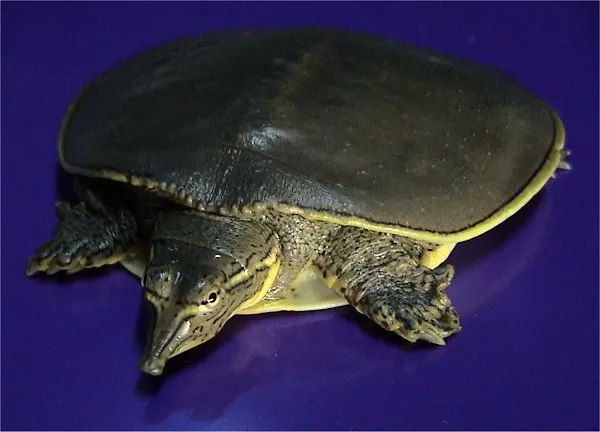
Quick Facts
| Attribute | Details |
|---|---|
| Type | Turtle |
| Size | Large (6-24 in) |
| Lifespan | 25-50 years |
| Temperature | 75-82°F |
| Water Type | Aquatic |
| Enclosure | 75+ gal aquatic |
| Care Level | Intermediate |
| Diet | Fish, insects, pellets |
| Temperament | Fast, Can be nippy |
Recommended for Softshell Turtles
Affiliate links may earn a commission. Affiliate disclosure.
ZooMed - Heating & lighting | ExoTerra - Enclosures & decor | Chewy - Aquatic supplies
Softshell Turtle Habitat Essentials
For a Softshell Turtle, consistent environmental monitoring and a proactive husbandry rhythm are foundational — every other care layer depends on them.
A group of fast river turtles
Softshell turtle on this page means the North American genus Apalone: spiny, smooth, and Florida softshells, plus the odd imported relative. Size runs 6 to 24 inches, because that is the spread, not a promise. Lifespan is about 25 to 50 years. Care is intermediate. A pancake-shaped hatchling becomes a buried, long-necked adult that can bite hard.
They are fully aquatic and they bask. Water around 75 to 82°F, a dry dock, UVB, and excellent filtration are the base. Seventy-five gallons is a start for a smaller species and cramped for a large Florida female. Sand they can hide in matters. Gravel eats the soft skin. A lid matters because they climb and they are quick.
Fish, insects, pellets
They eat fish, insects, and pellets. They will also eat tank mates, including fish you liked. Feed with tongs. Hands stay out of the water at dinner. Calcium and a full dry-out under the lamp keep the skin healthier. The leathery shell punctures and grows fungus when the water is dirty or the dock is a sharp plastic edge.
The US rule against selling turtles under 4 inches applies. Salmonella precautions apply. Species that are native and protected should not be collected. A softshell that stays on the surface gasping needs a reptile vet. Use ARAV to find a clinic that will see a turtle.
Softshell turtle questions
Which softshell is the pet one?
There is not a single pet species. Spiny, smooth, and Florida softshells all show up, and adult size runs from about 6 inches to 2 feet. Ask for the species before you trust a tank size.
Do softshells need sand?
They bury themselves. Fine sand is the usual floor. Rough gravel scrapes the skin that replaces a hard shell.
Are softshell turtles friendly?
No. They are fast and nippy. A food-scented hand in the water gets bitten. Watch them. Do not cuddle them.
Decision Guides for Softshell Turtle
Use these only when comparing food, insurance, ownership budget, or beginner fit for this specific pet.