Sailfin Dragon (Philippine Sailfin Lizard)
This page is educational reference material for preparing questions. A licensed veterinarian examines the animal, makes the diagnosis, and sets the treatment.
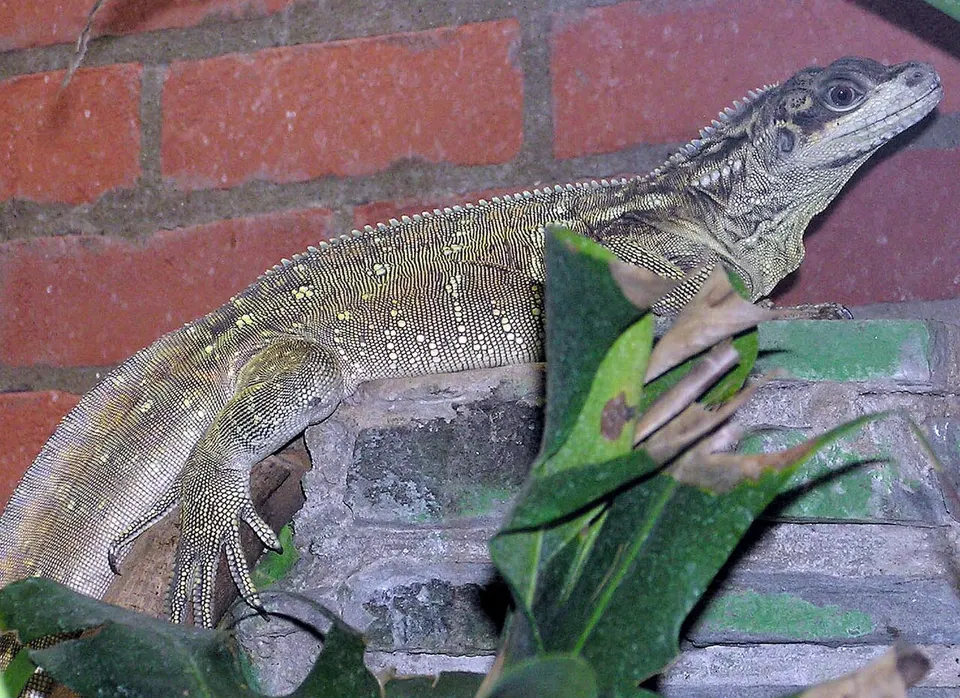
Quick Facts
| Attribute | Details |
|---|---|
| Scientific Name | Hydrosaurus pustulatus |
| Origin | Philippines, Indonesia |
| Size | 3-4 feet (90-120 cm) |
| Lifespan | 15-25 years |
| Temperature | 80-90°F (27-32°C), basking to 100°F |
| Humidity | 70-80% |
| Enclosure | 8x4x6 feet minimum (adults) |
| Care Level | Advanced |
| Diet | Omnivore |
| Temperament | Skittish, flighty, can be nervous |
Recommended for Sailfin Dragons
Affiliate links may earn a commission. Affiliate disclosure.
Dubia Roaches - Premium feeders | Reptile Supply - Large enclosures | Arcadia - Quality UVB lighting
A sail, a pool, and a long flight distance
Philippine sailfin lizards are Hydrosaurus pustulatus. Adults reach about 3 to 4 feet, males with the taller fin. They commonly reach 15 to 25 years, and care is advanced. They are semi-aquatic, arboreal, and nervous. People buy them for the fin and then meet a lizard that smashes its nose on the glass trying to leave.
The enclosure listed is at least 8 by 4 by 6 feet. Include a pool deep enough to swim, branches over it, temperatures of 80 to 90°F with a basking spot near 100°F, humidity of 70 to 80 percent, and UVB. They eat insects, greens, and some other protein. Calcium is required. Cover the viewing glass if the lizard battering-rams its face. A raw nose infects. Care level is advanced because of the space and the stress, not because the diet is a secret.
Captive-bred, and left mostly alone
These lizards are protected. Captive-bred babies from a known breeder are the ethical path, and they still grow into a large nervous adult. Handling is minimal. A fall from the finned back of a startled adult is an injury. Do not release one. A Florida canal is not a rescue plan.
A sailfin off its food, or one that stays in the water and gasps, needs a reptile vet. Search ARAV before the animal is in crisis. Early appetite changes are covered on the not-eating page.
Sailfin dragon questions
Why is my sailfin so nervous?
They are skittish, flighty, and nervous. A calm sailfin is an accomplishment of the setup, not the default. Chasing one to prove it is tame makes it worse.
How much water do they need?
Enough to swim. They are semi-aquatic. A large cage of at least 8 by 4 by 6 feet with a real pool fits them better than a damp hide in a wooden box.
Are they legal to buy?
They are protected, and wild collection has hurt them. Captive-bred animals with paperwork are the ones to consider. A cheap adult with no history is a bad sign.
Decision Guides for Sailfin Dragon (Philippine Sailfin Lizard)
Use these only when comparing food, insurance, ownership budget, or beginner fit for this specific pet.
- Best Diet for Sailfin Dragon (Philippine Sailfin Lizard) →
- Best Pet Insurance for Sailfin Dragon (Philippine Sailfin Lizard) →
- Sailfin Dragon (Philippine Sailfin Lizard) Cost to Own →
- Sailfin Dragon (Philippine Sailfin Lizard) Health Costs →
- Is Sailfin Dragon (Philippine Sailfin Lizard) Good for First-Time Owners? →