Milk Snake
This page is educational reference material for preparing questions. A licensed veterinarian examines the animal, makes the diagnosis, and sets the treatment.
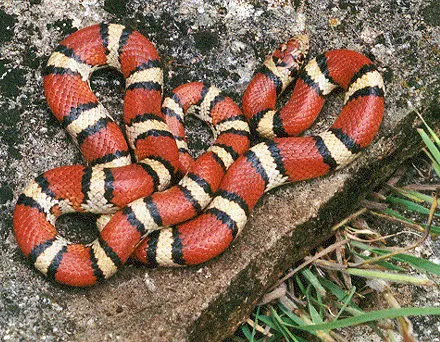
Quick Facts
| Attribute | Details |
|---|---|
| Type | Snake |
| Size | Medium (2-5 ft) |
| Lifespan | 15-20 years |
| Temperature | 72-85°F |
| Humidity | 40-60% |
| Enclosure | 20-40 gal |
| Care Level | Beginner |
| Diet | Mice |
| Temperament | Docile, Colorful |
Recommended for Milk Snakes
Affiliate links may earn a commission. Affiliate disclosure.
ZooMed - Heating & lighting | ExoTerra - Enclosures & decor | Chewy - Substrate & supplies
Milk Snake Habitat Essentials
ZooMed - Heat mats & thermostats | ExoTerra - Terrariums & hides | Chewy - Substrate & accessories
Red bands, and a kingsnake appetite
Milk snakes are the tricolor Lampropeltis that used to sit in one species and are now split into several. A typical adult is 2 to 5 feet, because a Pueblan and a large Honduran are not the same length. Lifespan is about 15 to 20 years. Care level is beginner for the common captive forms: mice, a thermostat, a secure tub.
Keep the warm side near 72 to 85°F and humidity around 40 to 60 percent. A moist hide fixes most sheds. Twenty to forty gallons is a fair cage, and a 5-foot animal needs the long one. They climb. Clip the lid. Keep a single snake. The instinct to eat other snakes does not go away because the meal is a mouse.
Know the species you paid for
Honduran, Pueblan, Sinaloan, and Nelson's milk snakes are the usual captive names. Eastern milk snakes from the United States are less common as well-started pets and are protected in places. Buy captive-bred and keep the label. Babies are nervous and musk. Adults settle if you support the body and skip handling on feeding day.
Stuck eye caps and a snake that loses weight while refusing food need a reptile vet. The directory is ARAV.
Milk snake questions
Which milk snake do shops sell?
Usually a Central American form such as a Honduran or Pueblan milk snake. The eastern milk snake is a different, often protected animal. Ask for the species, not only the red color.
Do milk snakes need other snakes as food?
No. Captive milk snakes eat mice. They will still eat a snake that shares the cage. House them alone.
Are the bands a coral snake warning?
The pattern mimics coral snakes. A captive-bred milk snake from a known species is not a coral snake. Wild identification is a different problem. Do not catch tricolor snakes.
Decision Guides for Milk Snake
Use these only when comparing food, insurance, ownership budget, or beginner fit for this specific pet.