Emerald Tree Boa
This page is educational reference material for preparing questions. A licensed veterinarian examines the animal, makes the diagnosis, and sets the treatment.
Quick Facts
| Attribute | Details |
|---|---|
| Type | Snake |
| Adult Size | 5-7 feet |
| Lifespan | 15-25 years |
| Temperament | Defensive, Display |
| Difficulty | Advanced |
| Origin | South America |
Recommended Products
Affiliate links may earn a commission. Affiliate disclosure.
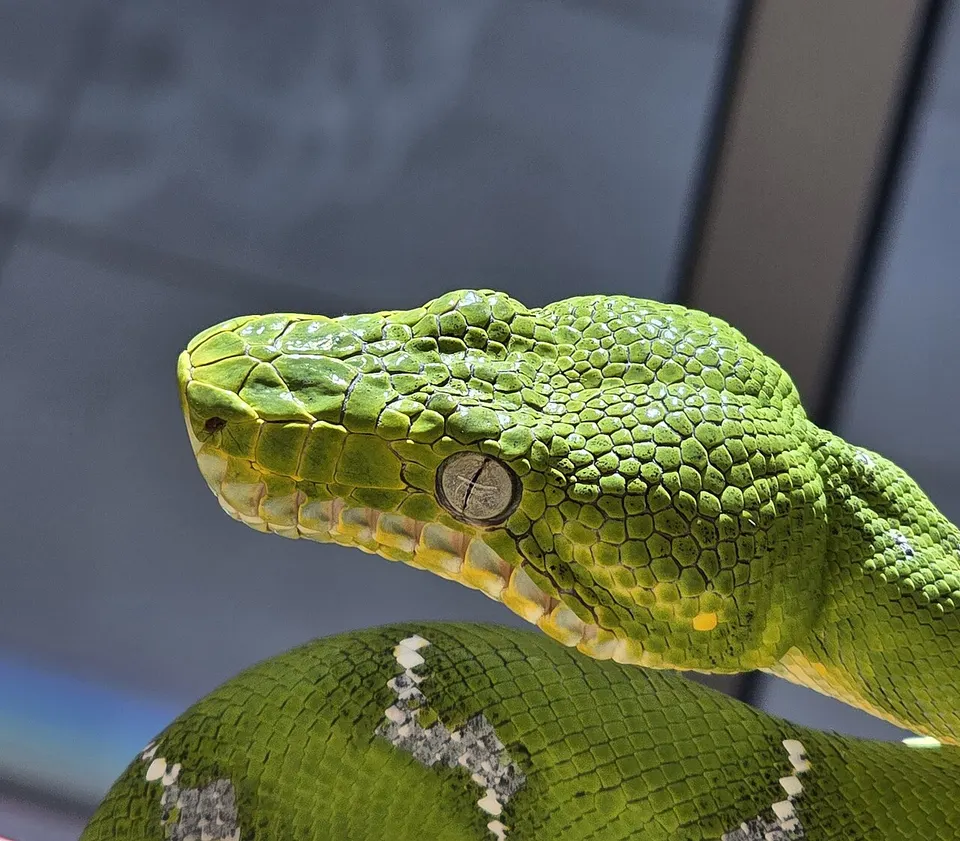
A green coil on a branch
Emerald tree boas, Corallus caninus and the related Amazon Basin animals sometimes split as C. batesii, are the bright green boas that rest in a saddle pose. Adults are about 5 to 7 feet. Lifespan is 15 to 25 years. Care is advanced, and they defend themselves. People buy the color and then meet the teeth.
The cage is vertical. Horizontal perches of the right diameter, a temperature gradient they can choose by moving up or down, and high humidity are the care. Ventilation has to exist or the cage molds. A water bowl or drip that actually gets used matters. They have heat pits. They strike at warm hands. Feed thawed rodents with long tongs, at the perch, and leave the animal alone the rest of the week.
Display, not a shoulder snake
Handling is occasional at most, for a cage clean or a vet trip, and it should be planned. A bite from an emerald is a deep puncture. Captive-bred babies are expensive and still not beginner snakes. Neonates are often orange or red and turn green. That color change is normal. A snake that stays on the floor, breathes with its mouth open, or never perches is in trouble.
Find a vet who has seen arboreal boas before you buy. ARAV is the list.
Emerald tree boa questions
Do emerald tree boas like to be held?
No. They are defensive, and they are a display animal. Long teeth and a bad attitude toward hands are normal. Watch them on the perch.
What is the cage shape?
Taller than it is wide, with horizontal perches the snake can drape over. Heat from above has to be guarded so the snake cannot burn its belly on a lamp.
How long do they live?
About 15 to 25 years. Advanced care for that whole span, or the snake fails earlier.
Decision Guides for Emerald Tree Boa
Use these only when comparing food, insurance, ownership budget, or beginner fit for this specific pet.