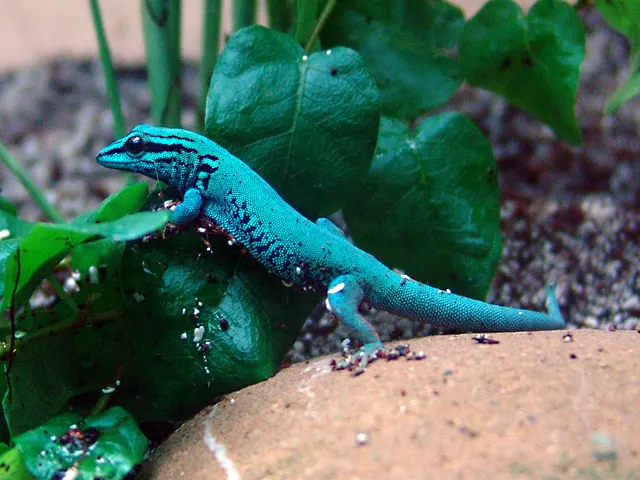
Electric Blue Day Gecko (Lygodactylus williamsi)
This page is educational reference material for preparing questions. A licensed veterinarian examines the animal, makes the diagnosis, and sets the treatment.
Quick Facts
| Attribute | Details |
|---|---|
| Type | Gecko |
| Adult Size | 3 inches |
| Lifespan | 5-10 years |
| Temperament | Active, Display-Only |
| Difficulty | Intermediate |
| Origin | Tanzania |
Recommended Products
Affiliate links may earn a commission. Affiliate disclosure.
A three-inch gecko with a conservation file
Electric blue day geckos are Lygodactylus williamsi. Males are the brilliant blue animals. Females are greenish bronze. Adults are about 3 inches. They usually last 5 to 10 years, the care is intermediate, and they are for watching, not holding. The intermediate part is real. The larger story is that this species was nearly emptied from the Kimboza forest for pet cages. It is critically endangered and on CITES Appendix I. A wild-caught animal is not a bargain. It is a problem.
Captive-bred geckos still need a vertical tank, UVB, heat with a basking spot, and humidity that cycles into the 60s and higher during the day with drying time. They drink droplets. They eat tiny insects and a bit of fruit puree, with calcium. Males display at each other through glass. Cover the sides between cages or house them where they cannot see a rival.
Papers, plants, and no grabbing
Ask a breeder how long the line has been captive. Keep the CITES paperwork. A planted cage with bamboo is both hiding cover and drinking surface. Handling is how tiny toes get broken. If the colony produces babies, the plan for those babies is part of owning the adults. Releasing any of them is illegal and useless to the forest they came from.
A gecko that fades, stops eating, or cannot climb needs a vet who has seen small day geckos. Start at ARAV.
Electric blue gecko questions
Why are electric blue geckos controversial?
They come from a tiny forest in Tanzania and were stripped from the wild for the pet trade. They are critically endangered and listed on CITES Appendix I. Captive-bred animals with paperwork are the only defensible pet.
Are they a handling pet?
No. They are active and display-only. They are tiny, fast, and territorial. Watch the blue. Keep your hands out.
Can two males share a tank?
No. Males fight. A pair or a small female group in a planted vertical tank is the usual limit, and even females need enough cover.
Decision Guides for Electric Blue Day Gecko (Lygodactylus williamsi)
Use these only when comparing food, insurance, ownership budget, or beginner fit for this specific pet.
- Best Diet for Electric Blue Day Gecko (Lygodactylus williamsi) →
- Best Pet Insurance for Electric Blue Day Gecko (Lygodactylus williamsi) →
- Electric Blue Day Gecko (Lygodactylus williamsi) Cost to Own →
- Electric Blue Day Gecko (Lygodactylus williamsi) Health Costs →
- Is Electric Blue Day Gecko (Lygodactylus williamsi) Good for First-Time Owners? →