Armadillo Lizard
This page is educational reference material for preparing questions. A licensed veterinarian examines the animal, makes the diagnosis, and sets the treatment.
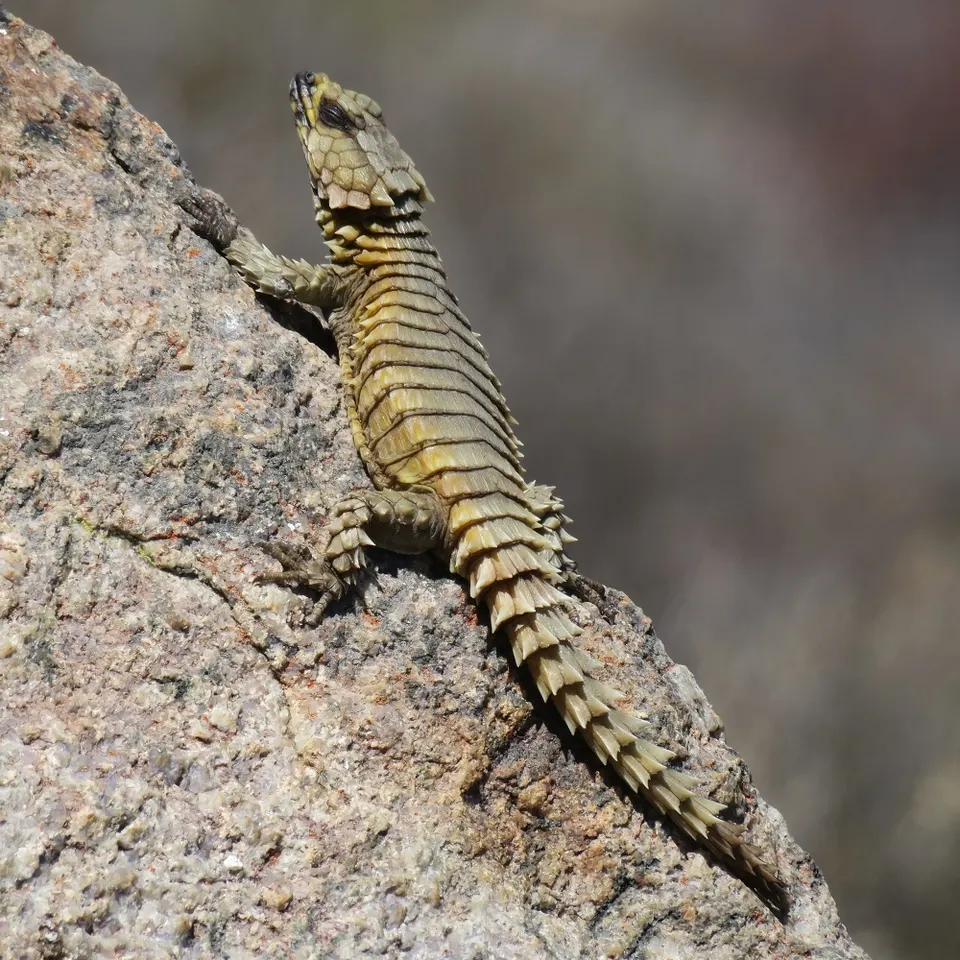
Quick Facts
| Attribute | Details |
|---|---|
| Scientific Name | Ouroborus cataphractus |
| Origin | South Africa |
| Size | 3-4 inches (7-10 cm) |
| Lifespan | 15-25 years |
| Temperature | 75-85°F (24-29°C), basking to 100°F |
| Humidity | 30-50% (low) |
| Enclosure | 20-40 gallon long |
| Care Level | Intermediate |
| Diet | Insectivore |
| Temperament | Docile, social, slow-moving |
Recommended for Armadillo Lizards
Affiliate links may earn a commission. Affiliate disclosure.
Dubia Roaches - Premium feeder insects | Reptile Supply - Enclosures & rocks | Arcadia - Quality UVB lighting
A spiny ring from the Karoo
Armadillo lizards are Ouroborus cataphractus, formerly Cordylus cataphractus. Adults are about 3 to 4 inches. They commonly reach 15 to 25 years, care is intermediate, and they are docile, slow, and social. The social part is real: they live in groups in rock crevices. The slow part ends when a predator, or a hand, arrives and the lizard seizes its own tail.
A 20 to 40 gallon tank with rock crevices, humidity of 30 to 50 percent, a basking spot near 100°F, and a cooler side in the 70s fits the species. UVB is part of the basking setup. They are insect eaters. Calcium and a varied bug list matter more than a fancy bowl. Water can be a dish plus an occasional light mist. A constantly wet tank is the wrong climate for a lizard from dry South African rock.
Captive-bred groups only
These lizards are protected and were hit hard by collection. Buy captive-bred, keep any paperwork, and do not add a wild animal to a group. Give the group space. One male with several females is the usual breeder pattern. Two pushy males in a small tank will fight even if the species is called social. Handling is optional. Many keepers never do it. The tail-bite display means stop.
A thin lizard that will not eat insects needs a check for bullying first, then a vet. ARAV lists clinics.
Armadillo lizard questions
Why does it bite its tail?
Defense. A threatened armadillo lizard grabs its tail and turns into a spiny ring. Let go of the idea of pulling the tail free. Give it cover and wait.
Can they live together?
Often yes, which is unusual. They are social. A group still needs more than one hide, more than one food spot, and no crowding.
What do they eat?
Mostly insects. In the wild they eat a lot of termites. Crickets and roaches, calcium-dusted, are the captive stand-in. Variety helps.
Decision Guides for Armadillo Lizard
Use these only when comparing food, insurance, ownership budget, or beginner fit for this specific pet.