Coral Beauty Angelfish
This page is educational reference material for preparing questions. A licensed veterinarian examines the animal, makes the diagnosis, and sets the treatment.
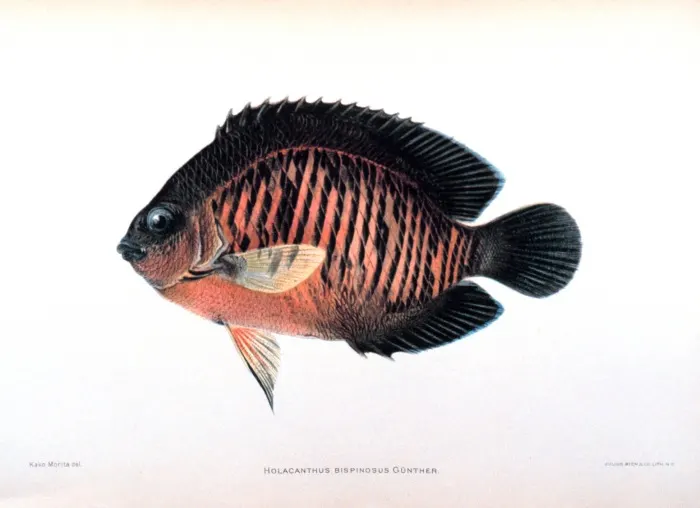
Quick Facts
| Attribute | Details |
|---|---|
| Type | Saltwater / Marine |
| Size | Small (4 in) |
| Lifespan | 5-7 years |
| Temperature | 72-82°F |
| Salinity | 1.020-1.025 sg |
| Min Tank Size | 70 gallon |
| Care Level | Intermediate |
| Diet | Omnivore: spirulina, mysis, angelfish preparations |
| Temperament | Semi-Aggressive, Hardy dwarf angel |
| Reef Safe | With caution (may nip corals) |
| Origin | Indo-Pacific |
| Typical Cost | $30-$60; $300-$500 setup |
Recommended for Marine Aquariums
Coral Beauty Angelfish Overview
The Coral Beauty Angelfish is a small (4 in) saltwater species originating from the Indo-Pacific. Known for being semi-aggressive, hardy dwarf angel, this species is rated intermediate care level, making it well-suited for hobbyists with some marine aquarium experience.
One of the hardiest dwarf angelfish; beautiful blue and orange coloration; occasional coral nipping makes reef compatibility unpredictable
Centropyge bispinosa, the coral beauty, is a dwarf angelfish of about 4 inches with a lifespan of 5 to 7 years. A coral beauty needs 70 gallons of mature rock to graze. Intermediate care is one angel and a reef you can stand to see sampled. It is a hardy dwarf angel by angel standards, semi-aggressive, and an omnivore that should get spirulina, mysis, and foods made for angelfish. The reef-safe line is with caution because it may nip corals. That caution is the correct confidence level. This is not a fish to call reef safe and then be surprised by a pecked LPS.
They graze film on the rocks. A mature 70-gallon reef with algae on the back surfaces suits that habit better than a sterile new tank full of dry rock. Grazing is also how they find coral polyps and clam mantles to sample. Some individuals never touch a coral. Some do it every night. You cannot see which one you bought until it is in your tank, so stock it only where a nipped coral is an acceptable loss. One coral beauty per tank. A second Centropyge in 70 gallons is a territorial fight more often than a pair.
Semi-aggressive shows up toward other angels, toward new fish, and sometimes toward shrimp. Add the angel after quieter fish have settled, or accept that a coral beauty already in residence will meet the next introduction with a charge. They are not maroons and they are not damsels, but the cute juvenile in the shop is still a dwarf angel with a territory. Seventy gallons gives that territory somewhere to be besides the entire aquascape.
From a water chemistry perspective, maintaining a saltwater aquarium for Coral Beauty Angelfish demands consistent attention to parameters including temperature (72-82°F), pH (8.1-8.4), and tank capacity (minimum 30 gallons). These parameters are not merely guidelines—they represent the range within which Coral Beauty Angelfish's metabolic processes, immune function, and reproductive behaviors operate optimally. Successful Coral Beauty Angelfish keeping therefore requires not just the right equipment, but a disciplined approach to monitoring and maintaining water quality over the long term.
Temperament & Compatibility
The Coral Beauty Angelfish is described as semi-aggressive, hardy dwarf angel and is considered reef safe with caution monitor closely in reef tanks as individual specimens may develop coral-nipping behavior.
- Compatible tankmates: Semi-aggressive community fish of similar size. Introduce simultaneously when possible to reduce territorial aggression.
- Stocking density: Marine fish require more space per individual than freshwater fish. The 70 gallon minimum is for this species alone increase tank size for community setups.
Temperature runs 72 to 82°F and salinity 1.020 to 1.025. pH of 8.1 to 8.4, nitrate under 10 ppm in a reef and under 20 ppm if the tank is fish-only, alkalinity held at 8 to 12 dKH, calcium at 380 to 450 ppm, and magnesium at 1250 to 1350 ppm are the water the card expects. Ammonia has to stay at 0 ppm, with nitrite matching it, or the grazing stops. The purchase price is about 30 to 60 dollars and the setup about 300 to 500. None of those figures buy a guarantee that your particular fish will ignore corals.
Feed angelfish preparations and spirulina so the film on the rocks is not the only meal. A hungry dwarf angel nips more. A fed one still might. Intermediate care is a 70-gallon tank, a single specimen, and a reef you are willing to police each evening for fresh white pecks on coral tissue. If the display cannot lose a polyp, choose a fish that does not carry this caution. The 5-to-7-year lifespan is plenty of time for a casual nipper to reshape a garden.
Color varies from deep blue and orange to paler fish, and color is not a behavior test. Watch the mouth, not the poster. A coral beauty that spends the day picking at rock film and prepared food is doing the job you can actually expect. One that settles onto a particular coral every afternoon should be moved to a fish-only system with live rock rather than debated with the reef.
Feeding behavior in Coral Beauty Angelfish reveals much about their ecological role and can be leveraged by keepers to promote natural behaviors and reduce aggression. Observing when, where, and how your Coral Beauty Angelfish feeds provides diagnostic information about their comfort level, health status, and social standing. Many successful Coral Beauty Angelfish keepers use varied feeding strategies including target feeding, scatter feeding, and enrichment feeders to promote natural foraging behaviors and reduce competition-related stress.
Tank Setup & Requirements
The Coral Beauty care item most frequently postponed is the same one whose effects compound most steadily — it deserves a place on the current list, not the later list.
Tank Specifications
- Minimum size: 70 gallon. Larger is strongly recommended for parameter stability.
- Sump systems recommended for tanks over 50 gallons.
- Water flow: Moderate to strong flow using powerheads or wavemakers. Provide areas of both higher and lower flow within the tank.
- Lighting: Standard marine lighting adequate for fish-only systems.
- Aquascaping: Live rock providing caves, overhangs, and swim-through passages. Ensure open swimming space for active species.
Water Parameters
| Parameter | Ideal Range |
|---|---|
| Temperature | 72-82°F |
| Salinity | 1.020-1.025 sg |
| pH | 8.1-8.4 |
| Ammonia | 0 ppm |
| Nitrite | 0 ppm |
| Nitrate | <10 ppm (reef), <20 ppm (FOWLR) |
| Alkalinity | 8-12 dKH |
| Calcium | 380-450 ppm |
| Magnesium | 1250-1350 ppm |
Critical: Cycle Your Tank First
Marine Tank Essentials
Coral Beauty Angelfish care quality tracks three controllable habits — parameter stability, feeding discipline, and quarantine protocol — more than anything else; these factors drive outcomes more than brand-name products.
Diet & Nutrition
The Coral Beauty Angelfish is classified as omnivore. Proper nutrition is essential for maintaining health, coloration, and immune function.
- Primary diet: Omnivore: spirulina, mysis, angelfish preparations.
- Feeding frequency: 2-3 small feedings per day. Small frequent meals are better than one large feeding.
- Variety: Rotate between different food types to ensure complete nutrition. Offer a mix of frozen foods, pellets, and algae-based foods.
- Avoid: Overfeeding is the most common feeding mistake.
Proper nutrition for Coral Beauty Angelfish requires understanding not just what to feed, but how feeding strategies affect health, behavior, and water quality. A disciplined approach to feeding, where your Coral Beauty Angelfish receives the right amount of appropriate food at consistent intervals, is one of the most impactful things you can do for both the fish and the overall aquarium ecosystem.
Diet variety is essential for optimal Coral Beauty Angelfish health because no single commercial food provides the complete nutritional profile these marine fish require. Observing your Coral Beauty Angelfish's response to different food types also provides useful health information, as reduced interest in normally preferred foods is often an early indicator of illness.
Common Health Issues
The most common health concerns for Coral Beauty Angelfishs include:
- Marine ich: Marine ich.
- lymphocystis: lymphocystis.
- bacterial infections: bacterial infections.
- internal parasites: internal parasites.
The journal of what you actually see — not a checklist — is what points at the priorities for your household.
Disease Emergency Response
Recognizing early signs of disease in Coral Beauty Angelfish requires a trained eye and consistent observation. Establishing a daily observation routine—even just a few minutes of focused attention during feeding—helps you develop a baseline understanding of what normal behavior looks like for your specific Coral Beauty Angelfish, making deviations immediately apparent.
Quarantine protocols represent one of the most impactful health management practices available to Coral Beauty Angelfish keepers. This single practice prevents the majority of disease outbreaks in established aquariums and is considered essential by virtually all experienced Coral Beauty Angelfish keepers.
Grooming & Maintenance
- Equipment maintenance: Clean protein skimmer cup 2-3 times weekly. Replace filter media monthly. Calibrate refractometer regularly.
- Algae management: Magnetic algae scrapers for glass cleaning. Clean-up crew (snails, hermit crabs) helps control nuisance algae.
- Water testing: Test salinity, pH, ammonia, nitrite, and nitrate weekly. Test alkalinity, calcium, and magnesium for reef systems.
Cost Overview
| Expense Category | Estimated Cost |
|---|---|
| Fish Purchase | $30-$60 |
| Tank & Equipment Setup | $300-$500 setup |
| Live Rock & Sand | $100-$300 |
| Salt Mix (annual) | $100-$200 |
| Food (annual) | $150-$300 |
| Electricity (annual) | $200-$500 |
| Water Testing Supplies | $50-$100/year |
| Replacement Equipment | $100-$300/year |
The true cost of keeping Coral Beauty Angelfish extends well beyond the initial purchase price and basic equipment. Many aspiring Coral Beauty Angelfish keepers underestimate these ongoing costs, which can lead to cut corners that ultimately compromise fish health and result in even greater expenses. A realistic budget that accounts for both routine maintenance and occasional replacement of equipment provides a more accurate picture of what Coral Beauty Angelfish keeping actually costs.
Heaters, filters, lights, and pumps all have finite lifespans, and their failure—particularly heater or filter failure—can have catastrophic consequences for Coral Beauty Angelfish if not addressed promptly. Many experienced Coral Beauty Angelfish keepers also invest in battery-operated air pumps and backup heaters as insurance against power outages, which can be lethal to tropical species within hours depending on ambient room temperature.
The cost-benefit analysis of quality versus budget equipment deserves careful consideration for Coral Beauty Angelfish keepers. This is particularly true for Coral Beauty Angelfish, where the animals themselves, along with any tank mates, plants, and established biological filtration, represent a significant investment of both money and time that is worth protecting with reliable equipment.
Insurance Considerations
Is the Coral Beauty Angelfish reef safe?
The Coral Beauty Angelfish is rated: With caution (may nip corals). Reef compatibility can vary between individual specimens. Providing adequate feeding can reduce the likelihood of fish picking at corals.
How big of a tank does a Coral Beauty Angelfish need?
The Coral Beauty Angelfish requires a minimum tank size of 70 gallon. Larger tanks provide more stable water parameters and reduce territorial aggression. Consider future fish additions when sizing your tank.
What do Coral Beauty Angelfishs eat?
Coral Beauty Angelfishs are classified as omnivore. Feed spirulina, mysis, angelfish preparations. Variety is essential for complete nutrition and maintaining vibrant coloration. Consider using an automatic feeder for consistency.
Are Coral Beauty Angelfishs good for beginners?
Coral Beauty Angelfishs are rated intermediate care level. They require some experience with saltwater aquariums and stable, established systems. Understanding water chemistry, proper acclimation, and disease prevention is important.
How long do Coral Beauty Angelfishs live?
Coral Beauty Angelfishs live 5-7 years in captivity with proper care.
Related Marine Species
Ocellaris Clownfish
Beginner care level Min 20 gallon
Blue Tang (Regal Tang)
Advanced care level Min 180 gallon
Yellow Tang
Intermediate care level Min 100 gallon
Flame Angelfish
Intermediate care level Min 70 gallon
View all marine fish species →
Ask Our AI About Coral Beauty Angelfishs
Have questions about Coral Beauty Angelfish care, tank setup, or compatibility? Our AI assistant provides personalized guidance for saltwater aquarists.
Decision Guides for Coral Beauty Angelfish
Use these only when comparing food, insurance, ownership budget, or beginner fit for this specific pet.
Coral Beauty Angelfish May Be Great For:
- A reef keeper who can tolerate Centropyge bispinosa nipping corals and who will keep only one dwarf angel
- Someone with about 70 gallons and a diet of mysis, brine, and algae
- An aquarist adding the angel to a stable tank
Coral Beauty Angelfish May Not Be Ideal For:
- A prized LPS or clam tank that cannot lose tissue to nipping
- A second dwarf angel in a modest reef
- A new aquarium still cycling
- Plan the adult size, the vet, and the daily work for the coral beauty before it comes home.
The best way to know if a Coral Beauty Angelfish is right for you is to spend time around one before committing. Visit a breeder, a rescue, or a fellow keeper. The firsthand experience of care routines, feeding, and habitat maintenance tells you more than any guide can. If it still feels right after that, you are probably ready.
Beginner care level Min 20 gallon Advanced care level Min 180 gallon Intermediate care level Min 100 gallon Intermediate care level Min 70 gallon View all marine fish species → Have questions about Coral Beauty Angelfish care, tank setup, or compatibility?
The coral beauty, Centropyge bispinosa, is a dwarf angelfish. It grazes film algae and also takes mysis and a prepared marine diet, in several small feedings. It may nip large-polyp corals and clam mantles. Mature live rock and a tank that has already grown algae suit it better than a newly set reef. Give it caves. A constantly chased angelfish stops eating.