Copperband Butterflyfish
This page is educational reference material for preparing questions. A licensed veterinarian examines the animal, makes the diagnosis, and sets the treatment.
Quick Facts
| Attribute | Details |
|---|---|
| Type | Saltwater / Marine |
| Size | Medium (8 in) |
| Lifespan | 5-10 years |
| Temperature | 72-82°F |
| Salinity | 1.020-1.025 sg |
| Min Tank Size | 75 gallon |
| Care Level | Expert |
| Diet | Carnivore: Aiptasia, mysis, frozen foods, clams |
| Temperament | Peaceful, Finicky eater |
| Reef Safe | Caution (may nip at clam mantles) |
| Origin | Indo-Pacific |
| Typical Cost | $30-$60; requires established tank with live food sources |
Recommended for Marine Aquariums
Copperband Butterflyfish three disciplines determine outcomes: keeping parameters stable, measuring feed portions, and quarantining new livestock thoroughly; these factors drive outcomes more than brand-name products.
Copperband Butterflyfish Overview
The Copperband Butterflyfish is a medium (8 in) saltwater species originating from the Indo-Pacific. Known for being peaceful, finicky eater, this species is rated expert care level, making it appropriate only for experienced marine aquarists with well-established systems. With a lifespan of 5-10 years, this is a rewarding species that can be enjoyed for many years with proper care.
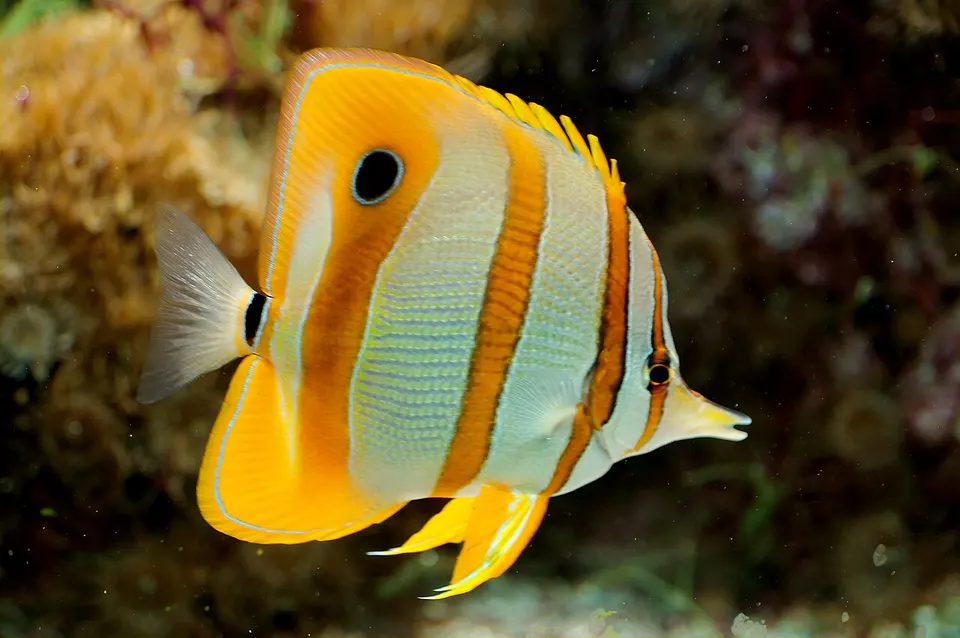
Prized for eating pest Aiptasia anemones; distinctive copper-orange vertical bands on silver body with false eyespot near tail; extremely difficult to get feeding in captivity
Chelmon rostratus, the copperband butterflyfish, is a specialized Indo-Pacific feeder with a long snout, an adult size around 8 inches, and a lifespan of 5 to 10 years. An 8-inch copperband needs 75 gallons of rock to forage across. Expert is the rating because so many of them never eat. Temperament is peaceful, and the feeding line is the risk: they are finicky. Many never take a normal aquarium diet. The card lists Aiptasia, mysis, frozen foods, and clams, and it notes that the fish requires an established tank with live food sources. A copperband that is not eating is not a fish you train with optimism. It is a fish that starves.
The only honest recommendation is a captive-bred animal or a fish that is already eating in front of you. Wild copperbands often refuse pellets, refuse mysis, and pick at rockwork until the body thins behind the head. If the shop cannot show this individual taking frozen food, walk away. Buying one to clear Aiptasia, then discovering it will not eat at all, solves neither the anemones nor the hunger. Aiptasia on the diet list is a bonus for a fish that is already feeding, not a job description for a new arrival.
From a water chemistry perspective, maintaining a saltwater aquarium for Copperband Butterflyfish demands consistent attention to parameters including temperature (72-82°F), pH (8.1-8.4), and tank capacity (minimum 30 gallons). These parameters are not merely guidelines—they represent the range within which Copperband Butterflyfish's metabolic processes, immune function, and reproductive behaviors operate optimally. Successful Copperband Butterflyfish keeping therefore requires not just the right equipment, but a disciplined approach to monitoring and maintaining water quality over the long term.
Temperament & Compatibility
The Copperband Butterflyfish is described as peaceful, finicky eater and is considered reef safe with caution monitor closely in reef tanks as individual specimens may develop coral-nipping behavior.
- Compatible tankmates: Other peaceful community fish of similar size. Avoid keeping with aggressive or highly territorial species.
- Stocking density: Marine fish require more space per individual than freshwater fish. The 75 gallon minimum is for this species alone increase tank size for community setups.
They nip coral and anemones. The card's reef-safe line is caution, specifically clam mantles, and the behavior extends to coral tissue and to ornamental anemones. A reef built around expensive LPS and a tridacna clam is the wrong place to experiment. A large fish-only tank with live rock, or a reef you are willing to see sampled, is the honest layout. Peaceful refers to other fish. It does not refer to sessile invertebrates.
Seventy-five gallons is the minimum for an 8-inch fish that forages all day across the rock. For a copperband that is eating, hold 72 to 82°F, salinity 1.020 to 1.025, and pH 8.1 to 8.4. Nitrate under 10 ppm on a reef and under 20 ppm in a fish-only system, with alkalinity 8 to 12 dKH, calcium 380 to 450 ppm, and magnesium 1250 to 1350 ppm when corals are present. Ammonia and nitrite at 0 ppm are part of expert care because a stressed, new copperband stops eating at the first swing. The listed cost is about 30 to 60 dollars, which is not enough money to justify a fish that may never feed.
Give a confirmed eater several small offerings of mysis, clam, and other frozen foods through the day. A single sprinkle at lights-on is easy to miss for a slow, snout-feeding animal. House it with calm fish. Damsels and aggressive tangs will keep it off the rocks and the weight will fall off. Expert means the tank was mature before the fish arrived, the fish was already eating, and you are prepared to rehome it or return it at the first week of refusal rather than waiting for a rescue feeding that does not come.
Tank Specifications
- Minimum size: 75 gallon. Larger is strongly recommended for parameter stability.
- Sump systems recommended for tanks over 50 gallons.
- Water flow: Moderate to strong flow using powerheads or wavemakers. Provide areas of both higher and lower flow within the tank.
- Lighting: Standard marine lighting adequate for fish-only systems.
- Aquascaping: Live rock providing caves, overhangs, and swim-through passages. Ensure open swimming space for active species.
Water Parameters
| Parameter | Ideal Range |
|---|---|
| Temperature | 72-82°F |
| Salinity | 1.020-1.025 sg |
| pH | 8.1-8.4 |
| Ammonia | 0 ppm |
| Nitrite | 0 ppm |
| Nitrate | <10 ppm (reef), <20 ppm (FOWLR) |
| Alkalinity | 8-12 dKH |
| Calcium | 380-450 ppm |
| Magnesium | 1250-1350 ppm |
Critical: Cycle Your Tank First
Marine Tank Essentials
Weight attention toward the factors that actually affect your setup; uniformly applying every recommendation is rarely the best use of time.
Diet & Nutrition
The Copperband Butterflyfish is classified as carnivore. Proper nutrition is essential for maintaining health, coloration, and immune function.
- Primary diet: Carnivore: Aiptasia, mysis, frozen foods, clams.
- Feeding frequency: 2-3 small feedings per day. Small frequent meals are better than one large feeding.
- Variety: Rotate between different food types to ensure complete nutrition. Offer frozen mysis shrimp, brine shrimp, and high-quality pellets.
- Avoid: Overfeeding is the most common feeding mistake.
Proper nutrition for Copperband Butterflyfish requires understanding not just what to feed, but how feeding strategies affect health, behavior, and water quality. A disciplined approach to feeding, where your Copperband Butterflyfish receives the right amount of appropriate food at consistent intervals, is one of the most impactful things you can do for both the fish and the overall aquarium ecosystem.
Diet variety is essential for optimal Copperband Butterflyfish health because no single commercial food provides the complete nutritional profile these marine fish require. Observing your Copperband Butterflyfish's response to different food types also provides useful health information, as reduced interest in normally preferred foods is often an early indicator of illness.
Common Health Issues
The most common health concerns for Copperband Butterflyfishs include:
- Starvation: Starvation (most common).
- marine ich: marine ich.
- lymphocystis: lymphocystis.
- bacterial infections: bacterial infections.
- refusal to eat prepared foods: refusal to eat prepared foods.
Disease Emergency Response
For Copperband Butterfly, prevention is always better than treatment.
Grooming & Maintenance
- Equipment maintenance: Clean protein skimmer cup 2-3 times weekly. Replace filter media monthly. Calibrate refractometer regularly.
- Algae management: Magnetic algae scrapers for glass cleaning. Clean-up crew (snails, hermit crabs) helps control nuisance algae.
- Water testing: Test salinity, pH, ammonia, nitrite, and nitrate weekly. Test alkalinity, calcium, and magnesium for reef systems.
Cost Overview
| Expense Category | Estimated Cost |
|---|---|
| Fish Purchase | $30-$60 |
| Tank & Equipment Setup | requires established tank with live food sources |
| Live Rock & Sand | $100-$300 |
| Salt Mix (annual) | $100-$200 |
| Food (annual) | $150-$300 |
| Electricity (annual) | $200-$500 |
| Water Testing Supplies | $50-$100/year |
| Replacement Equipment | $100-$300/year |
The true cost of keeping Copperband Butterflyfish extends well beyond the initial purchase price and basic equipment. Many aspiring Copperband Butterflyfish keepers underestimate these ongoing costs, which can lead to cut corners that ultimately compromise fish health and result in even greater expenses. A realistic budget that accounts for both routine maintenance and occasional replacement of equipment provides a more accurate picture of what Copperband Butterflyfish keeping actually costs.
The high-leverage inputs are food quality, exercise, preventive veterinary care, and handling. Dial those in first.
Insurance Considerations
The best results come from combining general best practices with attentive observation of individual responses.
Quick Answers About Copperband Butterfly
Is the Copperband Butterflyfish reef safe?
The Copperband Butterflyfish is rated: Caution (may nip at clam mantles). Reef compatibility can vary between individual specimens. Providing adequate feeding can reduce the likelihood of fish picking at corals.
How big of a tank does a Copperband Butterflyfish need?
The Copperband Butterflyfish requires a minimum tank size of 75 gallon. Larger tanks provide more stable water parameters and reduce territorial aggression. Consider future fish additions when sizing your tank.
What do Copperband Butterflyfishs eat?
Copperband Butterflyfishs are classified as carnivore. Feed Aiptasia, mysis, frozen foods, clams. Variety is essential for complete nutrition and maintaining vibrant coloration. Consider using an automatic feeder for consistency.
Are Copperband Butterflyfishs good for beginners?
Copperband Butterflyfishs are rated expert care level. They are recommended for experienced marine aquarists only.
How long do Copperband Butterflyfishs live?
Copperband Butterflyfishs live 5-10 years in captivity with proper care.
Related Marine Species
The trade-off is simple: a few hours reading about Copperband Butterfly behavior now versus larger bills and stress later.
Ocellaris Clownfish
Beginner care level Min 20 gallon
Blue Tang (Regal Tang)
Advanced care level Min 180 gallon
Yellow Tang
Intermediate care level Min 100 gallon
Coral Beauty Angelfish
Intermediate care level Min 70 gallon
View all marine fish species →
Ask Our AI About Copperband Butterflyfishs
Have questions about Copperband Butterflyfish care, tank setup, or compatibility? Our AI assistant provides personalized guidance for saltwater aquarists.
Decision Guides for Copperband Butterflyfish
Use these only when comparing food, insurance, ownership budget, or beginner fit for this specific pet.
Is Copperband Butterflyfish Right for Your Aquarium?
A mature reef keeper who will feed a copperband, Chelmon rostratus, several times a day on clam, mysis, and blackworms Someone who already has Aiptasia and accepts that many copperbands never eat it reliably An aquarist with a quarantine tank and a lid, because these fish are thin and they jump A new reef, or a keeper whose plan is that the fish will learn to eat frozen food later A tank full of ornamental shrimp and fan worms the butterfly can pick apart Anyone buying a copperband as a guaranteed Aiptasia solution
Copperband Butterflyfish May Be Great For:
- A mature reef keeper who will feed a copperband, Chelmon rostratus, several times a day on clam, mysis, and blackworms
- Someone who already has Aiptasia and accepts that many copperbands never eat it reliably
- An aquarist with a quarantine tank and a lid, because these fish are thin and they jump
Copperband Butterflyfish May Not Be Ideal For:
- A new reef, or a keeper whose plan is that the fish will learn to eat frozen food later
- A tank full of ornamental shrimp and fan worms the butterfly can pick apart
- Anyone buying a copperband as a guaranteed Aiptasia solution
Before getting a Copperband Butterflyfish, make sure the practical side lines up: you have the right equipment, the budget for ongoing care, and the time for daily maintenance. If those boxes are checked, the rest — learning the species' quirks, fine-tuning the habitat, building a care routine — comes with experience.
Beginner care level Min 20 gallon Advanced care level Min 180 gallon Intermediate care level Min 100 gallon Intermediate care level Min 70 gallon View all marine fish species → Have questions about Copperband Butterflyfish care, tank setup, or compatibility?
The copperband butterfly, Chelmon rostratus, picks aiptasia and small worms with a long snout. Many stop eating after they are shipped. Offer live blackworms or a piece of clam on a shell, in a quiet tank, and keep the salinity and temperature steady while the fish learns frozen food. A fish that has not eaten in several days needs a plan with an experienced marine keeper, and a bare tank makes the problem worse.