Ocellaris Clownfish
This page is educational reference material for preparing questions. A licensed veterinarian examines the animal, makes the diagnosis, and sets the treatment.
Quick Facts
| Attribute | Details |
|---|---|
| Type | Saltwater / Marine |
| Size | Small (3-4 in) |
| Lifespan | 6-10 years |
| Temperature | 72-82°F |
| Salinity | 1.020-1.025 sg |
| Min Tank Size | 20 gallon |
| Care Level | Beginner |
| Diet | Omnivore: pellets, frozen mysis, flakes |
| Temperament | Semi-Aggressive, Hardy |
| Reef Safe | Yes (with caution around anemones) |
| Origin | Indo-Pacific, Great Barrier Reef |
| Typical Cost | $15-$40 for captive-bred; $200-$500 setup |
Recommended for Marine Aquariums
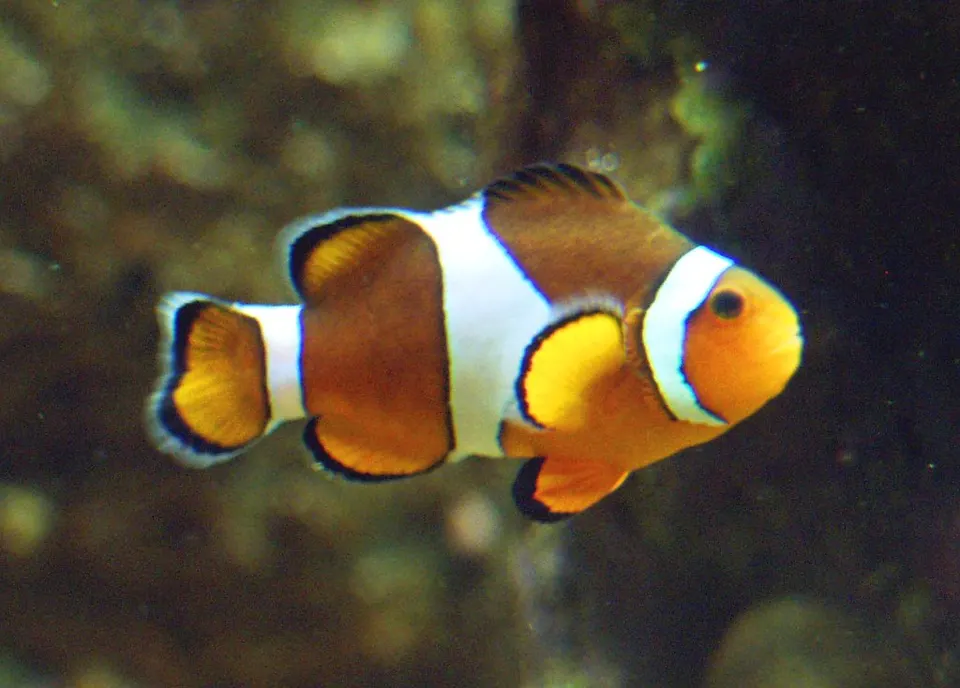
The clownfish on this card is the ocellaris, a small Indo-Pacific anemonefish about 3 to 4 inches long with a lifespan of 6 to 10 years. A captive-bred pair can live in 20 gallons without an anemone. Beginner is accurate for captive-bred ocellaris in a tank that has already cycled. The diet is omnivore: pellets, frozen mysis, and flakes. Temperament is semi-aggressive and hardy. Reef safe comes with a caution around anemones. Captive-bred fish are the ones to buy, listed around 15 to 40 dollars, with a setup in the 200 to 500 dollar range. A wild clownfish is an unnecessary take for a species the hobby already breeds.
They do not require an anemone. A pair will host a bubble-tip if you insist, and they will just as readily adopt a rock, a corner of a powerhead, or a patch of leather coral. The caution on the card is there because an anemone is a stinging animal with its own needs, not a toy that comes with the fish. Many anemones in new reefs wander, bleach, or eat the clown. Skip the anemone until the 20-gallon tank has been stable for a long time, and skip it entirely if the goal is simply to keep the fish.
Ocellaris form a hierarchy. The largest fish becomes the female, the next becomes the breeding male, and any smaller fish stays suppressed. Two large fish added together in 20 gallons often fight. A better start is a pair that is already together, or a larger fish and a clearly smaller one. They will thump tankmates that swim through the chosen host site. Semi-aggressive is accurate once they have a territory, and it is milder than a maroon clown, which is a different species and not this page.
Temperature can run 72 to 82°F and salinity 1.020 to 1.025. Keep pH at 8.1 to 8.4. Nitrate under 10 ppm is the reef mark and under 20 ppm is the fish-only mark. They are hardy beginners only after the tank is past the cycle. Ammonia above 0 ppm still burns gills, and nitrite above 0 ppm is the same kind of failure. Feed pellets and mysis on a schedule. They overeat and they beg, and a 4-inch female in a 20-gallon tank produces more waste than the juvenile suggested.
A lid is optional for some marine fish and wiser for a clown that has been known to launch during a water change. Give them a host site that is not the intake of a filter. The 6-to-10-year lifespan is ordinary for captive-bred ocellaris in stable salt. It is not a reason to add a wild anemone, a third adult, or a maroon clown to the same 20 gallons. One established pair, food they already accept, and water inside those ranges is the beginner tank this card is describing.
Marine Tank Essentials
Apply accepted best practices, watch what happens, and adjust — consistent execution of care basics.
Common clownfish in the pet trade are usually Amphiprion ocellaris, the orange fish with white bars. Adults are about 3 to 4 inches and often live 6 to 10 years in a stable marine tank. They are semi-aggressive, hardy for a saltwater fish, and a reasonable beginner marine animal if the tank, not the fish, is the project you actually funded.
Salt, rock, and a pair
A 20-gallon tank with live rock, a hang-on or internal filter plus nutrient export, a heater, a lid, and a refractometer is the minimum honest setup. Specific gravity around 1.024, temperature in the 72 to 82°F band, pH 8.1 to 8.4, ammonia and nitrite at zero, nitrate low. Mix saltwater with a marine salt, not table salt, and top off evaporation with fresh water so the salinity does not creep up.
Buy captive-bred. A pair can share a tank; two unsexed juveniles often sort themselves into a pair because these fish change sex, the dominant animal becoming female. They do not need an anemone. Adding one to a new tank is how beginners lose both the anemone and the corals.
Food and the white-spot scare
They eat marine pellets and frozen mysis or brine shrimp. Feed small amounts they finish. Marine ich, Cryptocaryon, looks like salt grains and spreads fast in a tank with no quarantine. A quarantine tank for new fish is the practice that keeps a display alive. Freshwater dips and reef-safe bottles are not a plan.
The fish price in the quick facts is modest. A working setup is often $400 to $1,200 new, even when a hopeful line item says less. Test kits are a yearly cost. This suits someone who likes maintenance. Gasping, scratching on rocks, or rapid breathing is a water test and the gasping page, then an aquatic vet if the fish is valuable and the water is already clean. The checker will not replace a refractometer.
Clownfish without the anemone myth
Do clownfish need an anemone?
No. They will host a coral, a rock, or a flowerpot in a home tank. Anemones need stable, mature reef light and they sting corals and hands. Start without one.
How big a tank?
About 20 gallons for a pair of the common ocellaris clownfish, with live rock, a protein skimmer or other nutrient export, and a plan for salinity. A jar on a desk is not a marine tank.
Wild-caught or captive-bred?
Captive-bred. They are widely available, they eat prepared food, and they do not come off a reef. Prices on this page's card, about $15 to $40, match farmed fish.
What salinity and temperature?
Specific gravity about 1.020 to 1.025 and temperature about 72 to 82°F, with pH 8.1 to 8.4. Stability matters more than hitting a single perfect number and then swinging.
Decision Guides for Ocellaris Clownfish
Use these only when comparing food, insurance, ownership budget, or beginner fit for this specific pet.