Vampire Crab
This page is educational reference material for preparing questions. A licensed veterinarian examines the animal, makes the diagnosis, and sets the treatment.
Affiliate links may earn a commission. Affiliate disclosure.
Quick Facts
| Attribute | Details |
|---|---|
| Scientific Name | Geosesarma sp. |
| Origin | Indonesia (Java, Sulawesi) |
| Size | 1-2 inches (2.5-5 cm) |
| Lifespan | 2-3 years |
| Care Level | Moderate |
| Tank Size | 10+ gallons (paludarium) |
| Temperature | 70-82°F (21-28°C) |
| Water Type | Freshwater |
| Breeding | Possible in captivity |
Recommended for Vampire Crabs
Chewy - Crab foods & supplements | Josh's Frogs - Paludarium supplies | Flip Aquatics - Vampire crabs
Overview
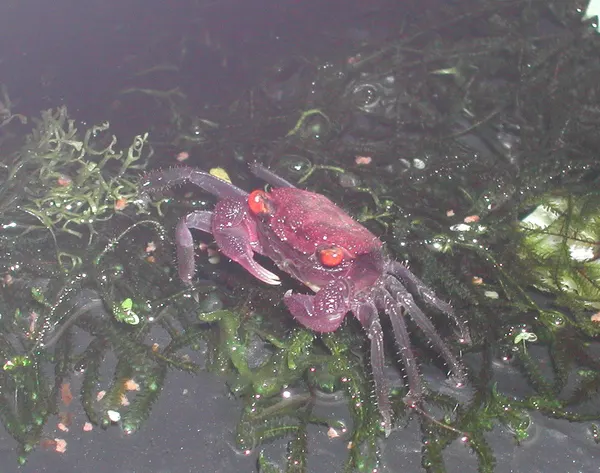
Vampire Crabs (Geosesarma species) are stunning small crabs named for their glowing yellow or orange eyes that contrast dramatically with their colorful bodies. These tiny jewels come in varieties including purple, red, orange, and carnival patterns, making them some of the most visually striking invertebrates available.
Unlike many aquarium crabs, Vampire Crabs are primarily terrestrial and prefer freshwater over brackish conditions. They spend most of their time on land, making them perfect for beautifully planted paludarium setups.
Vampire crabs are Geosesarma from Java and Sulawesi, small land crabs about 1 to 2 inches across, with a lifespan of 2 to 3 years. Moderate care is the paludarium itself, not a difficult diet. The setup on the card is a paludarium of 10 gallons or more, not a filled aquarium. They drown in a full tank. Most of the box should be land: leaf litter, cork, and soil that stays damp, with a shallow pool of freshwater they can walk out of easily. A deep water column with a floating cork is not the same thing.
The water itself is freshwater, pH 7.0 to 8.0, general hardness 4 to 16 dGH, carbonate hardness 3 to 10 dKH, temperature 72 to 82°F. Ammonia and nitrite in that pool should be 0 ppm, which is tricky because the pool is small and these crabs bury leftovers. Change the pool on a short schedule. Air humidity is 75 to 85 percent. A screen top that lets the land dry out will force the crabs to the water and then fail them there too. Cover most of the lid, mist as needed, and measure humidity instead of guessing from a wet corner.
Natural Habitat
Vampire Crabs come from Indonesian forest environments.
- Range: Java and Sulawesi, Indonesia (recently described species)
- Environment: Humid forest floors near freshwater streams
- Behavior: Primarily terrestrial; only enter water briefly
- Climate: Warm, humid tropical conditions
Tank Requirements
Vampire Crabs need humid paludarium setups.
- Tank Size: 10+ gallons; more for groups
- Land Ratio: 80% land, 20% shallow water
- Water Depth: Very shallow - 2-3 inches maximum
- Substrate: Soil/coco fiber for land; sand for water area
- Plants: Live terrarium plants add beauty and humidity
- Hiding Spots: Cork bark, coconut hides, leaf litter, driftwood
- Humidity: 75-85% - critical for survival
- Lid: Tight-fitting to maintain humidity and prevent escape
Critical: Humidity Requirements
Vampire Crabs breathe through modified gills that must stay moist. Humidity below 70% can be fatal. Use live plants, misting, and proper ventilation balance to maintain 75-85% humidity. A hygrometer is essential.
Water Parameters
Vampire Crabs use freshwater - no salt required.
| Parameter | Ideal Range |
|---|---|
| Temperature | 72-82°F (22-28°C) |
| pH | 7.0-8.0 |
| GH | 4-16 dGH |
| KH | 3-10 dKH |
| Ammonia | 0 ppm |
| Nitrite | 0 ppm |
| Air Humidity | 75-85% |
Diet & Feeding
Vampire Crabs are omnivores with small appetites.
- Protein: Bloodworms, small insects, dried shrimp
- Commercial Foods: Crab pellets, fish flakes, shrimp pellets
- Plant Matter: Blanched vegetables, dried leaves
- Calcium: Cuttlebone pieces, calcium supplements
- Treats: Small pieces of fruit occasionally
- Live Foods: Small crickets, flightless fruit flies
Feeding Tip: Feed on land areas in small amounts every 1-2 days. Remove uneaten food to prevent mold.
Using this as a starting point, the day-to-day decisions about feeding, activity, preventive care, and mental stimulation are easier to land
Vampire Crab consistent chemistry, controlled feeding, and deliberate quarantine sit at the centre of sustained aquatic welfare; these factors drive outcomes more than brand-name products.
Behavior & Temperament
Vampire Crabs have engaging personalities: Upfront effort to understand how a Vampire Crab actually operates usually pays dividends in fewer vet emergencies.
- Primarily Terrestrial: Spend most time on land
- Nocturnal: Most active at night; hide during day
- Territorial: Males may spar but serious injury is rare
- Social: Can be kept in groups with enough space
- Shy: May hide initially; become bolder over time
- Climbing: Active climbers; appreciate vertical space
They climb. A crab on the silicone seam is looking for a way out, and a loose lid is a way out. They also molt on land, hiding until the new shell hardens. A crab that vanishes for a week may be under the leaf litter, not dead. Digging through the soil to check is how legs get torn off. Watch the food instead. If a protein food and a vegetable piece keep disappearing, someone is eating.
The diet is easy to get wrong if you only offer fish flakes on the water. They take insect prey, frozen bloodworms placed on land, and some greens. Breeding is listed as possible in captivity, unlike many brackish crabs. A pair or a small group with enough land, hiding spots, and stable humidity sometimes produces young that stay in the setup. Crowding a 10-gallon paludarium with a pile of males is how limbs are lost. Give each crab a burrow and a line of sight that can be broken.
Do not keep them with fish. The pool is too small for a fish, and the crabs are not an aquatic species that shares a community tank. The 2-to-3-year lifespan is the horizon for an animal that was given land, a shallow freshwater pool, and humid air in the 75 to 85 percent band. A vampire crab sold as a fully aquatic pet has been mislabeled. If the enclosure cannot be mostly land, wait and build that enclosure first.
Color Varieties
- Purple (G. dennerle): Deep purple body with yellow eyes
- Red Devil (G. hagen): Red/orange body with yellow eyes
- Tangerine: Bright orange coloration
- Carnival: Multi-colored patterns
- Blue: Blue-tinted specimens
Compatibility
Vampire Crabs are best in species-only setups.
Can Work With
- Other Vampire Crabs (multiple females, single male)
- Springtails and isopods (cleanup crew)
- Small, fast fish in water area (risky)
Avoid
- Other crab species
- Shrimp (will be eaten)
- Slow or bottom-dwelling fish
- Frogs and newts (competition/predation)
- Snails (may be attacked)
Breeding
Vampire Crabs can breed in captivity - unique among pet crabs.
- Sexing: Males have larger, more colorful claws; females have wider abdomens
- Group Ratio: 1 male to 2-3 females recommended
- Eggs: Female carries eggs under abdomen
- Development: Direct development - no larval stage
- Babies: Hatch as miniature crabs
- Survival: Provide extra hiding spots for juveniles
Breeding Success
Unlike most aquatic crabs that require marine larval stages, Vampire Crabs have direct development. Babies emerge as tiny crabs and can be raised in the same tank. Provide ample hiding spots to prevent cannibalism.
Health Issues
Common Vampire Crab health concerns: The practical payoff of Vampire Crab-specific advice over generic guidance shows up in almost every care decision.
- Desiccation: From low humidity - most common killer
- Failed Molts: From calcium deficiency or dehydration
- Shell Problems: Soft shell or damage from poor conditions
- Lethargy: Often indicates environmental issues
- Lost Limbs: From fights; regenerate through molting
Is This Species Right for You?
Most Vampire Crab owners eventually land on these topics. Reading them early makes the first-year learning curve much shorter.
Vampire Crabs Are Perfect For:
- Paludarium and vivarium enthusiasts
- Those who appreciate unique, colorful invertebrates
- Keepers interested in breeding projects
- Those wanting freshwater crabs (no salt needed)
- Observers who enjoy nocturnal animals
Vampire Crabs May Not Be Ideal For:
- Traditional aquarium setups
- Those unable to maintain high humidity
- Keepers wanting active daytime animals
- Community tank enthusiasts
- Beginners to invertebrate keeping
Adding a Vampire Crab to your setup works best when you have honestly evaluated your tank size, maintenance habits, and budget.
Experienced Vampire Crab keepers will tell you that the learning curve is steepest in the first few months. After that, maintenance becomes routine.
Cost of Ownership
Related Species
If you're interested in Vampire Crabs, consider these related species.
- Fiddler Crab - Brackish, more display behavior
- Red Claw Crab - Larger, more aggressive
- Dwarf Crayfish - Fully aquatic freshwater
- Electric Blue Crayfish - Striking blue coloration
Ask Our AI About Vampire Crabs
Have specific questions about Vampire Crab care, paludarium setup, or breeding? Our AI assistant can provide personalized guidance.
Get Personalized AI Guidance
Ask Our AI NowDecision Guides for Vampire Crab
Use these only when comparing food, insurance, ownership budget, or beginner fit for this specific pet.
Vampire crabs, Geosesarma, are mostly terrestrial. They need a humid land area, a shallow pool of fresh water they can leave, leaf litter, and a tight lid. A full aquarium drowns them. They eat a small pellet, leaf litter, and the occasional insect. A dry crab with a dull shell is a humidity problem.