Upside-Down Catfish
This page is educational reference material for preparing questions. A licensed veterinarian examines the animal, makes the diagnosis, and sets the treatment.
Affiliate links may earn a commission. Affiliate disclosure.
Quick Facts
| Attribute | Details |
|---|---|
| Type | Freshwater |
| Family | Mochokidae |
| Adult Size | 3-4 inches |
| Lifespan | 15 years |
| Tank Size | 20+ gallons |
| Temperament | Peaceful Nocturnal |
| Difficulty | Beginner |
Upside-Down Catfish Overview
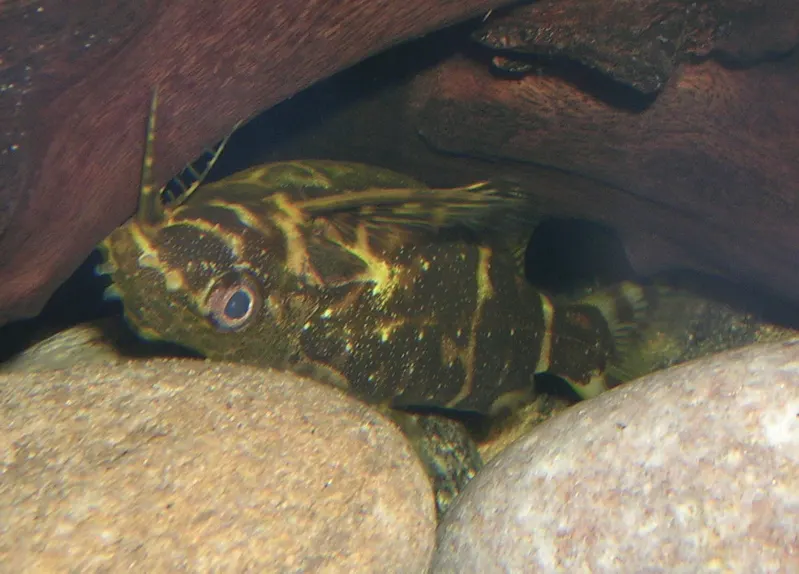
The upside-down catfish is a mochokid, Synodontis nigriventris, and it is not a pictus cat. Adults reach about 3 to 4 inches and the lifespan on this card is 15 years, which is long for a fish this size and long enough to make the housing decision matter. A group needs 20 gallons or more under the leaves they rest beneath. Temperament is peaceful and nocturnal. Difficulty is beginner. The feature everyone notices is real: they swim inverted, belly toward the ceiling, and they will rest under a leaf or a piece of wood in that posture.
One upside-down catfish is a wasted purchase. It hides until you forget you own it. Several fish in a 20-gallon tank with broad leaves and dark wood will use the underside of the decor in the open, which is the point of keeping them. They are most active when the room is dim. A tank blasted with light and stripped of cover will look empty at noon and busy after dinner. Feed sinking and midwater foods in the evening: small pellets, frozen bloodworms, and similar omnivore fare. Daytime leftovers from the other fish are not a feeding plan for a 15-year nocturnal group.
They are peaceful toward fish that are not small enough to be eaten. A 4-inch catfish can take a tiny fry or a shrimp. Do not house them with a breeding colony of dwarf shrimp and expect both projects to thrive. Ordinary community tetras of a decent size, peaceful schooling fish, and other calm residents are a better match. They do not have the long sharp spines and the 55-gallon requirement of a pictus, and they should not be stocked as if they did. They also will not clean the glass.
The card's costs are the usual wide band: setup about 100 to 500 dollars or more, each fish about 5 to 100 dollars or more, annual maintenance about 200 to 500 dollars, and food about 50 to 150 dollars a year. Spread across a 15-year lifespan, the annual line matters more than the purchase price. A 20-gallon tank is the floor. A group that will live into its second decade is more comfortable in something longer, with a filter you are willing to maintain after the novelty of the inverted swimming has worn off.
Temperament & Behavior
Beginner care fits a cycled tank, a group, and evening feedings. It does not fit a brand-new aquarium and one fish bought as a curiosity. They can be startled into the decor and they appreciate a lid. Provide shade. A pale, skittish animal that never inverts is often a fish with nowhere to tuck under, or a fish that is not S. nigriventris at all. Other Synodontis species swim the right way up and get larger. Buy the one that is already demonstrating the belly-up posture in the shop, and give that group the years the card allows.
Because they live under the wood, a dead fish is easy to miss and a 15-year plan is easy to neglect in year six. Look for every member of the group at feeding time. Gravel vacuums should avoid collapsing the caves they use by day. Peaceful and nocturnal is not the same as invisible and maintenance-free. The inverted swim is the display. The 20-gallon minimum and the decade-plus lifespan are the part you have to keep showing up for.
Upside-Down Catfish stable water parameters, appropriately measured feeding, and a consistent quarantine protocol carry most of the welfare signal; these factors drive outcomes more than brand-name products.
Housing & Environment Requirements
A minimum tank size of 20+ gallons is recommended for Upside-Down Catfishs. Provide appropriate substrate, hiding places, and peaceful tankmates. A quality filtration system and heater are essential.
Diet & Nutrition
Feed Upside-Down Catfishs a varied diet appropriate for their species. Overfeeding leads to water quality issues. Vary the diet to ensure complete nutrition.
Common Health Issues
Common health issues in Upside-Down Catfishs include ich (white spot disease), fin rot, bacterial infections, and stress-related conditions. Maintaining excellent water quality is the best prevention. Quarantine new fish for 2-4 weeks before adding to the main tank. Have aquarium salt and broad-spectrum medications on hand for emergencies.
For Upside Down Catfish, prevention is always better than treatment.
Grooming & Maintenance
Remove uneaten food promptly. Trim live plants as needed. Monitor equipment function daily. Replace filter media according to manufacturer recommendations.
Beginner-Friendly Rating: Beginner
Upside-Down Catfishs are excellent for newcomers to fishkeeping.
Before acquiring an Upside-Down Catfish, research thoroughly and prepare the habitat in advance. Join online communities and forums dedicated to fishkeeping to connect with experienced keepers who can offer guidance specific to Upside-Down Catfish care.
Socialization & Enrichment
Rearranging decorations periodically provides novelty. For Upside-Down Catfishs specifically, consider their natural habitat when designing your aquascape - this helps encourage natural behaviors and reduces stress.
Feeding enrichment is another important aspect. Live and frozen foods provide hunting stimulation that dry foods cannot. This knowledge helps you detect health issues early and optimize care.
Where to Find Upside-Down Catfishs
Purchase Upside-Down Catfishs from reputable local fish stores (LFS) that maintain clean, well-cared-for aquariums. Online sellers with strong reviews and live arrival guarantees are another option.
Cost of Ownership Overview
| Expense | Estimated Cost |
|---|---|
| Initial Setup (tank + equipment) | $100-$500+ |
| Fish Purchase | $5-$100+ per fish |
| Annual Maintenance | $200-$500 |
| Food (annual) | $50-$150 |
Plan on a few weeks of intentional practice to set the habits here; the durability of the outcome is worth the upfront investment.
Daily Care Routine for Upside-Down Catfishs
Successful Upside-Down Catfish keeping depends on consistent daily observation and maintenance.
What size tank do Upside-Down Catfishs need?
Upside-Down Catfishss need a starting tank of 20+ gallons or more. Larger systems are more forgiving on water chemistry and far easier on tankmate compatibility.
What fish are compatible with Upside-Down Catfishs?
With their peaceful nocturnal temperament, Upside-Down Catfishs are compatible with many community fish of similar size and temperament. Good tankmates include other peaceful species that share similar water parameter requirements. Always research specific compatibility before adding new species to your aquarium.
How often should I feed Upside-Down Catfishs?
Feed Upside-Down Catfishs 1-2 times daily, offering only what they can consume within 2-3 minutes. Fasting one day per week can benefit digestive health.
Are Upside-Down Catfishs good for beginners?
Yes, Upside-Down Catfishs are excellent for beginning fishkeepers. Start with a properly cycled tank and maintain regular maintenance habits.
Long-Term Commitment & Responsible Ownership
Owning Upside-Down Catfishs is a commitment that spans their full lifespan of 15 years. Aquariums require daily attention, weekly maintenance, and ongoing expense. Many fishkeeping communities have members willing to help in emergencies.
Plan for equipment upgrades as fish grow and needs change over time.
Get Personalized Upside-Down Catfish Guidance
Ask Our AI NowDecision Guides for Upside-Down Catfish
Use these only when comparing food, insurance, ownership budget, or beginner fit for this specific pet.
Is Upside-Down Catfish Right for Your Aquarium?
A keeper who will school Synodontis nigriventris and leave caves for the day Someone who knows swimming belly-up is the species, not a dying fish, unless the belly is pinched and the gills are racing An aquarist with a lid and tankmates that are not large cichlids A single upside-down catfish in a bright, bare tank Aggressive Central American cichlids Anyone who will treat the normal upside-down swim as a disease and medicate the tank
Upside-Down Catfish May Be Great For:
- A keeper who will school Synodontis nigriventris and leave caves for the day
- Someone who knows swimming belly-up is the species, not a dying fish, unless the belly is pinched and the gills are racing
- An aquarist with a lid and tankmates that are not large cichlids
Upside-Down Catfish May Not Be Ideal For:
- A single upside-down catfish in a bright, bare tank
- Aggressive Central American cichlids
- Anyone who will treat the normal upside-down swim as a disease and medicate the tank
- Plan the adult size, the vet, and the daily work for the upside down catfish before it comes home.
Keeping an Upside-Down Catfish is one of those experiences that gets better with time. The first few weeks involve a steep learning curve, but once you establish a routine, the daily care becomes second nature. Most long-term Upside-Down Catfish keepers say they wish they had started sooner.
Upside-down catfish, Synodontis nigriventris, swim belly-up on purpose and feed at the surface that way. A group needs a planted tank, driftwood, subdued light, and a sinking or slow pellet they can reach. The belly is darker than the back, which is the camouflage for a fish that lives inverted. They are poor roommates for tiny shrimp.