Tiger Barb
This page is educational reference material for preparing questions. A licensed veterinarian examines the animal, makes the diagnosis, and sets the treatment.
Affiliate links may earn a commission. Affiliate disclosure.
Quick Facts
| Attribute | Details |
|---|---|
| Scientific Name | Puntigrus tetrazona |
| Origin | Sumatra, Borneo (Indonesia) |
| Size | 2.5-3 inches (6-7.5 cm) |
| Lifespan | 5-7 years |
| Temperature Range | 74-82°F (23-28°C) |
| pH Range | 6.0-7.5 |
| Tank Size Minimum | 30 gallons |
| Care Level | Easy to Moderate |
| Diet | Omnivore |
| Temperament | Semi-aggressive, Fin Nipper |
Recommended for Tiger Barbs
Aquarium Co-Op - Quality foods & supplies | Seachem - Water treatment | Fluval - Reliable filtration
Tiger Barb Overview
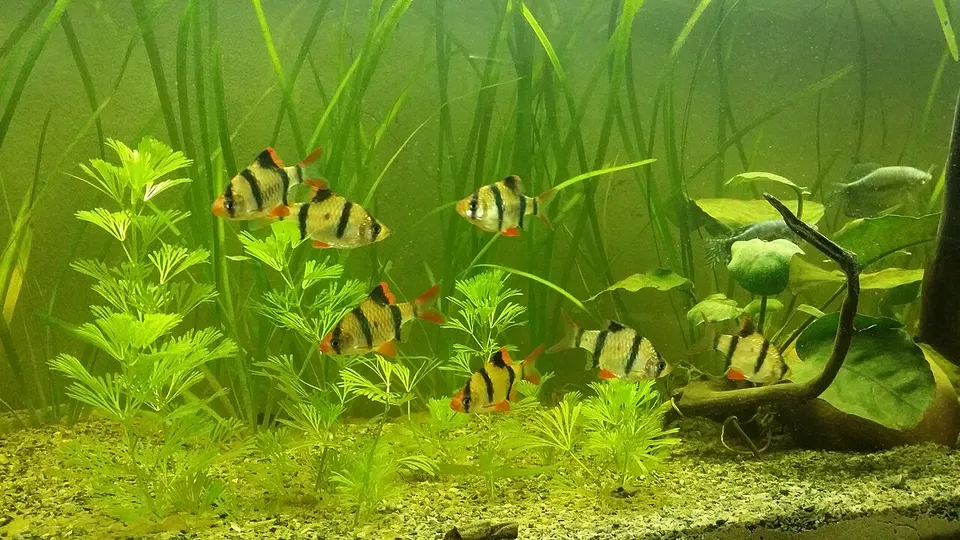
Tiger Barbs are striking, energetic fish known for their bold black stripes on a golden-orange body, reminiscent of a tiger's pattern. These active schooling fish are endlessly entertaining to watch as they chase each other around the tank in their characteristic playful manner.
However, tiger barbs have a notorious reputation as fin nippers, which can make tank mate selection challenging. The key to successful tiger barb keeping is maintaining them in large schools (8+) where they focus their energy on each other rather than harassing other fish. When kept properly, they're hardy, beautiful additions to appropriately designed aquariums.
Tiger barbs, Puntigrus tetrazona, are small, fast cyprinids from Sumatra and Borneo. Adults are about 2.5 to 3 inches and live 5 to 7 years. A nipping school belongs in 30 gallons or more. Care is easy to moderate. The temperament line says semi-aggressive and fin nipper, and that is the fact that should decide the stocking. They are not a playful alternative to a harlequin in a betta tank.
They do better in a group of six or more so the nipping stays inside the group. Five tiger barbs in a tank with an angelfish will use the angelfish as the outlet. Eight tiger barbs in a 30-gallon tank with similarly robust, short-finned neighbors will mostly chase each other. The 30-gallon minimum is for that group, not for a pair. A smaller tank makes the chasing constant because there is no length to break it up.
Temperature is 74 to 82°F, pH 6.0 to 7.5, and hardness 5 to 15 dGH. The nitrate ceiling for this group is under 30 ppm. Ammonia and nitrite at 0 ppm are required even though the fish looks tough. They are active omnivores and they eat eagerly: flakes, pellets, frozen foods, and greens. Eager eating in a tight school loads the water. A 30-gallon tank with eight growing barbs needs a filter and a water-change habit sized for that, or the moderate half of the care rating shows up as disease after the easy half convinced you they were indestructible.
Natural Habitat & Origin
Tiger barbs originate from Southeast Asian waters.
- Native Range: Sumatra, Borneo (Indonesia), Malay Peninsula
- Habitat: Clear or slightly turbid streams and tributaries
- Environment: Areas with moderate current and vegetation
- Wild Behavior: Found in large schools
Tank Requirements & Setup
Tiger barbs need space for their active swimming.
Tank Size
- Minimum: 30 gallons for a school of 8
- Recommended: 40+ gallons for larger groups
- School Size: Keep 8+ (reduces fin nipping significantly)
- Shape: Long tanks preferred over tall
Essential Equipment
- Filter: Moderate to strong flow
- Heater: Maintain stable tropical temperatures
- Lighting: Standard aquarium lighting
- Lid: Secure lid (occasional jumpers)
Decoration & Plants
- Open Swimming: Plenty of space for active swimming
- Plants: Along perimeter, leaving center open
- Decorations: Some cover but not overcrowded
- Substrate: Sand or gravel
Water Parameters
Tiger barbs are adaptable but prefer slightly acidic water: Your aquatic veterinarian and experienced Tiger Barb owners can offer perspective tailored to your situation.
| Parameter | Ideal Range |
|---|---|
| Temperature | 74-82°F (23-28°C) |
| pH | 6.0-7.5 |
| Ammonia | 0 ppm |
| Nitrite | 0 ppm |
| Nitrate | <30 ppm |
| Hardness (GH) | 5-15 dGH |
Diet & Feeding
Primary Foods
- Flake Food: High-quality tropical flakes
- Pellets: Small sinking or floating pellets
- Frozen Foods: Bloodworms, brine shrimp, daphnia
- Live Foods: Brine shrimp, mosquito larvae
- Vegetables: Blanched spinach, zucchini occasionally
Feeding Guidelines
- Feed 2-3 times daily
- Small amounts consumed quickly
- Variety promotes health and color
Tiger Barb consistent chemistry, controlled feeding, and deliberate quarantine sit at the centre of sustained aquatic welfare; these factors drive outcomes more than brand-name products.
Popular Tiger Barb Varieties
- Wild Type: Golden body with black stripes
- Green Tiger Barb: Green/black coloration
- Albino Tiger Barb: Pale with faint stripes
- GloFish Tiger Barb: Fluorescent colors
Behavior & Temperament
- Highly Active: Constantly swimming and chasing
- Schooling: Must be kept in groups of 8+
- Fin Nippers: Will harass slow/long-finned fish if understocked
- Hierarchical: Establish pecking orders within school
- Playful: Chase each other constantly
Managing Fin Nipping
The #1 way to reduce fin nipping is keeping tiger barbs in groups of 8 or more. In large schools, they focus aggression on each other (which is normal play behavior) rather than targeting other fish. Small groups (under 6) almost always cause problems.
Color forms, green and albino included, nip the same way. Cherry barbs, Puntius titteya, are the calmer relative people sometimes wanted when they bought tigers for the stripes. If the tank holds long fins and cannot hold a group of six, the cherry is the barb that fits that job. Tiger barbs themselves should not be kept with bettas, fancy guppies, or angelfish. Choose active fish with short fins, or give the barbs a species tank.
They spawn in fine plants if the group is well fed and the water is in range, and the adults will eat the eggs. Raising fry is a choice, not part of keeping the school. Managing the group is not. Buy the six together so you are not adding one bright fish to a school that already has a target. Leave no gap at the rim, because a chased barb will use it. A startled tiger barb will clear a low rim. The 5-to-7-year lifespan is reasonable for a school that was given 30 gallons, six or more of its own, and nitrate held under 30 ppm.
Breed origin shapes several practical defaults: calorie density, exercise tolerance, environmental preferences. Plans that respect these origins outperform plans that ignore them.
Compatibility with Other Fish
Experienced Tiger Barb owners often cite this as the factor they wish they had taken more seriously at the start.
Compatible Tank Mates
- Other tiger barbs (same species best)
- Other robust barbs (rosy, cherry in large groups)
- Corydoras catfish
- Plecos
- Larger tetras (not slow or long-finned)
- Rainbowfish
- Loaches (clown, yoyo)
Incompatible Species
- Bettas (NEVER - will be harassed)
- Angelfish (fins will be nipped)
- Guppies (long fins targeted)
- Any slow-moving or long-finned fish
- Shy, timid species
- Goldfish
Breeding Information
Tiger barbs breed readily in home aquariums: A care plan fitted to this particular Tiger Barb almost always produces better behavior and better health markers.
- Egg Scatterers: Scatter eggs among plants
- Spawning: Males chase females intensely
- Eggs: 200-500 eggs
- Hatching: 36-48 hours
- Fry Care: Remove adults immediately (will eat eggs/fry); feed infusoria, then baby brine shrimp
- Breeding Setup: Marbles or mesh bottom to protect eggs
Common Health Issues
Getting Tiger Barb care right is not about optimising every decision; it is about making sensible, repeatable choices that compound over time. Observe closely during the first month; your Tiger Barb will tell you which parts of the routine to keep.
Ich
- Symptoms: White spots on body and fins
- Treatment: Raise temperature, ich medication
Fin Rot
- Symptoms: Deteriorating fins
- Causes: Often from nipping injuries getting infected
- Treatment: Clean water, antibacterial medication
Swim Bladder Issues
- Symptoms: Swimming difficulties
- Treatment: Fast, then varied diet
Tiger Barb Health Products
API Melafix - Tea-tree-oil remedy; fix water quality first | Seachem Paraguard - Disease treatment | Aquarium Co-Op - Quality fish foods
Tiger Barbs Are Great For:
- Active, species-only tanks
- Keepers who can maintain large schools
- Those wanting entertaining, bold fish
- Tanks with robust, similar-sized fish
Tiger Barbs May Not Be Ideal For:
- Peaceful community tanks with slow fish
- Tanks with long-finned fish
- Small tanks (under 30 gallons)
- Those unable to keep 8+ individuals
The best way to decide if a Tiger Barb is right for your tank is to talk to people who already keep them. That kind of practical insight is more valuable than any care sheet.
A well-maintained Tiger Barb is one of the more satisfying species to keep, and most owners who take the time to get it right have no regrets.
Cost of Ownership
Apply accepted best practices, watch what happens, and adjust — consistent execution of care basics.
Related Species
- Cherry Barb - Peaceful alternative
- Zebra Danio - Active, compatible tank mate
- Rainbowfish - Robust, colorful alternative
- Corydoras - Good bottom-dwelling tank mates
Ask Our AI About Tiger Barbs
Have specific questions about tiger barb care, tank mates, or managing behavior? Our AI assistant can provide personalized guidance.
Get Personalized AI Guidance
Ask Our AI NowDecision Guides for Tiger Barb
Use these only when comparing food, insurance, ownership budget, or beginner fit for this specific pet.
Tiger barbs, Puntigrus tetrazona, are schooling fish that nip fins when the group is under six or the tank is small. A proper school in a 20-gallon or longer tank spends the nipping on each other and leaves peaceful tankmates alone more often. They eat flake and frozen foods and are too rowdy for a betta.