Swordtail Fish
This page is educational reference material for preparing questions. A licensed veterinarian examines the animal, makes the diagnosis, and sets the treatment.
Affiliate links may earn a commission. Affiliate disclosure.
Quick Facts
| Attribute | Details |
|---|---|
| Scientific Name | Xiphophorus hellerii |
| Origin | Central America (Mexico to Honduras) |
| Size | 4-5 inches (10-12.5 cm) |
| Lifespan | 3-5 years |
| Temperature Range | 72-79°F (22-26°C) |
| pH Range | 7.0-8.4 |
| Tank Size Minimum | 20 gallons |
| Care Level | Easy |
| Diet | Omnivore |
| Temperament | Peaceful (males can be competitive) |
Recommended for Swordtails
Aquarium Co-Op - Quality livebearer supplies | Seachem - Water treatment | Fluval - Reliable tank setups
Swordtail Overview
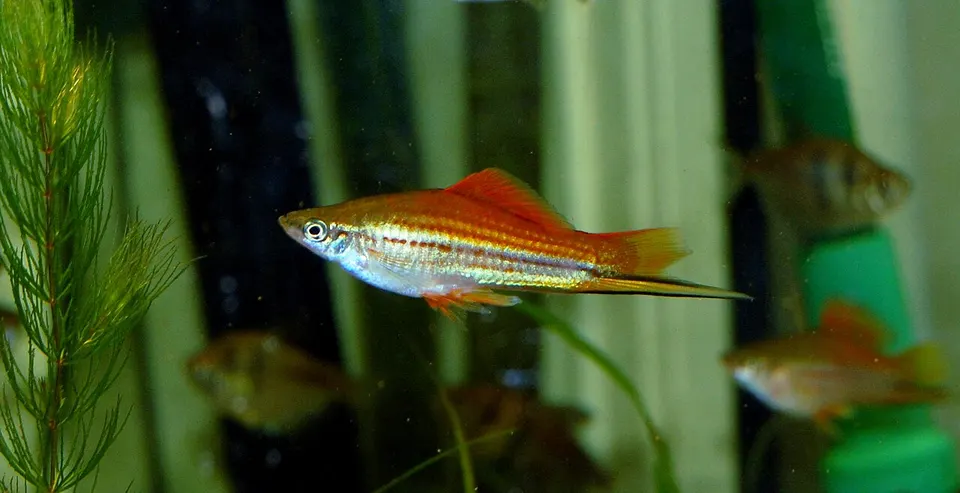
Swordtails are elegant livebearing fish named for the distinctive sword-like extension on the lower tail fin of males. Related to platies (and capable of interbreeding), swordtails are slightly larger and make impressive additions to community aquariums. They combine hardiness with striking appearance, available in numerous colors including red, orange, pineapple, black, and combinations.
Their active swimming behavior and interesting social dynamics make them engaging to watch. Swordtails are excellent for beginners while still being appreciated by experienced aquarists for their beauty and ease of breeding.
Swordtails are Xiphophorus hellerii, livebearers from Mexico to Honduras. Adults are listed at 4 to 5 inches, and the male is the one that grows the sword, a lower tail extension that makes him look longer than a female of the same body. Adults typically live 3 to 5 years while producing brood after brood. The adults need 20 gallons before the fry are even counted. They are easy omnivores, peaceful overall, with the note that males can be competitive. That competition is real in a short tank with two mature males and no break in the line of sight.
Water is hard and alkaline: 72 to 79°F, pH 7.0 to 8.4, hardness 12 to 30 dGH. Nitrate is tolerated under 40 ppm on this card. The nitrogen cycle still has to show ammonia at 0 ppm and nitrite at 0 ppm. Soft rainwater tanks that suit wild tetras are a poor match. If your tap water is hard, you are already closer to this fish than to a blackwater species. If it is not, raise the mineral content and test it rather than pouring salt in at random. The swordtail's preference is hardness and a moderate temperature, not a brine tank.
Natural Habitat & Origin
Swordtails originate from Central American waterways.
- Native Range: Mexico, Guatemala, Honduras, Belize
- Habitat: Streams, rivers, springs, and ponds
- Environment: Vegetated areas with hard, alkaline water
- Wild Coloration: Olive-green with red/yellow lateral stripe
Tank Requirements & Setup
Swordtails need adequate space for their active swimming.
Tank Size
- Minimum: 20 gallons for a small group
- Recommended: 30+ gallons for multiple males
- Ratio: 1 male to 2-3 females minimum
- Lid: Essential - swordtails are jumpers
Essential Equipment
- Filter: Moderate flow filtration
- Heater: Maintain stable temperatures
- Lighting: Standard aquarium lighting
- Secure Lid: Prevent jumping escapes
Decoration & Plants
- Live Plants: Vallisneria, Amazon sword, hornwort
- Open Swimming: Plenty of room to swim
- Hiding Spots: For females and fry
- Substrate: Gravel or sand
Water Parameters
Swordtails prefer hard, alkaline water.
| Parameter | Ideal Range |
|---|---|
| Temperature | 72-79°F (22-26°C) |
| pH | 7.0-8.4 |
| Ammonia | 0 ppm |
| Nitrite | 0 ppm |
| Nitrate | <40 ppm |
| Hardness (GH) | 12-30 dGH |
Diet & Feeding
Swordtails are omnivores with a preference for plant matter: Health and behavior metrics for a Swordtail. Swordtails are omnivores with a preference for plant matter. They also need a lid, because they jump, and a tank long enough for a male to display the sword without being nipped to pieces. Livebearing means a female can drop fry you did not plan to raise. Keep males from harassing one female into exhaustion. A swordtail in a ten-gallon with three males is a fight, not a display.
Primary Foods
- Flake Food: High-quality tropical/omnivore flakes
- Algae/Spirulina: Important vegetable component
- Frozen Foods: Brine shrimp, bloodworms
- Vegetables: Blanched spinach, zucchini, peas
- Live Foods: Daphnia, brine shrimp (occasional)
Feeding Guidelines
- Feed 2-3 times daily
- Include vegetable matter regularly
- Only what they consume in 2-3 minutes
Proper nutrition for Swordtail Fish requires understanding not just what to feed, but how feeding strategies affect health, behavior, and water quality. A disciplined approach to feeding, where your Swordtail Fish receives the right amount of appropriate food at consistent intervals, is one of the most impactful things you can do for both the fish and the overall aquarium ecosystem.
Diet variety is essential for optimal Swordtail Fish health because no single commercial food provides the complete nutritional profile these fish require. Observing your Swordtail Fish's response to different food types also provides useful health information, as reduced interest in normally preferred foods is often an early indicator of illness.
Popular Swordtail Varieties
- Red Swordtail: Classic solid red
- Red Wag: Red body with black fins
- Pineapple: Yellow-orange with red accents
- Marigold: Golden-yellow coloration
- Black: Solid black or near-black
- Neon: Bright, iridescent colors
- Tuxedo: Dark rear body half
- Lyretail: Extended, lyre-shaped tail
Behavior & Temperament
- Active Swimmers: Need open swimming space
- Generally Peaceful: Good community fish
- Male Competition: Males may spar for dominance
- Jumpers: Require secure lids
- Hierarchical: Establish pecking orders
They are livebearers, and they produce more fry than a small tank can hold. A female drops large broods and can continue after she is separated from males. A 20-gallon aquarium with a pair will not stay a pair. Fry hide in plants for a while, then they grow, and the nitrate number climbs toward that 40 ppm ceiling. Harvest young to another tank if you want them, or stock fewer adults than the gallon rule of thumb suggests and let the plants and the adults account for some of the surplus.
Planning with these specific traits in focus produces a care programme calibrated to the animal in your home, not to a breed average that may not describe it well.
Feeding behavior in Swordtail Fish reveals much about their ecological role and can be leveraged by keepers to promote natural behaviors and reduce aggression. Observing when, where, and how your Swordtail Fish feeds provides diagnostic information about their comfort level, health status, and social standing. Many successful Swordtail Fish keepers use varied feeding strategies including target feeding, scatter feeding, and enrichment feeders to promote natural foraging behaviors and reduce competition-related stress.
Compatibility with Other Fish
A confident read of this side of Swordtail care puts you in a better position to make decisions the animal can actually feel. Use these defaults as a starting point and adjust to the cadence your Swordtail actually prefers — the right rhythm typically becomes obvious quickly.
Compatible Tank Mates
- Other livebearers (platies, mollies, guppies)
- Corydoras catfish
- Larger tetras
- Rainbowfish
- Peaceful barbs
- Gouramis
Incompatible Species
- Aggressive cichlids
- Fin nippers
- Very small fish that may be bullied
- Slow-moving long-finned fish
Breeding Information
Swordtails breed readily in home aquariums.
- Livebearers: Give birth to live fry
- Gestation: 28-40 days
- Fry Per Batch: 20-100+ fry
- Frequency: Every 4-6 weeks
- Fry Care: Dense plants for hiding, or breeding box
- Sex Change: Females can develop swords and become male-like
Common Health Issues
Most Swordtail owners eventually land on these topics. Reading them early makes the first-year learning curve much shorter.
Ich
- Symptoms: White spots on body and fins
- Treatment: Raise temperature, ich medication
Fin Rot
- Symptoms: Deteriorating sword and fins
- Treatment: Clean water, antibacterial treatment
Swim Bladder Issues
- Symptoms: Swimming difficulties
- Treatment: Fast, feed peas, improve diet
Swordtail Health Products
API Aquarium Salt - Optional salt for freshwater tanks | Seachem Paraguard - Disease treatment | Aquarium Co-Op - Quality foods
The foundation of Swordtail health management is water quality — full stop. Regular testing and diligent maintenance are your best tools.
Swordtail Fish the three variables that move outcomes most are water stability, feeding discipline, and careful handling of new stock; these factors drive outcomes more than brand-name products.
Quarantine protocols represent one of the most impactful health management practices available to Swordtail Fish keepers. This single practice prevents the majority of disease outbreaks in established aquariums and is considered essential by virtually all experienced Swordtail Fish keepers.
Is This Fish Right for You?
Health and behavior metrics for a Swordtail. Feed a swordtail a flake or pellet that is not pure protein, plus blanched greens. They tolerate a range of hard water and they do not tolerate a filthy one. Ich, fungus on a nipped fin, and a female that is bullied until she hides are the common problems. Quarantine new livebearers. A shop swordtail often arrives with parasites and a pregnancy.
Swordtails Are Great For:
- Beginners wanting elegant fish
- Community tank enthusiasts
- Those interested in livebearer breeding
- Aquarists with hard water
Swordtails May Not Be Ideal For:
- Very small tanks (under 20 gallons)
- Soft, acidic water setups
- Tanks without secure lids
- Those not wanting population growth
The best way to decide if a Swordtail Fish is right for your tank is to talk to people who already keep them. That kind of practical insight is more valuable than any care sheet.
A well-maintained Swordtail Fish is one of the more satisfying species to keep, and most owners who take the time to get it right have no regrets.
Cost of Ownership
Small adjustments based on what you observe often yield the biggest improvements.
The true cost of keeping Swordtail Fish extends well beyond the initial purchase price and basic equipment. While the upfront investment in a properly equipped aquarium (minimum 20 gallons) represents a significant portion of the total cost, ongoing expenses for water treatment chemicals, filter media, electricity for heating and lighting, and food constitute the majority of long-term spending. Many aspiring Swordtail Fish keepers underestimate these ongoing costs, which can lead to cut corners that ultimately compromise fish health and result in even greater expenses. A realistic budget that accounts for both routine maintenance and occasional replacement of equipment provides a more accurate picture of what Swordtail Fish keeping actually costs.
Related Species
- Platy - Close relative, can interbreed
- Molly - Larger livebearer
- Guppy - Smaller, colorful livebearer
- Rainbowfish - Similar size and activity level
Ask Our AI About Swordtails
Have specific questions about swordtail care, breeding, or health issues? Our AI assistant can provide personalized guidance.
When to Seek Help
Recognizing signs of illness early gives your Swordtail Fish the best chance of recovery.
- Water testing: Before treating for disease, always test water parameters.
Diet and Nutrition Tips
- Primary diet: Feed a high-quality staple food formulated for your Swordtail Fish's dietary type (herbivore, omnivore, or carnivore). Look for foods with whole ingredients and minimal fillers.
- Variety ensures complete nutrition and encourages natural foraging.
- Feeding frequency: Feed small amounts 1-2 times daily.
- Avoid overfeeding: Overfeeding is the most common nutritional mistake in fishkeeping. It leads to obesity, water pollution, and secondary health problems.
Tank Environment and Stimulation
- Tank size: Always choose a tank that meets or exceeds the minimum recommended size for Swordtail Fish. Larger tanks are more stable and forgiving of water quality fluctuations.
- Water parameters: Maintain consistent temperature, pH, and hardness levels appropriate for Swordtail Fish. Test water weekly and perform regular partial water changes.
- Filtration: Use a quality filter rated for your tank size.
- This reduces stress and aggression.
Tank Maintenance Essentials
They hybridize with platys. Both are Xiphophorus, and a mixed community produces fry that do not belong cleanly to either species. Keep them apart if you care what the young are. Inside the swordtails themselves, choose males with intact swords and females that are not being run ragged. A 20-gallon tank can hold a small group if it is longer than it is tall. Several adult males in that footprint will tear swords and stress the females even though the species is called peaceful.
Feed flakes, spirulina, and frozen foods. They eat at the surface and in the middle and they are not picky, which helps the easy rating and hurts the water if you feed until the sword is wagging over a pile of leftovers. The 3-to-5-year lifespan is typical, not a failure, for a fish that breeds this hard. Give the adults 20 gallons, hard water inside the ranges above, and a plan for more babies than the tank can raise. A male with no sword yet is often just a young male. Give him the length to grow the extension before you decide the fish is a female.
- Water changes: Perform 20-30% partial water changes weekly.
- Filter maintenance: Rinse filter media in old tank water monthly.
- Algae control: Some algae is normal, but excessive growth indicates nutrient imbalance. Adjust lighting duration and consider adding algae-eating species.
- Water testing: Test ammonia, nitrite, nitrate, and pH at least weekly. Keep a log to track trends and catch problems early.
Living Environment
Expect a short installation period followed by a long stretch of near-autopilot maintenance.
- A stable location reduces stress and prevents temperature fluctuations.
- Compatible tankmates: Research compatibility before adding new species. Aggression, different water parameter requirements, and size mismatches are common problems.
- Substrate choice: Select substrate appropriate for your Swordtail Fish's natural behavior, whether that is sand for digging species or planted substrate for aquascaping.
- Equipment failures can be life-threatening.
Helpful Resources for Swordtail Fish Owners
Explore More Guides
Get Personalized AI Guidance
Ask Our AI NowDecision Guides for Swordtail Fish
Use these only when comparing food, insurance, ownership budget, or beginner fit for this specific pet.
Swordtails, Xiphophorus hellerii, are livebearers whose males grow a sword on the tail. They do better in hard water, eat flake and algae, and produce fry if plants give cover. A long fin and a sword are targets for barbs and angelfish. Give them a tank of 20 gallons or more and a lid.