Red Claw Crab
This page is educational reference material for preparing questions. A licensed veterinarian examines the animal, makes the diagnosis, and sets the treatment.
Affiliate links may earn a commission. Affiliate disclosure.
Quick Facts
| Attribute | Details |
|---|---|
| Scientific Name | Perisesarma bidens |
| Origin | Indo-Pacific coastal regions |
| Size | 2-2.5 inches (5-6 cm) carapace |
| Lifespan | 2-2.5 years |
| Care Level | Moderate |
| Tank Size | 10+ gallons (paludarium) |
| Temperature | 72-82°F (22-28°C) |
| Water Type | BRACKISH strongly preferred |
| Breeding | Very Difficult in captivity |
Recommended for Red Claw Crabs
Chewy - Marine salt & crab foods | Aquarium Co-Op - Paludarium equipment | Petco - Live red claw crabs
Overview
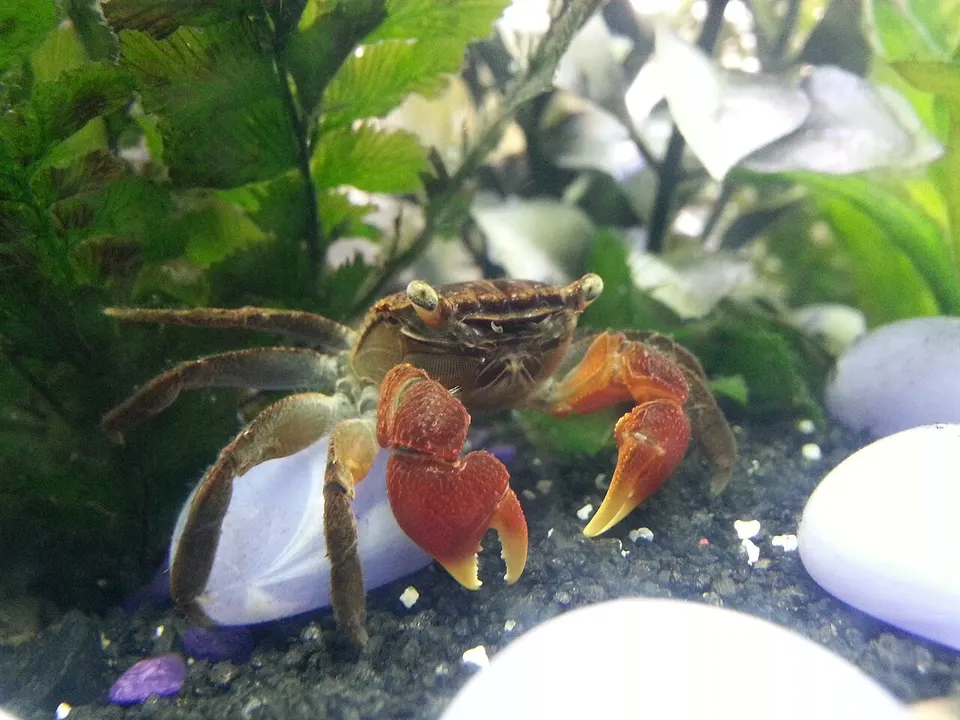
Red Claw Crabs (Perisesarma bidens) are striking semi-terrestrial crabs named for their vibrant red claws that contrast beautifully with their dark bodies. Native to mangrove swamps of the Indo-Pacific, these feisty crabs have become popular in the pet trade.
Despite being commonly sold as freshwater aquarium inhabitants, Red Claw Crabs actually need brackish water and access to land to thrive. They're active, personable crabs but can be aggressive, requiring careful consideration of tankmates and setup.
Perisesarma bidens is a small coastal crab, not a fully aquatic fish-tank ornament. The carapace reaches about 2 to 2.5 inches, and the lifespan is only 2 to 2.5 years. Moderate is the rating because the animal is a climber that wants land and salt. The tank on the card is 10 gallons or more set up as a paludarium, with water that is strongly preferred brackish at a specific gravity of 1.005 to 1.015. A freshwater community tank with a deep water column and no land is the wrong build, even if a crab survives there for a few weeks.
They need to leave the water. Provide rocks, wood, or a sloped bank that stays above the line, and keep the air humid. The card asks for humidity of 75 percent or higher above the water. A screen lid that dumps all the moisture into the room, with no cover over part of the land, dries the gill chamber. A tight lid matters for the opposite reason too: these crabs climb plumbing and will leave the tank. Temperature of the water is 72 to 82°F. pH is 7.5 to 8.5, general hardness 8 to 20 dGH, and carbonate hardness 6 to 16 dKH.
Ammonia and nitrite at 0 ppm are as important in a small brackish pool as in a reef, because the water volume in a paludarium is often much less than the tank's total gallons. Do not read 10 gallons of tank as 10 gallons of water if half the box is land. Size the filter, or the water-change habit, to the pool you actually poured. Breeding is listed as very difficult in captivity. Do not buy a pair expecting a colony. Males and females fight, and two males in a small paludarium will damage each other, especially around a molt when the shell is soft.
Natural Habitat
Red Claw Crabs inhabit coastal mangrove environments.
- Range: Indo-Pacific: Taiwan, Japan, Indonesia, Southeast Asia
- Environment: Mangrove forests, brackish estuaries
- Behavior: Climb mangrove roots; spend much time above water
- Water: Brackish - mixture of fresh and salt water
Tank Requirements
Red Claw Crabs need specialized paludarium setups.
- Tank Size: 10+ gallons; more for groups
- Land Area: Minimum 50% of tank should be dry land
- Water Depth: Shallow areas crabs can easily exit
- Substrate: Sand for burrowing; rocks/driftwood for climbing
- Plants: Hardy plants like Anubias; mangrove roots ideal
- Hiding Spots: Multiple caves, crevices, and shelters
- Lid: ESSENTIAL - extremely skilled escape artists
Critical: Land Access Required
Red Claw Crabs are NOT fully aquatic. They MUST have dry land to climb out and rest. Crabs kept without land access will drown from exhaustion. Ensure easy ramps between water and land areas.
Water Parameters
Red Claw Crabs prefer brackish conditions.
| Parameter | Ideal Range |
|---|---|
| Temperature | 72-82°F (22-28°C) |
| Salinity (SG) | 1.005-1.015 |
| pH | 7.5-8.5 |
| GH | 8-20 dGH |
| KH | 6-16 dKH |
| Ammonia | 0 ppm |
| Nitrite | 0 ppm |
| Humidity | 75%+ above water |
Diet & Feeding
Red Claw Crabs are opportunistic omnivores.
- Protein: Bloodworms, brine shrimp, small pieces of fish/shrimp
- Commercial Foods: Crab pellets, sinking fish food, algae wafers
- Plant Matter: Blanched vegetables, dried seaweed
- Calcium: Critical for molting - cuttlebone, calcium blocks
- Fruits: Occasional pieces of fruit as treats
- Variety: Varied diet prevents nutritional deficiencies
Feeding Tip: Red Claw Crabs may eat on land or in water. Offer food in both areas.
Proper nutrition for Red Claw Crab requires understanding not just what to feed, but how feeding strategies affect health, behavior, and water quality. A disciplined approach to feeding, where your Red Claw Crab receives the right amount of appropriate food at consistent intervals, is one of the most impactful things you can do for both the fish and the overall aquarium ecosystem.
Diet variety is essential for optimal Red Claw Crab health because no single commercial food provides the complete nutritional profile these fish require. Observing your Red Claw Crab's response to different food types also provides useful health information, as reduced interest in normally preferred foods is often an early indicator of illness.
Behavior & Temperament
Red Claw Crabs have bold, sometimes aggressive personalities: Generic guidance is a floor; it is the Red Claw Crab-specific nuance that raises the ceiling on outcomes.
- Territorial: Especially males; will fight for space
- Aggressive: Will attack fish, shrimp, and other invertebrates
- Climbers: Excellent climbers; scale everything
- Escape Artists: Will find any gap in tank lid
- Nocturnal: More active at night
- Molting: Vulnerable during molting; need hiding spots
They are opportunistic eaters. Pellets, blanched greens, and bits of frozen fish food are all taken, and so are slow fish and small tankmates. This is not a crab to drop into a tetra tank as a scavenger. Keep it with the understanding that anything it can catch is a possible meal, or keep it in a species setup. Molting crabs hide. An uneaten meal rotting in a 5-gallon pool of brackish water will spike ammonia past 0 ppm before you notice the crab has been under the wood for two days.
Specific gravity should stay inside 1.005 to 1.015. Pure freshwater on one end, and full marine salt at reef strength on the other, are both outside that preference. Use a refractometer, not a guess from a handful of salt. Copper medications are lethal. The short 2-to-2.5-year lifespan means a crab that arrives as an adult may not have long, so the paludarium should be ready before the animal comes home. Land, humid air, brackish water, and a lid are the moderate part. The crab itself is hardy only inside that layout.
Feeding behavior in Red Claw Crab reveals much about their ecological role and can be leveraged by keepers to promote natural behaviors and reduce aggression. Observing when, where, and how your Red Claw Crab feeds provides diagnostic information about their comfort level, health status, and social standing. Many successful Red Claw Crab keepers use varied feeding strategies including target feeding, scatter feeding, and enrichment feeders to promote natural foraging behaviors and reduce competition-related stress.
Compatibility
Red Claw Crabs have limited compatibility due to aggression: Your aquatic veterinarian and experienced Red Claw Crab owners can offer perspective tailored to your situation.
Possible Tankmates (With Caution)
- Other Red Claw Crabs (with adequate space, one male per tank)
- Fast brackish fish that stay in upper water column
- Mollies (some success reported, but at risk)
Avoid
- Small or slow fish (will be caught and eaten)
- Bottom-dwelling fish (in crab's territory)
- Shrimp (prey)
- Snails (will be eaten)
- Other crab species
- Frogs and salamanders
Aggression Warning
Red Claw Crabs are opportunistic predators. Any fish that can be caught WILL be eaten eventually. Even "compatible" tankmates are at risk. Species-only tanks are safest for long-term success.
Breeding
- Sexing: Males have larger, more colorful claws; females have broader abdomens
- Mating: Occurs after female molts
- Eggs: Female carries eggs under abdomen
- Larvae: Require marine water conditions
- Development: Multiple planktonic larval stages over weeks
- Success Rate: Nearly zero in home aquaria
Health Issues
- Failed Molts: From improper water conditions or calcium deficiency
- Shell Rot: Bacterial infection; black spots on shell
- Lethargy: Often indicates poor water quality or stress
- Lost Limbs: From fights; regenerate through molting
- Drowning: From no land access or exhaustion
- Escape Deaths: From drying out after escaping tank
Keeping a Red Claw Crab healthy means prioritizing water quality above everything else.
Recognizing early signs of disease in Red Claw Crab requires a trained eye and consistent observation. Establishing a daily observation routine—even just a few minutes of focused attention during feeding—helps you develop a baseline understanding of what normal behavior looks like for your specific Red Claw Crab, making deviations immediately apparent.
Quarantine protocols represent one of the most impactful health management practices available to Red Claw Crab keepers. This single practice prevents the majority of disease outbreaks in established aquariums and is considered essential by virtually all experienced Red Claw Crab keepers.
Is This Species Right for You?
This is a low-profile piece of Red Claw Crab ownership that quietly shapes year-over-year outcomes more than headline topics do.
Red Claw Crabs Are Perfect For:
- Those wanting bold, active invertebrates
- Paludarium enthusiasts
- Keepers who appreciate crab personalities
- Experienced aquarists seeking challenges
- Species-only tank setups
Red Claw Crabs May Not Be Ideal For:
- Community tank keepers
- Beginners expecting easy freshwater care
- Those wanting peaceful invertebrates
- Standard aquarium setups
- Keepers wanting tankmate variety
Aquarium keeping is a hobby of specifics, and Red Claw Crab is no exception.
If you can commit to the maintenance schedule and the initial investment in proper equipment, a Red Claw Crab is likely to reward you with an engaging, long-term addition to your aquarium.
Cost of Ownership
Planning ahead financially is one of the most practical things you can do before getting a Red Claw Crab. Red Claw Crab care costs are real and ongoing.
The true cost of keeping Red Claw Crab extends well beyond the initial purchase price and basic equipment. Many aspiring Red Claw Crab keepers underestimate these ongoing costs, which can lead to cut corners that ultimately compromise fish health and result in even greater expenses. A realistic budget that accounts for both routine maintenance and occasional replacement of equipment provides a more accurate picture of what Red Claw Crab keeping actually costs.
Heaters, filters, lights, and pumps all have finite lifespans, and their failure—particularly heater or filter failure—can have catastrophic consequences for Red Claw Crab if not addressed promptly. Many experienced Red Claw Crab keepers also invest in battery-operated air pumps and backup heaters as insurance against power outages, which can be lethal to tropical species within hours depending on ambient room temperature.
The cost-benefit analysis of quality versus budget equipment deserves careful consideration for Red Claw Crab keepers. This is particularly true for Red Claw Crab, where the animals themselves, along with any tank mates, plants, and established biological filtration, represent a significant investment of both money and time that is worth protecting with reliable equipment.
Related Species
If you're interested in Red Claw Crabs, consider these related species.
- Fiddler Crab - Similar needs, less aggressive
- Vampire Crab - Freshwater, less aggressive
- Dwarf Crayfish - Fully aquatic freshwater
- Electric Blue Crayfish - Larger, fully aquatic
Ask Our AI About Red Claw Crabs
Have specific questions about Red Claw Crab care, aggression, or setup? Our AI assistant can provide personalized guidance.
Get Personalized AI Guidance
Ask Our AI NowDecision Guides for Red Claw Crab
Use these only when comparing food, insurance, ownership budget, or beginner fit for this specific pet.