Pearl Gourami
This page is educational reference material for preparing questions. A licensed veterinarian examines the animal, makes the diagnosis, and sets the treatment.
Quick Facts
| Attribute | Details |
|---|---|
| Type | Freshwater |
| Size | Medium (4-5 in) |
| Lifespan | 4-5 years |
| Temperature | 77-82°F |
| pH Range | 6.0-8.0 |
| Min Tank Size | 30 gal |
| Care Level | Beginner |
| Diet | Omnivore |
| Temperament | Peaceful |
Recommended for Pearl Gouramis
Pearl Gourami sustained welfare comes from parameter discipline, measured nutrition, and proper quarantine — not from ad-hoc intervention; these factors drive outcomes more than brand-name products.
Pearl Gourami Overview
The Pearl Gourami is a medium (4-5 in) freshwater species that is an excellent choice for both beginners and experienced aquarists. With a lifespan of 4-5 years, this peaceful species requires a minimum tank size of 30 gal.
Pearl Gouramis thrive in water temperatures of 77-82°F with a pH range of 6.0-8.0. As an omnivore, they accept a wide variety of foods.
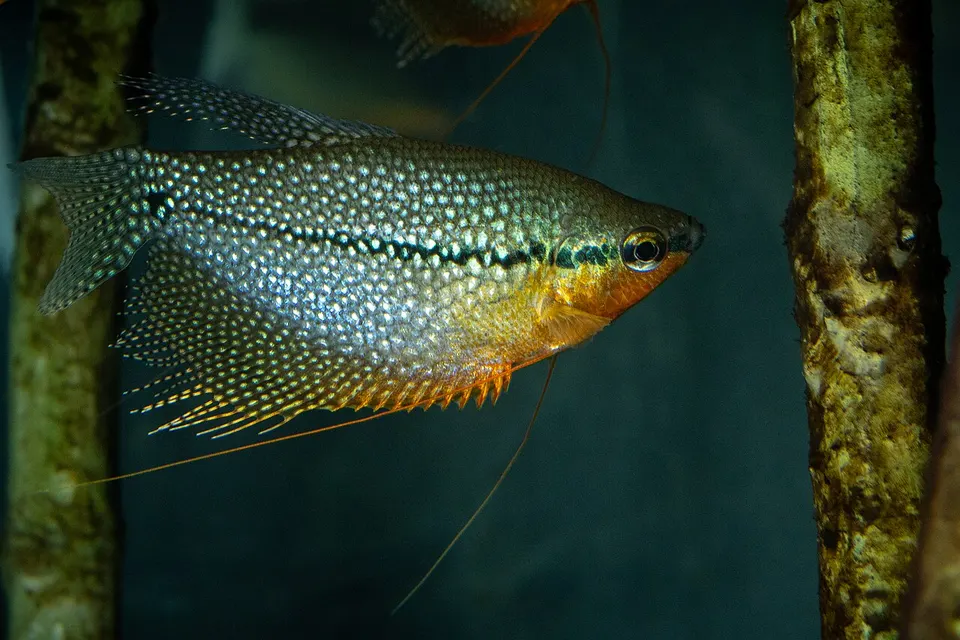
Trichopodus leerii is a larger gourami, not a dwarf that can be tucked into a nano tank. The adult size is 4 to 5 inches, the lifespan is 4 to 5 years, and the minimum tank is 30 gallons. A pearl gourami carries a filamentous pelvic feeler on each side, a thread the fish uses to test the space in front of it. Those threads tear on sharp plastic and get nipped off by the wrong neighbors, so the feelers are a husbandry detail, not just a field mark.
Males build bubble nests. A mature male under floating plants will stack bubbles and try to spawn if a female is ready. The tank should allow a quiet corner at the surface and a gap of still air under the lid, because this is a labyrinth fish that takes breaths from above. A tight, agitated surface with no cover makes a spawning male abandon the nest and leaves the fish gulping in a current. Temperature on the card is 77 to 82°F and pH is a wide 6.0 to 8.0. A nesting male still needs ammonia at 0 ppm and nitrite at 0 ppm. Nitrate under the nest should stay under 20 ppm.
They are more peaceful than three-spot gouramis, and the card rates them peaceful and beginner-level. That peace is conditional. Crowded pearl gouramis nip long fins. A 30-gallon tank with two males, a betta, and an angelfish is already crowded in the way that matters. One male with one or more females, or a single fish, in a planted 30 gallons is the stocking that matches the temperament line. Extra length helps more than extra height.
Tank Requirements & Setup
The Pearl Gourami benefits more from consistently good decisions than from any single perfect one; aim for repeatable defaults. Small tweaks based on how your Pearl Gourami actually reacts usually beat rigid adherence to a template.
Tank Size
- Minimum: 30 gal
- Recommended: Larger is always better for stability and swimming room.
- Type: Freshwater planted or community tank
Equipment
- Filtration: Quality canister or HOB filter rated for your tank size.
- Heating: Reliable heater to maintain 77-82°F.
- Lighting: Standard aquarium lighting; planted tanks benefit from full-spectrum.
- Air Pump: Optional but beneficial for oxygenation.
Water Parameters
| Parameter | Ideal Range |
|---|---|
| Temperature | 77-82°F |
| pH | 6.0-8.0 |
| Ammonia | 0 ppm |
| Nitrite | 0 ppm |
| Nitrate | <20 ppm |
Water Quality Warning
Always cycle your tank fully before adding fish. Use a quality test kit to monitor ammonia, nitrite, and nitrate levels. Never add Pearl Gouramis to an uncycled or newly set up tank.
Diet & Feeding
- Primary Diet: Omnivore.
- Foods: High-quality flakes/pellets, frozen brine shrimp, mysis shrimp, and blanched vegetables.
- Variety: Rotate different food types for balanced nutrition.
Pearl Gourami Tank Essentials
Applying breed history to daily decisions — what to feed, how much to exercise, how to structure enrichment — consistently improves long-term health trajectories.
Common Health Issues
- Ich (White Spot Disease): White spots on body and fins. Raise temperature gradually and use ich medication.
- Parasites: Internal and external parasites; quarantine new additions.
Compatibility
- Temperament: Peaceful - pairs well with other peaceful community species.
- Tank Mates: Other peaceful community fish of similar size.
- Avoid: Large aggressive species that may bully or eat them.
Pearl Gouramis Are Great For:
- Beginning aquarists looking for a rewarding species
- Community freshwater tank keepers
- Those who can maintain stable freshwater parameters
Pearl Gouramis May Not Be Ideal For:
- Those unable to commit to regular water testing and maintenance
- Those looking for a zero-maintenance pet
Ask Our AI About Pearl Gouramis
The question to ask yourself is not whether you can keep a Pearl Gourami alive, but whether you can keep one thriving. If you are willing to invest in those consistently, you and your Pearl Gourami will both benefit.
When to Seek Help
- Water testing: Before treating for disease, always test water parameters.
Diet and Nutrition Tips
Good habits here are slow to establish and slow to erode — a few weeks of consistency produces results that last for years.
- Primary diet: Feed a high-quality staple food formulated for your Pearl Gourami's dietary type (herbivore, omnivore, or carnivore). Look for foods with whole ingredients and minimal fillers.
- Variety ensures complete nutrition and encourages natural foraging.
- Feeding frequency: Feed small amounts 1-2 times daily.
- Avoid overfeeding: Overfeeding is the most common nutritional mistake in fishkeeping. It leads to obesity, water pollution, and secondary health problems.
Tank Environment and Stimulation
- Tank size: Always choose a tank that meets or exceeds the minimum recommended size for Pearl Gourami. Larger tanks are more stable and forgiving of water quality fluctuations.
- Water parameters: Maintain consistent temperature, pH, and hardness levels appropriate for Pearl Gourami. Test water weekly and perform regular partial water changes.
- Filtration: Use a quality filter rated for your tank size.
- This reduces stress and aggression.
Tank Maintenance Essentials
- Water changes: Perform 20-30% partial water changes weekly.
- Filter maintenance: Rinse filter media in old tank water monthly.
- Algae control: Some algae is normal, but excessive growth indicates nutrient imbalance. Adjust lighting duration and consider adding algae-eating species.
- Water testing: Test ammonia, nitrite, nitrate, and pH at least weekly. Keep a log to track trends and catch problems early.
Living Environment
- A stable location reduces stress and prevents temperature fluctuations.
- Compatible tankmates: Research compatibility before adding new species. Aggression, different water parameter requirements, and size mismatches are common problems.
- Substrate choice: Select substrate appropriate for your Pearl Gourami's natural behavior, whether that is sand for digging species or planted substrate for aquascaping.
- Equipment failures can be life-threatening.
Helpful Resources for Pearl Gourami Owners
When households plan for a Pearl Gourami, the spotlight tends to fall on a few common areas; this item deserves more consideration than it usually receives.
Explore More Guides
Get Personalized AI Guidance
Ask Our AI NowDecision Guides for Pearl Gourami
Use these only when comparing food, insurance, ownership budget, or beginner fit for this specific pet.
Behavior & Temperament
Pearl Gourami are characterized by a peaceful disposition that influences their care requirements and compatibility.
- General Disposition: Peaceful nature that defines daily interactions
- Social Behavior: Specific social needs that owners should understand and accommodate
- Activity Patterns: Natural activity cycles that influence care scheduling
The diet is omnivore. They take flakes at the surface, frozen bloodworms, and soft vegetable matter. Feed a mix so a fish that spends its life at the top still gets more than one color of flake. Care feels easy until a male is in nest-building mode and starts shoving tankmates out of the top corner. Have a second plan for that month, even if you are not raising the fry. The fry, if you let the nest stand, need infusoria and then fine foods, and the adults will eat them if the plants are sparse.
Do not keep them in a cold room below that 77°F floor for long, and do not assume the peaceful label survives a tank of fin-nipping barbs. The threads, the bubble nest, and the 4-to-5-inch body are the three things that separate this fish from the smaller gouramis people confuse with it. A 30-gallon planted tank with a lid, gentle flow, and neighbors that leave long fins alone is the setup the card is describing.
Real results come from consistency and situational attention, not from any single recommendation applied in isolation. Small adjustments based on what you observe often yield the biggest improvements.
Cost of Ownership
Start with the recommended approach and make adjustments as needed based on real-world feedback.
Pearl gouramis, Trichopodus leerii, are labyrinth fish that reach about 4 to 5 inches and show their best spots in a planted tank with gentle flow. Males build a bubble nest. They eat a pellet and frozen foods and breathe at the surface, so the lid should trap moist air and the filter should not churn that surface flat.