Peacock Bass
This page is educational reference material for preparing questions. A licensed veterinarian examines the animal, makes the diagnosis, and sets the treatment.
Affiliate links may earn a commission. Affiliate disclosure.
Quick Facts
| Attribute | Details |
|---|---|
| Scientific Name | Cichla spp. |
| Origin | South America (Amazon basin) |
| Size | 12-30 inches (30-75 cm) depending on species |
| Lifespan | 10-15 years |
| Temperature | 76-86°F (24-30°C) |
| pH | 6.5-7.5 |
| Tank Size | 180+ gallons minimum |
| Care Level | Advanced |
| Diet | Carnivore/Piscivore |
| Temperament | Predatory, Aggressive |
Recommended for Peacock Bass
Chewy - Premium carnivore pellets | Petco - Large aquarium systems | PetSmart - Powerful filtration
Overview
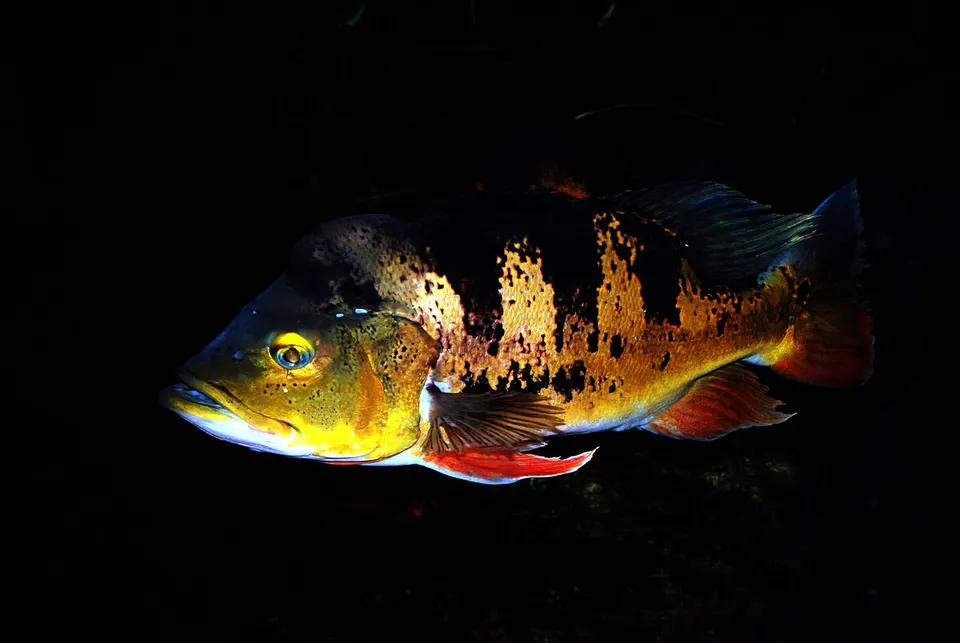
Peacock Bass are stunning South American cichlids prized for their beauty, size, and sport fishing value. Named for the distinctive "eye spot" on their tail that resembles a peacock feather, these powerful predators are among the most impressive freshwater fish kept in aquariums.
While primarily known as game fish, several Peacock Bass species are increasingly popular in the aquarium hobby. Their vibrant colors, predatory nature, and impressive size make them centerpiece fish for large display aquariums.
Peacock bass are Cichla, large predatory cichlids from Amazon drainages, and they are not community fish. Depending on the species, adults run 12 to 30 inches. The lifespan is 10 to 15 years. The minimum tank is 180 gallons. A butterfly peacock and a temensis do not share one adult size, so the species name matters before the tank is chosen, and the tank still has to sit at or above that 180-gallon floor.
The diet is carnivore and piscivore. They eat fish. Tankmates that fit in the mouth will be eaten, and tankmates that do not fit may still be killed and ignored. This is a predator tank: one fish, or a carefully matched group in a system much larger than the minimum, with sturdy cover and no dither fish you are fond of. Temperature runs warm, 76 to 86°F. pH is 6.5 to 7.5 and hardness 5 to 15 dGH. A fish that eats whole meals should still see nitrate under 30 ppm. Ammonia remains 0 ppm after those meals, and nitrite remains 0 ppm with it.
Care is advanced because of the combination of size, aggression, and food. A 180-gallon aquarium with a weak hang-on filter will not keep up with a fish that eats whole silversides and produces the corresponding waste. Use serious filtration and a water-change habit that holds nitrate under that 30 ppm line. Live feeder fish from a pet shop are a disease risk. Frozen fish foods, prawns, and prepared carnivore diets are the cleaner route, offered on a schedule that does not leave rot in the corner.
Natural Habitat
Peacock Bass originate from South American waters.
- Range: Amazon and Orinoco river basins, tropical South America
- Environment: Warm, slow-moving rivers, lakes, and flooded forests
- Behavior: Ambush predators that patrol territories
- Introduced: Florida, Hawaii, and other tropical regions for sport fishing
Species Varieties
Several Cichla species are kept in aquariums.
- Cichla ocellaris: Butterfly Peacock Bass; most commonly kept; reaches 24 inches
- Cichla temensis: Speckled Peacock Bass; largest species; can exceed 30 inches
- Cichla monoculus: Monoculus Peacock Bass; attractive coloration
- Cichla kelberi: Kelberi Peacock Bass; smaller species; max 18 inches
Tank Requirements
- Tank Size: Minimum 180 gallons for smaller species; 300+ gallons for larger species
- Dimensions: Length and width more important than height (surface swimmers)
- Filtration: Heavy-duty filtration; sump systems recommended
- Substrate: Sand or fine gravel
- Decorations: Driftwood and large rocks; leave open swimming space
- Cover: Secure lid; can jump when startled
Water Parameters
Peacock Bass require warm, clean water: Your aquatic veterinarian and experienced Peacock Bass owners can offer perspective tailored to your situation.
| Parameter | Ideal Range |
|---|---|
| Temperature | 76-86°F (24-30°C) |
| pH | 6.5-7.5 |
| Hardness (GH) | 5-15 dGH |
| Ammonia | 0 ppm |
| Nitrite | 0 ppm |
| Nitrate | <30 ppm |
Diet & Feeding
Peacock Bass are voracious predators: Narrow, breed-aware detail beats broad pet-care platitudes in nearly every scenario owners actually face.
- Primary Diet: Fish - their natural food source
- Pellets: High-quality carnivore pellets (train young fish to accept)
- Live Foods: Feeder fish (quarantine first), shrimp, crayfish
- Frozen Foods: Silversides, smelt, shrimp, fish fillets
- Avoid: Fatty fish, goldfish feeders (thiaminase), mammal meat
Feeding Schedule: Juveniles 2-3 times daily; adults every 1-2 days. Fast one day per week.
Behavior & Social Structure
Peacock Bass exhibit distinctive behaviors: Your aquatic veterinarian and experienced Peacock Bass owners can offer perspective tailored to your situation.
- Predatory: Ambush hunters that engulf prey whole
- Territorial: Establish and defend territories aggressively
- Active: Constantly patrol their environment
- Intelligent: Learn feeding routines quickly
- Color Changes: Intensify colors when excited or breeding
They are patterned, fast, and impressive, and a juvenile looks like a fish that might share a tank with large tetras. It will not. By the time the body is past a foot long, the temperament on the card, predatory and aggressive, is the whole stocking plan. Lids must be secure. Cichla jump when they hunt a reflection or when the lights change. Decor has to be heavier than the fish, because a spooked adult will shove it.
If the space you have is a living-room tank under 180 gallons, pick a different cichlid. Peacock bass do not stunt into a manageable pet. They stall, break down, and still try to eat the rest of the tank. The 10-to-15-year lifespan belongs to a fish that was given the length to sprint and the water changes to match its meals. Anything else is a holding pattern.
Peacock Bass the three variables that move outcomes most are water stability, feeding discipline, and careful handling of new stock; these factors drive outcomes more than brand-name products.
Compatibility
Tank mate selection is very limited: Your aquatic veterinarian and experienced Peacock Bass owners can offer perspective tailored to your situation.
Potentially Compatible Tank Mates
- Other large South American cichlids (Oscar, Severum - similar size)
- Large armored catfish (Pleco, Raphael catfish)
- Large characins (Silver Dollars in groups, Pacu)
- Bichirs and other robust bottom dwellers
Incompatible Species
- Any fish small enough to eat (up to half their body length)
- Slow-moving fish easily ambushed
- Delicate or long-finned species
- Other territorial predators competing for space
Breeding
Breeding Peacock Bass in aquariums is challenging.
- Size Requirements: Need massive tanks (500+ gallons)
- Pair Formation: Difficult; pairs must be carefully matched
- Spawning: Substrate spawners; both parents guard eggs
- Fry: Parents protect fry aggressively; separate once feeding independently
- Challenges: Rarely achieved in home aquariums
Common Health Issues
Peacock Bass are hardy but susceptible to certain conditions.
- Ich: Common parasite; raise temperature and treat with medication
- Hole in the Head (HITH): Often from poor diet or water quality
- Bloat: From overfeeding or inappropriate food items
- Parasites: Internal parasites from live feeder fish
- Injuries: Fighting wounds; keep water pristine for healing
Health & Nutrition Products
Chewy - Premium fish foods | Petco - Water treatments | 1-800-PetMeds - Fish medications
Is This Fish Right for You?
Peacock Bass Are Great For:
- Experienced large fish keepers
- Those with very large aquarium systems
- Hobbyists wanting impressive predator displays
- Aquarists who appreciate aggressive species
Peacock Bass May Not Be Ideal For:
- Beginning to intermediate aquarists
- Those with tanks under 180 gallons
- Community tank enthusiasts
- Keepers unwilling to feed live/frozen fish
Before committing to a Peacock Bass, think less about whether this species is "easy" or "hard" and more about whether your setup matches its specific needs. A species rated as easy can still fail in the wrong environment.
A peacock bass is a predator, genus Cichla, and it will eat any tankmate that fits in the mouth. Adults outgrow a standard community tank. Match the species before you buy, because a big temensis is a different building project from a smaller Cichla. They jump. Use a heavy lid, a filter that can handle large messy meals, and food that is actually sized for a predator, not a flake. This is a poor first fish. A juvenile in a 40-gallon tank is a temporary lie. Plan the adult tank before the fish comes home.
Cost of Ownership
These Peacock Bass cost estimates give you a solid starting point, but real-world expenses vary by location, health status, and personal choices. Building in some buffer for unplanned expenses is always a good idea.
Small adjustments based on what you observe often yield the biggest improvements.
Related Species
If you're interested in Peacock Bass, you might also consider.
- Arowana - Another impressive large predator
- Flowerhorn - Colorful, interactive cichlid
- Jack Dempsey - Smaller Central American cichlid
- African Cichlid - Colorful alternative for smaller tanks
Ask Our AI About Peacock Bass
Have specific questions about Peacock Bass care, feeding, or tank setup? Our AI assistant can provide personalized guidance.
Get Personalized AI Guidance
Ask Our AI NowDecision Guides for Peacock Bass
Use these only when comparing food, insurance, ownership budget, or beginner fit for this specific pet.
Peacock bass, Cichla, are large South American predators with an eye spot on the tail. Adults are measured in feet and need a tank most homes cannot heat and filter. They eat fish and large meaty foods. A juvenile in a 55-gallon community tank is a temporary picture.