Pacu
This page is educational reference material for preparing questions. A licensed veterinarian examines the animal, makes the diagnosis, and sets the treatment.
Affiliate links may earn a commission. Affiliate disclosure.
Quick Facts
| Attribute | Details |
|---|---|
| Scientific Name | Colossoma macropomum (Black Pacu), Piaractus brachypomus (Red-bellied Pacu) |
| Origin | South America (Amazon and Orinoco basins) |
| Size | 24-36 inches (60-90 cm) |
| Lifespan | 20-30 years |
| Temperature | 76-82°F (24-28°C) |
| pH | 6.0-7.5 |
| Tank Size | 300+ gallons minimum |
| Care Level | Expert (due to size) |
| Diet | Primarily Herbivore |
| Temperament | Peaceful |
Recommended for Pacus
Chewy - Vegetable-based foods | Petco - Large aquarium systems | PetSmart - Pond supplies & filtration
Overview
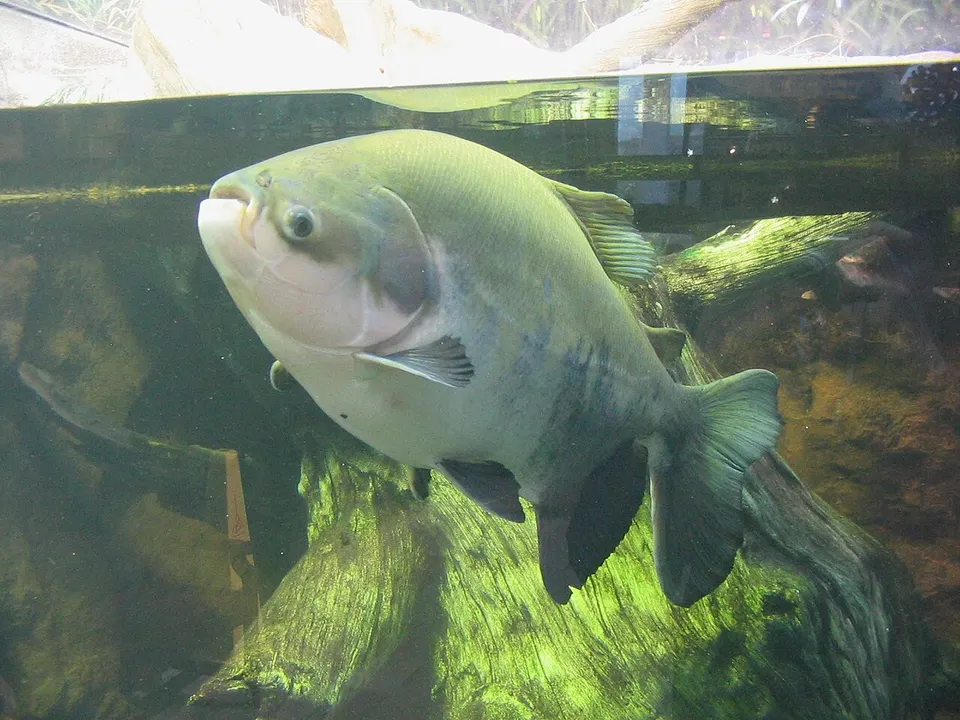
Pacus are large, peaceful South American fish often mistaken for piranhas due to their similar body shape. However, unlike their carnivorous cousins, Pacus are primarily herbivores with human-like teeth adapted for crushing nuts and seeds. They are the gentle giants of the aquarium world.
Unfortunately, Pacus are often sold as small juveniles without buyers understanding their eventual massive size. They are NOT suitable for typical home aquariums and require pond-sized enclosures or professional installations. Many end up in aquariums and zoos due to owners unable to accommodate them.
Size Warning
Pacus can grow over 3 feet long and weigh over 55 pounds. They should NOT be purchased unless you can provide a 300+ gallon tank or heated pond. Please research thoroughly before buying.
Pacu sold as vegetarians still become huge fish. The black pacu, Colossoma macropomum, and the red-bellied pacu, Piaractus brachypomus, are listed at 24 to 36 inches and 20 to 30 years. The minimum tank is 300 gallons. They are not small piranhas, even though the juvenile body and the shop story suggest a toothy oddball that will stay in a 55-gallon tank. A home aquarium that cannot hold a 2-foot fish is the wrong address, and some places restrict possession of pacu for that reason.
The diet line says primarily herbivore. Fruit, vegetables, and plant matter are the staple, and nuts or seeds show up in wild diets. That does not mean the jaws stay harmless or the fish stays small. Teeth are molar-like and can crush, and a startled adult can injure a hand. Feed greens, pellets made for herbivorous giants, and the occasional prepared food. Do not build a diet of feeder fish and expect a vegetarian that tops out at a foot.
Temperature is 76 to 82°F, pH 6.0 to 7.5, and hardness 4 to 15 dGH. They are peaceful toward fish they cannot eat, which is a short list once they are adult. Nitrate should remain under 40 ppm. Ammonia and nitrite at 0 ppm are non-negotiable because the waste from a 2-foot herbivore is enormous. Care is rated expert because of the size, not because the water recipe is obscure. Filtration, water changes, and a tank that is actually 300 gallons or more are the expertise.
Natural Habitat
Pacus are native to South American river systems: Your aquatic veterinarian and experienced Pacu owners can offer perspective tailored to your situation.
- Range: Amazon and Orinoco river basins
- Environment: Flooded forests, rivers, and floodplains
- Behavior: Seasonal migrations following fruit-producing trees
- Diet Source: Fallen fruits, nuts, and seeds during flood season
Species Varieties
Several Pacu species are found in the aquarium trade: Your aquatic veterinarian and experienced Pacu owners can offer perspective tailored to your situation.
- Black Pacu (Colossoma macropomum): Largest species; dark coloration; 36+ inches
- Red-bellied Pacu (Piaractus brachypomus): Most common in trade; red/orange belly; 30 inches
- Small-scaled Pacu (Piaractus mesopotamicus): Slightly smaller; more silver coloration
Tank Requirements
Pacus require enormous enclosures.
- Tank Size: Minimum 300 gallons; 500+ gallons for adults; pond ideal
- Dimensions: Width crucial; at least 4 feet wide for turning
- Filtration: Massive filtration; sump systems or pond filters
- Substrate: Sand or bare bottom for easy cleaning
- Decorations: Large driftwood; avoid sharp objects
- Plants: Will eat most plants; use plastic or very hardy species
Water Parameters
Pacus are adaptable but prefer specific conditions.
| Parameter | Ideal Range |
|---|---|
| Temperature | 76-82°F (24-28°C) |
| pH | 6.0-7.5 |
| Hardness (GH) | 4-15 dGH |
| Ammonia | 0 ppm |
| Nitrite | 0 ppm |
| Nitrate | <40 ppm |
Diet & Feeding
Pacus are primarily herbivorous with unique dietary needs: Your aquatic veterinarian and experienced Pacu owners can offer perspective tailored to your situation.
- Vegetables: Peas, lettuce, spinach, zucchini, cucumber
- Fruits: Grapes, bananas, melon, berries (remove seeds from stone fruits)
- Nuts: Occasional walnuts or almonds (natural behavior)
- Commercial Food: Large vegetable-based pellets, Spirulina sticks
- Protein: Occasional earthworms or shrimp (small percentage of diet)
Feeding Schedule: Feed 1-2 times daily; amount they can consume in 5 minutes.
Proper nutrition for Pacu requires understanding not just what to feed, but how feeding strategies affect health, behavior, and water quality. A disciplined approach to feeding, where your Pacu receives the right amount of appropriate food at consistent intervals, is one of the most impactful things you can do for both the fish and the overall aquarium ecosystem.
Diet variety is essential for optimal Pacu health because no single commercial food provides the complete nutritional profile these fish require. Observing your Pacu's response to different food types also provides useful health information, as reduced interest in normally preferred foods is often an early indicator of illness.
Behavior & Social Structure
Pacus are generally peaceful but have specific behaviors.
- Peaceful: Non-aggressive despite their size and piranha-like appearance
- Schooling: Prefer groups in the wild; can be kept singly in captivity
- Skittish: Can panic and injure themselves on tank walls
- Powerful: Can break equipment and heaters with their strength
- Interactive: Often recognize owners and may eat from hand
Juveniles are round, silver, and often mislabeled. If you already have one in a tank that will never reach the minimum, rehoming to a public aquarium or a keeper with a pond-scale system is the honest move. Growth is fast on heavy feeding. Waiting to see whether this individual stays small is how 30-inch fish end up in 100-gallon tanks. Check local rules before you buy. A legal problem on top of a housing problem is a bad surprise at 2 feet.
They are schooling fish when young and become more solitary as they bulk up, but the gallon floor does not drop for a single adult. A 300-gallon tank is the starting point on the card for an animal that may reach 36 inches and live for decades. Temperature spikes above 82°F in an undersized tub, and nitrate that sits well over 40 ppm, are how those decades get cut down. Plan the building, the floor load, and the filter before the fish.
Feeding behavior in Pacu reveals much about their ecological role and can be leveraged by keepers to promote natural behaviors and reduce aggression. Observing when, where, and how your Pacu feeds provides diagnostic information about their comfort level, health status, and social standing. Many successful Pacu keepers use varied feeding strategies including target feeding, scatter feeding, and enrichment feeders to promote natural foraging behaviors and reduce competition-related stress.
Compatibility
Pacus can live with certain tank mates: Good care starts with recognising the Pacu as a particular animal with particular preferences, not as a stand-in for the species average.
Potentially Compatible Tank Mates
- Other large South American fish (Arowana, Bichirs)
- Large plecos and catfish
- Large cichlids (if tank is enormous)
- Other Pacus (if tank is massive)
Incompatible Species
- Any fish small enough to accidentally swallow
- Aggressive fish that may stress them
- Fin-nippers
- Fish requiring different water conditions
Breeding
Breeding Pacus in captivity is extremely challenging.
- Requirements: Massive pond-sized enclosures
- Hormones: Often requires hormone injection (in commercial operations)
- Spawning: Open-water egg scatterers in nature
- Eggs: Parents do not guard eggs or fry
- Reality: Essentially impossible in home aquariums
Common Health Issues
Pacus are hardy but can experience health problems.
- Ich: Common parasite; treat with increased temperature and medication
- Stress-Related Issues: From inadequate tank size or poor water quality
- Bloat: From improper diet (too much protein)
- Injuries: From panicked collisions with tank walls
- Nutritional Deficiencies: Without varied diet
Health & Nutrition Products
Chewy - Large fish foods | Petco - Pond equipment | 1-800-PetMeds - Fish medications
Keeping a Pacu healthy means prioritizing water quality above everything else.
Recognizing early signs of disease in Pacu requires a trained eye and consistent observation. Establishing a daily observation routine—even just a few minutes of focused attention during feeding—helps you develop a baseline understanding of what normal behavior looks like for your specific Pacu, making deviations immediately apparent.
Quarantine protocols represent one of the most impactful health management practices available to Pacu keepers. This single practice prevents the majority of disease outbreaks in established aquariums and is considered essential by virtually all experienced Pacu keepers.
Is This Fish Right for You?
Pacus Are Great For:
- Those with massive aquariums or heated ponds
- Experienced keepers of large fish
- Public aquariums and zoos
- Hobbyists committed to 20+ year care
Pacus Are NOT Suitable For:
- Most home aquarists
- Tanks under 300 gallons
- Beginners to intermediate keepers
- Anyone not prepared for their eventual size
Adding a Pacu to your setup works best when you have honestly evaluated your tank size, maintenance habits, and budget.
Experienced Pacu keepers will tell you that the learning curve is steepest in the first few months. After that, maintenance becomes routine.
Cost of Ownership
The true cost of keeping Pacu extends well beyond the initial purchase price and basic equipment. Many aspiring Pacu keepers underestimate these ongoing costs, which can lead to cut corners that ultimately compromise fish health and result in even greater expenses. A realistic budget that accounts for both routine maintenance and occasional replacement of equipment provides a more accurate picture of what Pacu keeping actually costs.
Heaters, filters, lights, and pumps all have finite lifespans, and their failure—particularly heater or filter failure—can have catastrophic consequences for Pacu if not addressed promptly. Many experienced Pacu keepers also invest in battery-operated air pumps and backup heaters as insurance against power outages, which can be lethal to tropical species within hours depending on ambient room temperature.
The cost-benefit analysis of quality versus budget equipment deserves careful consideration for Pacu keepers. This is particularly true for Pacu, where the animals themselves, along with any tank mates, plants, and established biological filtration, represent a significant investment of both money and time that is worth protecting with reliable equipment.
Related Species
If you're interested in Pacus, you might also consider.
- Silver Dollar - Similar appearance, stays much smaller
- Arowana - Another impressive large species
- Peacock Bass - Large predatory alternative
- Flowerhorn - Manageable size with personality
Ask Our AI About Pacus
Have specific questions about Pacu care, diet, or housing requirements? Our AI assistant can provide personalized guidance.
Get Personalized AI Guidance
Ask Our AI NowDecision Guides for Pacu
Use these only when comparing food, insurance, ownership budget, or beginner fit for this specific pet.
Pacu are large South American herbivores with molar-like teeth built to crush fruit and nuts. They grow past 2 feet and do not belong in a living-room aquarium once the juvenile stripes fade. A public pond or a several-hundred-gallon system with heavy filtration is the adult housing. They eat vegetables, fruit, and a large herbivore pellet.