Neon Tetra
This page is educational reference material for preparing questions. A licensed veterinarian examines the animal, makes the diagnosis, and sets the treatment.
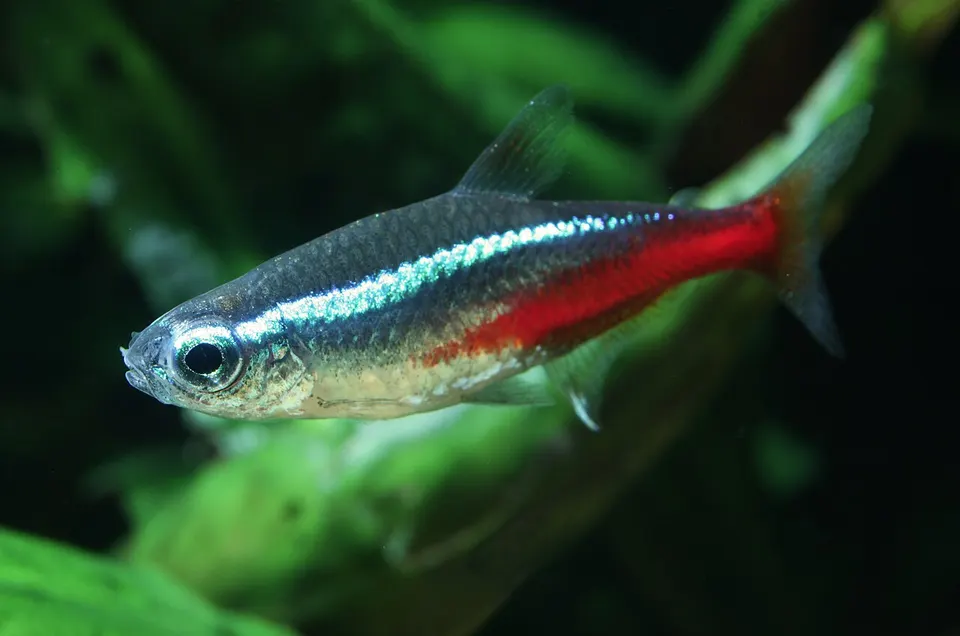
Quick Facts
| Attribute | Details |
|---|---|
| Scientific Name | Paracheirodon innesi |
| Origin | South America (Amazon Basin) |
| Size | 1.5 inches (4 cm) |
| Lifespan | 5-8 years |
| Temperature Range | 70-81°F (21-27°C) |
| pH Range | 6.0-7.0 |
| Tank Size Minimum | 10 gallons (38 liters) |
| Care Level | Easy |
| Diet | Omnivore |
| Temperament | Peaceful, Schooling |
Recommended for Neon Tetras
Affiliate links may earn a commission. Affiliate disclosure.
Aquarium Co-Op - Quality foods & plants | Seachem - Water treatment products | Fluval - Excellent filtration systems
Neon Tetra Tank Essentials
Aquarium Co-Op - Live plants & driftwood | Fluval Plant Spectrum - Great planted tank lighting | Seachem Flourish - Plant nutrients
Neon Tetra Health Products
API Master Test Kit - Monitor water quality | Seachem Prime - Detoxifies ammonia & nitrite | Aquarium Co-Op Quarantine Trio - Preventive treatment
Neon tetras, Paracheirodon innesi, are the blue-and-red inch-and-a-half fish from blackwater streams in the Amazon basin. They live about 5 to 8 years when the school is large enough and the water is stable. They are peaceful, easy only in a mature tank, and a poor choice as a single "color accent."
A school and soft water
Keep them in a group of eight or more in at least 10 gallons, with plants and open swimming room. Temperature 70 to 81°F, pH 6.0 to 7.0, hardness on the soft side, ammonia and nitrite at zero, nitrate under 20 ppm. A dark substrate and floating cover make the colors show and the fish less nervous. They eat small foods: crushed flake, micro pellets, frozen cyclops or baby brine. A mouth that small cannot use a large cichlid stick.
Buying and disease
Neon tetra disease is the one to recognize. Color fades, a pale area develops in the muscle, the fish isolates, and it dies. Treatment at home is unreliable. Do not buy from a tank where several neons look thin or blotchy, and quarantine new fish if you already have a healthy school. Ich is the other import: white specks and flashing. That one is usually a water and temperature problem you can treat if you catch it early.
A school and a planted 10- to 20-gallon tank is often a $100 to $200 project. They suit a beginner who will cycle the tank and resist adding a big centerpiece fish. They do not suit a bowl on a desk. Gasping or flicking against rocks is the moment for a water test, the gasping page, and the checker. For a valuable display tank, an aquatic vet and the Merck fish section beat another round of unrelated medications.
Neon tetra schools
How many neon tetras should live together?
At least eight, and a dozen looks and behaves better. A pair in a community tank spends its life hiding or getting picked off.
What water do they want?
About 70 to 81°F, pH around 6.0 to 7.0, and soft to moderately soft water. They fade and clamp in a brand-new, high-pH, uncycled tank.
What is neon tetra disease?
A parasitic infection that often shows as fading color and a pale, lumpy patch under the dorsal area, then death. There is no reliable home cure. Remove the sick fish, do not buy from a tank full of thin, fading neons, and quarantine new stock.
Can they live with angelfish or oscars?
Angelfish may eat them once the angels are large. Oscars will. Choose tankmates with small mouths.
Decision Guides for Neon Tetra
Use these only when comparing food, insurance, ownership budget, or beginner fit for this specific pet.