Molly Fish
This page is educational reference material for preparing questions. A licensed veterinarian examines the animal, makes the diagnosis, and sets the treatment.
Affiliate links may earn a commission. Affiliate disclosure.
Quick Facts
| Attribute | Details |
|---|---|
| Scientific Name | Poecilia sphenops / P. latipinna / P. velifera |
| Origin | Central & South America |
| Size | 3-5 inches (7.5-12.5 cm) |
| Lifespan | 3-5 years |
| Temperature Range | 72-82°F (22-28°C) |
| pH Range | 7.5-8.5 |
| Tank Size Minimum | 20 gallons |
| Care Level | Easy |
| Diet | Omnivore |
| Temperament | Peaceful |
Recommended for Mollies
Aquarium Co-Op - Quality foods & supplies | Seachem - Water conditioners & salt | Fluval - Reliable filtration
Molly Fish Overview
Mollies are one of the most popular livebearing aquarium fish, beloved for their hardiness, variety of colors and fin types, and ease of breeding. These adaptable fish can thrive in freshwater, brackish, and even full marine conditions, making them incredibly versatile for different aquarium setups.
Available in numerous colors including black, white, gold, dalmatian, and orange, as well as different fin types like sailfin, lyretail, and balloon, mollies offer something for every aquarist. They're excellent community fish that add activity and personality to any peaceful tank.
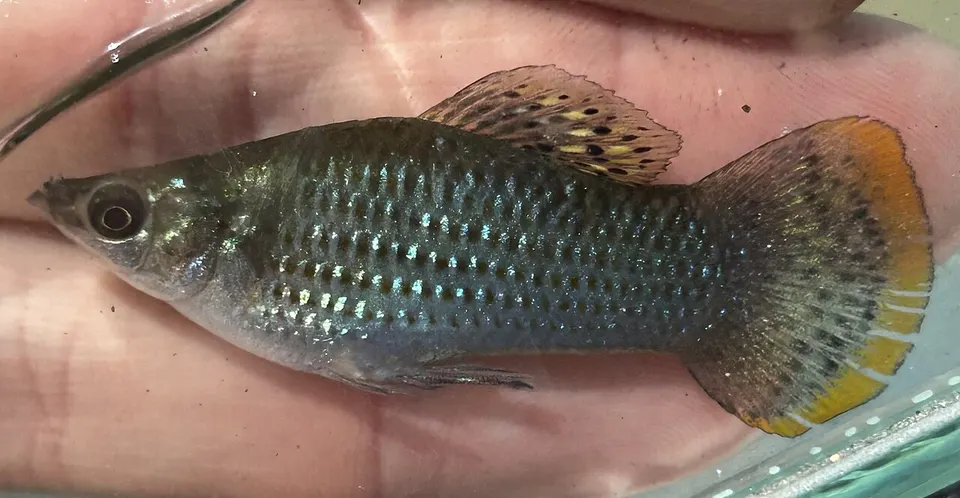
Mollies in the pet trade are Poecilia sphenops, P. latipinna, and P. velifera. The last two are the sailfins, and a mature sailfin male is the fish that pushes the size toward the top of the 3 to 5 inch range. A short-finned balloon or lyretail molly is the same genus with a different outline, not a smaller species that can live in a bowl. The minimum tank is 20 gallons, the lifespan is 3 to 5 years, and the temperament is peaceful until males spend all day displaying at each other in a tank that is too short.
They are livebearers from Central and South America, and they breed constantly. A female can drop a brood about once a month and can store sperm, so a tank that started with four fish becomes a tank of fry without any further pairing. A 20-gallon aquarium can hold the adults. It cannot absorb unlimited generations. Remove fry to a separate grow-out or accept that the adults will eat some of them and the rest will stunt the water quality.
The water on the card is hard and alkaline: pH 7.5 to 8.5, general hardness 12 to 25 dGH, temperature 72 to 82°F. Soft, acidic water that suits tetras leaves mollies shimmying and prone to wasting. They often do better with some aquarium salt as well as that mineral content, especially the sailfins. This is a husbandry preference for hard, slightly brackish conditions, not a medication schedule. Nitrate is tolerated higher than in many cards here, with a ceiling under 40 ppm, but ammonia and nitrite still have to read 0 ppm. Do not use the nitrate allowance as a reason to skip water changes.
Natural Habitat & Origin
Mollies are native to freshwater and brackish waters of the Americas.
- Native Range: Southern United States through Central America to South America
- Habitat: Streams, rivers, coastal areas, and brackish estuaries
- Environment: Often found in areas with hard, alkaline water
- Species: Multiple species contribute to aquarium mollies
Their natural tolerance for brackish conditions is why aquarium mollies often benefit from some salt in their water.
Tank Requirements & Setup
Mollies need adequate space for their active swimming.
Tank Size
- Minimum: 20 gallons for a small group
- Sailfin Mollies: 30+ gallons (larger fish)
- Ratio: 1 male to 2-3 females
- Groups: Keep in groups of 4 or more
Essential Equipment
- Heater: Maintain stable warm temperatures
- Filter: Good filtration with moderate flow
- Lighting: Standard aquarium lighting
- Optional: Aquarium salt (1 tbsp per 5 gallons)
Decoration & Plants
- Live Plants: Java fern, vallisneria, hornwort
- Hiding Spots: Important for females and fry
- Substrate: Gravel or sand
- Open Space: Swimming room appreciated
Water Parameters
Mollies prefer hard, alkaline water: Your aquatic veterinarian and experienced Molly owners can offer perspective tailored to your situation.
| Parameter | Ideal Range |
|---|---|
| Temperature | 72-82°F (22-28°C) |
| pH | 7.5-8.5 |
| Ammonia | 0 ppm |
| Nitrite | 0 ppm |
| Nitrate | <40 ppm |
| Hardness (GH) | 12-25 dGH |
Salt Recommendation
Mollies often thrive with the addition of aquarium salt (1 tablespoon per 5 gallons). This helps prevent disease and mimics their natural brackish habitat. Ensure tank mates are salt-tolerant.
Diet & Feeding
Mollies are omnivores with a preference for plant matter: Leaning into Molly-specific detail, instead of one-size-fits-all advice, consistently yields better results.
Primary Foods
- Flake Food: High-quality tropical flakes
- Algae: Spirulina flakes, algae wafers
- Vegetables: Blanched zucchini, spinach, peas
- Frozen Foods: Brine shrimp, bloodworms (treats)
- Live Foods: Daphnia, brine shrimp (occasional)
Feeding Guidelines
- Feed 2-3 times daily in small amounts
- Include vegetable matter regularly
- Avoid overfeeding
- Variety ensures optimal health
Proper nutrition for Molly Fish requires understanding not just what to feed, but how feeding strategies affect health, behavior, and water quality. A disciplined approach to feeding, where your Molly Fish receives the right amount of appropriate food at consistent intervals, is one of the most impactful things you can do for both the fish and the overall aquarium ecosystem.
Diet variety is essential for optimal Molly Fish health because no single commercial food provides the complete nutritional profile these fish require. Observing your Molly Fish's response to different food types also provides useful health information, as reduced interest in normally preferred foods is often an early indicator of illness.
Popular Molly Varieties
- Black Molly: Solid black coloration
- White/Silver Molly: Bright white or silver
- Dalmatian Molly: White with black spots
- Gold/Orange Molly: Bright golden-orange
- Sailfin Molly: Large dorsal fin (P. latipinna/velifera)
- Lyretail Molly: Forked, lyre-shaped tail
- Balloon Molly: Rounded body shape
- Platinum/Creamsicle: Various color morphs
Behavior & Temperament
Mollies are active, social fish.
- Active Swimmers: Constantly moving throughout tank
- Peaceful: Generally non-aggressive
- Social: Prefer groups of their own kind
- Males: May chase females persistently
- Algae Grazers: Nibble on algae throughout the day
Care is rated easy, and the fish are omnivores that take flakes, spirulina, and frozen foods. The failures come from three practical mismatches: a soft-water community, a 10-gallon desktop tank, and no plan for the broods. Sailfin males need the full 20 gallons of length so the dorsal fin is not torn on rough plastic plants. Keep more females than males if you are not trying to breed, because one male in a small group harasses the females without pause.
A molly that is clamping, flickering against the gravel, or losing weight in water below that pH band is not a mysterious disease by default. Check the hardness and the salt before you add anything else. Variatus platys and other hard-water livebearers can share the tank. Soft-water rasboras and wild bettas should not. If the goal is a single pretty fish in a nano cube, this is the wrong Poecilia.
Feeding behavior in Molly Fish reveals much about their ecological role and can be leveraged by keepers to promote natural behaviors and reduce aggression. Observing when, where, and how your Molly Fish feeds provides diagnostic information about their comfort level, health status, and social standing. Many successful Molly Fish keepers use varied feeding strategies including target feeding, scatter feeding, and enrichment feeders to promote natural foraging behaviors and reduce competition-related stress.
Compatibility with Other Fish
This is the kind of Molly detail whose long-term impact is disproportionate to how mundane it appears in any single week.
Compatible Tank Mates
- Other livebearers (guppies, platies, swordtails)
- Corydoras catfish
- Peaceful tetras
- Rasboras
- Peaceful gouramis
- Snails
Incompatible Species
- Aggressive cichlids
- Fin nippers
- Large predatory fish
- Fish requiring very soft, acidic water
Breeding Information
Mollies are prolific livebearers: Your aquatic veterinarian and experienced Molly owners can offer perspective tailored to your situation.
- Livebearers: Give birth to free-swimming fry
- Gestation: 60-70 days
- Fry Per Batch: 20-100 depending on female size
- Frequency: Can give birth every 4-6 weeks
- Fry Care: Provide plants or breeding boxes for protection
- Fry Food: Crushed flakes, baby brine shrimp
Common Health Issues
The closer your routine tracks the Molly's specific traits, the easier everything downstream becomes.
Molly Disease (Shimmies)
- Symptoms: Rocking motion, clamped fins, not swimming
- Causes: Poor water conditions, wrong parameters
- Treatment: Water changes, add aquarium salt, correct parameters
Ich
- Symptoms: White spots on body
- Treatment: Raise temperature, add salt, ich medication
Fin Rot
- Symptoms: Deteriorating fins
- Treatment: Clean water, aquarium salt, antibacterial if needed
Molly Health Products
API Aquarium Salt - Optional for mollies in soft water | Seachem Paraguard - Disease treatment | Aquarium Co-Op - Quality livebearer foods
Keeping a Molly healthy means prioritizing water quality above everything else.
Quarantine protocols represent one of the most impactful health management practices available to Molly Fish keepers. This single practice prevents the majority of disease outbreaks in established aquariums and is considered essential by virtually all experienced Molly Fish keepers.
Mollies Are Great For:
- Beginners wanting hardy, colorful fish
- Community tank enthusiasts
- Those interested in livebearer breeding
- Brackish tank setups
- Hard water aquariums
Mollies May Not Be Ideal For:
- Soft, acidic water setups
- Those not wanting population growth
- Very small tanks
- Tanks with sensitive soft-water fish
The question to ask yourself is not whether you can keep a Molly Fish alive, but whether you can keep one thriving. If you are willing to invest in those consistently, you and your Molly Fish will both benefit.
Cost of Ownership
The true cost of keeping Molly Fish extends well beyond the initial purchase price and basic equipment. While the upfront investment in a properly equipped aquarium (minimum 20 gallons) represents a significant portion of the total cost, ongoing expenses for water treatment chemicals, filter media, electricity for heating and lighting, and food constitute the majority of long-term spending. Many aspiring Molly Fish keepers underestimate these ongoing costs, which can lead to cut corners that ultimately compromise fish health and result in even greater expenses. A realistic budget that accounts for both routine maintenance and occasional replacement of equipment provides a more accurate picture of what Molly Fish keeping actually costs.
Molly Fish baseline welfare rests on three habits: stable chemistry, measured feeding, and disciplined quarantine of new arrivals; these factors drive outcomes more than brand-name products.
Related Species
- Guppy - Smaller, equally colorful livebearer
- Platy - Similar care, different appearance
- Swordtail - Distinctive tail extension
- Neon Tetra - Peaceful tank mate option
Ask Our AI About Mollies
Have specific questions about molly care, breeding, or health issues? Our AI assistant can provide personalized guidance.
Get Personalized AI Guidance
Ask Our AI NowDecision Guides for Molly Fish
Use these only when comparing food, insurance, ownership budget, or beginner fit for this specific pet.
Mollies, Poecilia, are livebearers that do better with a little salt and hard water than in a soft acidic community tank. They eat flake, algae, and vegetable matter. A balloon molly is a deformed spine line with more swimming trouble. Fry appear whether you planned on them or not if males and females share the tank.