French Angelfish
This page is educational reference material for preparing questions. A licensed veterinarian examines the animal, makes the diagnosis, and sets the treatment.
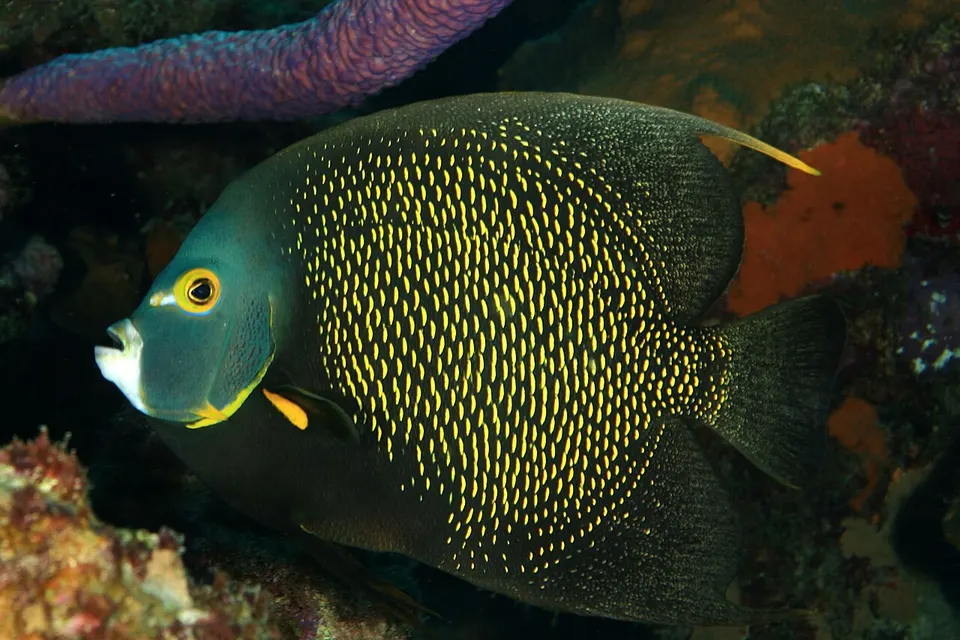
Quick Facts
| Attribute | Details |
|---|---|
| Type | Saltwater |
| Size | Large (15 in) |
| Lifespan | 10-15 years |
| Temperature | 72-82°F |
| pH Range | 8.1-8.4 |
| Min Tank Size | 250 gal |
| Care Level | Expert |
| Diet | Omnivore |
| Temperament | Semi-Aggressive |
Recommended for French Angelfish
French angelfish are Pomacanthus paru, a marine angelfish, not the freshwater Pterophyllum that shares the word angel. Adults reach about 15 inches and live 10 to 15 years. The tank minimum is 250 gallons. Temperature is 72 to 82°F, pH 8.1 to 8.4, specific gravity 1.020 to 1.025, nitrate under 10 ppm. Care is expert. Temperament is semi-aggressive. Diet is omnivore. A juvenile in a 50-gallon reef is a temporary photograph, not a plan that satisfies this card.
French Angelfish Overview
The French Angelfish is a large (15 in) saltwater species that requires advanced knowledge and a well-established aquarium. With a lifespan of 10-15 years, this semi-aggressive species requires a minimum tank size of 250 gal.
French Angelfish thrive in water temperatures of 72-82°F with a pH range of 8.1-8.4. As an omnivore, they accept a wide variety of foods.
Juveniles are black with curved yellow bands. Adults darken to charcoal with gold-edged scales and a yellow face. The change takes years, and the fish is eating and growing the whole time. People buy the banded juvenile because it looks like a miniature of a poster and then discover the adult needs 250 gallons and will sample corals, sponges, and ornamental invertebrates. Reef-safe as a juvenile is not a promise about the adult. Plan on a fish-only tank with solid rock, or a reef you are willing to see nibbled.
The omnivore diet in a tank means sponge-based angel foods, frozen mysis, and algae or nori, offered often. A French angel that eats only flake will be thin and will look harder at the corals and the clam mantles. Feed the angel specifically. In a mixed reef the wrasses and tangs get to the food first. Ten to 15 years is the life if the diet stays varied and the tank is actually large enough for a 15-inch fish to turn around. Expert care is the size, the diet, and the aggression toward other angels.
Tank Requirements & Setup
Tank Size
- Minimum: 250 gal
- Recommended: Larger is always better for stability and swimming room.
- Type: Saltwater reef or fish-only setup
Equipment
- Filtration: Protein skimmer and live rock for biological filtration.
- Heating: Reliable heater to maintain 72-82°F.
- Lighting: Appropriate reef or marine lighting.
- Powerheads: For adequate water flow and circulation.
Water Parameters
| Parameter | Ideal Range |
|---|---|
| Temperature | 72-82°F |
| pH | 8.1-8.4 |
| Ammonia | 0 ppm |
| Nitrite | 0 ppm |
| Nitrate | <10 ppm |
| Salinity | 1.020-1.025 sg |
Water Quality Warning
Saltwater species are sensitive to parameter fluctuations. Use an RO/DI unit for water changes and test regularly. Never add French Angelfish to an uncycled or newly set up tank.
Diet & Feeding
- Primary Diet: Omnivore.
- Foods: High-quality flakes/pellets, frozen brine shrimp, mysis shrimp, and blanched vegetables.
- Variety: Rotate different food types for balanced nutrition.
French Angelfish Tank Essentials
Knowing the particulars translates into a more accurate routine, a more realistic budget, and a health plan that anticipates what this breed actually tends to need.
Common Health Issues
- Marine Ich (Cryptocaryon): White spots on body and fins. Treat with copper-based medication in quarantine tank.
- Marine Velvet: Dusty gold appearance; highly contagious and often fatal if untreated.
- Parasites: Internal and external parasites; quarantine new additions.
Understanding the core picture makes daily calls about feeding, exercise, and preventive care substantially easier
Compatibility
- Temperament: Semi-Aggressive - may show territorial behavior; choose tankmates carefully.
- Tank Mates: Research compatible species carefully before adding to your tank.
- Avoid: Very timid species that may be stressed by their presence.
Is This Species Right for You?
Upfront effort to understand how a French Angelfish actually operates usually pays dividends in fewer vet emergencies.
French Angelfish Are Great For:
- Experienced hobbyists ready for a rewarding challenge
- Reef aquarium enthusiasts
- Those who can maintain stable saltwater parameters
French Angelfish May Not Be Ideal For:
- Beginners without established, mature tanks
- Hobbyists without space for a large aquarium
Ask Our AI About French Angelfish
French Angelfish baseline welfare rests on three habits: stable chemistry, measured feeding, and disciplined quarantine of new arrivals; these factors drive outcomes more than brand-name products.
Aquarium keeping is a hobby of specifics, and French Angelfish is no exception.
If you can commit to the maintenance schedule and the initial investment in proper equipment, a French Angelfish is likely to reward you with an engaging, long-term addition to your aquarium.
When to Seek Help
- Water testing: Before treating for disease, always test water parameters.
Diet and Nutrition Tips
- Primary diet: Feed a high-quality staple food formulated for your French Angelfish's dietary type (herbivore, omnivore, or carnivore). Look for foods with whole ingredients and minimal fillers.
- Variety ensures complete nutrition and encourages natural foraging.
- Feeding frequency: Feed small amounts 1-2 times daily.
- Avoid overfeeding: Overfeeding is the most common nutritional mistake in fishkeeping. It leads to obesity, water pollution, and secondary health problems.
Tank Environment and Stimulation
- Tank size: Always choose a tank that meets or exceeds the minimum recommended size for French Angelfish. Larger tanks are more stable and forgiving of water quality fluctuations.
- Water parameters: Maintain consistent temperature, pH, and hardness levels appropriate for French Angelfish. Test water weekly and perform regular partial water changes.
- Filtration: Use a quality filter rated for your tank size.
- This reduces stress and aggression.
Tank Maintenance Essentials
- Water changes: Perform 20-30% partial water changes weekly.
- Filter maintenance: Rinse filter media in old tank water monthly.
- Algae control: Some algae is normal, but excessive growth indicates nutrient imbalance. Adjust lighting duration and consider adding algae-eating species.
- Water testing: Test ammonia, nitrite, nitrate, and pH at least weekly. Keep a log to track trends and catch problems early.
Living Environment
- A stable location reduces stress and prevents temperature fluctuations.
- Compatible tankmates: Research compatibility before adding new species. Aggression, different water parameter requirements, and size mismatches are common problems.
- Substrate choice: Select substrate appropriate for your French Angelfish's natural behavior, whether that is sand for digging species or planted substrate for aquascaping.
- Equipment failures can be life-threatening.
Helpful Resources for French Angelfish Owners
Explore More Guides
Get Personalized AI Guidance
Ask Our AI NowDecision Guides for French Angelfish
Use these only when comparing food, insurance, ownership budget, or beginner fit for this specific pet.
Behavior & Temperament
French Angelfish are characterized by a semi-aggressive disposition that influences their care requirements and compatibility.
- General Disposition: Semi-Aggressive nature that defines daily interactions
- Social Behavior: Specific social needs that owners should understand and accommodate
- Activity Patterns: Natural activity cycles that influence care scheduling
One French angelfish is the usual stocking. Two adults fight unless they paired as juveniles and grew up together, and even then a 250-gallon tank is the starting size rather than a guarantee. They will harass other large angels, and a smaller angel added later is a target. Semi-aggressive on the card is mild language for a fish that owns a reef stack. Give it structure and open swimming room in front of the rock. A tall tank with no length makes a 15-inch angel pace the glass.
Do not buy a juvenile you cannot house as an adult. Rehoming a 12-inch marine angel is a hard search, and the fish does not pause its growth while you shop for a 250-gallon system. The salinity and the pH are standard reef numbers. The expert label is not about mixing salt. It is about keeping a large omnivore that picks at invertebrates, lives for more than a decade, and needs a tank most people do not own when they see the yellow bands in a shop.
The high-leverage inputs are food quality, exercise, preventive veterinary care, and handling. Dial those in first.
Cost of Ownership
What matters is a routine the household can sustain, with small tweaks when something clearly is not working.
Your own experience with your animal will quickly show which parts of this plan deserve the most attention and which can stay lightweight.
The French angelfish, Pomacanthus paru, is a marine fish that grows toward 15 inches and needs a tank on the order of 180 to 250 gallons. Juveniles are black and yellow and graze algae and sponge. Quarantine is part of the purchase, because marine ich shows up after the fish has already been swimming in the display.