Electric Blue Acara
This page is educational reference material for preparing questions. A licensed veterinarian examines the animal, makes the diagnosis, and sets the treatment.
Affiliate links may earn a commission. Affiliate disclosure.
Quick Facts
| Attribute | Details |
|---|---|
| Type | Freshwater |
| Family | Cichlidae |
| Adult Size | 6-7 inches |
| Lifespan | 8-10 years |
| Tank Size | 30+ gallons |
| Temperament | Peaceful for a cichlid |
| Difficulty | Beginner-Intermediate |
Electric Blue Acara Overview
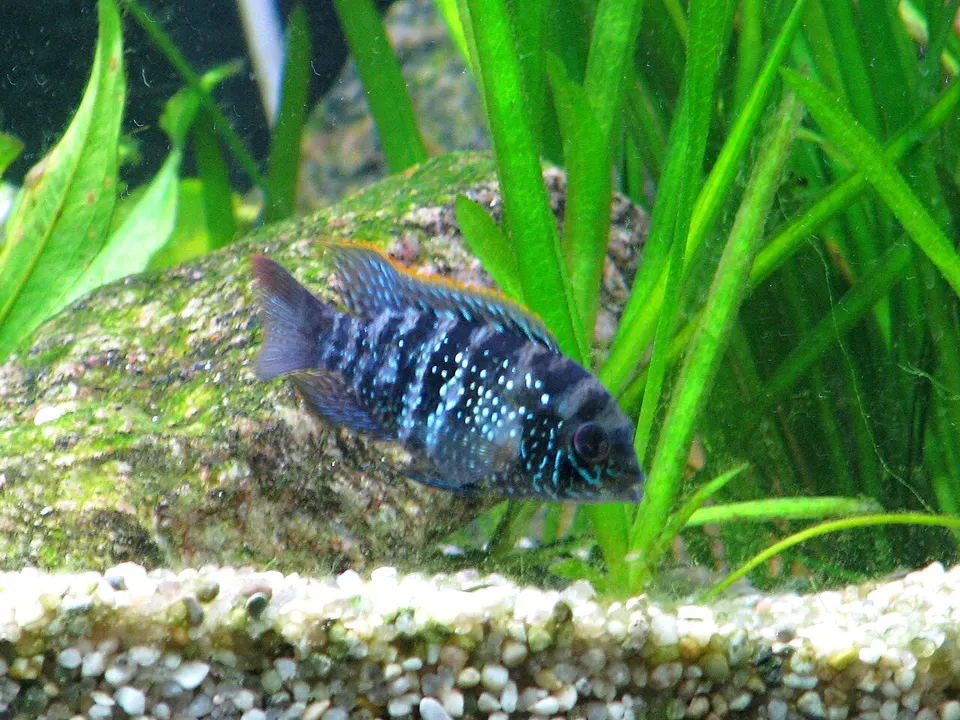
Electric blue acara are a blue captive line of Andinoacara pulcher, or a closely related electric-blue strain. They are not a wild electric species from a lake, and they are not a naturally occurring fish someone discovered already neon. Adults reach 6 to 7 inches and live 8 to 10 years. One fish or a young pair starts at 30 gallons. Temperament is peaceful for a cichlid, and the difficulty line says beginner to intermediate. The peaceful part holds until they pair and spawn. Then they harass any small tankmate that comes near the eggs.
The blue was selected in aquaculture. Some lines are sturdy and some are thin, shy, and prone to sitting on the bottom with clamped fins. Buy a fish that is already eating and that has a full body, not the palest juvenile in a bare wholesale tank. A 30-gallon tank is the floor for one fish or a young pair and gets small once two 7-inch cichlids are guarding a brood. A longer tank, with sand they can sift and a flat stone or a piece of wood to spawn on, matches the way a pair actually lives.
They are South American cichlids and they belong in neutral to slightly acidic community water, not in a hard alkaline Malawi tank and not with mbuna. The electric color does not make them an African cichlid. They also are not Jack Dempseys, green terrors, or oscars, even though a juvenile can look like a generic blue cichlid in a bad photo. Those fish get larger and meaner. An electric blue acara that is starting to terrorize a tank is usually spawning, not turning into a terror. The behavior drops after the fry are gone, and it comes right back at the next spawn.
A pair will claim a patch of substrate, clean it, and drive tetras, shrimp, and smaller cichlids out of that half of the tank. In a 30-gallon community the driven fish have nowhere to go. Plan for that before you add a male and a female. One acara in a tank of robust mid-sized fish, such as larger tetras, a school of Congo tetras, or peaceful catfish, is the calmer stocking. Two of them are a future pair even if they ignore each other as juveniles. They dig. Plants rooted in the spawn site will be uprooted. Anchor the plants you mean to keep, or put them in pots.
Feed a cichlid pellet and frozen or fresh meaty foods. They are eager eaters when they are healthy, and a fish that refuses food for more than a day or two while looking dark is a fish to isolate and watch. Eight to 10 years is a long life for a color form that some hatcheries push out weak. The beginner half of the care label fits a single healthy fish in a quiet 30-gallon tank. The intermediate half is the pair, the digging, and the week they spend trying to kill every neon tetra you thought was fine.
Temperament & Behavior
Do not buy them as a rare wild import. If a seller describes an electric species from a named lake, the story is wrong. The color is a line. Treat the animal as a medium cichlid with a temper that changes when the eggs appear, give it sand and a solid place to lay those eggs, and keep the small, fragile tankmates in a different aquarium. A blue acara that spends its life with its fins clamped in a mbuna tank is in the wrong water and the wrong company, no matter how good the color looked under the shop light.
Feeding behavior in Electric Blue Acara reveals much about their ecological role and can be leveraged by keepers to promote natural behaviors and reduce aggression. Observing when, where, and how your Electric Blue Acara feeds provides diagnostic information about their comfort level, health status, and social standing. Many successful Electric Blue Acara keepers use varied feeding strategies including target feeding, scatter feeding, and enrichment feeders to promote natural foraging behaviors and reduce competition-related stress.
Housing & Environment Requirements
A minimum tank size of 30+ gallons is recommended for Electric Blue Acaras. Provide appropriate substrate, hiding places, and peaceful tankmates. A quality filtration system and heater are essential.
Diet & Nutrition
Feed Electric Blue Acaras a varied diet appropriate for their species. Overfeeding leads to water quality issues. Vary the diet to ensure complete nutrition.
Proper nutrition for Electric Blue Acara requires understanding not just what to feed, but how feeding strategies affect health, behavior, and water quality. A disciplined approach to feeding, where your Electric Blue Acara receives the right amount of appropriate food at consistent intervals, is one of the most impactful things you can do for both the fish and the overall aquarium ecosystem.
Diet variety is essential for optimal Electric Blue Acara health because no single commercial food provides the complete nutritional profile these fish require. Observing your Electric Blue Acara's response to different food types also provides useful health information, as reduced interest in normally preferred foods is often an early indicator of illness.
Common Health Issues
Common health issues in Electric Blue Acaras include ich (white spot disease), fin rot, bacterial infections, and stress-related conditions. Maintaining excellent water quality is the best prevention. Quarantine new fish for 2-4 weeks before adding to the main tank. Have aquarium salt and broad-spectrum medications on hand for emergencies.
For Electric Blue Acara, prevention is always better than treatment.
Recognizing early signs of disease in Electric Blue Acara requires a trained eye and consistent observation. Establishing a daily observation routine—even just a few minutes of focused attention during feeding—helps you develop a baseline understanding of what normal behavior looks like for your specific Electric Blue Acara, making deviations immediately apparent.
Quarantine protocols represent one of the most impactful health management practices available to Electric Blue Acara keepers. This single practice prevents the majority of disease outbreaks in established aquariums and is considered essential by virtually all experienced Electric Blue Acara keepers.
Grooming & Maintenance
Remove uneaten food promptly. Trim live plants as needed. Monitor equipment function daily. Replace filter media according to manufacturer recommendations.
Beginner-Friendly Rating: Beginner-Intermediate
Electric Blue Acaras are suitable for keepers with some experience.
Before acquiring an Electric Blue Acara, research thoroughly and prepare the habitat in advance. Join online communities and forums dedicated to fishkeeping to connect with experienced keepers who can offer guidance specific to Electric Blue Acara care.
Socialization & Enrichment
Rearranging decorations periodically provides novelty. For Electric Blue Acaras specifically, consider their natural habitat when designing your aquascape - this helps encourage natural behaviors and reduces stress.
Feeding enrichment is another important aspect. Live and frozen foods provide hunting stimulation that dry foods cannot. This knowledge helps you detect health issues early and optimize care.
Where to Find Electric Blue Acaras
Purchase Electric Blue Acaras from reputable local fish stores (LFS) that maintain clean, well-cared-for aquariums. Online sellers with strong reviews and live arrival guarantees are another option.
Cost of Ownership Overview
| Expense | Estimated Cost |
|---|---|
| Initial Setup (tank + equipment) | $100-$500+ |
| Fish Purchase | $5-$100+ per fish |
| Annual Maintenance | $200-$500 |
| Food (annual) | $50-$150 |
The true cost of keeping Electric Blue Acara extends well beyond the initial purchase price and basic equipment. Many aspiring Electric Blue Acara keepers underestimate these ongoing costs, which can lead to cut corners that ultimately compromise fish health and result in even greater expenses. A realistic budget that accounts for both routine maintenance and occasional replacement of equipment provides a more accurate picture of what Electric Blue Acara keeping actually costs.
Heaters, filters, lights, and pumps all have finite lifespans, and their failure—particularly heater or filter failure—can have catastrophic consequences for Electric Blue Acara if not addressed promptly. Many experienced Electric Blue Acara keepers also invest in battery-operated air pumps and backup heaters as insurance against power outages, which can be lethal to tropical species within hours depending on ambient room temperature.
The cost-benefit analysis of quality versus budget equipment deserves careful consideration for Electric Blue Acara keepers. This is particularly true for Electric Blue Acara, where the animals themselves, along with any tank mates, plants, and established biological filtration, represent a significant investment of both money and time that is worth protecting with reliable equipment.
Daily Care Routine for Electric Blue Acaras
Successful Electric Blue Acara keeping depends on consistent daily observation and maintenance.
What size tank do Electric Blue Acaras need?
Don't go below 30+ gallons for an Electric Blue Acaras.
What fish are compatible with Electric Blue Acaras?
With their peaceful for a cichlid temperament, Electric Blue Acaras are compatible with many community fish of similar size and temperament. Good tankmates include other peaceful species that share similar water parameter requirements. Always research specific compatibility before adding new species to your aquarium.
How often should I feed Electric Blue Acaras?
Feed Electric Blue Acaras 1-2 times daily, offering only what they can consume within 2-3 minutes. Fasting one day per week can benefit digestive health.
Are Electric Blue Acaras good for beginners?
Electric Blue Acaras are suitable for fishkeepers with some experience.
Long-Term Commitment & Responsible Ownership
Owning Electric Blue Acaras is a commitment that spans their full lifespan of 8-10 years. Aquariums require daily attention, weekly maintenance, and ongoing expense. Many fishkeeping communities have members willing to help in emergencies.
Plan for equipment upgrades as fish grow and needs change over time.
Get Personalized Electric Blue Acara Guidance
Have specific questions about your Electric Blue Acara?
Ask Our AI NowDecision Guides for Electric Blue Acara
Use these only when comparing food, insurance, ownership budget, or beginner fit for this specific pet.
Is Electric Blue Acara Right for Your Aquarium?
The best way to evaluate whether an Electric Blue Acara fits your aquarium is to match three factors: the animal's baseline care demand, your household's realistic capacity, and the environmental constraints of your space. Households that get this match wrong usually do so on one specific dimension — undersized space, undersupplied daily time, or undermatched experience level — rather than across the board. Identifying which dimension is the limiting factor lets you decide whether to adapt the household or choose a better-fit animal.
An Electric Blue Acara rewards households whose routines already include the care cadence the species requires. It becomes stressful for households that must reorganise their schedule to accommodate care. Evaluate honestly rather than optimistically before committing.
Electric Blue Acara May Be Great For:
- A cichlid keeper who wants the line-bred blue Andinoacara and will not buy a dyed fish
- Someone with 30 to 55 gallons and tankmates too big to become food
- An aquarist who knows electric blue is a color line, not a promise of a calm community fish
Electric Blue Acara May Not Be Ideal For:
- A tank of shrimp and nano tetras
- A fish with a painted or injected color
- Anyone who puts an acara in a 10-gallon desk tank
- Plan the adult size, the vet, and the daily work for the electric blue acara before it comes home.
The best way to know if an Electric Blue Acara is right for you is to spend time around one before committing. Visit a breeder, a rescue, or a fellow keeper. The firsthand experience of care routines, feeding, and habitat maintenance tells you more than any guide can. If it still feels right after that, you are probably ready.