Celestial Pearl Danio (Galaxy Rasbora)
This page is educational reference material for preparing questions. A licensed veterinarian examines the animal, makes the diagnosis, and sets the treatment.
Affiliate links may earn a commission. Affiliate disclosure.
Quick Facts
| Attribute | Details |
|---|---|
| Type | Freshwater |
| Family | Cyprinidae |
| Adult Size | 1 inch |
| Lifespan | 3-5 years |
| Tank Size | 10+ gallons |
| Temperament | Peaceful Nano |
| Difficulty | Beginner |
Celestial Pearl Danio (Galaxy Rasbora) Overview
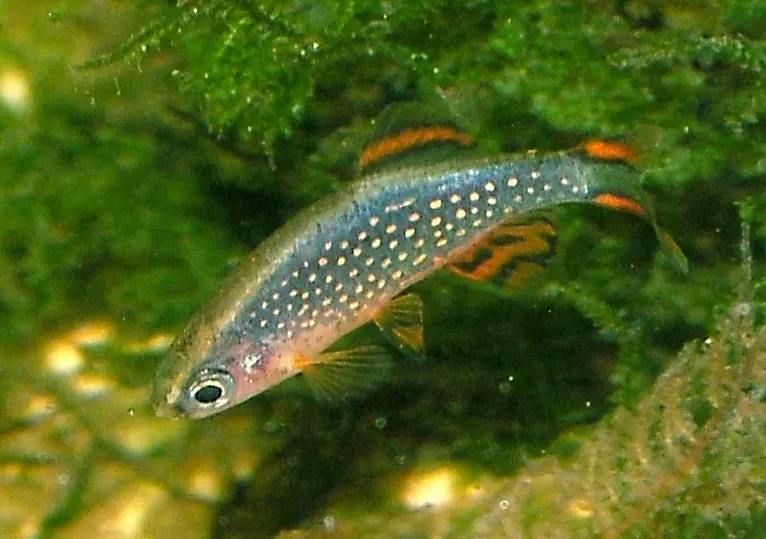
Celestial pearl danios are Danio margaritatus, the fish shops also call a galaxy rasbora. The rasbora nickname is a leftover from the year they were described. They are danios, family Cyprinidae, and they are not zebra danios. Adults are about 1 inch and live 3 to 5 years. A tank of 10 gallons or more, densely planted, is the minimum that lets a school behave like itself. Temperament is a peaceful nano fish. In a bare tank with fast roommates they simply vanish into a corner and stop showing the spots you bought them for.
They come from small, vegetated pools in Myanmar, and the aquarium fish today are mostly captive-bred. The wild pools are cooler and quieter than a discus tank or a Lake Malawi setup. Keep them out of hot, hard, alkaline water. A planted community in the low to mid 70s, with gentle flow and a dark substrate, is the look that brings the pearly spots and the orange-red on the males out of hiding. A strong powerhead pins a 1-inch fish to the glass. Turn the flow down or baffle it.
Males carry more red on the belly and a busier pattern of pearly spots. Females are rounder and plainer, with a dark little mark at the vent that is easier to see in a clear cup than in the tank. A school of eight or more, with both sexes, is when the males display instead of sulk. Six males and no females will spar in a way the peaceful label did not prepare you for. The fighting is small, but a beaten male stops eating, and at this size you notice only when he is already thin.
The mouth is tiny. Crushed flake, a micro pellet, and frozen baby brine shrimp or cyclops are the foods that fit. A community wafer meant for a pleco is irrelevant to them. Feed in the planted midwater where they actually hunt. If danios or barbs share the tank, the celestial pearls get nothing. They should not share with boisterous barbs at all. A tiger barb is a different kind of animal, and a 1-inch shy danio is not a dither fish for it.
They jump. A lid, or a full cover of floating plants plus a lid, belongs on the tank. The floating plants also dim the light, which is what gets a school out of the stems and into the open. Three to 5 years is a short life, and it is easy to waste the first months in a tank that is too bright, too fast, and too empty. They are listed as beginner fish. That is fair in a quiet planted 10-gallon tank and unfair in a community that was stocked for color and speed.
Temperament & Behavior
Do not buy them as a substitute for zebra danios. Danio rerio is larger, faster, happier in cooler open water, and perfectly willing to nip a slow neighbor. Celestial pearls are the opposite animal that happens to share a genus. A shop that labels them galaxy rasboras is selling the same Danio margaritatus. A shop that offers them as food for an angelfish has misunderstood both fish. One inch is the adult size, not a juvenile measurement they will grow out of.
Feeding behavior in Celestial Pearl Danio (Galaxy Rasbora) reveals much about their ecological role and can be leveraged by keepers to promote natural behaviors and reduce aggression. Observing when, where, and how your Celestial Pearl Danio (Galaxy Rasbora) feeds provides diagnostic information about their comfort level, health status, and social standing. Many successful Celestial Pearl Danio (Galaxy Rasbora) keepers use varied feeding strategies including target feeding, scatter feeding, and enrichment feeders to promote natural foraging behaviors and reduce competition-related stress.
Housing & Environment Requirements
A minimum tank size of 10+ gallons is recommended for Celestial Pearl Danio (Galaxy Rasbora). Provide appropriate substrate, hiding places, and peaceful tankmates. A quality filtration system and heater are essential.
Diet & Nutrition
Feed Celestial Pearl Danio (Galaxy Rasbora) a varied diet appropriate for their species. Use micro-pellets, crushed flakes, and small frozen foods like baby brine shrimp. Overfeeding leads to water quality issues. Vary the diet to ensure complete nutrition.
Proper nutrition for Celestial Pearl Danio (Galaxy Rasbora) requires understanding not just what to feed, but how feeding strategies affect health, behavior, and water quality. A disciplined approach to feeding, where your Celestial Pearl Danio (Galaxy Rasbora) receives the right amount of appropriate food at consistent intervals, is one of the most impactful things you can do for both the fish and the overall aquarium ecosystem.
Diet variety is essential for optimal Celestial Pearl Danio (Galaxy Rasbora) health because no single commercial food provides the complete nutritional profile these fish require. Observing your Celestial Pearl Danio (Galaxy Rasbora)'s response to different food types also provides useful health information, as reduced interest in normally preferred foods is often an early indicator of illness.
Common Health Issues
Common health issues in Celestial Pearl Danio (Galaxy Rasbora) include ich (white spot disease), fin rot, bacterial infections, and stress-related conditions. Maintaining excellent water quality is the best prevention. Quarantine new fish for 2-4 weeks before adding to the main tank. Have aquarium salt and broad-spectrum medications on hand for emergencies.
The foundation of Celestial Pearl Danio health management is water quality — full stop. Regular testing and diligent maintenance are your best tools.
Recognizing early signs of disease in Celestial Pearl Danio (Galaxy Rasbora) requires a trained eye and consistent observation. Establishing a daily observation routine—even just a few minutes of focused attention during feeding—helps you develop a baseline understanding of what normal behavior looks like for your specific Celestial Pearl Danio (Galaxy Rasbora), making deviations immediately apparent.
Quarantine protocols represent one of the most impactful health management practices available to Celestial Pearl Danio (Galaxy Rasbora) keepers. This single practice prevents the majority of disease outbreaks in established aquariums and is considered essential by virtually all experienced Celestial Pearl Danio (Galaxy Rasbora) keepers.
Grooming & Maintenance
Remove uneaten food promptly. Trim live plants as needed. Monitor equipment function daily. Replace filter media according to manufacturer recommendations.
Beginner-Friendly Rating: Beginner
Celestial Pearl Danio (Galaxy Rasbora) are excellent for newcomers to fishkeeping.
Before acquiring a Celestial Pearl Danio (Galaxy Rasbora), research thoroughly and prepare the habitat in advance. Join online communities and forums dedicated to fishkeeping to connect with experienced keepers who can offer guidance specific to Celestial Pearl Danio (Galaxy Rasbora) care.
Socialization & Enrichment
Rearranging decorations periodically provides novelty. For Celestial Pearl Danio (Galaxy Rasbora) specifically, consider their natural habitat when designing your aquascape - this helps encourage natural behaviors and reduces stress.
Feeding enrichment is another important aspect. Live and frozen foods provide hunting stimulation that dry foods cannot. This knowledge helps you detect health issues early and optimize care.
Where to Find Celestial Pearl Danio (Galaxy Rasbora)
Purchase Celestial Pearl Danio (Galaxy Rasbora) from reputable local fish stores (LFS) that maintain clean, well-cared-for aquariums. Online sellers with strong reviews and live arrival guarantees are another option.
Cost of Ownership Overview
| Expense | Estimated Cost |
|---|---|
| Initial Setup (tank + equipment) | $100-$500+ |
| Fish Purchase | $5-$100+ per fish |
| Annual Maintenance | $200-$500 |
| Food (annual) | $50-$150 |
The true cost of keeping Celestial Pearl Danio (Galaxy Rasbora) extends well beyond the initial purchase price and basic equipment. Many aspiring Celestial Pearl Danio (Galaxy Rasbora) keepers underestimate these ongoing costs, which can lead to cut corners that ultimately compromise fish health and result in even greater expenses. A realistic budget that accounts for both routine maintenance and occasional replacement of equipment provides a more accurate picture of what Celestial Pearl Danio (Galaxy Rasbora) keeping actually costs.
Heaters, filters, lights, and pumps all have finite lifespans, and their failure—particularly heater or filter failure—can have catastrophic consequences for Celestial Pearl Danio (Galaxy Rasbora) if not addressed promptly. Many experienced Celestial Pearl Danio (Galaxy Rasbora) keepers also invest in battery-operated air pumps and backup heaters as insurance against power outages, which can be lethal to tropical species within hours depending on ambient room temperature.
The cost-benefit analysis of quality versus budget equipment deserves careful consideration for Celestial Pearl Danio (Galaxy Rasbora) keepers. This is particularly true for Celestial Pearl Danio (Galaxy Rasbora), where the animals themselves, along with any tank mates, plants, and established biological filtration, represent a significant investment of both money and time that is worth protecting with reliable equipment.
Daily Care Routine for Celestial Pearl Danio (Galaxy Rasbora)
Successful Celestial Pearl Danio (Galaxy Rasbora) keeping depends on consistent daily observation and maintenance.
Common Questions About Celestial Pearl Danio (Galaxy Rasbora)
What size tank do Celestial Pearl Danio (Galaxy Rasbora) need?
Celestial Pearl Danio (Galaxy Rasbora) require a minimum tank size of 10+ gallons. Larger tanks are always better as they provide more stable water conditions, more swimming space, and greater flexibility for tankmate selection.
What fish are compatible with Celestial Pearl Danio (Galaxy Rasbora)?
With their peaceful nano temperament, Celestial Pearl Danio (Galaxy Rasbora) are compatible with many community fish of similar size and temperament. Good tankmates include other peaceful species that share similar water parameter requirements. Always research specific compatibility before adding new species to your aquarium.
How often should I feed Celestial Pearl Danio (Galaxy Rasbora)?
Feed Celestial Pearl Danio (Galaxy Rasbora) 1-2 times daily, offering only what they can consume within 2-3 minutes. Fasting one day per week can benefit digestive health.
Are Celestial Pearl Danio (Galaxy Rasbora) good for beginners?
Yes, Celestial Pearl Danio (Galaxy Rasbora) are excellent for beginning fishkeepers. Start with a properly cycled tank and maintain regular maintenance habits.
Long-Term Commitment & Responsible Ownership
Owning Celestial Pearl Danio (Galaxy Rasbora) is a commitment that spans their full lifespan of 3-5 years. Aquariums require daily attention, weekly maintenance, and ongoing expense. Many fishkeeping communities have members willing to help in emergencies.
Plan for equipment upgrades as fish grow and needs change over time.
Get Personalized Celestial Pearl Danio (Galaxy Rasbora) Guidance
Have specific questions about your Celestial Pearl Danio (Galaxy Rasbora)?
Ask Our AI NowDecision Guides for Celestial Pearl Danio (Galaxy Rasbora)
Use these only when comparing food, insurance, ownership budget, or beginner fit for this specific pet.
Celestial Pearl Danio (Galaxy Rasbora) May Be Great For:
- A planted-tank keeper who will keep a school of Celestial Pearl Danios, Danio margaritatus, in cooler water
- Someone with a lid, soft cover, and no large tankmates
- An aquarist happy at about 72-76°F rather than a hot discus tank
Celestial Pearl Danio (Galaxy Rasbora) May Not Be Ideal For:
- A single CPD in a community of barbs or cichlids
- A warm, brightly bare tank with no plants
- Anyone who will mix them with long-fin bettas that get nipped
The decision to keep a Celestial Pearl Danio (Galaxy Rasbora) should be based on practical readiness, not just enthusiasm. Can you maintain the habitat consistently? Can you handle the costs? Do you have access to a qualified vet? If yes, you are in a solid position. If any of those feel shaky, it is better to address them first.