Arowana
This page is educational reference material for preparing questions. A licensed veterinarian examines the animal, makes the diagnosis, and sets the treatment.
Affiliate links may earn a commission. Affiliate disclosure.
Quick Facts
| Attribute | Details |
|---|---|
| Scientific Name | Osteoglossum spp. / Scleropages spp. |
| Origin | South America, Asia, Australia |
| Size | 24-36 inches (60-90 cm), some larger |
| Lifespan | 15-20+ years |
| Temperature | 75-82°F (24-28°C) |
| pH | 6.0-7.5 |
| Tank Size | 250+ gallons minimum |
| Care Level | Expert |
| Diet | Carnivore |
| Temperament | Predatory, Semi-aggressive |
Recommended for Arowanas
Chewy - Premium carnivore foods | Petco - Large aquarium equipment | PetSmart - Powerful filtration systems
Overview
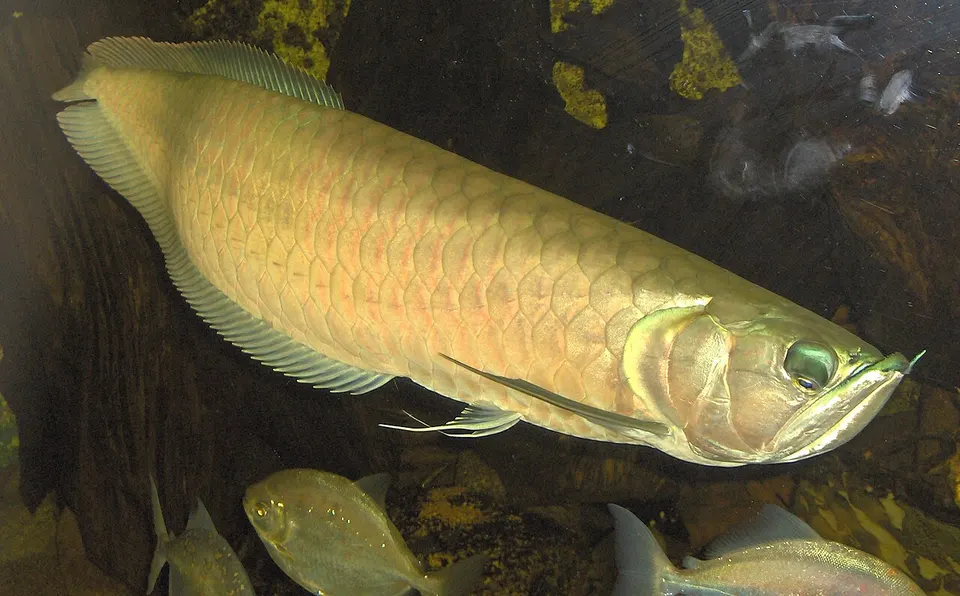
Arowanas are often called "dragon fish" due to their elongated bodies, large metallic scales, and barbels resembling dragon whiskers. These ancient fish are living fossils that have remained largely unchanged for millions of years, making them fascinating additions to large aquariums.
In Asian cultures, particularly Chinese, Arowanas are considered symbols of luck, prosperity, and strength. The most prized Asian Arowanas can command prices of tens of thousands of dollars, with some exceptional specimens selling for over $300,000. South American Silver Arowanas are more accessible to hobbyists.
The arowana people actually keep is the silver, Osteoglossum bicirrhosum, from the Amazon. Asian arowana, Scleropages formosus, is a different fish and is listed on CITES Appendix I. The table covers Osteoglossum and Scleropages together, with adult size at 24 to 36 inches and some individuals larger, and a lifespan of 15 to 20 years or more. The tank floor on this page is 250 gallons. A juvenile in a 55-gallon tank is a temporary situation with a deadline, not a home.
Temperature sits at 75 to 82°F, pH 6.0 to 7.5, hardness about 4 to 12 dGH. Ammonia at 0 ppm is marked critical for a reason. A fish this size produces a heavy bioload, and a dirty tank shows up as frayed fins and refusal to eat. They are carnivores and predators. Fish, insects, and meaty frozen foods are the diet. Feeder goldfish are a poor staple. They carry parasites and teach the arowana to ignore prepared food.
They are jumpers. The eye is built to look up, and a gap at the lid, a loose cable, or a hood left open during feeding is enough. Arowana leave the tank and dry on the floor. The lid has to be heavy, tight, and closed every time. Temperament is predatory and semi-aggressive. Anything that fits in the mouth is food, including smaller tankmates that were the same length on the day they were added. Bottom fish that stay out of the mouth can work. A school of tetras will not.
Natural Habitat
Arowanas inhabit various freshwater environments: Your aquatic veterinarian and experienced Arowana owners can offer perspective tailored to your situation.
- South American: Amazon basin floodplains, slow-moving rivers, and flooded forests
- Asian: Blackwater streams, peat swamps, and slow-moving rivers in Southeast Asia
- Australian: Rivers and billabongs of northern Australia and New Guinea
- Surface Dwellers: Spend most time near the surface, leaping for prey
Arowana Varieties
Several species are kept in aquariums: Your aquatic veterinarian and experienced Arowana owners can offer perspective tailored to your situation.
- Silver Arowana (Osteoglossum bicirrhosum): Most common; South American origin; grows to 3+ feet
- Black Arowana (Osteoglossum ferreirai): Juveniles are black; adults silver; South American
- Asian Arowana (Scleropages formosus): Most prestigious; includes Red, Gold, and Green varieties; CITES protected
- Jardini Arowana (Scleropages jardini): Australian; more aggressive; beautiful spotted pattern
- African Arowana (Heterotis niloticus): Less colorful; filter-feeding species
Legal Notice
Asian Arowanas are protected under CITES and illegal to import into the United States. Only farm-bred, microchipped specimens with proper documentation can be legally owned in countries where permitted. Always verify local laws before purchasing.
Tank Requirements
Arowanas require massive, specialized aquariums.
- Tank Size: Minimum 250 gallons; 300+ gallons preferred for adults
- Dimensions: Tank must be at least 3x fish length long, 2x wide
- Lid: Heavy, secure lid is ESSENTIAL; Arowanas are powerful jumpers
- Filtration: Massive filtration; sump systems recommended
- Decorations: Minimal; open swimming space is crucial
- Lighting: Moderate; excessive light can stress them
Water Parameters
Water quality is critical for Arowana health.
| Parameter | Ideal Range |
|---|---|
| Temperature | 75-82°F (24-28°C) |
| pH | 6.0-7.5 |
| Hardness (GH) | 4-12 dGH |
| Ammonia | 0 ppm (critical) |
| Nitrite | 0 ppm |
| Nitrate | <20 ppm |
Diet & Feeding
Arowanas are surface-feeding carnivores.
- Staple Foods: Carnivore pellets (once trained to accept them)
- Live Foods: Crickets, mealworms, grasshoppers, shrimp
- Frozen Foods: Market shrimp, silversides, smelt
- Occasional: Small feeder fish (quarantine first to prevent disease)
- Avoid: Fatty foods, goldfish feeders (thiaminase content)
Feeding Schedule: Juveniles 2-3 times daily; adults once daily or every other day. Overfeeding causes "drop eye" and obesity.
Proper nutrition for Arowana requires understanding not just what to feed, but how feeding strategies affect health, behavior, and water quality. A disciplined approach to feeding, where your Arowana receives the right amount of appropriate food at consistent intervals, is one of the most impactful things you can do for both the fish and the overall aquarium ecosystem.
Diet variety is essential for optimal Arowana health because no single commercial food provides the complete nutritional profile these fish require. Observing your Arowana's response to different food types also provides useful health information, as reduced interest in normally preferred foods is often an early indicator of illness.
Behavior & Social Structure
Arowanas display distinctive behaviors.
- Surface Dwellers: Patrol near the surface constantly
- Jumpers: Can leap 6+ feet out of water; secure lids mandatory
- Intelligent: Recognize owners and can be hand-fed
- Territorial: Aggressive toward conspecifics and similar-looking fish
- Predatory: Will eat any fish that fits in their mouth
Silver arowana are the legal, commonly sold pet. Asian arowana paperwork, when a fish is even legal to possess, is part of buying that species, not an optional extra. Do not take a shop's word that a red or gold juvenile is a silver that will color up. The body shape and the chin barbels differ, and the legal status differs. A fish you cannot document is a fish you should not bring home.
Growth is the bill people do not run before the purchase. A 4-inch silver becomes a 2-foot fish that needs the 250-gallon minimum and a filter to match, and it may live past 20 years. Expert is the care level on the card. That reflects the adult, the jump risk, and the predatory diet, not the week a juvenile spends eating pellets in a shop tank. Plan the tank you will need in three years, or do not buy the fish.
Feeding behavior in Arowana reveals much about their ecological role and can be leveraged by keepers to promote natural behaviors and reduce aggression. Observing when, where, and how your Arowana feeds provides diagnostic information about their comfort level, health status, and social standing. Many successful Arowana keepers use varied feeding strategies including target feeding, scatter feeding, and enrichment feeders to promote natural foraging behaviors and reduce competition-related stress.
Compatibility
Tank mate selection is limited.
Potentially Compatible Tank Mates
- Large peaceful or semi-aggressive fish (adult Oscar, large Pleco)
- Bottom-dwelling fish (Bichirs, large catfish)
- Fast-swimming fish too large to eat (large Silver Dollars)
Incompatible Species
- Any fish that fits in the Arowana's mouth
- Other Arowanas (unless tank is enormous)
- Aggressive surface dwellers
- Slow-moving fish that can be ambushed
Common Health Issues
Arowanas are prone to specific conditions: Your aquatic veterinarian and experienced Arowana owners can offer perspective tailored to your situation.
- Drop Eye: Eyes droop downward; causes debated; may be irreversible
- Gill Curl: Gill covers curl outward; often from poor water quality
- Ich: Common parasite; treat with increased temperature and medication
- Fin Rot: Bacterial infection from poor conditions
- Anchor Worms: External parasites; require manual removal
- Jump Injuries: Broken jaw or spinal damage from hitting lids
Health & Water Quality Products
Chewy - Large tank filtration | Petco - Professional test kits | 1-800-PetMeds - Fish medications
Keeping an Arowana healthy means prioritizing water quality above everything else.
Recognizing early signs of disease in Arowana requires a trained eye and consistent observation. Establishing a daily observation routine—even just a few minutes of focused attention during feeding—helps you develop a baseline understanding of what normal behavior looks like for your specific Arowana, making deviations immediately apparent.
Quarantine protocols represent one of the most impactful health management practices available to Arowana keepers. This single practice prevents the majority of disease outbreaks in established aquariums and is considered essential by virtually all experienced Arowana keepers.
Arowanas Are Great For:
- Experienced aquarists ready for a commitment
- Those with space for 250+ gallon tanks
- Hobbyists wanting an impressive centerpiece fish
- Keepers who appreciate prehistoric species
Arowanas May Not Be Ideal For:
- Beginners to fishkeeping
- Those with limited space or budget
- Community tank enthusiasts
- Anyone unable to commit to 15+ years of care
The best way to decide if an Arowana is right for your tank is to talk to people who already keep them. That kind of practical insight is more valuable than any care sheet.
A well-maintained Arowana is one of the more satisfying species to keep, and most owners who take the time to get it right have no regrets.
Cost of Ownership
Arowana consistent chemistry, controlled feeding, and deliberate quarantine sit at the centre of sustained aquatic welfare; these factors drive outcomes more than brand-name products.
The true cost of keeping Arowana extends well beyond the initial purchase price and basic equipment. Many aspiring Arowana keepers underestimate these ongoing costs, which can lead to cut corners that ultimately compromise fish health and result in even greater expenses. A realistic budget that accounts for both routine maintenance and occasional replacement of equipment provides a more accurate picture of what Arowana keeping actually costs.
Heaters, filters, lights, and pumps all have finite lifespans, and their failure—particularly heater or filter failure—can have catastrophic consequences for Arowana if not addressed promptly. Many experienced Arowana keepers also invest in battery-operated air pumps and backup heaters as insurance against power outages, which can be lethal to tropical species within hours depending on ambient room temperature.
The cost-benefit analysis of quality versus budget equipment deserves careful consideration for Arowana keepers. This is particularly true for Arowana, where the animals themselves, along with any tank mates, plants, and established biological filtration, represent a significant investment of both money and time that is worth protecting with reliable equipment.
Related Species
If you're interested in Arowanas, you might also consider.
- Peacock Bass - Large, impressive predator
- Flowerhorn - Colorful, interactive fish
- Pacu - Large, peaceful South American species
- African Cichlid - Colorful alternative for smaller tanks
Ask Our AI About Arowanas
Have specific questions about Arowana care, feeding, or health issues? Our AI assistant can provide personalized guidance.
Get Personalized AI Guidance
Ask Our AI NowDecision Guides for Arowana
Use these only when comparing food, insurance, ownership budget, or beginner fit for this specific pet.
Arowana are surface predators that jump and outgrow almost every home tank. A juvenile silver arowana needs a covered aquarium measured in feet of length, a heater, and a diet of insects, prawns, and fish fillets. Feeder goldfish are a poor staple because of parasites and thiaminase.