Apistogramma
This page is educational reference material for preparing questions. A licensed veterinarian examines the animal, makes the diagnosis, and sets the treatment.
Quick Facts
| Attribute | Details |
|---|---|
| Type | Freshwater |
| Size | Small (2-3 in) |
| Lifespan | 3-5 years |
| Temperature | 72-86°F |
| pH Range | 5.0-7.0 |
| Min Tank Size | 20 gal |
| Care Level | Intermediate |
| Diet | Omnivore |
| Temperament | Semi-Aggressive |
Recommended for Apistogrammas
Apistogramma stable water chemistry, deliberate feeding, and a disciplined quarantine habit are the tripod that supports everything else; these factors drive outcomes more than brand-name products.
Apistogramma Overview
The Apistogramma is a small (2-3 in) freshwater species that is well-suited for hobbyists with some experience. With a lifespan of 3-5 years, this semi-aggressive species requires a minimum tank size of 20 gal.
Apistogrammas thrive in water temperatures of 72-86°F with a pH range of 5.0-7.0. As an omnivore, they accept a wide variety of foods.
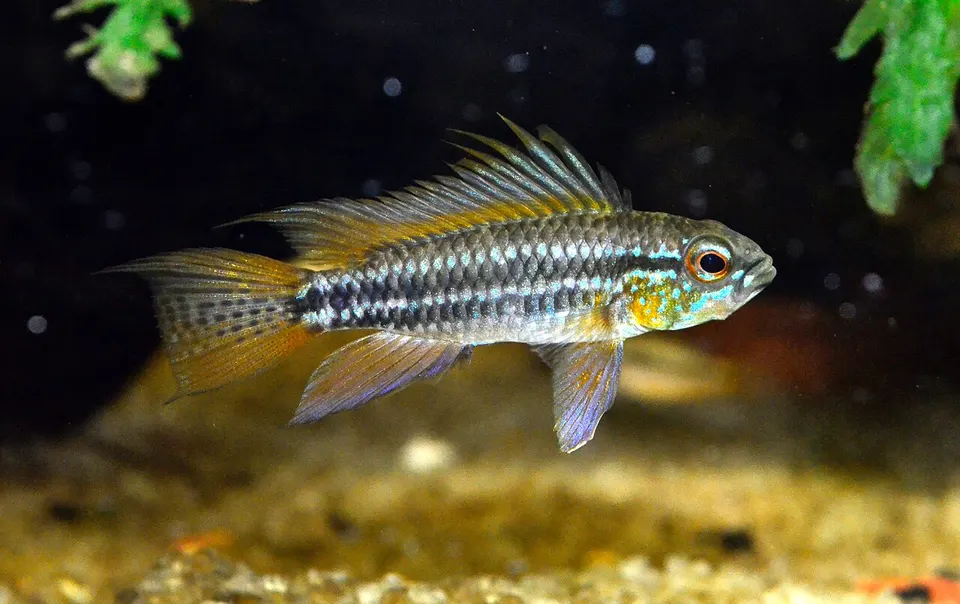
Apistogramma is a genus of small South American cichlids, not one species with a single correct temperature. Most of the fish sold under the name stay 2 to 3 inches and live 3 to 5 years. The table's 72 to 86°F span is that wide because a cooler-water borellii and a warmer-water cacatuoides got printed on one card. Care level is intermediate. A 20-gallon tank is the listed minimum, and a long footprint matters more than height for a fish that lives on the sand.
pH on the card runs from 5.0 to 7.0. Blackwater species, including many agassizii, fade and stop spawning in hard tap water. Some line-bred cockatoo cichlids, A. cacatuoides, tolerate closer to neutral. If the label says only Apistogramma, ask which species is in the bag before you set the heater. Fine sand, leaf litter, and a cave the female can fill with her body are the furniture. A bare tank with plastic plants gives her nowhere to put a brood, and the male spends his time displaying at the glass.
Temperament is semi-aggressive, and almost all of that aggression is about sex and a cave. A female guarding eggs turns yellow and black and will drive the male off. The group that works in 20 gallons is one male and two or three females, not two males. Two males in a small tank fight until one stops eating. Any dither fish have to accept the same soft, acidic water. A barbs-and-goldfish community cannot be their room.
Tank Size
- Minimum: 20 gal
- Recommended: Larger is always better for stability and swimming room.
- Type: Freshwater planted or community tank
Equipment
- Filtration: Quality canister or HOB filter rated for your tank size.
- Heating: Reliable heater to maintain 72-86°F.
- Lighting: Standard aquarium lighting; planted tanks benefit from full-spectrum.
- Air Pump: Optional but beneficial for oxygenation.
Water Parameters
| Parameter | Ideal Range |
|---|---|
| Temperature | 72-86°F |
| pH | 5.0-7.0 |
| Ammonia | 0 ppm |
| Nitrite | 0 ppm |
| Nitrate | <20 ppm |
Water Quality Warning
Always cycle your tank fully before adding fish. Use a quality test kit to monitor ammonia, nitrite, and nitrate levels. Never add Apistogrammas to an uncycled or newly set up tank.
Diet & Feeding
- Primary Diet: Omnivore.
- Foods: High-quality flakes/pellets, frozen brine shrimp, mysis shrimp, and blanched vegetables.
- Variety: Rotate different food types for balanced nutrition.
Apistogramma Tank Essentials
They are omnivores that do better on small meaty foods than on large cichlid sticks. Baby brine shrimp, frozen daphnia, and a pellet they can chew match a 2-inch mouth. Males are the fish on the price tag: tall dorsal spines on a cockatoo, a spear tail and a cheek stripe on an Agassiz's. Females look plain until they spawn, and then they are the brightest animal in the tank. Buying only the male is why he never quite colors up.
Proper nutrition for Apistogramma requires understanding not just what to feed, but how feeding strategies affect health, behavior, and water quality. A disciplined approach to feeding, where your Apistogramma receives the right amount of appropriate food at consistent intervals, is one of the most impactful things you can do for both the fish and the overall aquarium ecosystem.
Diet variety is essential for optimal Apistogramma health because no single commercial food provides the complete nutritional profile these fish require. Observing your Apistogramma's response to different food types also provides useful health information, as reduced interest in normally preferred foods is often an early indicator of illness.
Common Health Issues
- Ich (White Spot Disease): White spots on body and fins. Raise temperature gradually and use ich medication.
- Parasites: Internal and external parasites; quarantine new additions.
Keeping an Apistogramma healthy means prioritizing water quality above everything else.
Recognizing early signs of disease in Apistogramma requires a trained eye and consistent observation. Establishing a daily observation routine—even just a few minutes of focused attention during feeding—helps you develop a baseline understanding of what normal behavior looks like for your specific Apistogramma, making deviations immediately apparent.
Quarantine protocols represent one of the most impactful health management practices available to Apistogramma keepers. This single practice prevents the majority of disease outbreaks in established aquariums and is considered essential by virtually all experienced Apistogramma keepers.
Compatibility
- Temperament: Semi-Aggressive - may show territorial behavior; choose tankmates carefully.
- Tank Mates: Research compatible species carefully before adding to your tank.
- Avoid: Very timid species that may be stressed by their presence.
Apistogrammas Are Great For:
- Experienced hobbyists ready for a rewarding challenge
- Community freshwater tank keepers
- Those who can maintain stable freshwater parameters
Apistogrammas May Not Be Ideal For:
- Those unable to commit to regular water testing and maintenance
- Those looking for a zero-maintenance pet
Ask Our AI About Apistogrammas
Have specific questions about Apistogramma care, tank setup, or health? Our AI assistant can provide personalized guidance.
The question to ask yourself is not whether you can keep an Apistogramma alive, but whether you can keep one thriving. If you are willing to invest in those consistently, you and your Apistogramma will both benefit.
When to Seek Help
Recognizing signs of illness early gives your Apistogramma the best chance of recovery.
- Water testing: Before treating for disease, always test water parameters.
Diet and Nutrition Tips
Proper nutrition is the foundation of good health for your Apistogramma.
- Primary diet: Feed a high-quality staple food formulated for your Apistogramma's dietary type (herbivore, omnivore, or carnivore). Look for foods with whole ingredients and minimal fillers.
- Variety ensures complete nutrition and encourages natural foraging.
- Feeding frequency: Feed small amounts 1-2 times daily.
- Avoid overfeeding: Overfeeding is the most common nutritional mistake in fishkeeping. It leads to obesity, water pollution, and secondary health problems.
Tank Environment and Stimulation
Providing the right environment is crucial for your Apistogramma's health and well-being.
- Tank size: Always choose a tank that meets or exceeds the minimum recommended size for Apistogramma. Larger tanks are more stable and forgiving of water quality fluctuations.
- Water parameters: Maintain consistent temperature, pH, and hardness levels appropriate for Apistogramma. Test water weekly and perform regular partial water changes.
- Filtration: Use a quality filter rated for your tank size.
- This reduces stress and aggression.
Tank Maintenance Essentials
- Water changes: Perform 20-30% partial water changes weekly.
- Filter maintenance: Rinse filter media in old tank water monthly.
- Algae control: Some algae is normal, but excessive growth indicates nutrient imbalance. Adjust lighting duration and consider adding algae-eating species.
- Water testing: Test ammonia, nitrite, nitrate, and pH at least weekly. Keep a log to track trends and catch problems early.
Living Environment
Creating the optimal living environment ensures your Apistogramma thrives and displays natural, healthy behaviors.
- A stable location reduces stress and prevents temperature fluctuations.
- Compatible tankmates: Research compatibility before adding new species. Aggression, different water parameter requirements, and size mismatches are common problems.
- Substrate choice: Select substrate appropriate for your Apistogramma's natural behavior, whether that is sand for digging species or planted substrate for aquascaping.
- Equipment failures can be life-threatening.
Helpful Resources for Apistogramma Owners
Typical Apistogramma planning focuses on headline topics; the real gains often come from the less obvious areas that most owners underweight.
Explore More Guides
Get Personalized AI Guidance
The specifics you ignore in month one are the ones that inflate your year-three budget
Ask Our AI NowDecision Guides for Apistogramma
Use these only when comparing food, insurance, ownership budget, or beginner fit for this specific pet.
Behavior & Temperament
Apistogramma are characterized by a semi-aggressive disposition that influences their care requirements and compatibility.
- General Disposition: Semi-Aggressive nature that defines daily interactions
- Social Behavior: Specific social needs that owners should understand and accommodate
- Activity Patterns: Natural activity cycles that influence care scheduling
A dark cave and soft water are what produce a spawn. The female fans the eggs. Fry need microworms or newly hatched brine shrimp, and any danio in the tank will eat them. Three to 5 years is a short life next to a big Central American cichlid, so a hollow-bellied import has already used part of it on a breeder rack. These are not dwarf cichlids for a goldfish tank or a rift-lake tank. Both of those run outside the pH on this card.
Shops mix the names. A Macmaster's, a cockatoo, and an Agassiz's do not want the same hardness, and a German blue ram is not in this genus at all. Set the heater for the species you actually bought, somewhere inside the 72 to 86°F band, instead of parking it at the top because the card allows it. Hot water and a tired filter is how a fish listed for 3 to 5 years dies in the first one. Nitrate under 20 ppm, ammonia and nitrite at 0 ppm, and a cave she can defend are the practical test.
Feeding behavior in Apistogramma reveals much about their ecological role and can be leveraged by keepers to promote natural behaviors and reduce aggression. Observing when, where, and how your Apistogramma feeds provides diagnostic information about their comfort level, health status, and social standing. Changes in feeding behavior—such as reduced enthusiasm, feeding only when other fish are not present, or aggressive food guarding—often signal underlying issues that should be investigated. Many successful Apistogramma keepers use varied feeding strategies including target feeding, scatter feeding, and enrichment feeders to promote natural foraging behaviors and reduce competition-related stress.
Cost of Ownership
These figures are averages, not guarantees. Some Apistogramma owners spend less; others spend more due to health complications or premium product preferences. Where you live matters too — urban vet costs tend to run higher. The point is to go in with a realistic financial picture, not an optimistic one.
The true cost of keeping Apistogramma extends well beyond the initial purchase price and basic equipment. While the upfront investment in a properly equipped aquarium (minimum 20 gal) represents a significant portion of the total cost, ongoing expenses for water treatment chemicals, filter media, electricity for heating and lighting, and food constitute the majority of long-term spending. Many aspiring Apistogramma keepers underestimate these ongoing costs, which can lead to cut corners that ultimately compromise fish health and result in even greater expenses. A realistic budget that accounts for both routine maintenance and occasional replacement of equipment provides a more accurate picture of what Apistogramma keeping actually costs.
Equipment failure is an inevitable aspect of aquarium keeping that should be factored into financial planning. Heaters, filters, lights, and pumps all have finite lifespans, and their failure—particularly heater or filter failure—can have catastrophic consequences for Apistogramma if not addressed promptly. Maintaining a small emergency fund specifically for aquarium equipment replacement, or keeping backup equipment on hand for critical systems like heating and filtration, is a wise investment. Many experienced Apistogramma keepers also invest in battery-operated air pumps and backup heaters as insurance against power outages, which can be lethal to tropical species within hours depending on ambient room temperature.
The cost-benefit analysis of quality versus budget equipment deserves careful consideration for Apistogramma keepers. Higher-quality filters, heaters with accurate thermostats, and reliable lighting systems cost more upfront but typically last longer, perform more consistently, and are less likely to fail catastrophically. In aquarium keeping, equipment failure can result in livestock losses worth far more than the savings from choosing budget equipment. This is particularly true for Apistogramma, where the animals themselves, along with any tank mates, plants, and established biological filtration, represent a significant investment of both money and time that is worth protecting with reliable equipment.
Apistogramma are dwarf cichlids from soft, acidic South American streams. Many species do well as a pair in a 20-gallon tank with leaf litter, caves, and a temperature in the mid to upper 70s Fahrenheit. The female often guards a cave of fry while the male holds a wider territory.