Rottweiler
This page is educational reference material for preparing questions. A licensed veterinarian examines the animal, makes the diagnosis, and sets the treatment.
Affiliate links may earn a commission. Affiliate disclosure.
Quick Facts
| Attribute | Details |
|---|---|
| Breed Group | Working |
| Size | Large (80-135 lbs) |
| Height | 22-27 inches |
| Lifespan | 9-10 years |
| Temperament | Loyal, Confident, Courageous |
| Good with Kids | Good (with proper training) |
| Good with Other Dogs | Moderate (same-sex issues common) |
| Shedding | Moderate |
| Exercise Needs | High |
| Trainability | Excellent (needs experienced handler) |
Recommended for Rottweilers
The Farmer's Dog - Fresh food for large working breeds | Embark DNA - Screen for heart conditions & cancer markers | Spot Insurance - Coverage for hip dysplasia & ACL tears
Save on Rottweiler Care
Chewy Autoship - Save on large breed food & supplies | Lemonade Pet - Comprehensive insurance for working breeds | K9 Training Institute - Professional Rottweiler training
Top Food Choices for Rottweilers
The Farmer's Dog - Fresh, human-grade meals for large breeds | Ollie - Custom portions for working dogs | Hill's Science Diet - Large breed formulas with joint support
A working dog with a short clock
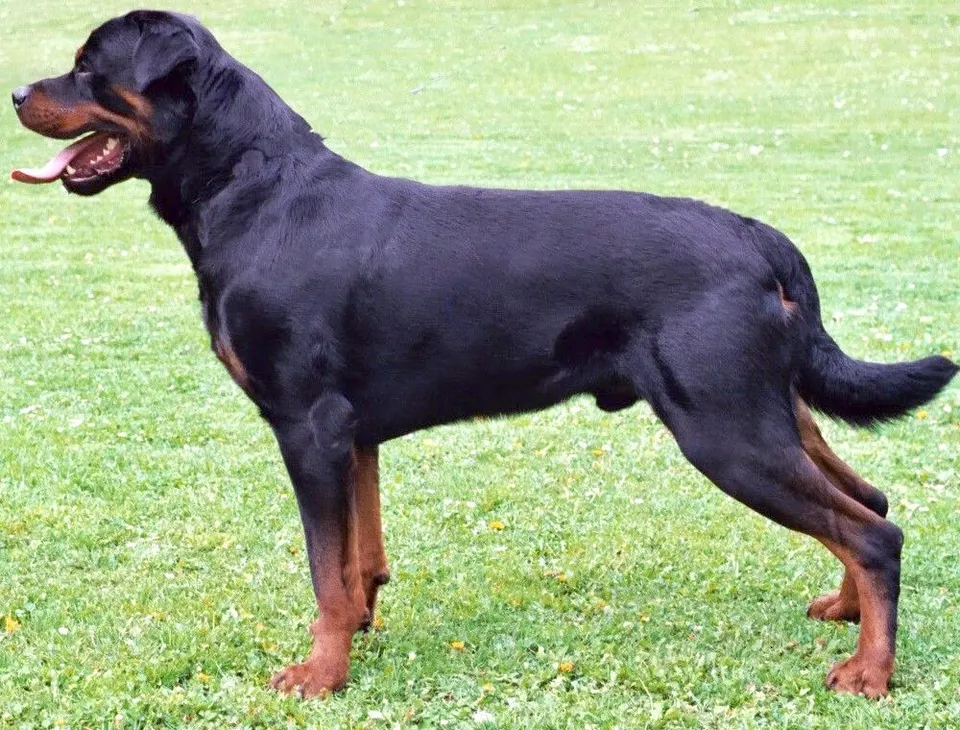
Rottweilers stand about 22 to 27 inches and weigh 80 to 135 pounds. Plan on 9 to 10 years. They are loyal and confident when someone has actually trained them, and dangerous when the training was a weekend video. Exercise needs are high. A bored young male will invent a job at the fence.
Same-sex friction is ordinary. Do not assume two adults will share a yard because they shared a puppy class. Children in the home need the dog to have a place to leave, and the dog needs a handler who can interrupt rude behavior without a fight. Food guarding should be taken seriously the first time it happens.
Bone, heart, and a DNA panel
Osteosarcoma is common enough that a sudden limp in a middle-aged Rottweiler is not "he slept wrong." Subaortic stenosis is a heart defect to listen for in puppies, then confirm with a cardiologist if a murmur is present. JLPP is a DNA test, not a guess. Hip dysplasia still matters. VCA has a readable osteosarcoma page. A limp that worsens over a week belongs on the limping guide.
Rottweiler questions
Are Rottweilers safe with children?
A well-bred, trained adult can be steady with kids the dog knows. Size and a guarding instinct mean this is not a dog you leave to supervise a party. Same-sex dog fights are common.
What is JLPP?
Juvenile laryngeal paralysis and polyneuropathy, a genetic disease that shows up in young Rottweilers as noisy breathing and weak legs. Breeding dogs should be DNA-tested.
How long do they live?
Often 9 to 10 years. Cancer, especially bone cancer, is a common reason the life is shorter than a Labrador's.
Decision Guides for Rottweiler
Use these only when comparing food, insurance, ownership budget, or beginner fit for this specific pet.
The Rottweiler was a German drover and cart dog. Hip and elbow dysplasia, osteosarcoma, subaortic stenosis, and cruciate ligament tears are the diseases that show up in the breed's health surveys. The chest is deep enough that bloat belongs in the first-aid plan. Early training and a job matter, because an untrained adult is a very strong dog on the end of a leash.