Irish Wolfhound
This page is educational reference material for preparing questions. A licensed veterinarian examines the animal, makes the diagnosis, and sets the treatment.
Affiliate links may earn a commission. Affiliate disclosure.
Quick Facts
| Attribute | Details |
|---|---|
| Breed Group | Hound |
| Size | Giant (105-180 lbs) |
| Height | 30-35+ inches (minimum 30" males, 28" females) |
| Lifespan | 6-8 years |
| Temperament | Gentle, Dignified, Courageous |
| Good with Kids | Excellent (gentle despite size) |
| Good with Other Dogs | Excellent |
| Shedding | Moderate |
| Exercise Needs | Moderate (30-60 min daily) |
| Trainability | Good (eager to please) |
Recommended for Irish Wolfhounds
The Farmer's Dog - Fresh food for giant breeds | Embark DNA - Cardiac and genetic health screening | Spot Insurance - Coverage for breed-specific conditions
Irish Wolfhound Overview
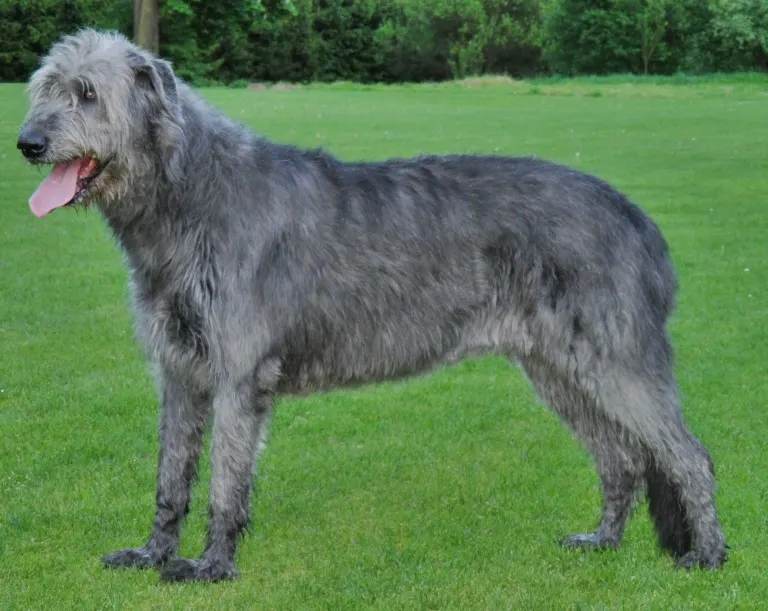
The Irish Wolfhound is the tallest of all dog breeds, with a history dating back over 2,000 years in Ireland. Originally bred to hunt wolves, elk, and wild boar, these magnificent dogs were so valued by Irish chieftains that they were given as royal gifts and their export was once restricted by law.
Despite their imposing size and fierce hunting heritage, Irish Wolfhounds are famously described as "gentle giants" - calm, patient, and remarkably sweet-natured. Their commanding presence combined with their gentle temperament makes them beloved family companions.
The Irish Wolfhound is a breed that commands attention not just for its physical appearance but for the depth of personality and capability it brings to a household. With a lifespan averaging 6-8 years, the decision to welcome an Irish Wolfhound into your family is one that will shape your daily routine, activity levels, and emotional life for well over a decade. This breed's gentle, dignified, courageous temperament is the product of generations of selective breeding for specific traits—understanding this heritage provides valuable insight into why your Irish Wolfhound behaves the way it does and what it needs from you as an owner to truly thrive.
Living well with an Irish Wolfhound starts with understanding what drives their behavior.
Bringing an Irish Wolfhound into your household means real changes to your daily rhythm.
Temperament & Personality
Irish Wolfhounds have a wonderfully gentle nature.
- Gentle & Patient: Despite their enormous size, they are remarkably gentle with children and small animals.
- Dignified & Calm: They carry themselves with quiet nobility and are not hyperactive or demanding.
- Courageous: When needed, they will protect their family with fierce determination.
- Sensitive: They are emotionally intuitive and responsive to their family's moods.
- Friendly: They are generally welcoming to strangers - not ideal guard dogs.
- Prey Drive: They retain hunting instincts and may chase small animals.
The gentle, dignified, courageous nature of the Irish Wolfhound is not a simple personality label—it is a complex behavioral profile shaped by breed history, individual genetics, early socialization experiences, and ongoing environmental factors. What this means in practice is that two Irish Wolfhound from different lines, raised in different environments, can display meaningfully different behavioral tendencies while still sharing core breed characteristics.
The vet's role is to adapt general Irish Wolfhound guidance into something calibrated to your animal's actual profile.
Common Health Issues
Irish Wolfhounds have significant health concerns, contributing to their shorter lifespan.
Major Health Concerns
- Dilated Cardiomyopathy (DCM): Heart disease is the leading cause of death. Annual cardiac screening essential.
- Osteosarcoma: Bone cancer is common in giant breeds. Early detection is crucial.
- Bloat (GDV): Deep-chested breeds are at very high risk for life-threatening gastric torsion.
- Liver Shunt: Portosystemic shunt can occur; testing recommended.
hereditary conditions including potential eye, dental, and metabolic issues
- Hip & Elbow Dysplasia: Joint problems common in giant breeds.
- Pneumonia: Aspiration pneumonia can occur, especially after anesthesia.
- Von Willebrand's Disease: A bleeding disorder; DNA testing available.
- Anesthesia Sensitivity: Sighthound-appropriate protocols required.
Health Screening Recommendation
Request cardiac evaluations, hip/elbow scores, and liver function tests from breeders. Annual cardiac screening throughout life is essential. Consider Embark DNA testing for comprehensive genetic screening. Discuss bloat prevention surgery with your veterinarian.
Preventive care pays off most when the same clinic sees your Irish Wolfhound year after year.
The middle years of an Irish Wolfhound's life are when subtle health shifts begin to appear — slightly slower recovery after exercise, a preference for softer resting spots, or minor changes in appetite.
Cost of Ownership
Irish Wolfhounds have significant ownership costs due to their giant size.
| Expense Category | Annual Cost Estimate |
|---|---|
| Food (premium quality) | $1,200-$2,400 |
| Veterinary Care (routine) | $500-$1,000 |
| Pet Insurance | $700-$1,500 |
| Grooming | $200-$400 |
| Training (first year) | $200-$600 |
| Supplies & Bedding | $300-$600 |
| Total Annual Cost | $3,100-$6,500 |
Your Irish Wolfhound's first year will be the most expensive.
Skipping a wellness check when your Irish Wolfhound seems fine is tempting, but many conditions progress silently.
Exercise & Activity Requirements
Irish Wolfhounds need moderate exercise with special considerations: Care plans built around Irish Wolfhound-level detail tend to make fewer mistakes than care plans built around averages.
- Daily Exercise: 30-60 minutes of moderate activity, more as adults
- Puppy Caution: Limit exercise until growth plates close (18-24 months) to protect developing joints
- Secure Fencing: 5-6 foot fence recommended - they can clear shorter barriers
- Soft Surfaces: Running on grass is preferred to reduce joint impact
- Lure Coursing: Good activity for adult wolfhounds when properly conditioned
- Couch Time: They love lounging and need large, comfortable resting areas
Training Tips for Irish Wolfhounds
Irish Wolfhounds are more trainable than most sighthounds.
- Early Training Essential: Start young before they reach full size - a well-trained giant is a joy
- Positive Reinforcement: They respond well to gentle, reward-based training
- Leash Manners: Critical - an adult pulling can be dangerous
- Socialization: Expose to many experiences while young to build confidence
- Gentle Corrections: They are sensitive and harsh methods are unnecessary and harmful
- Recall Training: Important, though prey drive may override training at times
Nutrition & Feeding
Irish Wolfhounds require careful nutrition management: The closer your routine tracks the Irish Wolfhound's specific traits, the easier everything downstream becomes.
- Giant Breed Puppy Food: Essential for controlled growth to protect developing bones and joints
- Multiple Small Meals: 2-3 meals daily to reduce bloat risk
- Slow Feeders: Prevent gulping which increases bloat risk
- Rest After Eating: No exercise for 1-2 hours after meals
- Quality Protein: Essential for maintaining muscle mass
- Controlled Growth: Avoid overfeeding puppies - steady growth is healthier than rapid growth
Top Food Choices for Irish Wolfhounds
The Farmer's Dog - Fresh, portion-controlled meals | Ollie - Custom fresh food for giant breeds | Hill's Science Diet - Giant breed formulas
Choosing the right food for your Irish Wolfhound involves more substance than marketing. Flashy ingredient lists matter less than whether the nutritional profile matches your Irish Wolfhound's life stage, size, and activity level. Pay attention to how your Irish Wolfhound responds — coat condition, energy, digestion, and weight stability are the real indicators of whether a food is working.
Grooming Requirements
Irish Wolfhound grooming is moderate.
- Brushing: 2-3 times weekly to remove dead hair and prevent mats
- Hand Stripping: Optional for maintaining proper coat texture
- Bathing: Every 6-8 weeks or as needed
- Beard Cleaning: Wipe after eating and drinking
- Nail Trimming: Every 2-3 weeks - large nails can be challenging
- Ear Cleaning: Weekly checks and cleaning
- Dental Care: Daily brushing recommended
Irish Wolfhounds Are Great For:
- Those wanting a gentle, affectionate giant companion
- Families with space for a very large dog
- People prepared for a shorter lifespan and potential health issues
- Those who can provide appropriate nutrition and veterinary care
- Calm households that appreciate a dignified companion
Irish Wolfhounds May Not Be Ideal For:
- Apartment dwellers or those with limited space
- Those on a tight budget (high care costs)
- Families wanting a long-lived companion
- People unable to provide giant-breed appropriate care
- Those with very small children (accidental knockdowns possible)
- Homes with small pets that could trigger prey drive
Dilated cardiomyopathy is the disease to budget for, not a surprise at age six. A wolfhound needs an echocardiogram on a schedule that starts while the dog still seems fine, because a cough or a faint can be late. Bone cancer and bloat are the other giants of this breed, and many live closer to 6 to 8 years than to a Labrador lifespan. Do not force a puppy to run. Tell every clinic this is a sighthound-type giant before anesthesia. Pick a vet who can ultrasound a chest this size before you need that person on a Sunday.
Related Breeds to Consider
If you're interested in Irish Wolfhounds, you might also consider.
- Scottish Deerhound - Slightly smaller, similar temperament
- Borzoi - Elegant sighthound, somewhat smaller
- Great Dane - Similar size, different appearance
- Greyhound - Smaller sighthound with gentle nature
Ask Our AI About Irish Wolfhounds
Owners who understand this dimension of Irish Wolfhound care rarely end up reacting to worst-case scenarios. Your Irish Wolfhound will show you what works through appetite, energy, coat, and behavior, adjust based on that evidence.
Cancer Surveillance Protocol
The Irish Wolfhound's elevated cancer risk necessitates a proactive surveillance approach. Breed-specific cancer incidence data from veterinary oncology registries suggests Irish Wolfhounds face higher-than-average risk compared to mixed-breed dogs of similar size.
Gastric Dilatation-Volvulus (GDV) Prevention
As a large breed with a deep chest conformation, the Irish Wolfhound carries elevated GDV risk.
Cardiac Health Monitoring
The closer your routine tracks the Irish Wolfhound's specific traits, the easier everything downstream becomes.
Related Health & Care Guides
Care plans built around Irish Wolfhound-level detail tend to make fewer mistakes than care plans built around averages.
Get Personalized AI Guidance
Ask Our AI NowDecision Guides for Irish Wolfhound
Use these only when comparing food, insurance, ownership budget, or beginner fit for this specific pet.