Giant Schnauzer
This page is educational reference material for preparing questions. A licensed veterinarian examines the animal, makes the diagnosis, and sets the treatment.
Affiliate links may earn a commission. Affiliate disclosure.
Quick Facts
| Attribute | Details |
|---|---|
| Breed Group | Working |
| Size | Large (60-85 lbs) |
| Height | 23.5-27.5 inches |
| Lifespan | 12-15 years |
| Temperament | Loyal, Alert, Trainable |
| Good with Kids | Good (with proper training) |
| Good with Other Dogs | Variable (needs socialization) |
| Shedding | Low (hypoallergenic) |
| Exercise Needs | High (1-2 hours daily) |
| Trainability | Excellent (for experienced owners) |
Recommended for Giant Schnauzers
The Farmer's Dog - Fresh food for working breeds | Embark DNA - Health screening for genetic conditions | Spot Insurance - Coverage for hip dysplasia & bloat
Giant Schnauzer Overview
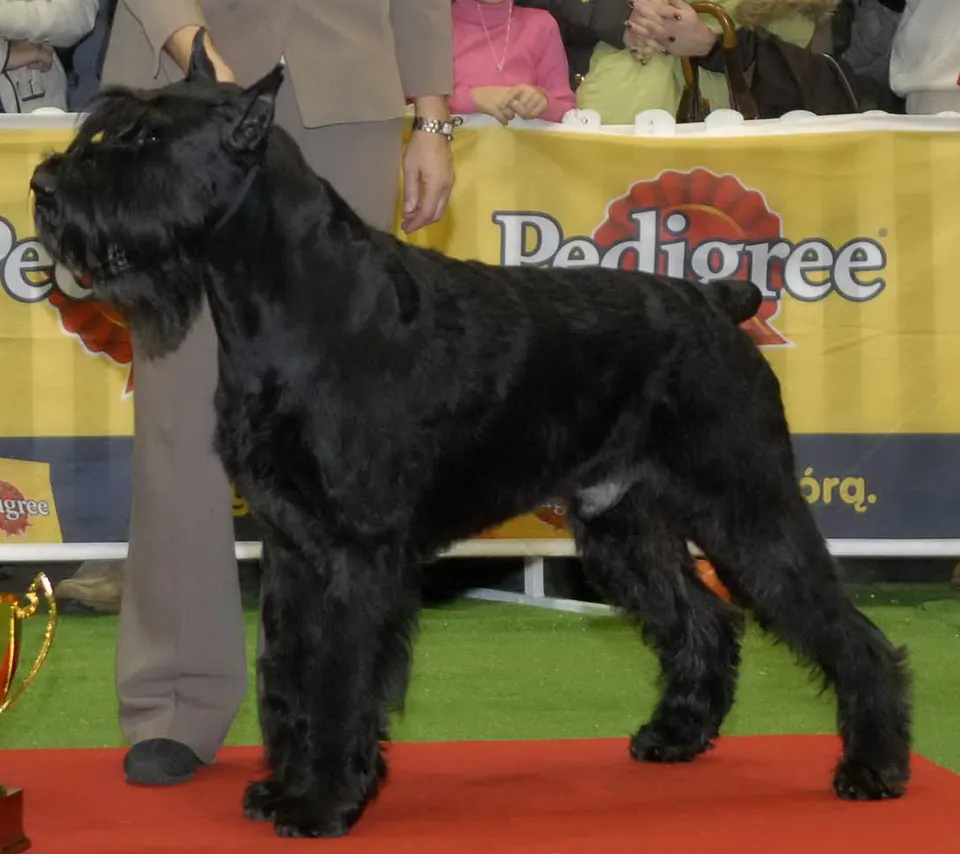
The Giant Schnauzer is the largest of the three Schnauzer breeds, developed in Germany to drive cattle and guard breweries and butcher shops. This powerful, intelligent working dog combines the Schnauzer family's signature wiry coat and bearded face with substantial size and impressive athletic ability.
Giant Schnauzers are serious working dogs that excel in police and military work, search and rescue, and protection sports like Schutzhund. They require experienced owners who can provide leadership, training, and a job to do. When properly trained and socialized, they are loyal, loving family companions with impressive intelligence and work ethic.
The Giant Schnauzer is a breed that commands attention not just for its physical appearance but for the depth of personality and capability it brings to a household. With a lifespan averaging 12-15 years, the decision to welcome a Giant Schnauzer into your family is one that will shape your daily routine, activity levels, and emotional life for well over a decade. This breed's loyal, alert, trainable temperament is the product of generations of selective breeding for specific traits—understanding this heritage provides valuable insight into why your Giant Schnauzer behaves the way it does and what it needs from you as an owner to truly thrive.
Do not treat ads for a giant schnauzer as a health clearance. A Giant Schnauzer is a working dog with a coat that mats if you only brush the furnishings. Hips, hypothyroidism, and bloat belong on the budget. They need a job and a handler. A shaved giant is not the breed plan. If you will not train and comb, do not buy the size.
A Giant Schnauzer is a working guard dog in a wiry coat, not a large miniature schnauzer. They need training, a job, and hand-stripping or a planned clip. Hip dysplasia and a strong defensive streak are the reasons this breed overwhelms a first dog home. Size alone makes an untrained one dangerous in a doorway.
Temperament & Personality
Giant Schnauzers have a powerful, driven personality.
- Loyal & Protective: Deeply devoted to family; natural guardian instincts.
- Intelligent & Trainable: Highly intelligent and capable of advanced training.
- Alert & Watchful: Excellent watchdogs; take protection duties seriously.
- Energetic & Athletic: Need significant physical and mental exercise.
- Strong-Willed: Require experienced handling and clear leadership.
The loyal, alert, trainable nature of the Giant Schnauzer is not a simple personality label—it is a complex behavioral profile shaped by breed history, individual genetics, early socialization experiences, and ongoing environmental factors. What this means in practice is that two Giant Schnauzer from different lines, raised in different environments, can display meaningfully different behavioral tendencies while still sharing core breed characteristics.
Common Health Issues
Giant Schnauzers are generally healthy but have some breed concerns.
skeletal and joint concerns
- Hip Dysplasia: Joint malformation; screening recommended.
- Osteochondritis Dissecans (OCD): Cartilage disorder in growing puppies.
Other Conditions
- Gastric Dilatation-Volvulus (Bloat): Life-threatening condition; deep-chested breeds at risk.
- Hypothyroidism: Underactive thyroid; manageable with medication.
- Autoimmune Thyroiditis: Immune system attacks thyroid.
- Progressive Retinal Atrophy (PRA): Eye disease causing vision loss.
- Squamous Cell Carcinoma: Toe cancer seen in dark-coated dogs.
Health Screening Recommendation
Before getting a Giant Schnauzer, ask breeders for OFA hip evaluations, thyroid testing, and eye certifications. Consider Embark DNA testing for comprehensive health screening. Discuss bloat prevention with your veterinarian.
Taking care of a Giant Schnauzer's long-term health means knowing what to watch for and when to act.
Genetic testing gives Giant Schnauzer owners a head start on conditions that might otherwise catch them off guard. By understanding which health risks are written into your Giant Schnauzer's DNA, you can work with your vet to schedule targeted checks and make informed choices about diet, exercise, and supplementation.
The shift from prime adulthood to the senior phase is gradual for most Giant Schnauzers, and the owners who navigate it best are the ones who adapt their care approach incrementally.
Cost of Ownership
Understanding the full cost helps prepare for Giant Schnauzer ownership.
| Expense Category | Annual Cost Estimate |
|---|---|
| Food (premium quality) | $600-$1,000 |
| Veterinary Care (routine) | $300-$600 |
| Pet Insurance | $500-$900 |
| Professional Grooming | $500-$1,000 |
| Training (ongoing) | $300-$1,000 |
| Supplies & Toys | $250-$500 |
| Total Annual Cost | $2,450-$5,000 |
Exercise & Activity Requirements
Giant Schnauzers are high-energy dogs with demanding exercise needs.
- Daily Exercise: 1-2 hours of vigorous activity
- Mental Stimulation: Essential - they need jobs to do
- Dog Sports: Excel at Schutzhund, obedience, agility, and tracking
- Working Activities: Thrive with structured activities and training
- Secure Fencing: Need secure areas; protective nature requires management
Training Tips for Giant Schnauzers
Giant Schnauzers require experienced, committed training.
- Experienced Handler: Not recommended for first-time dog owners
- Early Socialization: Critical for managing protective instincts
- Consistent Leadership: Need clear, fair leadership from their owners
- Positive but Firm: Respond to positive training with clear boundaries
- Ongoing Training: Benefit from continuous training throughout life
- Professional Help: Consider professional training, especially for protection work
Nutrition & Feeding
Proper nutrition supports the Giant Schnauzer's active lifestyle.
- High-Quality Protein: Active working dogs need quality protein
- Bloat Prevention: Feed 2-3 smaller meals; avoid exercise around mealtimes
- Large Breed Formula: Appropriate for their size
- Portion Control: Maintain athletic build; typically 3-4 cups daily
- Joint Support: Foods with glucosamine beneficial for active dogs
Top Food Choices for Giant Schnauzers
The Farmer's Dog - Fresh, portion-controlled meals | Ollie - Custom fresh food for active dogs | Hill's Science Diet - Large breed formulas
Grooming Requirements
Giant Schnauzers require regular grooming to maintain their distinctive appearance.
- Brushing: 2-3 times weekly to prevent matting
- Hand Stripping: Traditional method for show coat; done 2-4 times yearly
- Professional Grooming: Every 6-8 weeks for clipping
- Beard Care: Clean after meals to prevent staining and odor
- Nail Trimming: Every 2-4 weeks
- Ear Cleaning: Weekly to prevent infections
Is a Giant Schnauzer Right for You?
This is a low-profile piece of Giant Schnauzer ownership that quietly shapes year-over-year outcomes more than headline topics do.
Giant Schnauzers Are Great For:
- Experienced dog owners seeking an intelligent, athletic partner
- Active individuals or families committed to training
- Those wanting a protective but trainable guardian
- People interested in dog sports or working activities
- Those who appreciate low-shedding breeds
Giant Schnauzers May Not Be Ideal For:
- First-time dog owners
- Those unwilling to commit to extensive training
- Sedentary lifestyles
- Homes without secure fencing
- Families who can't provide mental and physical stimulation
Related Breeds to Consider
If you're interested in Giant Schnauzers, you might also consider.
- Standard Schnauzer - Smaller version, similar temperament
- Bouvier des Flandres - Similar size and working nature
- Airedale Terrier - King of Terriers, similar appearance
- Doberman Pinscher - Similar working abilities, different coat
Ask Our AI About Giant Schnauzers
Related Health & Care Guides
Get Personalized AI Guidance
Ask Our AI NowDecision Guides for Giant Schnauzer
Use these only when comparing food, insurance, ownership budget, or beginner fit for this specific pet.