Chesapeake Bay Retriever
This page is educational reference material for preparing questions. A licensed veterinarian examines the animal, makes the diagnosis, and sets the treatment.
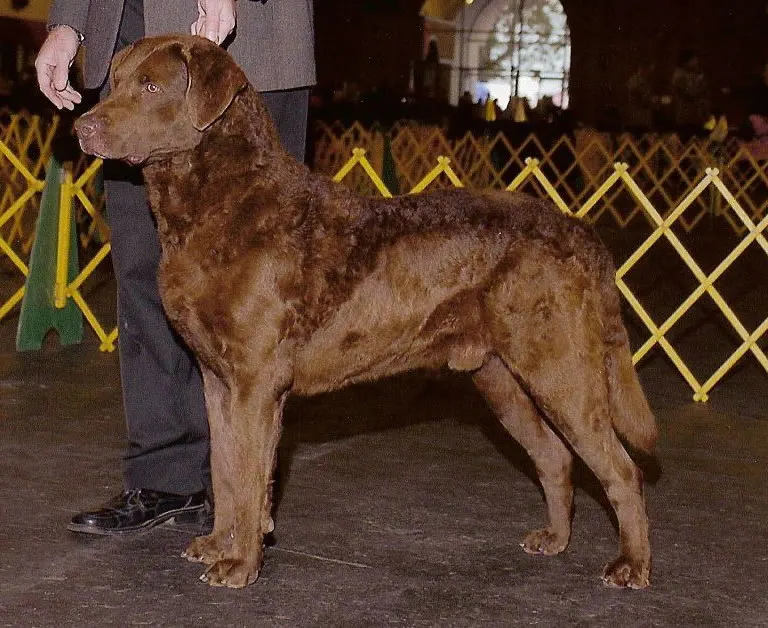
Affiliate links may earn a commission. Affiliate disclosure.
Quick Facts
| Attribute | Details |
|---|---|
| Breed Group | Sporting |
| Size | Large (55-80 lbs) |
| Height | 21-26 in |
| Lifespan | 10-13 years |
| Temperament | Affectionate, Bright, Sensitive |
| Good with Kids | Good |
| Shedding | Moderate |
| Exercise Needs | High |
| Grooming Needs | High |
Recommended for Chesapeake Bay Retrievers
The Farmer's Dog - Fresh meals tailored to breed size | Embark DNA - Screen for breed-specific conditions | Spot Insurance - Coverage for Chesapeake Bay Retriever health issues
Chesapeake Bay Retriever Overview
The Chesapeake Bay Retriever is a large sporting breed known for being affectionate, bright, sensitive. Weighing 55-80 lbs and standing 21-26 in tall, this breed combines an appealing appearance with a wonderful temperament that has made it a favorite among dog enthusiasts worldwide. With a lifespan of 10-13 years, the Chesapeake Bay Retriever offers years of loyal companionship.
Originally developed for assisting hunters in the field with stamina and retrieving ability, the Chesapeake Bay Retriever has evolved into an excellent family companion while retaining many of its original instincts and abilities.
Chesapeake Bay Retrievers are good family dogs that do well with respectful children.
The Chesapeake Bay Retriever is a breed that commands attention not just for its physical appearance but for the depth of personality and capability it brings to a household. With a lifespan averaging 10-13 years, the decision to welcome a Chesapeake Bay Retriever into your family is one that will shape your daily routine, activity levels, and emotional life for well over a decade. This breed's affectionate, bright, sensitive temperament is the product of generations of selective breeding for specific traits—understanding this heritage provides valuable insight into why your Chesapeake Bay Retriever behaves the way it does and what it needs from you as an owner to truly thrive.
Caring well for a Chesapeake Bay Retriever requires more than meeting their basic physical needs. Owners who approach Chesapeake Bay Retriever care with this depth of knowledge create an environment where the animal can genuinely flourish.
Sharing your space with a Chesapeake Bay Retriever means making room — literally and figuratively — for their specific needs. Owners who recognize this early and plan for it tend to have a much smoother experience than those who expect the Chesapeake Bay Retriever to simply fit into their existing routine unchanged.
Temperament & Personality
Chesapeake Bay Retrievers have a distinctive personality that endears them to their owners.
- Affectionate: This defining trait makes the Chesapeake Bay Retriever a standout companion that bonds deeply with their family.
- Sensitive: Chesapeake Bay Retrievers show remarkable sensitive in various situations and environments.
- Alert: Chesapeake Bay Retrievers are naturally watchful and will alert their families to unusual activity.
- Energetic: Their energy level is high, requiring regular daily exercise and activities.
- Social: Chesapeake Bay Retrievers can be selective with strangers but warm up with proper introductions.
The affectionate, bright, sensitive nature of the Chesapeake Bay Retriever is not a simple personality label—it is a complex behavioral profile shaped by breed history, individual genetics, early socialization experiences, and ongoing environmental factors. What this means in practice is that two Chesapeake Bay Retriever from different lines, raised in different environments, can display meaningfully different behavioral tendencies while still sharing core breed characteristics.
Your veterinarian is the one who translates general Chesapeake Bay Retriever guidance into a plan that reflects the individual animal and its current condition.
Common Health Issues
Chesapeake Bay Retrievers are generally healthy dogs, but like all breeds, they can be prone to certain conditions.
orthopedic problems
- Hip Dysplasia: A common concern in large breeds. Regular screening and maintaining healthy weight helps manage this condition.
- Progressive Retinal Atrophy: Can affect Chesapeake Bay Retrievers, particularly as they age. Early detection through regular vet visits is important.
additional hereditary conditions including allergies and age-related changes
- Ear Infections: Chesapeake Bay Retriever owners should be aware of this condition and discuss prevention strategies with their veterinarian.
- Exercise-related injuries: A breed-relevant concern that responsible breeders screen for.
Health Screening Recommendation
Consider Embark DNA testing to screen for breed-specific genetic conditions in your Chesapeake Bay Retriever.
Keeping your Chesapeake Bay Retriever healthy over the long haul requires attention to details that are easy to overlook.
If you are curious about your Chesapeake Bay Retriever's inherited health profile, genetic testing can provide valuable context.
As your Chesapeake Bay Retriever ages, their care needs will shift in ways that are easier to manage when anticipated.
Cost of Ownership
Understanding the full cost of Chesapeake Bay Retriever ownership helps you prepare financially.
| Expense Category | Annual Cost Estimate |
|---|---|
| Food (premium quality) | $600-$1,200 |
| Veterinary Care (routine) | $300-$600 |
| Pet Insurance | $400-$800 |
| Grooming | $300-$600 |
| Training (first year) | $200-$500 |
| Supplies & Toys | $150-$300 |
| Total Annual Cost | $1,350-$4,000 |
Save on Chesapeake Bay Retriever Care
Chewy Autoship - 35% off first Autoship order, then 5% off repeat orders | Lemonade Pet - Accident & illness plans; prices vary by pet and state | K9 Training Institute - Expert Chesapeake Bay Retriever training
Budget estimates only tell part of the story. Some Chesapeake Bay Retriever owners spend well below these figures; others spend significantly more due to health issues or premium product choices.
Budget more aggressively for the first year. Beyond the obvious — food, vet visits, supplies — there are costs that catch people off guard: replacing items your Chesapeake Bay Retriever destroys during teething, emergency visits for swallowed objects, and higher food costs during rapid growth phases. After that initial period, expenses settle into a more manageable rhythm.
Owners who maintain a regular preventive care schedule for their Chesapeake Bay Retriever consistently report lower overall vet costs than those who wait for problems to appear. The math favors prevention every time.
Exercise & Activity Requirements
- Activities: Excels at field work, agility, dock diving, and retrieving games.
- Socialization: Regular interaction with other dogs and people keeps your Chesapeake Bay Retriever well-adjusted.
Training Tips for Chesapeake Bay Retrievers
Training a Chesapeake Bay Retriever is generally enjoyable thanks to their willing nature.
- Positive Reinforcement: Use treats, praise, and play as rewards for desired behaviors.
- Consistency: Establish clear rules and maintain them across all family members.
- Early Socialization: Expose your Chesapeake Bay Retriever to various people, animals, sounds, and environments from puppyhood.
- Short Sessions: Keep training sessions to 10-15 minutes for maximum effectiveness.
- Patience: While eager to please, every dog learns at their own pace.
- Professional Help: Consider professional training classes, especially for first-time Chesapeake Bay Retriever owners.
Nutrition & Feeding
Proper nutrition is essential for your Chesapeake Bay Retriever's health.
- Meal Schedule: Two measured meals daily for adults; three meals for puppies.
- Fresh Water: Always provide access to clean, fresh water.
- Treats: Keep treats to 10% or less of daily caloric intake.
When it comes to Chesapeake Bay Retriever nutrition, simplicity usually wins. A well-formulated food that meets your Chesapeake Bay Retriever's specific needs is better than a rotation of trendy diets. Focus on protein quality, calorie appropriateness for your Chesapeake Bay Retriever's size and activity level, and avoiding ingredients your Chesapeake Bay Retriever does not tolerate well. The rest is marketing.
Learning to read a pet food label takes five minutes and will serve you for the life of your Chesapeake Bay Retriever. Look at the guaranteed analysis for protein and fat percentages that match your Chesapeake Bay Retriever's needs.
Grooming Requirements
Chesapeake Bay Retrievers have high grooming needs.
- Bathing: Every 3-4 weeks or as needed.
- Nail Trimming: Every 2-3 weeks to prevent overgrowth.
- Dental Care: Brush teeth several times weekly to prevent dental disease.
- Ear Cleaning: Check and clean ears weekly, especially if ears are floppy.
- Shedding: Moderate shedding throughout the year.
Hip and Joint Health in the Chesapeake Bay Retriever
The Orthopedic Foundation for Animals (OFA) reports a hip dysplasia prevalence of approximately 17.1% in evaluated Chesapeake Bay Retrievers (large breed, typical weight 55-80 lbs).
Chessies have a higher dysplasia rate than other retrievers, possibly related to their powerful, muscular build developed for cold-water retrieval. Their waterproof coat and love of swimming make aquatic therapy a natural fit.
Exercise Guidelines: Swimming is ideal — the breed was literally made for it. Cold-water conditioning builds joint-supporting musculature. Limit high-impact land activities during growth phases.
Gastric Dilatation-Volvulus (GDV) Prevention
As a large breed with a deep chest conformation, the Chesapeake Bay Retriever carries elevated GDV risk.
Chesapeake Bay Retrievers Are Great For:
- Families with older, respectful children
- Active individuals and families who enjoy outdoor adventures
- Both first-time and experienced dog owners
- Those looking for an affectionate and devoted companion
- People who can commit to regular grooming maintenance
Chesapeake Bay Retrievers May Not Be Ideal For:
- Those living in small apartments without yard access
- Sedentary owners or those with limited time for exercise
- Those who cannot tolerate any shedding
- People who leave their dogs alone for extended periods
Ask Our AI About Chesapeake Bay Retrievers
Time spent understanding this topic is one of the highest-leverage investments a Chesapeake Bay Retriever owner can make. No two Chesapeake Bay Retriever behave exactly alike, so let your own pet's cues guide the small adjustments that matter.
Get Personalized AI Guidance
Ask Our AI NowA Chesapeake Bay Retriever has an oily, water-resistant coat and a guarding streak that a Labrador usually does not. They were built to retrieve in cold water and to be possessive of a bird. Hip dysplasia is the orthopedic question. They need a job and a handler, and the coat should be washed, not stripped of the oil that protects it. A Chesapeake left without a job will guard the couch and the family more tightly than a Labrador would.
Ask a Chessie breeder for hip scores, an eye exam, and the exercise-induced collapse DNA result. That collapse shows up after hard work: a dog that is wobbly or down after a retrieve needs rest and a vet, not another mark thrown into the water. They are more protective and more likely to be sharp with other dogs than a Labrador. Introduce guests on purpose. Do not over-bathe the coat. The oil is the water protection, and stripping it with harsh soap creates the skin problem you were trying to wash off.
Buying Guides for Chesapeake Bay Retriever
- Best Food for Chesapeake Bay Retriever →
- Best Pet Insurance for Chesapeake Bay Retriever →
- Chesapeake Bay Retriever Cost to Own →
- Chesapeake Bay Retriever Health Costs →
- Is Chesapeake Bay Retriever Good for First-Time Owners? →
- Best Crate Size for Chesapeake Bay Retriever →
- Best Toys for Chesapeake Bay Retriever →