Black Russian Terrier
This page is educational reference material for preparing questions. A licensed veterinarian examines the animal, makes the diagnosis, and sets the treatment.
Affiliate links may earn a commission. Affiliate disclosure.
Quick Facts
| Attribute | Details |
|---|---|
| Breed Group | Working |
| Size | Large (80-130 lbs) |
| Height | 26-30 inches |
| Lifespan | 10-12 years |
| Temperament | Confident, Calm, Courageous |
| Good with Kids | Very Good |
| Good with Other Dogs | Moderate (can be dominant) |
| Shedding | Low (but requires grooming) |
| Exercise Needs | Moderate to High (45-60 minutes daily) |
| Trainability | Good to Excellent |
Recommended for Black Russian Terriers
The Farmer's Dog - Fresh food for large breeds | Embark DNA - Health screening for genetic conditions | Spot Insurance - Covers hereditary conditions such as hip dysplasia if not pre-existing
Black Russian Terrier Overview
The Black Russian Terrier (BRT), despite its name, is not a true terrier but a working dog created by Soviet military scientists. Developed at the Red Star Kennel in the 1940s-50s, the BRT was bred by crossing Giant Schnauzers, Rottweilers, Airedale Terriers, and other breeds to create the ideal military and guard dog for Russian winters.
Known as "Blackies" to enthusiasts and "Stalin's Dogs" historically, these powerful dogs were designed to be robust, trainable, and adaptable. After the Cold War, they spread beyond Russia's borders and gained recognition worldwide for their impressive working ability and devoted family nature.
The Black Russian Terrier is a breed that commands attention not just for its physical appearance but for the depth of personality and capability it brings to a household. With a lifespan averaging 10-12 years, the decision to welcome a Black Russian Terrier into your family is one that will shape your daily routine, activity levels, and emotional life for well over a decade. This breed's confident, calm, courageous temperament is the product of generations of selective breeding for specific traits—understanding this heritage provides valuable insight into why your Black Russian Terrier behaves the way it does and what it needs from you as an owner to truly thrive.
Do not treat ads for a black russian terrier as a health clearance. A Black Russian Terrier is a large, protective working dog with a coat that mats to the skin if you only pet the outside. Hips and elbows belong on the breeder's paperwork. They are not a novice family dog. A bored one guards the wrong things. Plan grooming, training, and a fence before the puppy is a hundred pounds.
A Black Russian Terrier is a large, protective working dog with a coat that mats to the skin if you only pet the outside. Hips and elbows belong on the breeder's paperwork. They are not a novice family dog. A bored one guards the wrong things. Plan grooming, training, and a fence before the puppy is a hundred pounds.
Temperament & Personality
Black Russian Terriers combine guardian instincts with trainability.
- Confident & Calm: Self-assured dogs that don't overreact to situations.
- Protective: Strong guarding instincts; they take protection seriously.
- Devoted to Family: Form strong bonds and want to be with their people.
- Good with Children: Patient and protective of family children.
- Trainable: More biddable than many guardian breeds; enjoy working with their handlers.
The confident, calm, courageous nature of the Black Russian Terrier is not a simple personality label—it is a complex behavioral profile shaped by breed history, individual genetics, early socialization experiences, and ongoing environmental factors. What this means in practice is that two Black Russian Terrier from different lines, raised in different environments, can display meaningfully different behavioral tendencies while still sharing core breed characteristics.
Common Health Issues
Black Russian Terriers have some breed-specific health concerns.
hip and joint issues
- Hip Dysplasia: Affects approximately 40% of BRTs. OFA screening essential.
- Elbow Dysplasia: Very common in the breed; causes front leg lameness.
Eye Conditions
- Progressive Retinal Atrophy (PRA): Genetic blindness; DNA test available.
- Cataracts: Can develop at various ages.
Other Concerns
- Hyperuricosuria (HUU): Causes kidney/bladder stones; DNA test available.
- Juvenile Laryngeal Paralysis & Polyneuropathy (JLPP): Fatal genetic disease; DNA test essential.
- Bloat (GDV): Risk in large, deep-chested breeds.
- Heart Conditions: Some cardiac issues can occur.
- Allergies: Skin allergies can be problematic.
Health Screening Recommendation
Before getting a BRT, ask breeders for OFA hip/elbow evaluations, eye certifications, and DNA tests for JLPP and HUU. Consider Embark DNA testing for comprehensive genetic screening.
Taking care of a Black Russian Terrier's long-term health means knowing what to watch for and when to act.
Genetic testing gives Black Russian Terrier owners a head start on conditions that might otherwise catch them off guard. By understanding which health risks are written into your Black Russian Terrier's DNA, you can work with your vet to schedule targeted checks and make informed choices about diet, exercise, and supplementation.
The shift from prime adulthood to the senior phase is gradual for most Black Russian Terriers, and the owners who navigate it best are the ones who adapt their care approach incrementally.
Cost of Ownership
Understanding the full cost helps prepare for BRT ownership.
| Expense Category | Annual Cost Estimate |
|---|---|
| Food (premium quality) | $700-$1,200 |
| Veterinary Care (routine) | $350-$700 |
| Pet Insurance | $500-$900 |
| Grooming | $600-$1,200 |
| Training (first year) | $300-$900 |
| Supplies & Toys | $250-$450 |
| Total Annual Cost | $2,700-$5,350 |
The numbers in the table above are averages — your actual spending will depend on where you live, your Black Russian Terrier's individual health, and the choices you make about food quality, insurance, and grooming. Cities tend to be pricier for vet care. Rural areas may require longer drives to specialists.
Year one hits the wallet hardest. Once those one-time costs are behind you, annual spending drops — though it tends to creep back up as your Black Russian Terrier ages and needs more frequent veterinary attention in the later years.
Preventive care is not glamorous, but it is the single best investment you can make in your Black Russian Terrier's health. Routine wellness exams catch problems early, when treatment is simpler and cheaper. Most veterinary professionals agree that consistent preventive care extends both the length and quality of a Black Russian Terrier's life.
Exercise & Activity Requirements
Black Russian Terriers need regular physical and mental activity.
- Daily Exercise: 45-60 minutes of activity including walks and play
- Mental Stimulation: They thrive with jobs to do and problems to solve
- Dog Sports: Excel at obedience, agility, protection sports, and tracking
- Cold Weather Preference: Bred for Russian winters; love cold weather
- Family Activities: Enjoy participating in family outings
Training Tips for Black Russian Terriers
BRTs are more trainable than many guardian breeds.
- Early Socialization: Essential for this protective breed; start early and continue
- Positive Reinforcement: They respond well to positive training methods
- Consistency: Need clear, consistent rules and leadership
- Mental Challenge: Keep training interesting and challenging
- Working Partnership: They enjoy working with their handler; build a relationship
Nutrition & Feeding
Proper nutrition supports BRT health.
- Large Breed Formula: Food designed for large, active breeds
- Bloat Prevention: Multiple smaller meals; avoid exercise around feeding
- Joint Support: Glucosamine and omega-3s especially important given hip/elbow concerns
- Quality Protein: Active working dogs need adequate protein
- Weight Management: Keep lean to reduce joint stress
Top Food Choices for Black Russian Terriers
The Farmer's Dog - Fresh, portion-controlled meals | Ollie - Custom fresh food for large breeds | Hill's Science Diet - Large breed formulas
Diet has a compounding effect on Black Russian Terrier health. You will not see dramatic changes overnight, but over the course of your Black Russian Terrier's life, consistent good nutrition makes a measurable difference in energy, mobility, and overall well-being.
Nutrition for your Black Russian Terrier should be evaluated by results, not labels. The best food is the one that keeps your Black Russian Terrier at a healthy weight, supports a glossy coat, provides steady energy, and produces firm, consistent stool.
Grooming Requirements
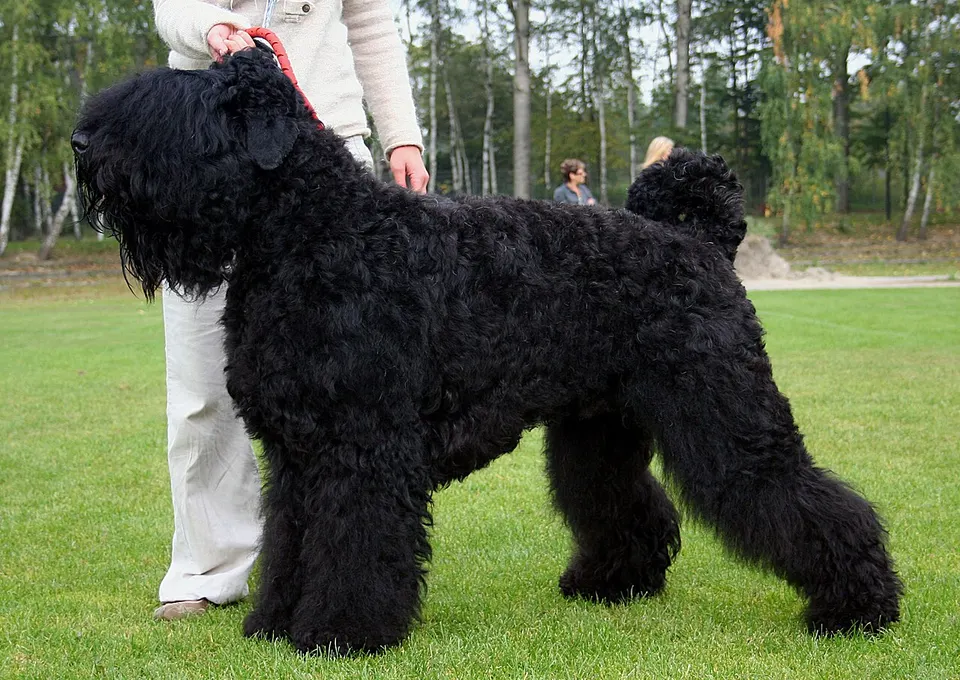
The BRT's tousled black coat requires significant maintenance.
- Brushing: 2-3 times weekly to prevent matting
- Professional Grooming: Every 6-8 weeks for trimming
- Beard Care: Clean beard regularly; it holds water and food
- Bathing: Monthly or as needed
- Hand Stripping: Some owners hand strip for proper coat texture
- Ear Care: Regular cleaning; hair may need plucking from ear canals
Black Russian Terriers Are Great For:
- Experienced dog owners who understand guardian breeds
- Families with older children
- Those wanting a trainable protection dog
- Cold climate dwellers
- People who enjoy grooming and dog sports
Black Russian Terriers May Not Be Ideal For:
- First-time dog owners
- Hot climates without air conditioning
- Those who dislike grooming maintenance
- Apartments or homes without secure yards
- People who want an immediately friendly dog with everyone
A Black Russian Terrier is not for everyone, and that is perfectly fine. Spend time around actual Black Russian Terrier dogs before committing. That firsthand experience is worth more than a hundred online guides.
Experienced Black Russian Terrier owners will tell you the same thing: the first year is the hardest, and every year after that gets easier and more enjoyable. By the time your Black Russian Terrier hits its stride as an adult, you will wonder how you ever lived without one.
Related Breeds to Consider
If you're interested in Black Russian Terriers, you might also consider.
- Giant Schnauzer - Founding breed with similar appearance
- Bouvier des Flandres - Similar protective herding breed
- Rottweiler - Founding breed, less grooming
- Standard Schnauzer - Smaller version with similar traits
Ask Our AI About Black Russian Terriers
Related Health & Care Guides
Get Personalized AI Guidance
Ask Our AI NowDecision Guides for Black Russian Terrier
Use these only when comparing food, insurance, ownership budget, or beginner fit for this specific pet.