Cornish Rex
This page is educational reference material for preparing questions. A licensed veterinarian examines the animal, makes the diagnosis, and sets the treatment.
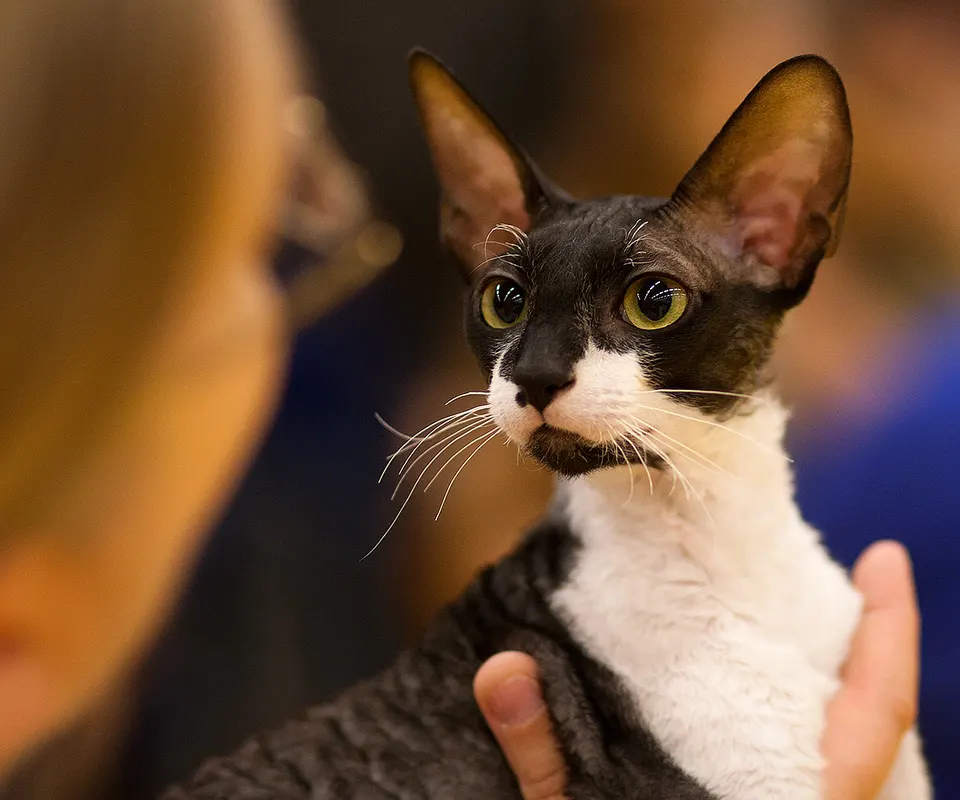
Quick Facts
| Attribute | Details |
|---|---|
| Size | Small to Medium (5-10 lbs) |
| Weight | Males: 8-10 lbs, Females: 5-7 lbs |
| Lifespan | 12-15 years |
| Temperament | Playful, Adventurous, Intelligent |
| Good with Kids | Excellent |
| Good with Other Pets | Excellent |
| Grooming Needs | Low |
| Vocalization | Moderate |
| Activity Level | Very High |
Affiliate links may earn a commission. Affiliate disclosure.
Recommended for Cornish Rex
Basepaws DNA Test - Genetic health screening for cats | Spot Insurance - Coverage for genetic conditions | Chewy - Interactive toys and climbing furniture
Save on Cornish Rex Care
Chewy Autoship - 35% off first Autoship order, then 5% off repeat orders | Lemonade Pet - Cat accident & illness plans; prices vary by pet and state | Amazon - Cat sweaters and heated beds
Top Food Choices for Cornish Rex
Smalls Cat Food - Human-grade fresh cat food | Wellness - High-protein formulas | Chewy - Premium cat food selection
Marcelled coat, marathon play
Cornish rex cats weigh about 5 to 10 pounds and often live 12 to 15 years. The mutation waves the coat, including the whiskers. They are intelligent and very active, and they want company. A Cornish that is the only pet and the only project in an empty apartment will invent projects you do not like.
Children and other pets are usually a good match if play is not rough on the thin skin. They sunburn on exposed ears and bellies. A windowsill at noon in July is not harmless. Offer shade the way you would for a hairless cat, even though this cat is not fully nude.
Heart and kneecap, again, in a different breed
Hypertrophic cardiomyopathy and patellar luxation show up here too. Do not copy a Devon myopathy article onto a Cornish and call it the same disease. Ask the breeder what they actually test. A cat that breathes with effort at rest needs a clinic the same day. VCA explains HCM in cats. Skipping meals around that breathing change is the not-eating page.
Cornish rex questions
Devon or Cornish?
Cornish rex have a wavy coat and a more wedge-shaped head. Devons have a pixie face and a coat that is often patchier. They are separate breeds. A 'rex' kitten with no breed named is a guess.
Do they need baths?
Sometimes, because skin oils sit on a thin coat. Do not bathe on a schedule you invented from a dog. Greasy skin or a rash is a vet question first.
Are they climbers?
Yes. They treat shoulders, curtain rods, and refrigerators as pathways. Breakable shelves need a plan before the cat does.
Decision Guides for Cornish Rex
A 1950s Cornwall mutation, different from the Devon
The Cornish rex coat is a recessive mutation first recorded in Cornwall in the 1950s. The Devon rex curl turned up later and sits on a different gene. Cross a Cornish with a Devon and the kittens grow a straight coat, because each parent supplies a working copy of the other breed's coat gene. Whiskers are wavy, the body is about 5 to 10 pounds, and the life is often 12 to 15 years. Exposed ears and bellies burn in direct sun. Hypertrophic cardiomyopathy and patellar luxation are the health questions to ask. Devon rex neck myopathy stays with the Devon. The shared word rex covers two coat genes and two health lists.