Plum-Headed Parakeet
This page is educational reference material for preparing questions. A licensed veterinarian examines the animal, makes the diagnosis, and sets the treatment.
Affiliate links may earn a commission. Affiliate disclosure.
Quick Facts
| Attribute | Details |
|---|---|
| Type | Parakeet |
| Size | 13 inches |
| Weight | 2.5-3 oz |
| Lifespan | 15-20 years |
| Temperament | Gentle, Quiet, Social |
| Noise Level | Low |
| Talking Ability | Moderate |
| Origin | Indian Subcontinent |
Plum-Headed Parakeet Overview
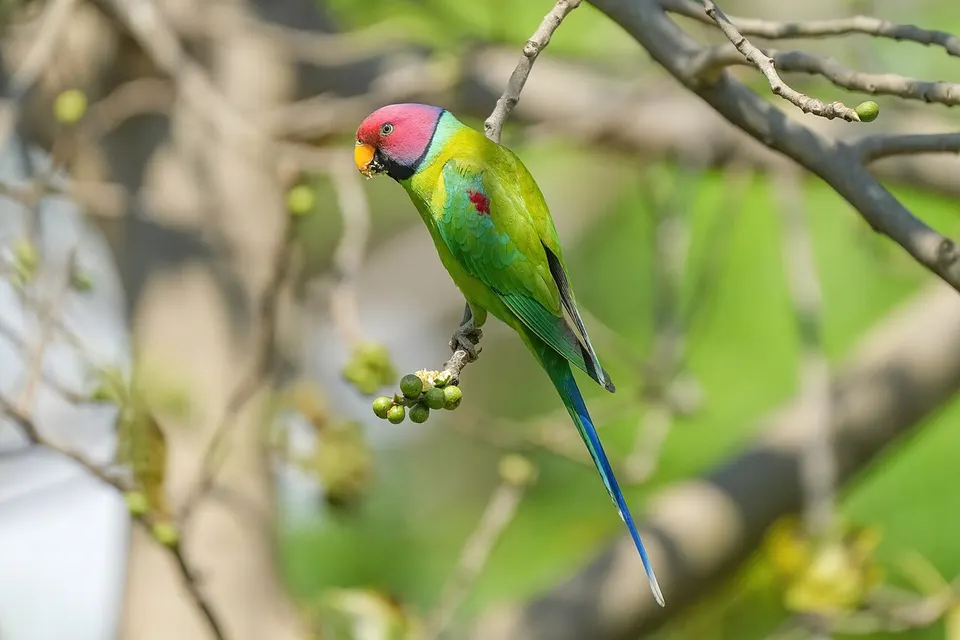
The plum-headed parakeet is Psittacula cyanocephala, a parrot from the Indian subcontinent listed at 13 inches and 2.5 to 3 ounces. Adult males have the plum-colored head. Birds without that head may be hens or young males, so a grey-headed juvenile is not automatically a different species and not automatically female. The voice is rated low, and talking ability on the card is moderate. Temperament is gentle, quiet, and social. Low and quiet are real next to an Alexandrine, and they do not turn this bird into a decoration that can live in a budgie cage.
Quieter than an Alexandrine is the useful comparison. Thirteen inches and a few ounces is a slimmer Psittacula than P. eupatria, and the call is easier to live with. It is still a parrot call. Apartments that cannot bear any flock noise will hear this one too, just not at Alexandrine volume. Moderate talking means some males learn words and phrases. Speech is a pleasant extra, not the reason to skip foraging and time out of the cage. Social birds want a person or a well-matched partner. A covered cage in a spare room is not social.
The usable version of this plan is the one your avian veterinarian writes after examining your Plum Headed Parakeet in person.
Lifespan is 15 to 20 years. That is shorter than a large macaw and long enough to outgrow a starter cage bought in a hurry. Out-of-cage time is a daily need, in a room you have checked for fans, open doors, and metals the beak should not find. The long tail needs perch placement that does not force the feathers into a corner. Gentle birds bite when they are hormonal or grabbed. The bite is smaller than an Alexandrine's and still a poor fit for a child's unsupervised hand.
Temperament & Behavior
Diet is pellets and vegetables, with seed and a little fruit as the smaller share. At 2.5 to 3 ounces, a sunflower habit puts fat on a bird that looks fine until it is not. Offer greens the bird will actually try, cut small, and rotate them. Bathing keeps the plum head and the body feathers in order. A shallow dish or a light mist, not a blast of cold water, is enough. Weight on a gram scale tells you whether the quiet bird is quiet because it is content or because it is ill.
Indian subcontinent origin sits on the card for the wild range. Pets should be captive-bred. A male in full plum head, a low voice, and a moderate gift for words are the attractions. The obligations are a Psittacula-sized cage, daily freedom in a safe room, and 15 to 20 years of a diet that is not a seed stick. Quiet on the temperament line means you can hold a conversation in the same room. It does not mean the bird can be left without company, without flight, or without a veterinarian who sees parrots.
Housing & Environment Requirements
Provide a spacious cage appropriate for Plum-Headed Parakeets - minimum dimensions should allow full wingspan extension plus room to climb and play. Maintain temperatures between 65-80°F with appropriate humidity levels.
Diet & Nutrition
A balanced diet for Plum-Headed Parakeets should include high-quality pellets as the foundation (60-70% of diet), supplemented with fresh fruits and vegetables (20-30%), and limited seeds/nuts as treats (5-10%). Fresh, clean water should always be available. Avoid avocado, chocolate, caffeine, alcohol, and high-salt foods. Consult an avian veterinarian for species-specific dietary recommendations.
Common Health Issues
Common health concerns for Plum-Headed Parakeets include respiratory infections, psittacine beak and feather disease, feather plucking (often stress-related), and nutritional deficiencies. Birds hide illness well, so annual avian vet checkups are essential.
Grooming & Maintenance
Regular grooming for Plum-Headed Parakeets includes providing bathing opportunities (mist spray or shallow dish), nail trimming as needed, and wing clipping (optional and debated - consult your avian vet). Keep the cage clean with daily spot cleaning and weekly deep cleaning. Replace food and water daily. Rotate toys regularly to prevent boredom.
Beginner-Friendly Rating: Intermediate
Plum-Headed Parakeets are suitable for keepers with some experience.
Before acquiring a Plum-Headed Parakeet, research thoroughly and prepare the habitat in advance. Join online communities and forums dedicated to aviculture to connect with experienced keepers who can offer guidance specific to Plum-Headed Parakeet care.
Socialization & Enrichment
Socialization is critical for Plum-Headed Parakeets. These intelligent creatures thrive on interaction and mental stimulation.
Many Plum-Headed Parakeet owners find that their birds enjoy music, gentle conversation, and watching nature videos.
Where to Find Plum-Headed Parakeets
Look for reputable breeders who hand-raise their birds, provide health guarantees, and are knowledgeable about Plum-Headed Parakeet care.
Cost of Ownership Overview
| Expense | Estimated Cost |
|---|---|
| Initial Setup (bird + cage + supplies) | $200-$3,000+ |
| Annual Food | $150-$400 |
| Annual Vet Care | $100-$300 |
| Toys & Enrichment (annual) | $100-$250 |
Most new Plum-Headed Parakeet owners are surprised by first-year costs. The good news is that subsequent years are more predictable. Just keep in mind that senior Plum-Headed Parakeets may need additional care as they enter the last few years of their 15-20 years lifespan.
Think of preventive care as an insurance policy with a guaranteed payout. For Plum-Headed Parakeet owners, staying on top of preventive care is one of the simplest ways to reduce lifetime veterinary expenses.
Daily Care Routine for Plum-Headed Parakeets
A consistent daily routine is essential for Plum-Headed Parakeet health and wellbeing.
Most Plum-Headed Parakeets need 10-12 hours of uninterrupted sleep in a quiet, dark environment. Weekly tasks include thorough cage cleaning, perch scrubbing, and toy rotation.
Common Questions About Plum-Headed Parakeets
Most planning for a Plum Headed Parakeet centres on the obvious items; this particular one rewards the attention that comparatively few owners give it.
How long do Plum-Headed Parakeets live?
Plum-Headed Parakeets typically live 15-20 years in captivity with proper care.
Are Plum-Headed Parakeets noisy?
Plum-Headed Parakeets have a low noise level.
Can Plum-Headed Parakeets talk?
Plum-Headed Parakeets have moderate talking ability. Their charm lies in their personality and beauty.
Do Plum-Headed Parakeets need a companion?
While Plum-Headed Parakeets are social creatures, a single bird can thrive with sufficient human interaction and enrichment. Always quarantine new birds and introduce them gradually.
Long-Term Commitment & Responsible Ownership
Bringing a Plum-Headed Parakeet into your home is a commitment that can last 15-20 years.
Include your Plum-Headed Parakeet in long-term planning. If rehoming becomes necessary, contact avian rescue organizations in your area.
Get Personalized Plum-Headed Parakeet Guidance
Ask Our AI NowDecision Guides for Plum-Headed Parakeet
Use these only when comparing food, insurance, ownership budget, or beginner fit for this specific pet.
Is a Plum-Headed Parakeet Right for You?
Plum-Headed Parakeet May Be Great For:
- A keeper who wants Psittacula cyanocephala and can tell the male's plum head from a female
- Someone with a cage and a diet built for a ringneck relative, not a budgie
- An owner planning 15-20 years and an avian vet
Plum-Headed Parakeet May Not Be Ideal For:
- A budgie setup and a seed stick
- Anyone who wanted an Alexandrine volume discount. They are smaller and still not quiet
- A home with no plan for the bite
Bringing any bird into your home is a long-term commitment, and the Plum-Headed Parakeet is no exception. Before signing papers or putting down a deposit, make sure the people you live with are equally on board. A Plum-Headed Parakeet thrives in a household where everyone participates in care, not just the person who wanted one. Shared responsibility makes the experience better for the bird and the family alike.
The grooming, vet appointments, and training around a Plum-Headed Parakeet are the operational half of ownership; the other half is the relationship. The bird learns your patterns, trusts your handling, and becomes a real participant in household life — and most Plum-Headed Parakeet owners name that as the part that justifies the rest.
The plum-headed parakeet, Psittacula cyanocephala, is an Asian parrot. Adult males develop the plum-red head and a black neck ring. Females keep a gray head. They need a long flight cage, vegetables every day, and a pellet or a measured seed mix. Seed alone is a thin diet. They can be nippy during breeding condition, so watch the hands in spring.