Parrotlet
This page is educational reference material for preparing questions. A licensed veterinarian examines the animal, makes the diagnosis, and sets the treatment.
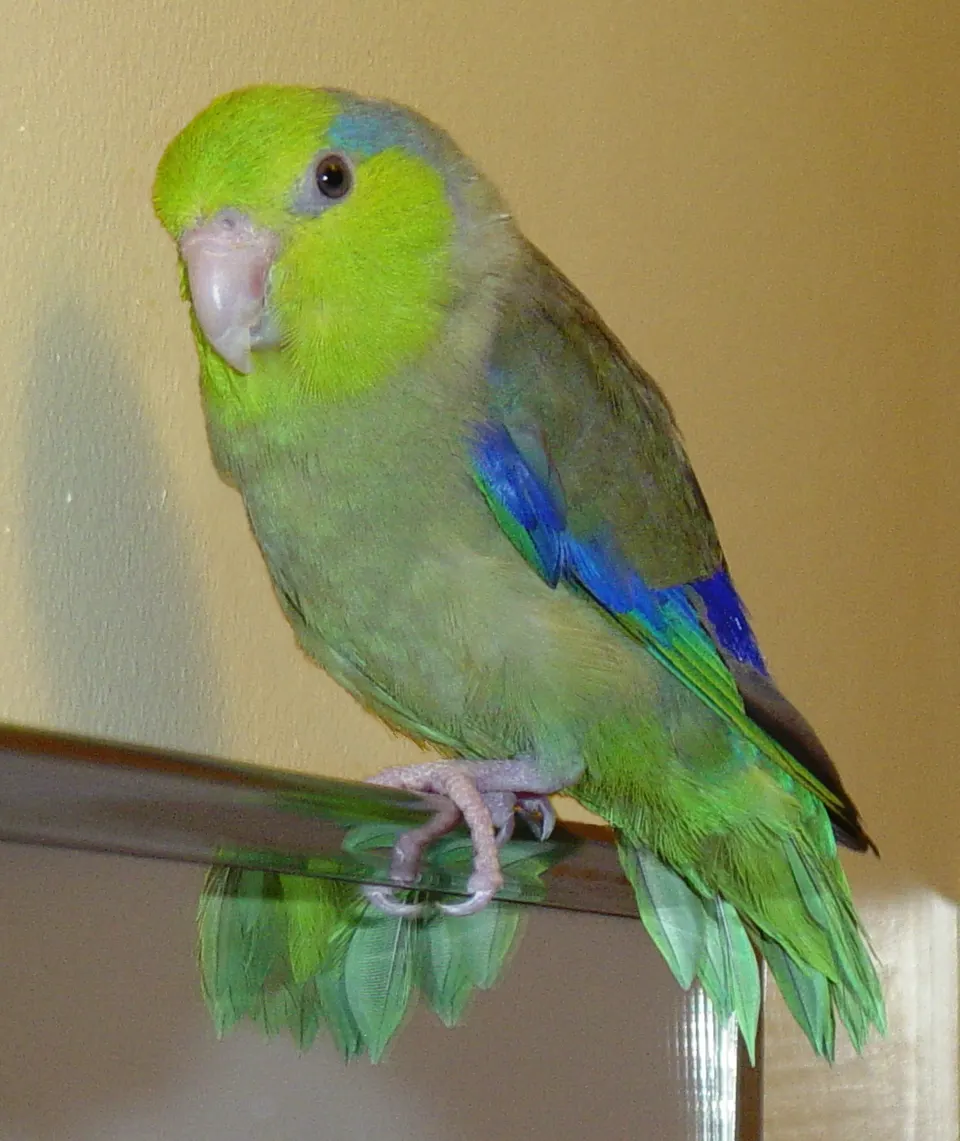
Quick Facts
| Attribute | Details |
|---|---|
| Scientific Name | Forpus spp. (7 species) |
| Origin | Central and South America |
| Size | Tiny (4.5-5.5 inches, 28-33 grams) |
| Lifespan | 15-20+ years |
| Noise Level | Low (quiet chirps and chattering) |
| Talking Ability | Moderate (can learn some words) |
| Diet | Pellets, seeds, vegetables, fruits |
| Care Level | Intermediate |
| Space Requirements | Minimum 18x18x18 inch cage |
Affiliate links may earn a commission. Affiliate disclosure.
Recommended for Parrotlets
Harrison's Bird Foods - Certified organic superfine pellets | Lafeber - Nutri-berries for small parrots | Kaytee - Small bird nutrition
Top Food Choices for Parrotlets
Harrison's Superfine - Organic pellets sized for parrotlets | Lafeber Nutri-Berries - Small size foraging nutrition | Kaytee Exact - Parakeet/small bird diet
A budgie-sized bird with parrot manners
Parrotlets are Forpus, seven species from Central and South America. The common pet is the Pacific parrotlet. Adults are about 4.5 to 5.5 inches. They often live 15 to 20 years or more, the voice is chirps rather than macaw screams, talking is moderate, and care is intermediate. People underestimate them because the body is small. The bite is a parrot bite. The attitude is often one-person and territorial.
A cage of at least 18 by 18 by 18 inches is only a minimum. They need to fly or to come out. A seed-only diet is a poor one. Pellets, vegetables, and some seed are the diet. Two parrotlets may fight even when you bought them as a pair. Watch the feet and the faces. Separate birds that draw blood. A single parrotlet with a consistent person is often the calmer house.
Fifteen years in a small chest
Weigh them. A gram lost on a 30-gram bird is a lot. Captive-bred only. A parrotlet this small needs an avian veterinarian who will actually see it. The AAV directory is where to find that clinic before the bird comes home. The fluffed, quiet posture is on the quiet bird page.
Parrotlet questions
Are parrotlets good for a child?
No. They bite, they are quick, and care is intermediate. A child can watch. An adult keeps the bird.
Which parrotlet is the pet?
Usually a Pacific parrotlet, one of several Forpus species. This page covers the genus at 4.5 to 5.5 inches. Confirm the species, because care overlaps and the birds are still different.
Do they talk?
Some do. Talking is moderate. The voice is big for the body, and so is the bite.
Decision Guides for Parrotlet
Blue marks the male Pacific parrotlet
The usual pet is Forpus coelestis, the Pacific parrotlet, one of seven Forpus species from Central and South America. Males show blue on the rump and the wings, and females are green in those places, so the sex is often visible without a laboratory test. Adults are about 4.5 to 5.5 inches and 28 to 33 grams, and they often live 15 to 20 years or longer. The voice is a chirp, and the bite is still a parrot bite, which is why care sits at intermediate. Two birds sold as a pair can still draw blood, and a single parrotlet with one consistent person is often the calmer house. Weigh them weekly, because a gram lost on a bird near 30 grams is a large share of the body.