Hawk-Headed Parrot (Red-Fan Parrot)
This page is educational reference material for preparing questions. A licensed veterinarian examines the animal, makes the diagnosis, and sets the treatment.
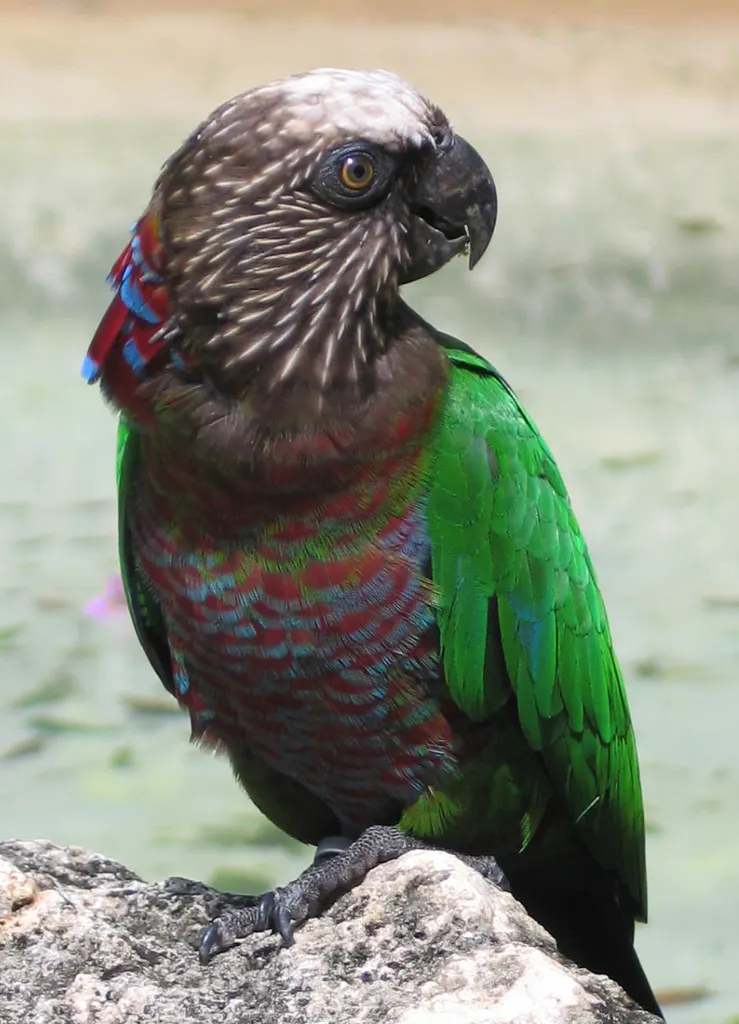
Quick Facts
| Attribute | Details |
|---|---|
| Type | Parrot |
| Size | 12-14 inches |
| Weight | 6-10 oz |
| Lifespan | 30-40 years |
| Temperament | Unique, Bold, Affectionate |
| Noise Level | Moderate to Loud |
| Talking Ability | Moderate |
| Origin | South America |
Affiliate links may earn a commission. Affiliate disclosure.
Hawk-Headed Parrot (Red-Fan Parrot) Overview
The hawk-headed parrot is Deroptyus accipitrinus, also called the red-fan parrot, from South America. The card lists 12 to 14 inches and 6 to 10 ounces, a lifespan of 30 to 40 years, noise that is moderate to loud, and moderate talking ability. Temperament is printed as unique, bold, and affectionate. Unique is the honest word. This is not a cuddly Amazon. The genus is its own, the display is its own, and the bite is not an Amazon pinch with a different paint job.
When the bird is alarmed it raises a feather ruff, the fan of elongated nape feathers that gives the red-fan name. The crown lifts, the neck widens, and the bird looks larger and more hawk-like than it did on the perch a moment earlier. That display is a stress and threat signal. It is not a party trick and not a cue to clap, film, or push a hand closer so the fan opens again. A keeper who provokes the ruff to show guests is manufacturing the mood that leads to a bite.
Hawk-heads can be nippy and unpredictable. Bold on the card is real. A bird that greets one person with interest may lunge at another, or at the same person on a different day, without a long warning that an Amazon owner would recognize. Affectionate applies to a bond built slowly with one careful handler. It does not describe a parrot that wants every visitor to scratch its neck. Unique means you cannot copy a caique or Amazon routine and expect the same result from Deroptyus.
A patient handler is the minimum skill, not a decorative phrase. Step-up, a neutral perch, and an end to the session before the fan comes up are the tools. Punishment, surprise grabs, and crowded rooms make a nippy bird worse. Thirty to 40 years is the lifespan attached to that patience. A hawk-head bought as a first parrot often changes households after the first serious bite. The second household inherits a bird that has learned hands are a threat, which confirms the unpredictable label and was preventable.
Moderate to loud is the noise line. The call is a harsh parrot voice, enough for a house and too much for a thin-walled apartment that wanted something picturesque. Moderate talking means some birds learn words and many use sound effects and contact calls instead. Do not buy Deroptyus as a talking project. Buy it, if at all, as a display species you are willing to read carefully for decades. South America is the origin. Captive-bred birds with a known history are the ones to consider. Wild-caught hawk-heads are a poor fit for the affectionate half of the temperament line.
Temperament & Behavior
Housing is a strong parrot cage sized for a 12 to 14 inch bird that fans its neck and needs personal space, not a conure starter kit. Give a retreat so the bird can leave the front bars when the room is busy. Toys should occupy the beak without requiring the keeper to reach in past a bird that is already displaying. Foraging helps. So does a predictable schedule. Affection grows from that predictability. It does not grow from forcing a cuddle on a bold animal that has already lifted the ruff.
Weight spans 6 to 10 ounces on this card, so two healthy adults can look quite different. Learn the individual bird's weight and appetite instead of guessing from chest shape alone. Diet is a standard parrot mix of pellets, vegetables, and a restrained nut portion. Seed as the whole bowl is as wrong here as it is for any large psittacine, and a hawk-head that feels ill becomes harder to handle, not easier. A quiet, fluffed bird that has stopped threatening is more worrying than one that still displays.
Find an avian veterinarian before you need a bite wound managed on either side of the relationship. The handler's skin and the bird's stress are both part of this species. Annual exams, nail and beak checks, and a plan for restraint that does not turn into a wrestling match belong in the first month. Thirty to 40 years of improvising with a dog clinic is a bad match for a parrot this unusual. Take the paperwork, the species name, and a recent weight to the first visit so the clinic is not guessing which Amazon it has.
People meet the fan in a photograph and expect a showy pet that likes attention. The bird behind the photograph is 12 to 14 inches, 6 to 10 ounces, moderate to loud, and only moderately talented at speech. It raises a feather ruff when alarmed. It can be nippy. It can also be affectionate with the person who earned that trust and did not spend it on performances. A patient handler with decades to give, and no need for an Amazon-shaped relationship, is the household that fits Deroptyus accipitrinus.
Housing & Environment Requirements
Provide a spacious cage appropriate for Hawk-Headed Parrot (Red-Fan Parrot) - minimum dimensions should allow full wingspan extension plus room to climb and play. Maintain temperatures between 65-80°F with appropriate humidity levels.
Diet & Nutrition
A balanced diet for Hawk-Headed Parrot (Red-Fan Parrot) should include high-quality pellets as the foundation (60-70% of diet), supplemented with fresh fruits and vegetables (20-30%), and limited seeds/nuts as treats (5-10%). Fresh, clean water should always be available. Avoid avocado, chocolate, caffeine, alcohol, and high-salt foods. Consult an avian veterinarian for species-specific dietary recommendations.
Feeding a Hawk-Headed Parrot (Red-Fan Parrot) well is less about following trends and more about paying attention to your specific animal. Some Hawk-Headed Parrot (Red-Fan Parrot) do great on standard species-appropriate avian pellets and fresh foods; others need a different approach due to allergies, sensitivities, or individual metabolism. Work with your vet to find what works, and be willing to adjust as your Hawk-Headed Parrot (Red-Fan Parrot)'s needs change with age.
Learning to read a pet food label takes five minutes and will serve you for the life of your Hawk-Headed Parrot (Red-Fan Parrot). Look at the guaranteed analysis for protein and fat percentages that match your Hawk-Headed Parrot (Red-Fan Parrot)'s needs.
Common Health Issues
Common health concerns for Hawk-Headed Parrot (Red-Fan Parrot) include respiratory infections, psittacine beak and feather disease, feather plucking (often stress-related), and nutritional deficiencies. Birds hide illness well, so annual avian vet checkups are essential.
Avian health management for Hawk-Headed Parrot (Red-Fan Parrot) requires a proactive approach built on understanding that birds, like all prey species, instinctively conceal signs of illness until they can no longer compensate. By the time a Hawk-Headed Parrot (Red-Fan Parrot) displays obvious symptoms such as fluffed feathers, tail bobbing, or sitting on the cage bottom, the underlying condition may already be advanced. This makes routine preventive care, regular wellness examinations with an avian veterinarian, and attentive daily observation essential components of responsible Hawk-Headed Parrot (Red-Fan Parrot) ownership.
Nutritional health is one of the most significant and controllable factors influencing your Hawk-Headed Parrot (Red-Fan Parrot)'s long-term wellbeing. A complete diet for Hawk-Headed Parrot (Red-Fan Parrot) should center on high-quality formulated pellets (comprising 60-70% of intake) supplemented with fresh vegetables, appropriate fruits, and species-specific treats. Transitioning a seed-addicted Hawk-Headed Parrot (Red-Fan Parrot) to a balanced diet requires patience and creativity, but the health benefits are substantial and well-documented.
Environmental health factors play a larger role in Hawk-Headed Parrot (Red-Fan Parrot) health than many owners realize. Creating a safe, controlled environment for your Hawk-Headed Parrot (Red-Fan Parrot) is as important as diet and veterinary care in maintaining long-term health.
Grooming & Maintenance
Regular grooming for Hawk-Headed Parrot (Red-Fan Parrot) includes providing bathing opportunities (mist spray or shallow dish), nail trimming as needed, and wing clipping (optional and debated - consult your avian vet). Keep the cage clean with daily spot cleaning and weekly deep cleaning. Replace food and water daily. Rotate toys regularly to prevent boredom.
Beginner-Friendly Rating: Intermediate
Hawk-Headed Parrot (Red-Fan Parrot) are suitable for keepers with some experience.
Before acquiring a Hawk-Headed Parrot (Red-Fan Parrot), research thoroughly and prepare the habitat in advance. Join online communities and forums dedicated to aviculture to connect with experienced keepers who can offer guidance specific to Hawk-Headed Parrot (Red-Fan Parrot) care.
Socialization & Enrichment
Socialization is critical for Hawk-Headed Parrot (Red-Fan Parrot). These intelligent creatures thrive on interaction and mental stimulation.
Many Hawk-Headed Parrot (Red-Fan Parrot) owners find that their birds enjoy music, gentle conversation, and watching nature videos.
Where to Find Hawk-Headed Parrot (Red-Fan Parrot)
Look for reputable breeders who hand-raise their birds, provide health guarantees, and are knowledgeable about Hawk-Headed Parrot (Red-Fan Parrot) care.
Cost of Ownership Overview
| Expense | Estimated Cost |
|---|---|
| Initial Setup (bird + cage + supplies) | $200-$3,000+ |
| Annual Food | $150-$400 |
| Annual Vet Care | $100-$300 |
| Toys & Enrichment (annual) | $100-$250 |
The numbers in the table above are averages — your actual spending will depend on where you live, your Hawk-Headed Parrot (Red-Fan Parrot)'s individual health, and the choices you make about food quality, insurance, and grooming. Cities tend to be pricier for vet care. Rural areas may require longer drives to specialists.
Year one hits the wallet hardest. Once those one-time costs are behind you, annual spending drops — though it tends to creep back up as your Hawk-Headed Parrot (Red-Fan Parrot) ages and needs more frequent veterinary attention in the later years.
Preventive care is not glamorous, but it is the single best investment you can make in your Hawk-Headed Parrot (Red-Fan Parrot)'s health. Routine wellness exams catch problems early, when treatment is simpler and cheaper. Most veterinary professionals agree that consistent preventive care extends both the length and quality of a Hawk-Headed Parrot (Red-Fan Parrot)'s life.
Daily Care Routine for Hawk-Headed Parrot (Red-Fan Parrot)
A consistent daily routine is essential for Hawk-Headed Parrot (Red-Fan Parrot) health and wellbeing.
Most Hawk-Headed Parrot (Red-Fan Parrot) need 10-12 hours of uninterrupted sleep in a quiet, dark environment. Weekly tasks include thorough cage cleaning, perch scrubbing, and toy rotation.
Quick Answers About Hawk-Headed Parrot (Red-Fan Parrot)
Most planning for a Hawk Headed Parrot centres on the obvious items; this particular one rewards the attention that comparatively few owners give it.
How long do Hawk-Headed Parrot (Red-Fan Parrot) live?
Hawk-Headed Parrot (Red-Fan Parrot) typically live 30-40 years in captivity with proper care.
Are Hawk-Headed Parrot (Red-Fan Parrot) noisy?
Hawk-Headed Parrot (Red-Fan Parrot) have a moderate to loud noise level. They vocalize regularly but are not among the loudest pet bird species.
Can Hawk-Headed Parrot (Red-Fan Parrot) talk?
Hawk-Headed Parrot (Red-Fan Parrot) have moderate talking ability. Their charm lies in their personality and beauty.
Do Hawk-Headed Parrot (Red-Fan Parrot) need a companion?
While Hawk-Headed Parrot (Red-Fan Parrot) are social creatures, a single bird can thrive with sufficient human interaction and enrichment. Always quarantine new birds and introduce them gradually.
Long-Term Commitment & Responsible Ownership
Bringing a Hawk-Headed Parrot (Red-Fan Parrot) into your home is a commitment that can last 30-40 years.
Include your Hawk-Headed Parrot (Red-Fan Parrot) in long-term planning. If rehoming becomes necessary, contact avian rescue organizations in your area.
Get Personalized Hawk-Headed Parrot (Red-Fan Parrot) Guidance
Have specific questions about your Hawk-Headed Parrot (Red-Fan Parrot)?
Ask Our AI NowDecision Guides for Hawk-Headed Parrot (Red-Fan Parrot)
Use these only when comparing food, insurance, ownership budget, or beginner fit for this specific pet.
Hawk-Headed Parrot (Red-Fan Parrot) May Be Great For:
- An experienced parrot keeper who understands Deroptyus accipitrinus raises a neck fan when alarmed and can bite hard
- Someone with decades, an avian vet, and a cage for a bird that is not a conure
- An owner who will not show the fan off to scare guests. That display is stress
Hawk-Headed Parrot (Red-Fan Parrot) May Not Be Ideal For:
- A first parrot
- Anyone who wants the fan as a party trick
- A keeper without a specialist vet
- Plan the adult size, the vet, and the daily work for the hawk headed parrot before it comes home.
Owning a Hawk-Headed Parrot (Red-Fan Parrot) is a commitment measured in years, not months. The enthusiasm of the first few weeks fades, and what remains is a daily routine of feeding, exercise, grooming, and vet visits. If that sounds like a satisfying rhythm rather than a burden, you are probably in a good position to move forward. If it sounds exhausting, it is worth reconsidering.
Experienced Hawk-Headed Parrot (Red-Fan Parrot) owners will tell you the same thing: the first year is the hardest, and every year after that gets easier and more enjoyable. By the time your Hawk-Headed Parrot (Red-Fan Parrot) hits its stride as an adult, you will wonder how you ever lived without one.