Finch
This page is educational reference material for preparing questions. A licensed veterinarian examines the animal, makes the diagnosis, and sets the treatment.
Affiliate links may earn a commission. Affiliate disclosure.
Quick Facts
| Attribute | Details |
|---|---|
| Scientific Name | Various (Taeniopygia, Lonchura, Erythrura spp.) |
| Origin | Australia, Africa, Asia (varies by species) |
| Size | Tiny (3-6 inches, 10-30 grams) |
| Lifespan | 5-10 years (up to 15 for some species) |
| Noise Level | Low (pleasant chirps and peeps) |
| Talking Ability | None (do not mimic speech) |
| Diet | Finch seed mix, millet, vegetables, egg food |
| Care Level | Beginner-friendly |
| Space Requirements | Flight cage minimum 30 inches long |
Recommended for Finches
Lafeber - Premium finch diet | Kaytee - Finch seed mixes | Chewy - Bird supplies on autoship
Finch Overview
Finches are small, active, social birds that provide endless entertainment with their acrobatic flying and cheerful chirping. Unlike parrots, finches are typically hands-off pets - they prefer the company of other finches to human interaction. Watching a group of finches interact is like having a living, chirping piece of art.
Finches are ideal for bird lovers who enjoy observing natural behaviors without the demands of parrot ownership. They're particularly suited to busy lifestyles since they require minimal interaction but still fill a home with life and pleasant sounds.
This page covers small finches, not one species and not a parrot. The scientific line is various Taeniopygia, Lonchura, and Erythrura species. Origin is Australia, Africa, or Asia depending on which bird is in the cage. Size is tiny, about 3 to 6 inches and 10 to 30 grams. Lifespan is 5 to 10 years, and up to 15 for some species. Noise is low, pleasant chirps and peeps. Talking ability is none. These birds do not mimic speech. Anyone shopping for a talking companion is in the wrong section of the site.
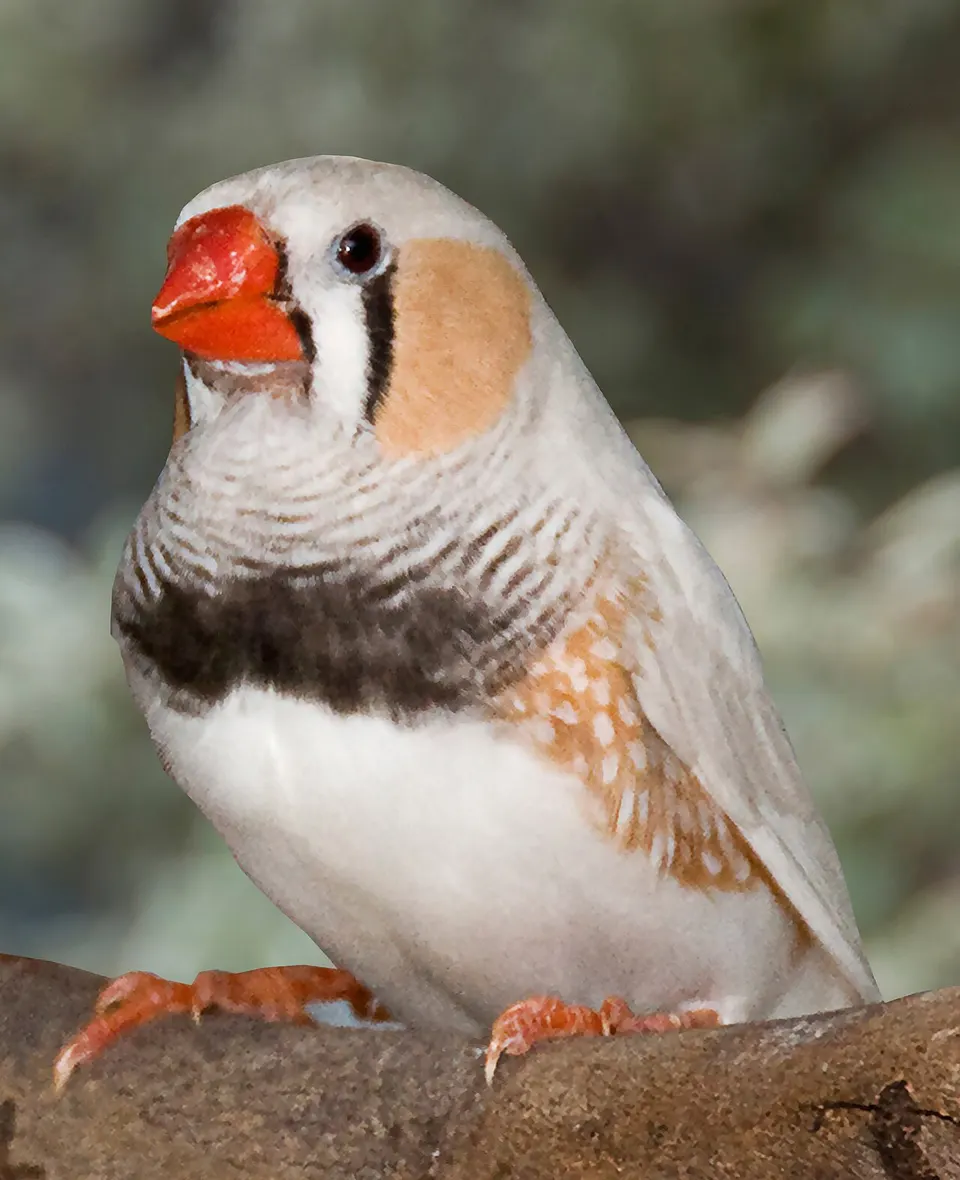
Zebra finches, Taeniopygia, are the hardy colony bird. They are the usual beginner finch, active, ready to breed, and tolerant of ordinary careful husbandry. Society finches, a domestic Lonchura, can foster. Keepers use them to rear the eggs and chicks of species that fail as parents. That talent is not a reason to dump every abandoned egg on one pair, and it is not a personality transplant. A society finch is still a small bird with a short life, and it does not want to be held.
Gouldian finches, Erythrura, are the fragile birds on this page. The colors are real, and so is the narrower margin for cold, stress, and dirty air. A gouldian that was sold beside a zebra finch does not share the zebra's toughness. Warmth, a stable room, and a keeper who already understands finch illness matter more here than they do for a zebra colony. Mixing the two without a plan is how a hardy flock hides the fact that the colorful birds are failing.
Natural Habitat & Origin
Pet finch species come from various regions.
- Zebra Finches: Australian grasslands
- Society Finches: Domesticated; no wild counterpart
- Gouldian Finches: Northern Australia
- Java Finches: Indonesia (Java, Bali)
- Owl Finches: Australian grasslands
Popular Finch Species
If you are optimizing a Finch's routine, this is one of the higher-leverage items to get right early.
Best for Beginners
- Zebra Finch: Most popular; hardy, active, prolific breeders (4 inches)
- Society Finch: Calm, excellent parents, many colors (4-5 inches)
- Spice Finch (Nutmeg): Peaceful, brown scaled plumage (4.5 inches)
Intermediate Species
- Gouldian Finch: Stunning colors; more delicate, needs warmth (5 inches)
- Java Finch: Large, gentle; can become finger-tame (5-6 inches)
- Owl Finch: Striking face pattern; peaceful (4 inches)
- Star Finch: Red face, olive body; calm disposition (4.5 inches)
Temperament & Personality
Finches have distinct characteristics.
- Social: Must be kept in pairs or groups; solitary finches become depressed
- Active: Constantly flying, hopping, and exploring
- Non-Handleable: Generally do not enjoy human contact
- Peaceful: Most species coexist well in mixed aviaries
- Entertaining: Fascinating to watch their social interactions
- Hardy: Most pet finch species are robust and adaptable
A flight cage at least 30 inches long is the space line, and longer is better. Finches fly horizontally. A tall parrot cage with a bell teaches nothing useful and invites a collision. Bar spacing has to hold a 10-gram bird. The diet is a finch seed mix, millet, vegetables, and egg food. Live food helps some species when they are breeding. Seed piled in a hopper, with no greens and no egg food, is a thin menu across a 5 to 10 year life, or across the longer span some species reach.
Care is listed as beginner-friendly. Read that as a comment on zebra and society finches kept as a group, with a proper flight and a simple diet. It is a poor description of a single gouldian, and it is a poor description of any finch kept alone. These are flock birds. One finch on a swing is a welfare problem, not a minimalist pet. Pairs and small groups let them preen, roost, and call. Human interaction is watching and cleaning, not scratching a head.
Because the page is a group, the receipt has to name the bird. A 3-inch waxbill and a 6-inch Java finch do not share a bar spacing or a risk of being bullied. Up to 15 years for some species means you cannot budget every finch as a five-year decoration. Chirps and peeps stay pleasant only when the group is healthy and the cage is long enough to prevent constant chasing. No amount of talking practice will produce a word. The pleasure is the colony, the flight, and the differences among zebra, society, gouldian, and the similar small finches kept with them.
Housing Requirements
Finches need horizontal flight space.
- Cage Size: Flight cage minimum 30 inches long; longer is better
- Bar Spacing: 1/4 to 1/2 inch maximum (small finches escape easily)
- Shape: Horizontal space trumps vertical; finches fly side to side
- Perches: Multiple thin perches; natural branches vary diameter
- Nests: Provide woven or bamboo nests for sleeping
- Aviary: Ideal for larger groups; indoor or outdoor (climate-dependent)
Diet & Nutrition
Proper diet ensures finch health: When in doubt, choose the guidance that names the Finch explicitly over the guidance that treats all pets alike.
- Finch Seed Mix: Base of diet; quality commercial blend
- Millet Sprays: Favorite treat and enrichment
- Fresh Vegetables: Finely chopped greens, grated carrot
- Egg Food: Important protein source, especially for breeding
- Cuttlebone: Essential calcium source
- Fresh Water: Changed daily; some enjoy bathing dishes
Top Food Choices for Finches
Lafeber Premium Finch - Nutritionally complete | Kaytee Finch Mix - Quality seed blend | Chewy Bird Supplies - Convenient delivery
Feeding a Finch well is less about following trends and more about paying attention to your specific animal. Some Finches do great on standard species-appropriate avian pellets and fresh foods; others need a different approach due to allergies, sensitivities, or individual metabolism. Work with your vet to find what works, and be willing to adjust as your Finch's needs change with age.
Marketing claims on pet food packaging can be misleading. What actually matters for your Finch is whether the food delivers balanced protein, fat, and micronutrients suited to their specific needs. Instead of chasing trendy ingredients, let your Finch's physical condition — their coat, energy, weight, and digestive health — guide your choices.
Health Issues
Common Health Concerns
- Air Sac Mites: Respiratory parasites; gasping, tail bobbing
- Scaly Face/Leg Mites: Crusty growths on beak and legs
- Egg Binding: Life-threatening in females
- Avian Pox: Viral disease; warty growths
- Coccidiosis: Intestinal parasites
Signs of Illness
- Fluffed feathers for extended periods
- Sitting on cage floor
- Labored breathing or tail bobbing
- Loss of appetite
- Discharge from eyes or nostrils
Social Needs Warning
Finches are flock birds and should NEVER be kept alone. A single finch will become depressed, stressed, and often develop health problems. Always keep at least two finches together - same sex pairs work fine if you don't want breeding. Some species like Gouldian finches may need same-species companions.
Avian health management for Finch requires a proactive approach built on understanding that birds, like all prey species, instinctively conceal signs of illness until they can no longer compensate. By the time a Finch displays obvious symptoms such as fluffed feathers, tail bobbing, or sitting on the cage bottom, the underlying condition may already be advanced. This makes routine preventive care, regular wellness examinations with an avian veterinarian, and attentive daily observation essential components of responsible Finch ownership.
Nutritional health is one of the most significant and controllable factors influencing your Finch's long-term wellbeing. A complete diet for Finch should center on high-quality formulated pellets (comprising 60-70% of intake) supplemented with fresh vegetables, appropriate fruits, and species-specific treats. Transitioning a seed-addicted Finch to a balanced diet requires patience and creativity, but the health benefits are substantial and well-documented.
Environmental health factors play a larger role in Finch health than many owners realize. Creating a safe, controlled environment for your Finch is as important as diet and veterinary care in maintaining long-term health.
Training & Socialization
Finches are not typically trained like parrots: Your avian veterinarian and experienced Finch owners can offer perspective tailored to your situation.
- Observation Birds: Best appreciated by watching, not handling
- Some Exceptions: Java Finches can become finger-tame with patience
- Acclimation: New finches need quiet time to adjust
- Trust Building: Moving slowly reduces stress
- Group Dynamics: Watch for bullying in mixed groups
Noise & Vocalization
Finches make pleasant, quiet sounds: Your avian veterinarian and experienced Finch owners can offer perspective tailored to your situation.
- Volume: Low - soft chirps, peeps, and beeps
- Zebra Males: Have a cheerful "beep beep" song
- Constant: Active birds vocalize throughout the day
- Apartment Friendly: Excellent for noise-sensitive living situations
- Night: Quiet after lights out
Compatibility with Families & Other Pets
- Children: Good for watching; not handling pets
- Other Finches: Essential - must have companions
- Canaries: Can coexist in large flight cages
- Parrots: Keep separate; parrots may harm finches
- Cats & Dogs: Secure housing essential; finches are prey
Is This Bird Right for You?
Finches Are Great For:
- Those wanting birds but not handling commitment
- Apartment dwellers needing quiet pets
- Beginners to bird keeping
- Busy people with limited interaction time
- Those fascinated by natural bird behavior
- Anyone wanting living, chirping decor
Finches May Not Be Ideal For:
- Those wanting a bird to handle and bond with
- People seeking talking birds
- Anyone wanting only ONE bird
- Those with cats that can access the bird area
A Finch is not for everyone, and that is perfectly fine. Spend time around actual Finch birds before committing. That firsthand experience is worth more than a hundred online guides.
Strip everything else away and Finch ownership comes down to the relationship. Most Finch owners describe that dynamic as the reason the rest of it is worth doing.
Cost of Ownership
These Finch cost estimates give you a solid starting point, but real-world expenses vary by location, health status, and personal choices. Building in some buffer for unplanned expenses is always a good idea.
The numbers in the table above are averages — your actual spending will depend on where you live, your Finch's individual health, and the choices you make about food quality, insurance, and grooming. Cities tend to be pricier for vet care. Rural areas may require longer drives to specialists.
Year one hits the wallet hardest. Once those one-time costs are behind you, annual spending drops — though it tends to creep back up as your Finch ages and needs more frequent veterinary attention in the later years.
Related Species to Consider
If you're interested in Finches, you might also consider.
- Canary - Beautiful singing, similar care
- Budgerigar - Small, can be tamed
- Dove - Gentle, quiet cooing
- Bourke's Parakeet - Quiet, gentle
- Cockatiel - Gentle, interactive option
Ask Our AI About Finches
Have specific questions about Finch health, care, or species selection? Our AI assistant can provide personalized guidance.
Get Personalized AI Guidance
Ask Our AI NowDecision Guides for Finch
Use these only when comparing food, insurance, ownership budget, or beginner fit for this specific pet.